TensorFlow Lite Boosts CPU Inference: XNNPack Unveils Dynamic Range Quantization and Quadrupled Performance
By Alan Kelly, Software Engineer
Published via TensorFlow Blog
Executive Summary: Main Facts
In a landmark update for on-device machine learning (ML), the TensorFlow team has announced that XNNPack—TensorFlow Lite’s dedicated CPU backend—now officially supports dynamic range quantization for its Fully Connected and Convolution 2D operators. Because central processing units (CPUs) provide the widest deployment reach for edge-based ML inference and remain the default target architecture for TensorFlow Lite, optimizing CPU performance stands as a paramount engineering priority.
By integrating dynamic range quantization into these core operators, developers have achieved a staggering quadrupling (4x) of inference performance compared to traditional single-precision (fp32) baselines. This technical leap effectively lowers the hardware barrier to entry, empowering developers to deploy sophisticated, resource-heavy AI features onto older, legacy, and lower-tier mobile and edge devices.
Crucially, this upgrade eliminates many of the deployment roadblocks historically associated with full integer quantization, making high-performance AI vastly more accessible to non-expert developers and paving the way for advanced generative models—such as Stable Diffusion—to run fluidly on consumer-grade hardware.
The Evolution of Edge Inference: A Chronological Overview
To understand the magnitude of this release, it is necessary to examine how mobile and edge inference has evolved over recent hardware and software generations.

1. The Pre-Quantization Era (FP32)
Historically, neural network inference relied heavily on single-precision floating-point formats (fp32). While fp32 offered maximum numerical precision, it exacted a severe toll on compute cycles, memory bandwidth, and battery consumption, restricting complex AI tasks primarily to powerful server environments or high-end flagship smartphones.
2. The Introduction of Half-Precision and Full Integer Quantization
Seeking performance gains, TensorFlow Lite introduced half-precision (fp16) and full integer quantization (int8).
- Full Integer Quantization compressed both weights and activations into signed 8-bit integers during model conversion. While efficient, it required a meticulously curated "representative dataset" to calibrate quantization parameters (zero points and scales). If the dataset was poorly chosen, quantization artifacts crippled accuracy. Furthermore, unsupported operators would cause conversion pipelines to fail outright.
- Half-Precision (FP16) halved storage requirements compared to fp32, paving the way for faster vectorized execution on hardware featuring native fp16 support (a capability pioneered on Android by devices like the Google Pixel 3 in 2018).
3. The XNNPack Milestone
Over successive updates, XNNPack emerged as the robust CPU execution engine for TensorFlow Lite, offering highly optimized, per-architecture implementations spanning ARM, ARM64, x86 (SSE, AVX, AVX-512), and WebAssembly. This laid the groundwork for modern processing units, including cutting-edge ARMv9 architectures like the Pixel 8’s Tensor G3 and the OnePlus 11’s Snapdragon 8 Gen 2.
4. The Present Breakthrough: Dynamic Range Quantization in XNNPack
With the integration of dynamic range quantization into XNNPack’s Fully Connected and Convolution 2D operators, developers no longer have to choose between the high error-risk of full integer quantization and the sluggish performance of fp32. Beginning in TensorFlow 2.17, dynamically quantized XNNPack inference is enabled by default in prebuilt binaries, marking a new standard for on-device efficiency.
Technical Deep Dive: Dynamic Range Quantization vs. Alternatives
Dynamic range quantization strikes a strategic balance between aggressive integer compression and floating-point flexibility.

How Dynamic Range Quantization Works
In a dynamically quantized model:
- Weights for Fully Connected and Convolution operators are compressed into 8-bit integers during model conversion.
- Tensors and Activations remain as float32 tensors throughout the network, avoiding the need for a representative dataset during conversion.
- Dynamic Scaling: During live inference, floating-point layer activations are converted to 8-bit integers on-the-fly right before entering the Fully Connected and Convolution operators. Crucially, the quantization parameters (zero-point and scale) for each row of the activation tensor are calculated dynamically based on the observed runtime range of activations. This maximizes numerical accuracy by utilizing all 8 available bits.
- Output Format: The resulting outputs of the Fully Connected and Convolution operators are returned in 32-bit floating-point format, preserving higher overall model accuracy.
Mixed Precision: Combining Dynamic Range Quantization and FP16
Developers can further compound these performance gains by combining dynamic range quantization with half-precision (fp16) inference on compatible hardware. Because modern CPUs can process twice as much data per instruction when utilizing 16-bit floats, compute-intensive floating-point operators—such as Batch Matrix Multiply and Softmax—see dramatic speed-ups.
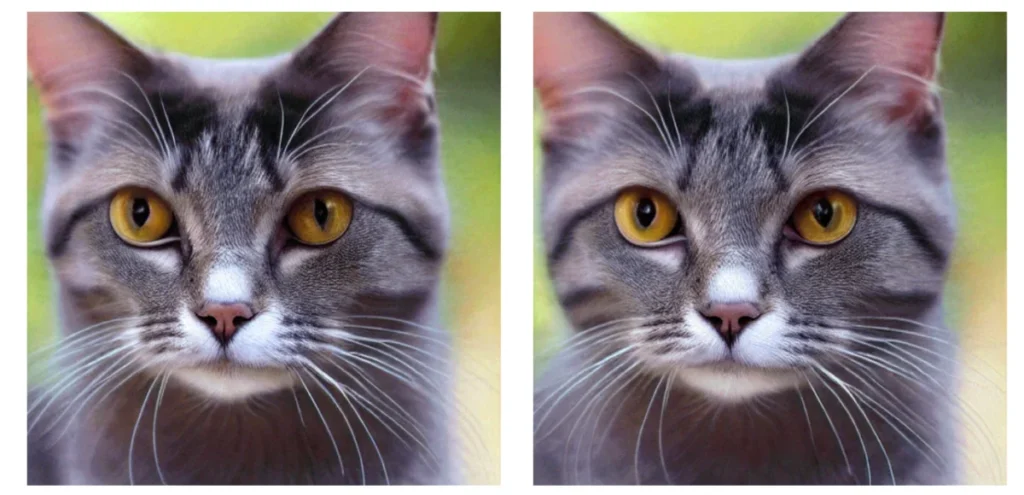
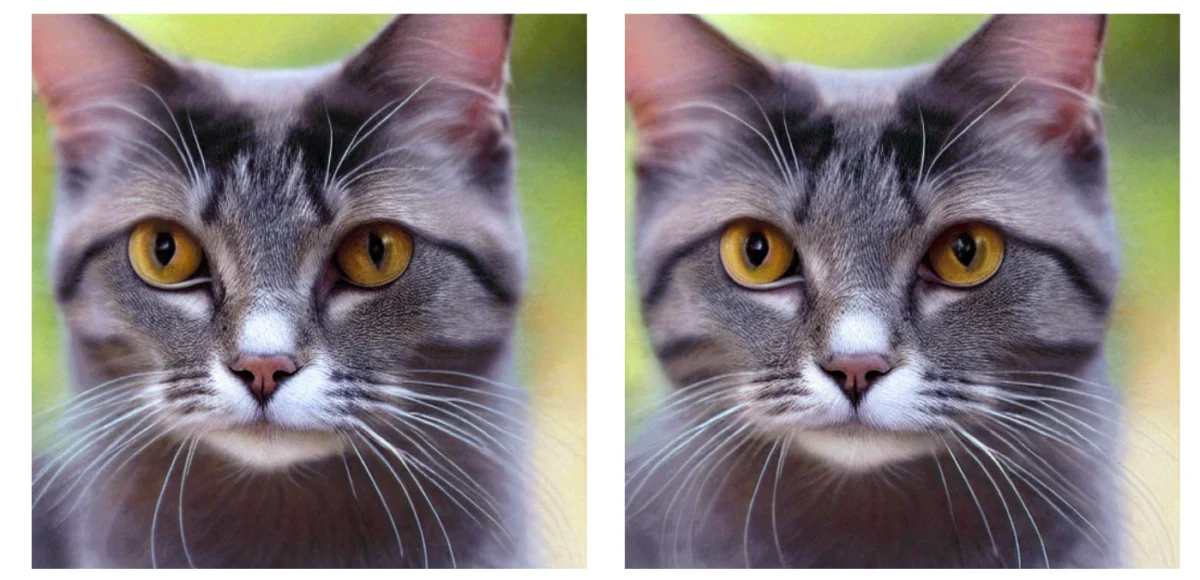
As demonstrated in recent benchmark imagery, images generated by a dynamically quantized Stable Diffusion model using fp16 activations are virtually indistinguishable from their fp32 counterparts, proving that performance gains do not come at the cost of perceptual quality.
Supporting Data and Benchmarks
Extensive benchmarking across public computer vision and generative AI models reveals compelling performance metrics. When compared against standard TensorFlow Lite kernels on flagship hardware such as the Google Pixel 8, the efficiency gains are unmistakable.
- Stable Diffusion Speed-Up: The diffusion model component of Stable Diffusion executed up to 6.2 times faster than the original float32 baseline when leveraging dynamic range quantization.
- Integer vs. Dynamic Range Paradox: Conventional computing wisdom dictates that full integer quantization (int8) should universally outperform dynamic range quantization because all underlying arithmetic is calculated using pure integers, circumventing runtime conversion overhead. However, profiling models via the TFLite profiler revealed a surprising counter-trend: in multiple tested models, dynamic range quantization matched or even exceeded full integer performance.
This anomaly occurs because full integer quantization relies on static parameters derived from a representative dataset. If the ratio of input and output scales falls outside an optimal range, the model is forced onto a less efficient execution path, degrading performance. Dynamic range quantization bypasses this bottleneck by calculating parameters contextually at runtime.

Official Responses and Ecosystem Impact
The rollout of XNNPack’s dynamic range quantization represents a coordinated engineering push by core contributors within the TensorFlow ecosystem. Software Engineer Alan Kelly highlighted the collaborative effort, offering special recognition to Frank Barchard and Quentin Khan for their foundational contributions to dynamic range quantization inference across TensorFlow Lite and XNNPack.
Google has already operationalized this technology at scale. XNNPack’s dynamic range quantization backend currently powers core enterprise features, including:
- Gemini on-device integrations
- Google Meet audio processing
- Chrome OS audio denoising pipelines
By pushing these optimizations into the open-source domain, Google is equipping the global developer community with enterprise-grade tooling to scale edge AI responsibly.
Implementation Guide: How Developers Can Use It
Adopting dynamic range quantization requires minimal friction. The process involves two primary steps:
- Model Conversion: Convert the model from TensorFlow with optimization flags enabled. Developers simply add the following converter flag during Python export:
converter = tf.lite.TFLiteConverter.from_saved_model(saved_model_dir)
converter.optimizations = [tf.lite.Optimize.DEFAULT]
tflite_model = converter.convert()
Note: Unlike full integer quantization, no representative dataset is required, and unsupported operators will not break the conversion pipeline.

- Version Adoption: Ensure the project utilizes TensorFlow 2.17 or higher (where dynamically quantized XNNPack inference is enabled by default in prebuilt binaries), or pull from nightly TensorFlow builds for immediate integration. Existing models already converted using dynamic range quantization require no reconversion.
Broader Implications for the AI Industry
The democratization of high-performance CPU inference via XNNPack carries profound implications for the future of artificial intelligence:
- Democratization of Edge AI: By quadrupling CPU inference speeds, developers are no longer strictly dependent on specialized Neural Processing Units (NPUs) or expensive GPUs to deliver responsive AI experiences. This opens up sophisticated machine learning capabilities for budget-friendly smartphones dominating emerging markets.
- Privacy and Offline Functionality: Running heavy models like Stable Diffusion locally on mobile hardware reduces reliance on cloud-based server farms, mitigating latency concerns while safeguarding user privacy through on-device data processing.
- Sustainability: Optimized CPU routines that process twice as much data per instruction translate directly to lower energy consumption, helping to curb the carbon footprint associated with mobile computing and extending battery life for end users.
As edge hardware continues to evolve, software advancements like XNNPack’s dynamic range quantization ensure that AI remains fast, accessible, and deeply integrated into everyday consumer devices.