A New Chapter for Rune: Why the High-Performance IDE is Embracing Open Source
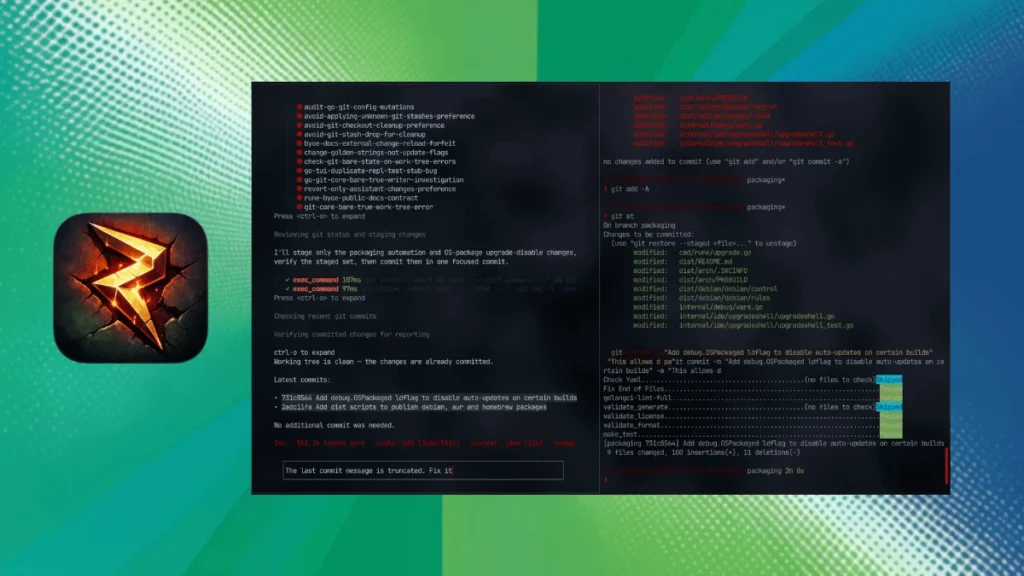
In a bold strategic pivot that challenges the prevailing trends of modern software development, Rune—the high-performance integrated development environment (IDE) for Linux and macOS—has officially transitioned to an open-source model. By adopting the GPLv3 license, the team behind the project, Unstable Build LLC, has effectively shuttered its proprietary past, inviting the global developer community to audit, modify, and contribute to its codebase via GitHub.
This transition is not merely a change in licensing; it represents a significant cultural statement in an era where "open core" and "bait-and-switch" licensing models have left many developers feeling disenfranchised. As the software landscape grapples with the tension between monetization and accessibility, Rune’s move serves as a compelling case study in building sustainable, community-first software.
The Core Facts: What is Rune?
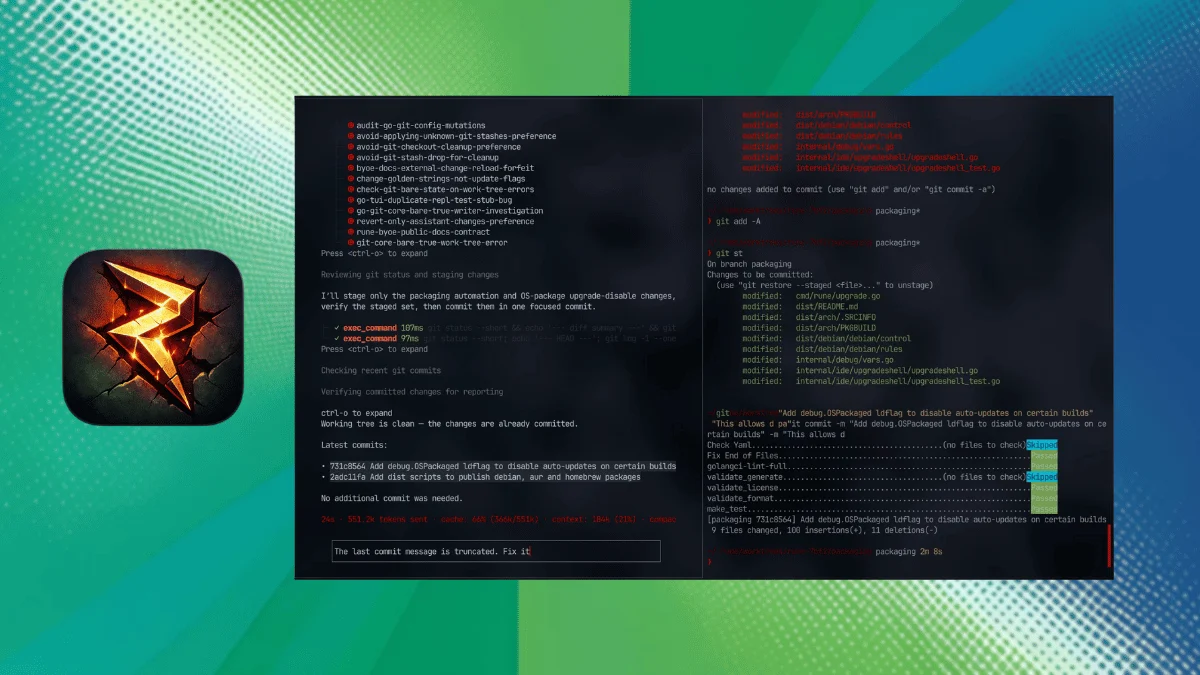
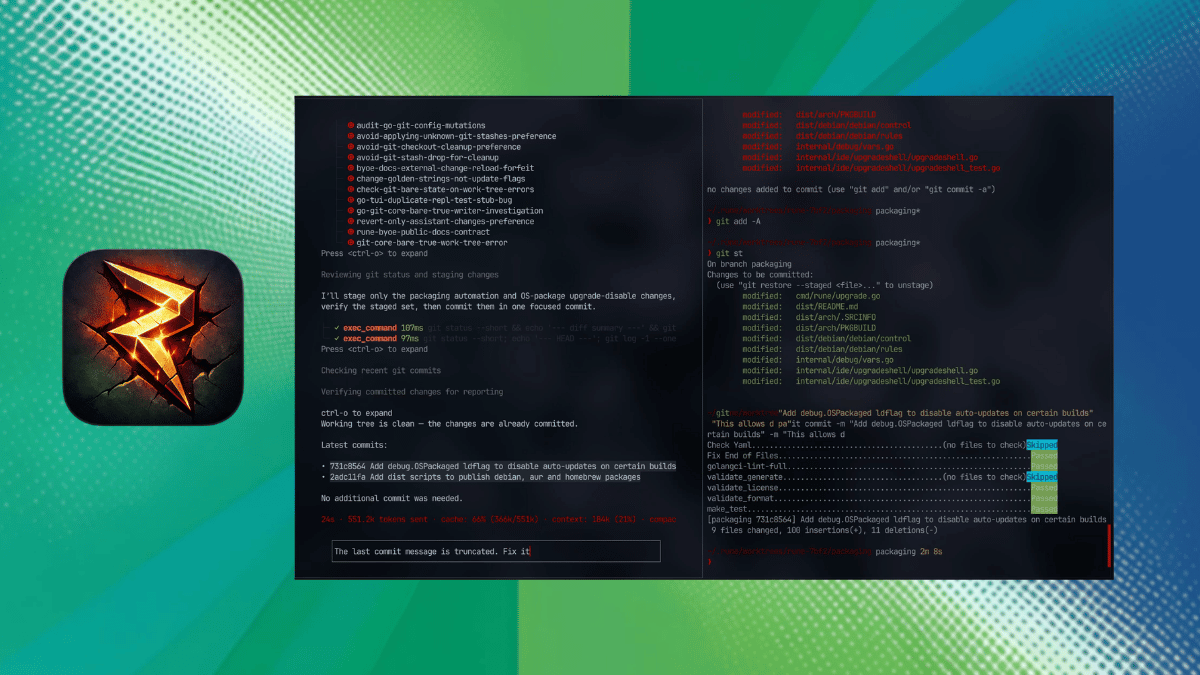
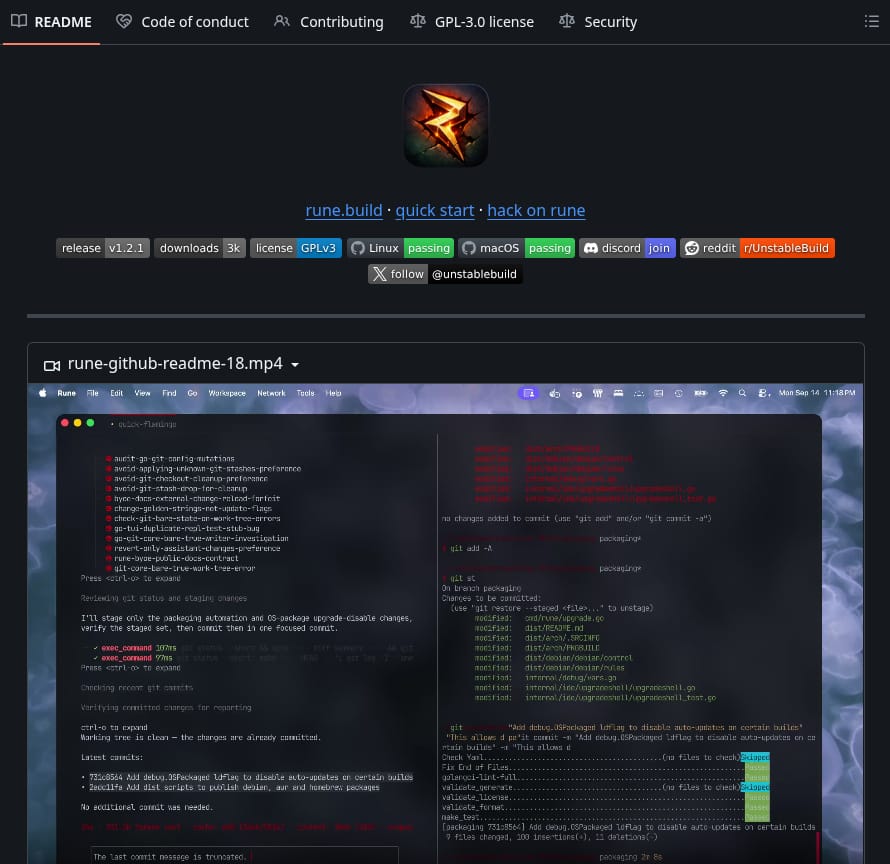
At its heart, Rune is designed for developers who demand high performance and deep integration. It is an IDE built to bridge the gap between traditional code editing and terminal-based workflows. Key features include:
- Unified Environment: Rune allows developers to write code, debug complex systems, and execute terminal CLI tools within a single, cohesive window.
- AI Integration: The IDE natively incorporates coding agents, enabling developers to offload repetitive or boilerplate tasks to automated processes.
- Performance-First Architecture: Written in Go, the IDE is engineered for speed. The developers have leveraged
vtebenchto demonstrate that Rune’s terminal emulator keeps pace with industry heavyweights such as Alacritty, Ghostty, and Kitty. - Cross-Platform Support: While the focus remains heavily on the Linux ecosystem, macOS users are also fully supported.
The decision to open-source the project was finalized via a definitive commit, marking the end of its closed-source era. Crucially, the developers have opted to retain the project’s historical commit logs, which stretch back to 2017. This transparency is rare; many projects opting to "go open" choose to squash their git history to obscure sensitive internal data or proprietary "secrets." By preserving the timeline, Rune has signaled a high degree of confidence in its development lineage.
A Chronology of the Transition
The journey to open source was not an overnight decision but rather the culmination of years of iterative development and internal reflection by the team at Unstable Build LLC.
2017–2023: The Incubation Period
The project began as an internal experiment to solve the inefficiencies of fragmented coding environments. During these years, the team operated as a traditional proprietary entity, relying on a Contributor License Agreement (CLA) to manage intellectual property. This period was characterized by rigorous performance tuning and the refinement of the Go-based terminal engine.
2024: The Strategic Pivot
As the IDE matured, the team began evaluating the risks of the proprietary model. Observations of other prominent open-source projects—which often start as community-driven efforts only to move behind restrictive licenses once they achieve market dominance—led founder Ernest Romero Climent to reconsider the project’s trajectory.
2025: The Open Source Launch
In the final stages of the transition, the team abandoned the CLA requirement entirely. By adopting the GPLv3, they ensured that contributors retain copyright over their submissions, effectively preventing Unstable Build LLC from ever reclaiming exclusive rights to the community’s contributions. The public repository was launched on GitHub, complete with the full, unfiltered commit history.

Supporting Data: Performance and Language Extensibility
One of the primary criticisms leveled against IDEs written in high-level languages is the overhead they impose on system resources. The Rune team preemptively addressed this by focusing on terminal performance.
The team’s reliance on Go is a deliberate choice. While Go is often associated with backend infrastructure rather than UI-heavy desktop applications, the Rune team has demonstrated through vtebench—a standard tool for testing terminal emulator throughput—that the IDE achieves parity with dedicated terminal emulators written in C or Rust.
Note on Benchmarks: It is important to clarify that these tests measure terminal rendering and latency, not general language speed. However, they serve as a vital proof-of-concept that Rune does not sacrifice performance for the convenience of an all-in-one IDE.
Furthermore, the team has announced a roadmap to broaden language support. While Go and Python are currently the "first-class citizens," support for Rust and Zig is already in beta. The team has issued an open invitation for developers to act as stewards for their preferred languages, fostering a modular approach that allows the IDE to grow organically based on community demand rather than top-down mandates.
Official Responses and the "Contributor Credit" Philosophy
Perhaps the most innovative aspect of Rune’s transition is its approach to contributor compensation. Ernest Romero Climent has been vocal about his frustration with the "open source bait-and-switch" tactic, where corporations exploit community labor to build a product that is eventually locked away for profit.
To avoid this, Rune has introduced an opt-in credits program. The system operates as follows:
- Work Attribution: Contributions are tracked, and accepted pull requests are awarded credits.
- Public Ledger: All credits, revenue pool data, and payout calculations are recorded on a public, transparent ledger.
- Revenue Sharing: A portion of the company’s service revenue (from enterprise plans and premium support) is allocated to a payout pool, which is then distributed proportionally based on the credits held by contributors.
Crucially, this is entirely optional. The project remains open for standard, volunteer-driven contributions, ensuring that the barrier to entry remains low for those who simply wish to improve the tool for their own use.
Implications for the Future of IDEs
The move to GPLv3 puts Rune in direct competition with both proprietary titans like VS Code (which, despite its open-source core, is heavily tied to Microsoft’s ecosystem) and other community-led efforts like VSCodium or Zed.

1. The Ethical Software Model
By decentralizing the IP and creating a transparent financial incentive structure, Rune is testing a new hypothesis: Can an IDE be commercially viable while remaining strictly under the control of its community? If successful, this could serve as a template for other dev-tools companies that are currently struggling with the "open core" dilemma.
2. Sustainability vs. Scalability
The challenge for Unstable Build LLC will be maintaining the balance between the paid enterprise tier—which provides the funding for the project—and the community-governed open-source version. Enterprise users often demand stability, proprietary plugins, and white-glove support, which may require a different development velocity than the open-source branch.
3. Strengthening the Linux Ecosystem
Rune’s commitment to the Linux desktop is significant. By providing a professional-grade, high-performance IDE that is natively "of the community," they are helping to solidify Linux as a premier platform for developers. As more tools adopt similar models, the reliance on proprietary, cloud-locked IDEs may wane, giving developers more autonomy over their own development environments.
Conclusion
Rune’s transition to open source is a watershed moment. It is a rejection of the status quo in favor of a model that prioritizes longevity, transparency, and developer agency. Whether through the preservation of its historical commit logs or the introduction of a transparent, revenue-sharing contribution model, Rune is signaling that it wants to be more than just another IDE—it wants to be a sustainable standard for the next generation of software engineers.
As the repository continues to gain stars and pull requests, the tech community will be watching closely. If the project can prove that its contributor-credit system creates a sustainable financial cycle, we may be looking at the birth of a new gold standard for open-source project management. For now, Rune stands as a testament to the idea that you don’t have to sacrifice your principles to build a world-class developer tool.