The Silicon Aquarium: Inside the Innovation of the "Pocket Tank"
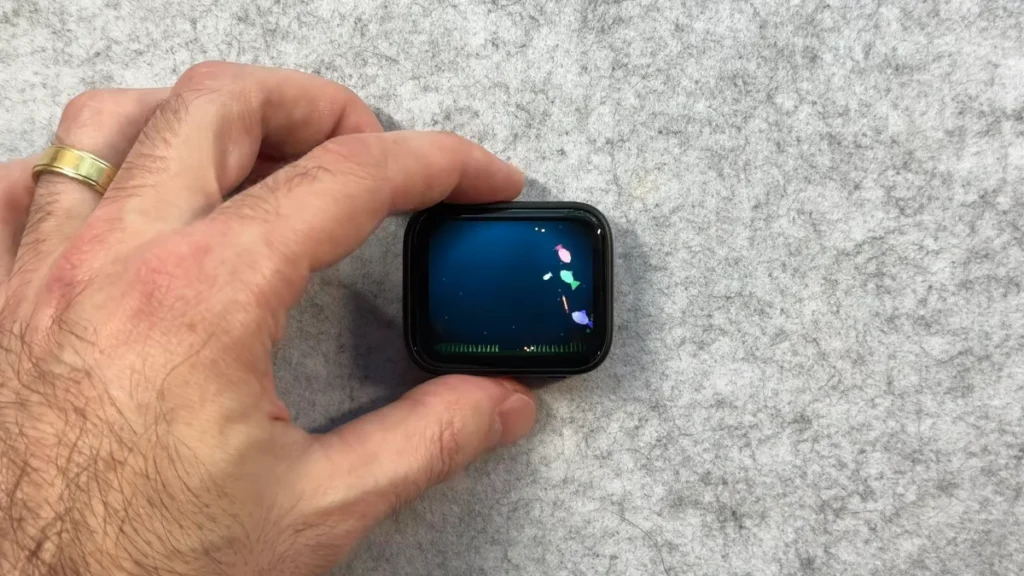
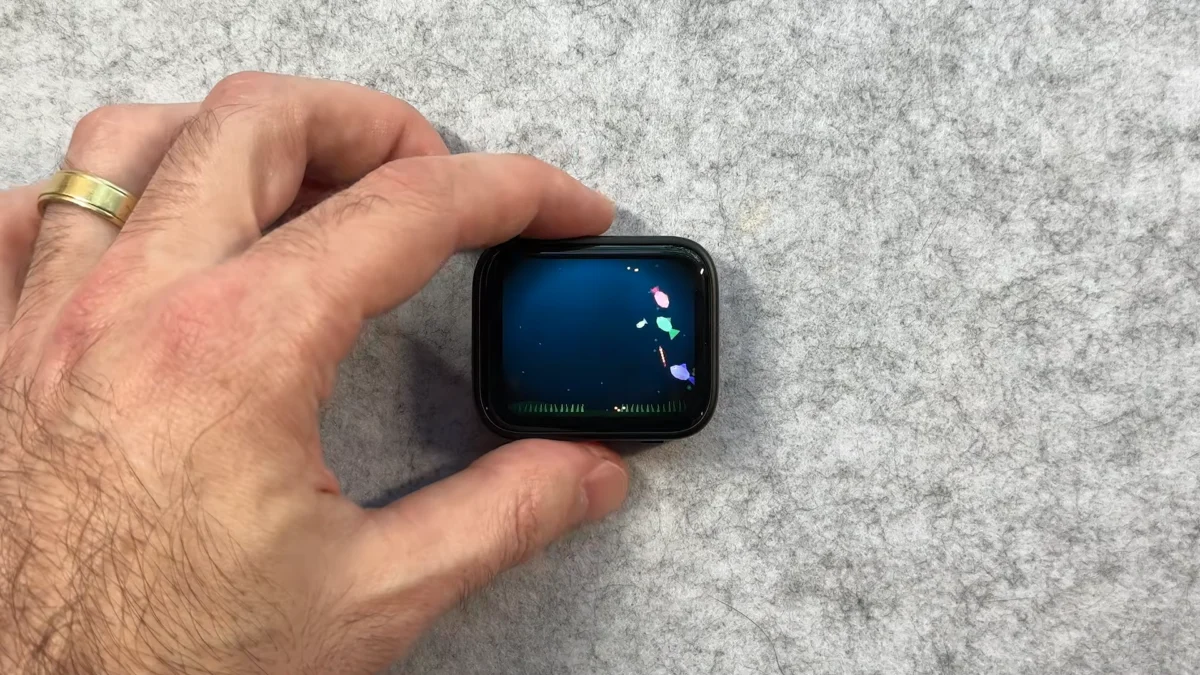
The traditional hobby of fishkeeping has long been defined by heavy glass tanks, complex filtration systems, and the constant anxiety of maintaining delicate water chemistry. For most, the dream of carrying an aquatic companion in one’s pocket has remained a physical impossibility—until now. A new project dubbed "Pocket Tank," developed by the creator known as StratoBuilds, has bridged the gap between retro-digital nostalgia and modern artificial intelligence, creating a self-contained, interactive ecosystem that fits in the palm of your hand.
By leveraging the power of the ESP32-S3 microcontroller and a miniaturized Large Language Model (LLM), StratoBuilds has successfully reinvented the digital pet, moving beyond the static pixelated sprites of the 1990s into a realm of autonomous, AI-driven behavior.
The Core Concept: Redefining Digital Life
At its most fundamental level, the Pocket Tank is a hardware-driven experiment in artificial life. Utilizing the Waveshare ESP32-S3-Touch-AMOLED-1.8, the device packs a vibrant 1.8-inch display and a surprisingly capable microcontroller into a compact, custom-designed housing.
Unlike traditional digital pets—which operate on fixed scripts and simple "if-then" logic—the Pocket Tank introduces a layer of cognitive processing. The fish inside are not merely playing a looping animation; they are "thinking." The project separates the visual experience from the cognitive experience, running the fluid, 25-30 frames-per-second (FPS) animations through standard optimized C++ code, while offloading the "personality" and decision-making processes to an LLM condensed specifically to run on the ESP32’s limited hardware.
This architecture ensures that the visuals remain smooth and responsive, while the fish demonstrate emergent behaviors based on their environment. When a fish swims toward a corner, it isn’t following a path; it is reacting to the state of the tank, analyzed by the internal LLM, which dictates the fish’s goals, hunger levels, and social interactions.
Chronology of Development: From Concept to Silicon
The journey of the Pocket Tank began as an inquiry into the limitations of embedded systems. StratoBuilds sought to answer a specific technical challenge: How much intelligence can be squeezed into a low-power, handheld device without sacrificing the "life-like" quality of the simulation?
- Phase 1: Hardware Selection: The choice of the ESP32-S3 was pivotal. Its dual-core processor and integrated wireless capabilities provided the necessary "grunt" to handle both the graphical rendering and the inference tasks required by the LLM.
- Phase 2: The Logic Engine: Early iterations focused on simple movement patterns. However, the developer found these lacking in depth. The pivot toward integrating a custom-condensed LLM allowed for the fish to "observe" their environment. By mapping the tank’s state into tokens, the model could interpret the situation and decide on behaviors such as foraging, resting, or interacting with other virtual inhabitants.
- Phase 3: The Tamagotchi Integration: Recognizing that a simulation without stakes is quickly ignored, the developer integrated a survival mechanic. Users must perform maintenance tasks, such as cleaning the virtual water and providing food. Failure to do so impacts the health of the fish, mirroring the responsibilities of real-world aquarium ownership.
- Phase 4: Optimization: The final stage involved aggressive code optimization. Shrinking an LLM to run on a microcontroller meant stripping away non-essential parameters while maintaining enough complexity to allow for "decision-making" that feels distinct from random number generation.
Technical Architecture and Supporting Data
The success of the Pocket Tank rests on a delicate balance of hardware and software optimization.
The Hardware Specs
- Processor: ESP32-S3 (Dual-core, high-performance microcontroller).
- Display: 1.8-inch AMOLED touchscreen, offering high contrast and low power consumption.
- Form Factor: Custom-printed housing designed for portability and thermal management.
- Interactivity: Capacitive touch input allows the user to tap the glass, feed the fish, or clean the tank.
The Software Engine
The software stack is a masterclass in embedded optimization. By splitting the load between a real-time rendering loop and a background inference task, the device avoids the "stutter" common in early digital simulations. The LLM acts as the "brain," receiving snapshots of the tank’s current state. If the fish is hungry, the model processes this data and returns a new objective state: "Move to food source." The rendering engine then calculates the vectors to get the fish from point A to point B smoothly.
Official Responses and Community Impact
The project has garnered significant attention within the hobbyist electronics community, particularly on platforms like GitHub, where the source code has been made open-source.
In a statement regarding the project’s release, the developer noted that the goal was never to replace real aquarium keeping, but to explore the intersection of LLMs and embedded systems. "We are moving into an era where our devices are no longer just tools, but active, reactive participants in our daily lives," the developer remarked.
The community reaction has been overwhelmingly positive, with many developers citing the Pocket Tank as a roadmap for how to deploy small-scale AI models on edge devices. The repository on GitHub has already seen forks and pull requests from users looking to add new species of fish, alter the tank physics, or implement complex "mood" variables for the inhabitants.
Implications: The Future of "Smart" Companions
The implications of the Pocket Tank extend far beyond the novelty of a digital fishbowl. This project serves as a "canary in the coal mine" for the future of edge computing and artificial intelligence.
1. The Decentralization of AI
For years, the narrative around AI has been centered on massive server farms and cloud-based processing. The Pocket Tank proves that significant cognitive complexity can be achieved locally, on hardware that costs less than a standard dinner. This suggests a future where our everyday appliances—thermostats, clocks, and even toys—could possess a degree of "intelligence" that functions offline, privately, and indefinitely.
2. The Evolution of Digital Pets
We are witnessing the death of the "fixed-state" toy. In the past, a digital pet had a finite set of animations. In the future, every interaction will be unique. An AI-driven pet could theoretically learn from its owner’s behavior, adapting its temperament and habits over time. The Pocket Tank is the first generation of this evolutionary chain.
3. Sustainability in Hobbyism
While the project is a digital simulation, it raises interesting questions about the future of traditional pet ownership. As climate change and resource scarcity make keeping exotic, high-maintenance animals more difficult, high-fidelity digital alternatives may become a primary method for people to engage with biological concepts and "animal" companionship without the ethical or environmental footprint of traditional husbandry.
Conclusion: A New Frontier in Your Pocket
The Pocket Tank is more than just a clever hack; it is a profound demonstration of what happens when we stop treating our microcontrollers as simple calculators and start treating them as potential vessels for simulated life. By combining the aesthetic charm of an aquarium with the raw processing power of the ESP32-S3 and the nuanced intelligence of an LLM, StratoBuilds has created something that feels remarkably alive.
Whether you are a developer interested in the technical minutiae of edge-AI, or a hobbyist looking for a low-maintenance way to enjoy the tranquility of a fish tank, the Pocket Tank stands as a testament to the power of open-source innovation. It reminds us that sometimes, the most complex problems don’t require more power—they require more creativity. As the project continues to evolve on GitHub, it will be fascinating to see how the community expands this tiny, digital world into something even more robust, intelligent, and engaging.
For those interested in building their own, the documentation provided by StratoBuilds is comprehensive, offering a rare look into the hardware-software handshake that makes this pocket-sized ecosystem possible. It is a bold, miniature step into a future where the line between the digital and the natural world continues to blur.