
From Trash to Precision: The DIY Evolution of Aluminum Solder Stencils
In the world of electronics prototyping, the transition from breadboard to printed circuit board (PCB) is a rite of passage. However, once a custom board is fabricated, the challenge of surface-mount technology (SMT) assembly looms large. Applying solder paste with surgical precision is essential for reliable connections, and while professional steel stencils are the industry standard, they are often cost-prohibitive for hobbyists.
Enter the humble soda can. A long-standing staple of the "hacker" community, the aluminum can provides a thin, conductive, and readily available material for makeshift stencils. Now, thanks to recent innovations by maker Saheen Palayi, the process of converting beverage packaging into high-fidelity assembly tools has reached a new level of professional accuracy, bridging the gap between kitchen-table engineering and industrial-grade manufacturing.
The Core Challenge: Precision in Prototyping
The primary hurdle in using recycled aluminum for solder stencils has always been mechanical consistency. To function effectively, a stencil must be perfectly flat and possess clean, burr-free apertures that correspond exactly to the footprint of the surface-mount components. Historically, makers have struggled with two specific phases: preparing the material without damaging it and creating the apertures without warping the delicate metal.
"The goal is to move beyond the rough, hand-cut stencils of the past," notes Palayi in his recent documentation. By leveraging modern 3D printing and fiber laser technology, he has successfully refined a workflow that turns a discarded aluminum vessel into a precision-cut template capable of handling fine-pitch components.
Chronology of the DIY Stencil Revolution
The history of the DIY stencil is a testament to the ingenuity of the open-source hardware movement.
- The Early Days (2010–2015): Early experiments often involved using hobby knives or Dremel tools to manually carve patterns into sheet metal. The results were notoriously inconsistent, often leading to uneven solder deposits that caused shorts or "cold" joints.
- The Chemical Era (2015–2020): Makers began adopting acid-etching techniques. By using toner-transfer methods similar to those used for PCB fabrication, hobbyists could apply a resist to the aluminum and etch the holes using ferric chloride. While effective, this process was hazardous, time-consuming, and lacked the edge definition required for modern, high-density ICs.
- The Machining Shift (2020–2023): Small-scale CNC routers allowed for more mechanical accuracy. However, the force required for machining often caused the thin aluminum to vibrate or tear, necessitating complex backing materials or rigid clamping mechanisms.
- The Current Laser-Enabled Era (2024–Present): With the rapid democratization of fiber laser technology, the bottleneck has shifted from "how do we cut it" to "how do we optimize the design." Palayi’s recent work represents the pinnacle of this era, integrating additive manufacturing to prepare the material and fiber optics to define the geometry.
Technical Methodology: The Palayi Workflow
The innovation lies in a two-stage process that addresses the inherent physical properties of aluminum cans.
1. Material Preparation: The 3D-Printed Cutter
Aluminum cans are designed to withstand significant pressure, but they are incredibly prone to kinking when handled improperly. Attempting to cut them with standard shears often results in wrinkled, unusable metal.
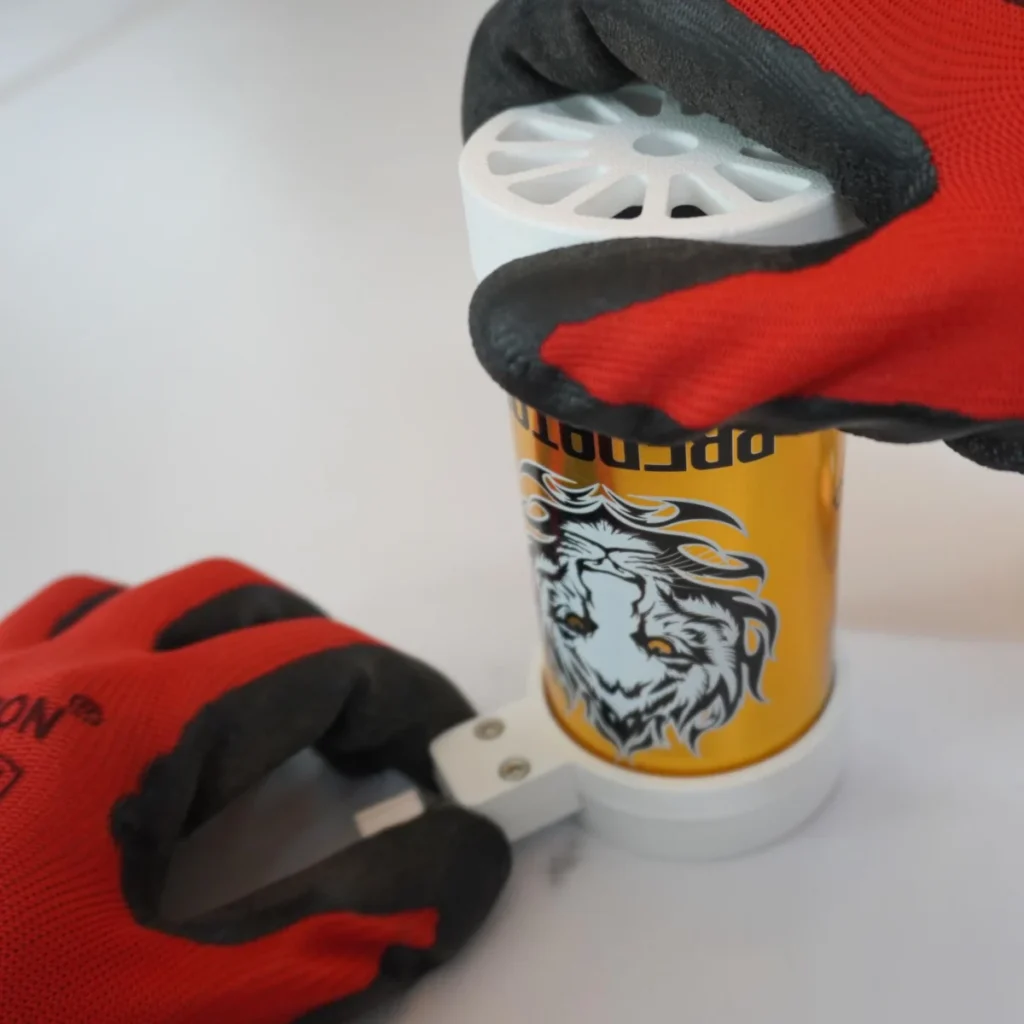
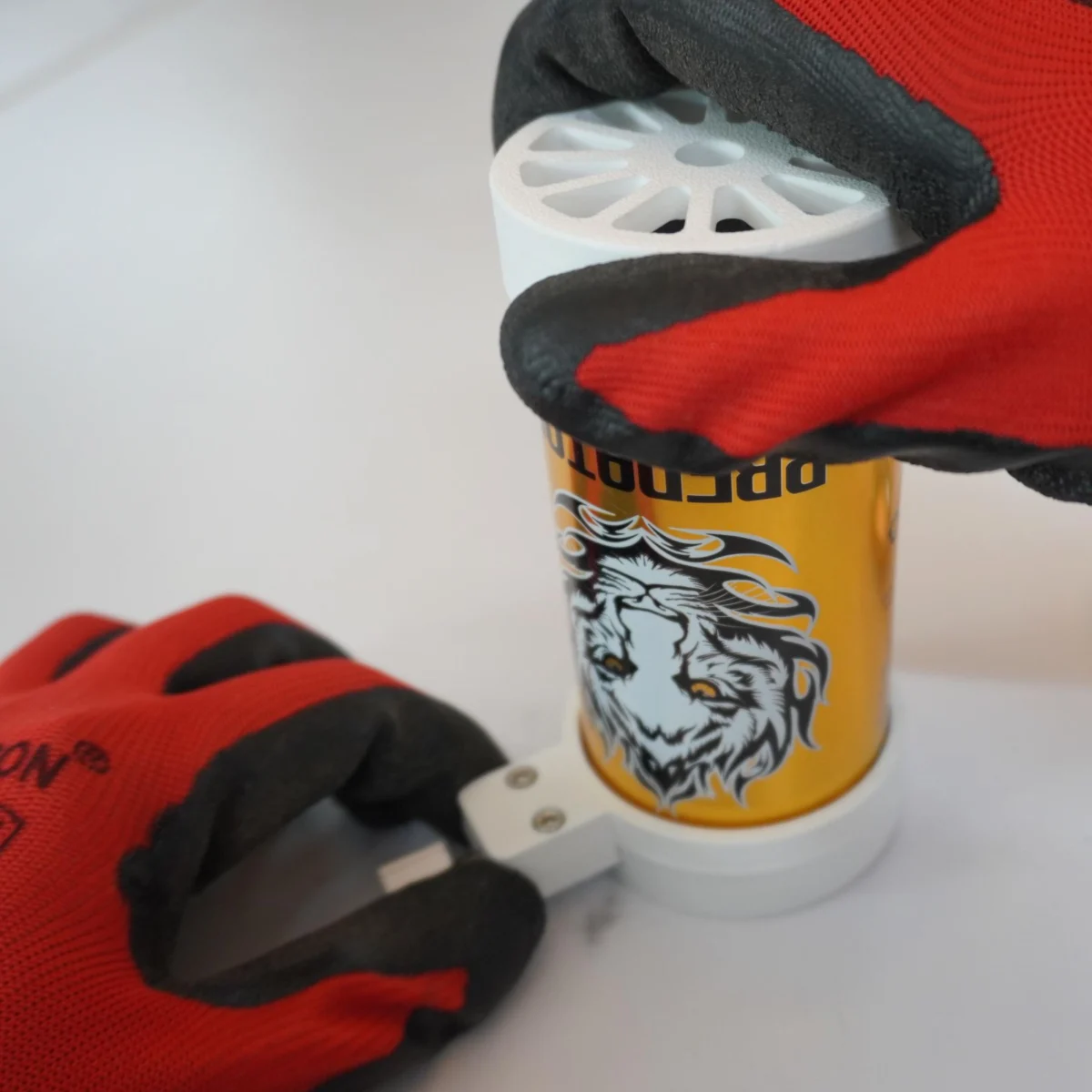
Palayi’s solution is a 3D-printed jig that functions as a manual lathe-style pipe cutter. The device holds a standard utility knife blade at a fixed, incremental depth. By rotating the can against the blade, the user creates a clean, continuous score that eventually severs the top and bottom caps without ever needing to apply uneven pressure. The result is a perfectly cylindrical aluminum sleeve that, once cut vertically, unfurls into a pristine, flat sheet of high-quality alloy.
2. Aperture Fabrication: Fiber Laser Ablation
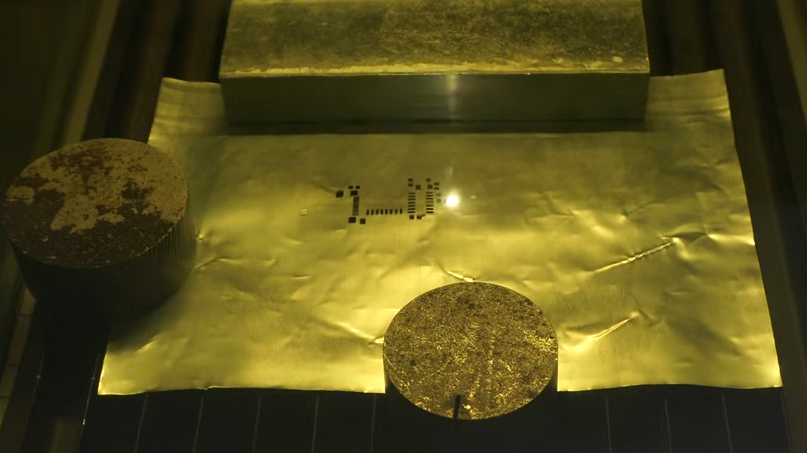
Once the sheet is flattened, the real magic happens. Using an xTool F1 Ultra fiber laser, Palayi imports the stencil layer directly from standard PCB design software (such as KiCad or Eagle).
Unlike CO2 lasers, which struggle with metals, fiber lasers operate at a wavelength that is highly absorbed by aluminum. The laser ablates the metal with extreme speed and minimal heat-affected zones. This prevents the metal from warping—a critical factor, as even a fraction of a millimeter of distortion can cause the stencil to lift off the PCB, leading to "smeared" solder paste.
Supporting Data: Why Aluminum Still Matters
While professional stencils are usually made of stainless steel (typically 0.1mm to 0.15mm thick), aluminum cans offer a surprising set of benefits:
- Thickness: The average soda can is approximately 0.1mm thick, which is the "sweet spot" for most fine-pitch QFN and TQFP component packages.
- Cost: The material cost is essentially zero, or the price of a beverage, making it the most sustainable option for rapid, iterative prototyping.
- Conductivity: Because the material is highly conductive, it is less prone to static buildup compared to plastic Mylar stencils, which can inadvertently attract fine solder particles.
- Availability: In a "doomsday" or remote-field engineering scenario, the ability to manufacture precision tools from local scrap is a significant tactical advantage for hardware developers.
Implications for the Maker Community
The shift toward accessible fiber lasers has profound implications for the democratized manufacturing landscape. We are entering an era where the barrier to entry for professional-grade electronics assembly is effectively collapsing.
The Prosumer Paradigm
Tools like the xTool F1 Ultra, which were once exclusively found in industrial manufacturing centers, are now occupying space on home workbenches. This creates a "prosumer" cycle: designers can now test a board, stencil it, and populate it within hours, rather than waiting days for a commercial stencil to arrive via mail.
Sustainability and the Circular Economy
Repurposing waste streams (soda cans) into high-value manufacturing tools is a prime example of the circular economy in action. Rather than relying on shipping heavy steel plates across the globe, makers are utilizing the "urban ore" found in their own recycling bins.
Future Challenges
Despite these advancements, the technique is not without its limitations. Aluminum is softer than stainless steel, meaning it will wear out much faster under the pressure of a squeegee. Furthermore, fiber lasers require careful ventilation; vaporized aluminum can be hazardous if inhaled, and the process requires strict adherence to safety protocols, including appropriate laser-rated eye protection and fume extraction.
Expert Perspective and Industry Outlook
When asked about the future of DIY SMT assembly, industry analysts note that the trend is moving toward "Integrated Prototyping Ecosystems." As software and hardware become more deeply linked—where a single click in a design suite sends the coordinates to a laser cutter, a CNC mill, and an automated pick-and-place machine—the distinction between a hobbyist and a professional manufacturer will continue to blur.
"The soda can stencil is more than just a hack," says one industry observer. "It is a symbol of autonomy. It represents the ability of the individual to command the manufacturing process, turning a discarded piece of consumer packaging into a tool of precision engineering."
As Palayi’s video demonstrations continue to gain traction, it is likely that we will see an influx of open-source 3D-printed jigs tailored for different can sizes and materials. The humble soda can, it seems, has a long future ahead of it in the annals of high-tech hardware development.
For the home hacker, the message is clear: if you can design it, you can make it. And if you have a cold drink nearby, you might just have the raw materials for your next project already in your hand.







