The Evolution of the Mac Studio: Four Generations of Silicon in One Iconic Chassis
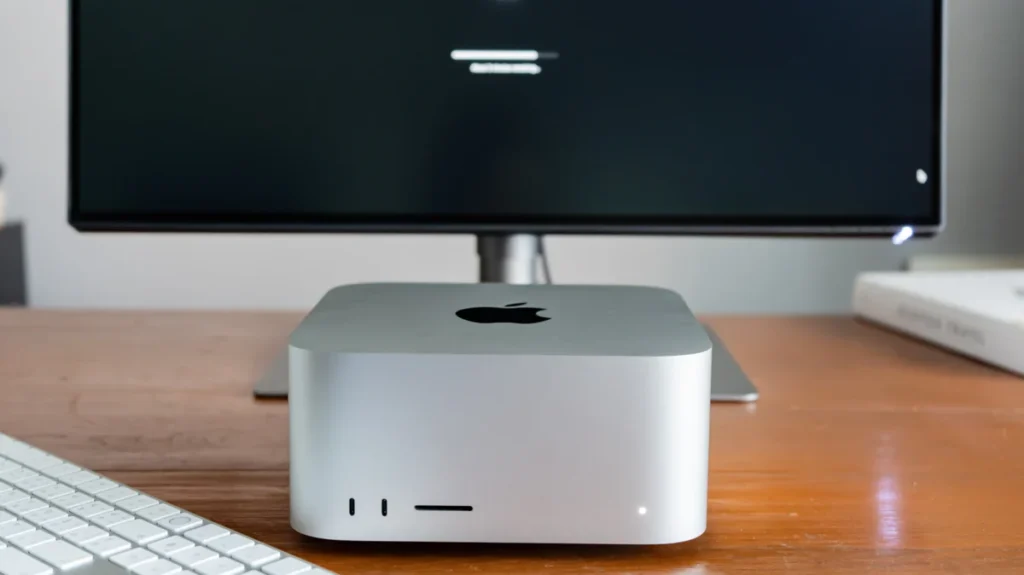
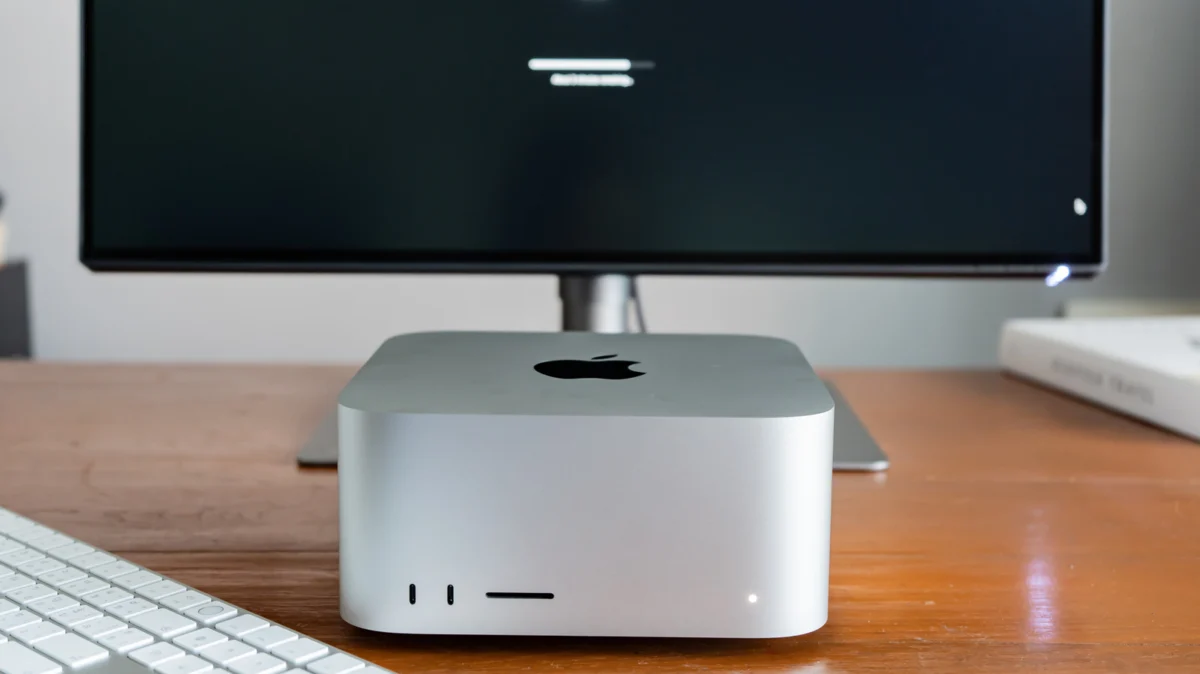
The Apple Mac Studio stands as a testament to a unique design philosophy: if the hardware remains functionally superior and aesthetically timeless, there is no need to reinvent the wheel—or, in this case, the aluminum cube. Since its debut in 2022, the Mac Studio has occupied a precarious yet vital space in Apple’s professional lineup, evolving from a "Mac mini on steroids" into the undisputed flagship of Apple’s desktop computing ecosystem.
Despite undergoing four distinct generational shifts in silicon, the exterior remains remarkably consistent. A 7.7-inch square of precision-machined aluminum, standing 3.7 inches tall, has housed some of the most powerful processors ever conceived for consumer and enterprise computing. While the chassis hasn’t changed, the internal architecture has undergone a radical transformation, driven by the relentless demands of AI development and high-end professional workflows.
The Chronology of Power: A Four-Year Trajectory
To understand the Mac Studio is to understand the rapid acceleration of Apple’s silicon strategy. The journey from the M1 Ultra to the M5 Ultra is not merely a story of faster clock speeds; it is a story of how Apple successfully cannibalized its own legendary Mac Pro line to create a more efficient, high-performance future.
2022: The "Mac mini" that Challenged the Mac Pro
The Mac Studio’s introduction in March 2022 was a watershed moment. Apple introduced the "UltraFusion" architecture—a clever, proprietary interconnect that physically joined two M1 Max dies, allowing 114 billion transistors to operate as a singular, cohesive processor.
The entry-level M1 Max variant offered a robust 10-core CPU and 32GB of memory. However, the M1 Ultra was the star, offering 20 cores and a memory ceiling of 128GB. With a rear I/O array featuring four Thunderbolt ports, 10Gb Ethernet, and an SD card slot, the machine signaled that Apple no longer needed the massive, modular tower design of the traditional Mac Pro to satisfy creative professionals.
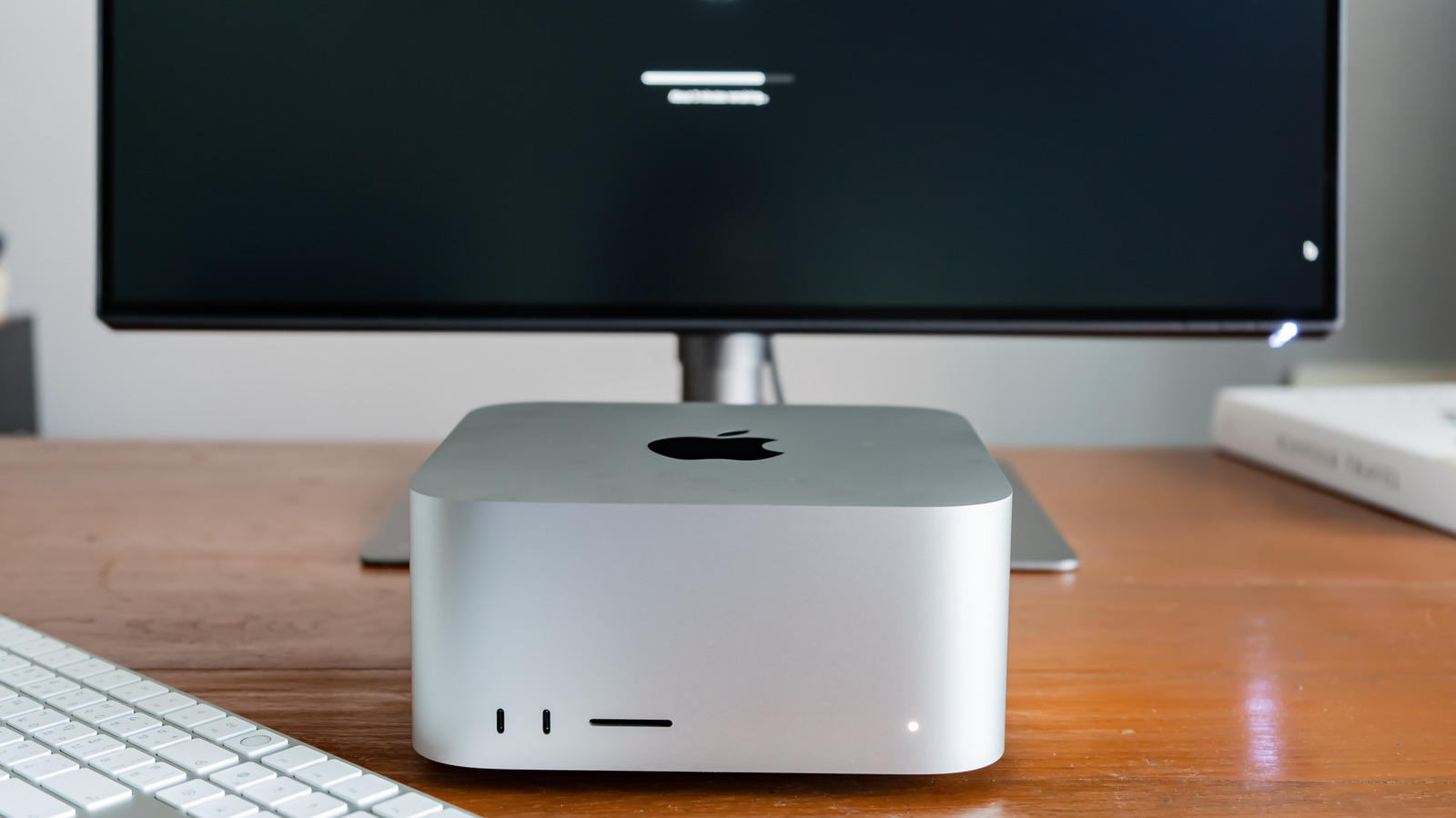
2023: Stability and Scalability
By June 2023, Apple refined the formula. The design remained untouched, but the silicon saw a significant leap. The M2 Max and M2 Ultra architectures arrived, with the latter utilizing 134 billion transistors to support up to 192GB of unified memory. At the time, Apple also unveiled an Apple Silicon-based Mac Pro. It was an awkward moment for the company; the Mac Pro shared the same M2 Ultra chip and memory capacity as the Studio but carried a massive $6,999 price tag compared to the Studio’s significantly lower entry point, effectively positioning the Mac Studio as the "rational" professional choice.
2025: The Year of Mismatched Silicon and Price Shocks
The two-year gap following the M2 release led to a period of instability. When the update arrived in March 2025, it featured a fragmented architecture: an M4 Max chip paired with an M3 Ultra. This was a deviation from the usual synchronized release cycles.
This period was also defined by a sobering economic reality. A global spike in memory costs forced Apple to abandon its $1,999 starting price, hiking it to $2,499. The M3 Ultra-equipped models saw even sharper increases, rising to $5,299. It was the largest price hike in the history of the Mac line, a decision Apple attributed to unprecedented volatility in the semiconductor supply chain.
2026: The M5 Era and the Death of the Mac Pro
In August 2026, Apple solidified its focus with the launch of the fourth-generation Mac Studio, powered by the M5 series. By this time, Apple had officially discontinued the Mac Pro, finally accepting that the future of high-end desktop computing was a compact, non-modular unit. The M5 Ultra is a behemoth, featuring 36 CPU cores, an 80-core GPU, and support for a staggering 512GB of unified memory.
Technical Analysis: Breaking Down the Silicon Roadmap
The technical evolution of the Mac Studio highlights Apple’s transition from general-purpose computing to AI-centric processing.
Memory Bandwidth and Throughput
One of the most critical metrics in the evolution of the Studio is memory bandwidth. The jump from the M3 Ultra to the M5 Ultra is substantial. The current M5 Ultra pushes data at 1.2TB/s, a nearly 50 percent increase over the previous generation. This is essential for modern AI workloads, where the ability to move vast datasets between the GPU and unified memory is the primary bottleneck for performance.
Core Architecture: Beyond Performance and Efficiency
The M5 chip marks a structural departure from previous designs. For years, Apple relied on a simple "Performance and Efficiency" core split. The M5 series introduces "Super Cores"—specialized processors designed to handle heavy-duty AI inferencing and high-bandwidth tasks, operating alongside traditional performance cores. This shift allows the Mac Studio to handle local AI model training that would have been impossible on a desktop computer just three years ago.
Networking and Storage
With the M5 generation, Apple integrated the N1 networking chip, bringing Wi-Fi 7 to the platform. Coupled with Thunderbolt 5, which offers 120Gb/s transfer speeds, the Mac Studio has finally eliminated the I/O bottlenecks that once plagued early Thunderbolt iterations.
Official Responses and Market Context
Apple’s strategy has not been without its critics. The decision to increase prices in 2025 caused significant friction within the professional creative community. In an rare move, Apple representatives briefed The Wall Street Journal regarding these hikes, noting that the component price surge—specifically regarding the HBM (High Bandwidth Memory) required for its Ultra-class chips—was the most dramatic they had encountered in decades.
Furthermore, the decision to discontinue the Mac Pro remains a point of contention. The Information reported that the shift to the M5-powered Mac Studio was largely driven by enterprise demand. Large-scale AI developers and boutique production houses were increasingly demanding machines capable of running local models with low latency. Apple realized that the market for "towers" had effectively evaporated, replaced by the demand for "compute density"—a metric the Mac Studio excels at.
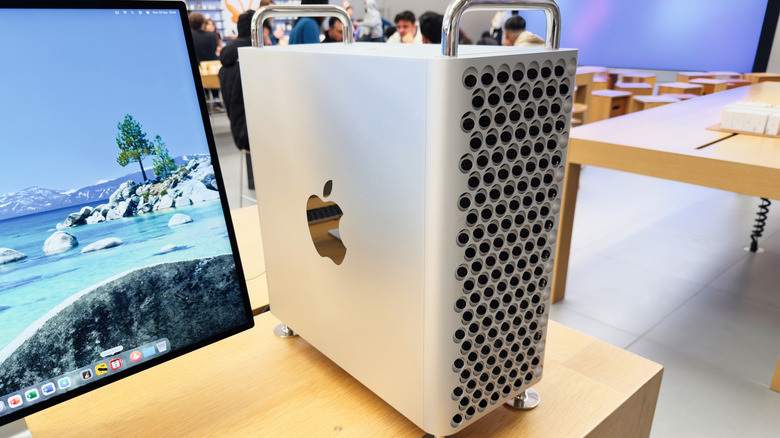
Implications: The Future of the "Pro" Desktop
What does the trajectory of the Mac Studio tell us about the future of computing?
- The End of Modular Hardware: The discontinuation of the Mac Pro signifies that the era of the user-upgradable desktop is effectively over for Apple. The industry is moving toward "System-on-Chip" (SoC) dominance, where performance is derived from the tight integration of memory and processor rather than hardware modularity.
- AI-Driven Hardware Requirements: The rapid escalation in memory capacity—from 128GB in 2022 to 512GB in 2026—proves that AI development is now the primary driver of hardware innovation. Professionals who once needed high-end graphics cards now need raw memory headroom to keep large language models (LLMs) loaded and responsive.
- The Premium Tax: As Apple’s hardware becomes more specialized, it becomes more expensive. The Mac Studio is no longer a mid-tier professional machine; it is a high-cost enterprise tool. The price hikes of 2025 and 2026 reflect a broader reality: the cost of cutting-edge silicon is rising, and that cost is being passed directly to the power user.
Final Thoughts
The Mac Studio has become the silent anchor of Apple’s professional ecosystem. By maintaining the same physical footprint for four generations, Apple has achieved a rare feat: a machine that feels familiar to the user, yet constantly pushes the boundaries of what is possible within the constraints of a small chassis. While the price of entry has risen, the capabilities have scaled exponentially. The Mac Studio is no longer just a computer; it is the primary engine for the next generation of AI-driven creative work, proving that in the world of high-performance computing, the most important changes are almost always those you cannot see from the outside.