
The Silent Sunset: DigitalOcean’s Open Source Credit Program Faces Uncertain Future
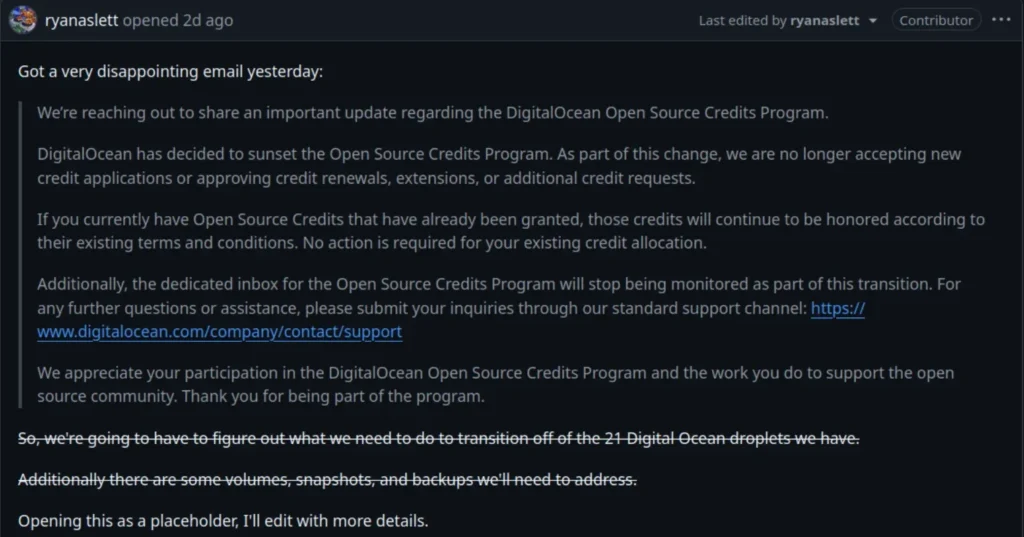
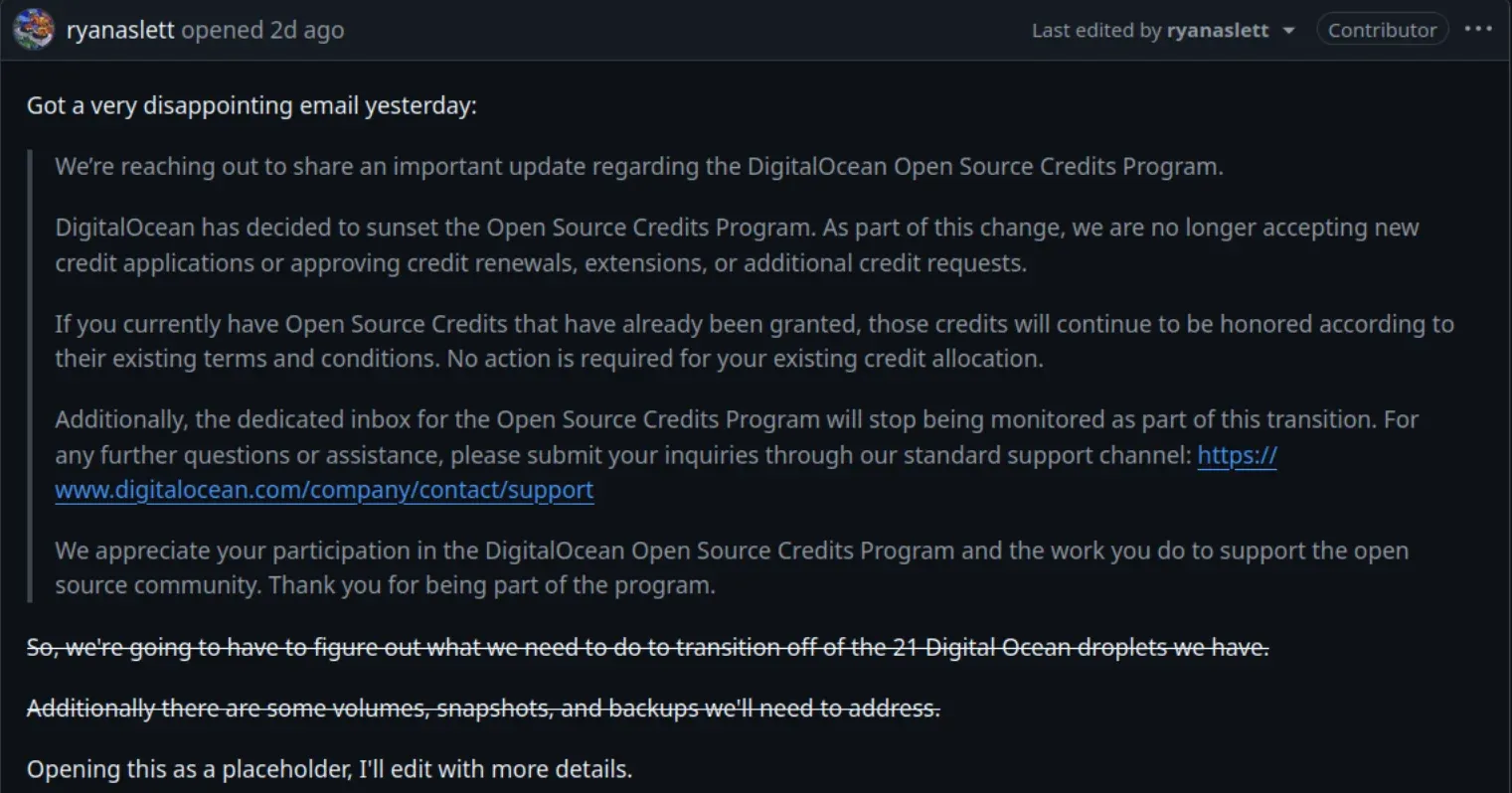
The open-source ecosystem is currently reeling from reports that DigitalOcean, one of the most prominent cloud infrastructure providers for developers, is quietly winding down its long-standing Open Source Credits program. While no formal announcement has been published on the company’s official blog or social media channels, evidence from internal communications within major projects—most notably Node.js—suggests that the company is effectively shuttering the initiative that has powered thousands of community-driven projects for years.
This development marks a significant shift in the relationship between commercial cloud providers and the open-source community, raising concerns about the sustainability of infrastructure-dependent projects that rely on corporate goodwill to keep their build systems, documentation, and testing environments online.
The Anatomy of the Open Source Credits Program
For over a decade, DigitalOcean’s Open Source Credits program functioned as a cornerstone of its community engagement strategy. The model was straightforward: DigitalOcean provided approved, high-impact open-source projects with monthly cloud credits. These credits covered the costs of virtual machines (Droplets), object storage, snapshots, and backup services.
For many projects, this was more than a financial convenience; it was a fundamental pillar of their operations. Node.js, for example, utilized this infrastructure to manage its complex build operations and CI/CD pipelines. By removing the barrier of hosting costs, DigitalOcean allowed maintainers to focus their limited resources on code quality, security, and feature development rather than struggling to secure funding for basic server infrastructure.
The program was mutually beneficial. Projects highlighted DigitalOcean in their documentation, "powered by" badges, and community forums. This exposure acted as a potent marketing engine, introducing millions of developers to the DigitalOcean ecosystem early in their careers. As these developers transitioned into professional roles, they frequently brought their preference for DigitalOcean into their enterprise environments, creating a symbiotic loop of loyalty and growth.
Chronology of a Silent Withdrawal
The first signs of trouble began to surface via private communications sent to project maintainers. The email, which has been cited in various community forums, explicitly stated:

"DigitalOcean has decided to sunset the Open Source Credits Program. As part of this change, we are no longer accepting new credit applications or approving credit renewals, extensions, or additional credit requests."
The Node.js Incident
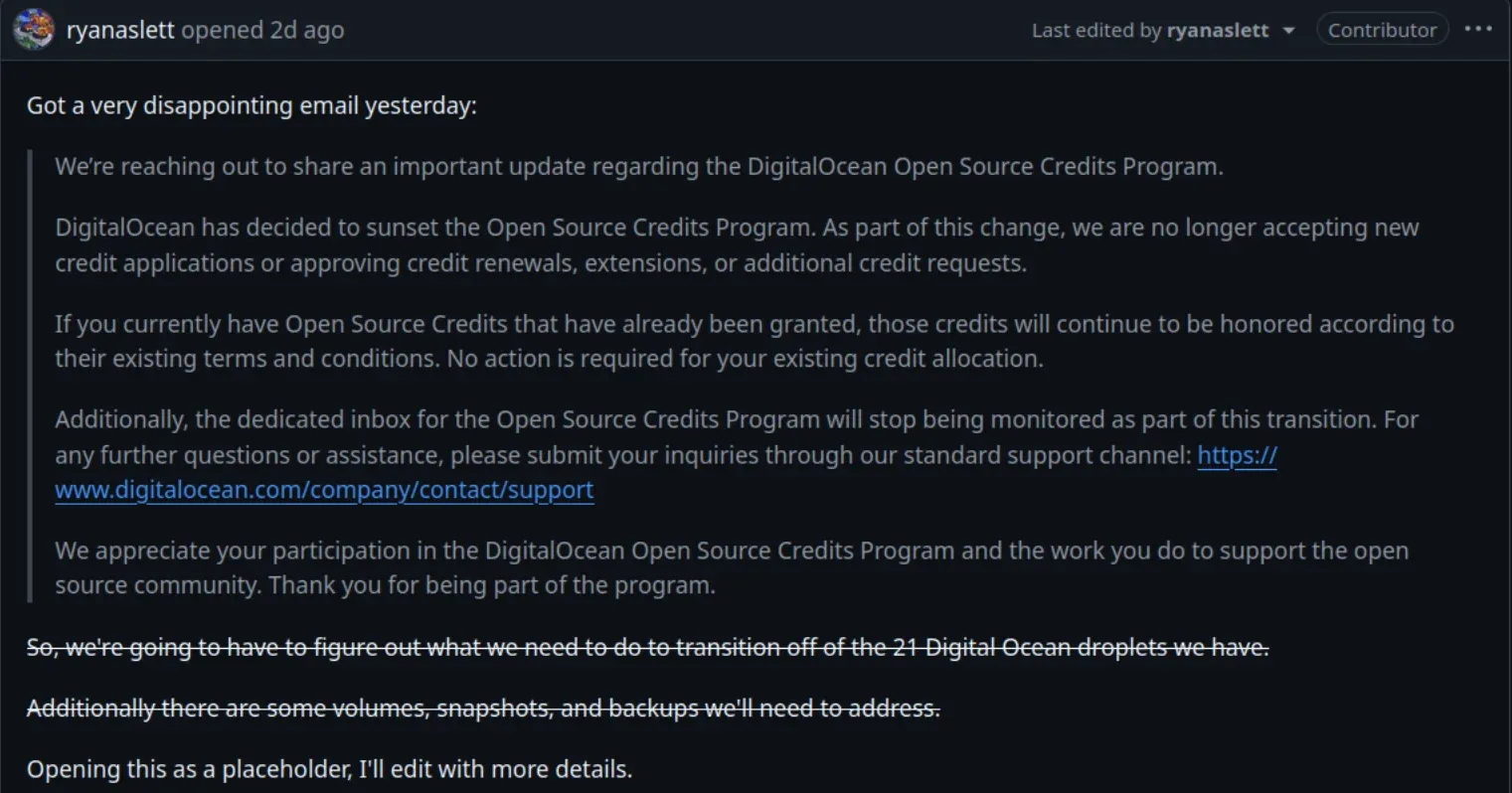
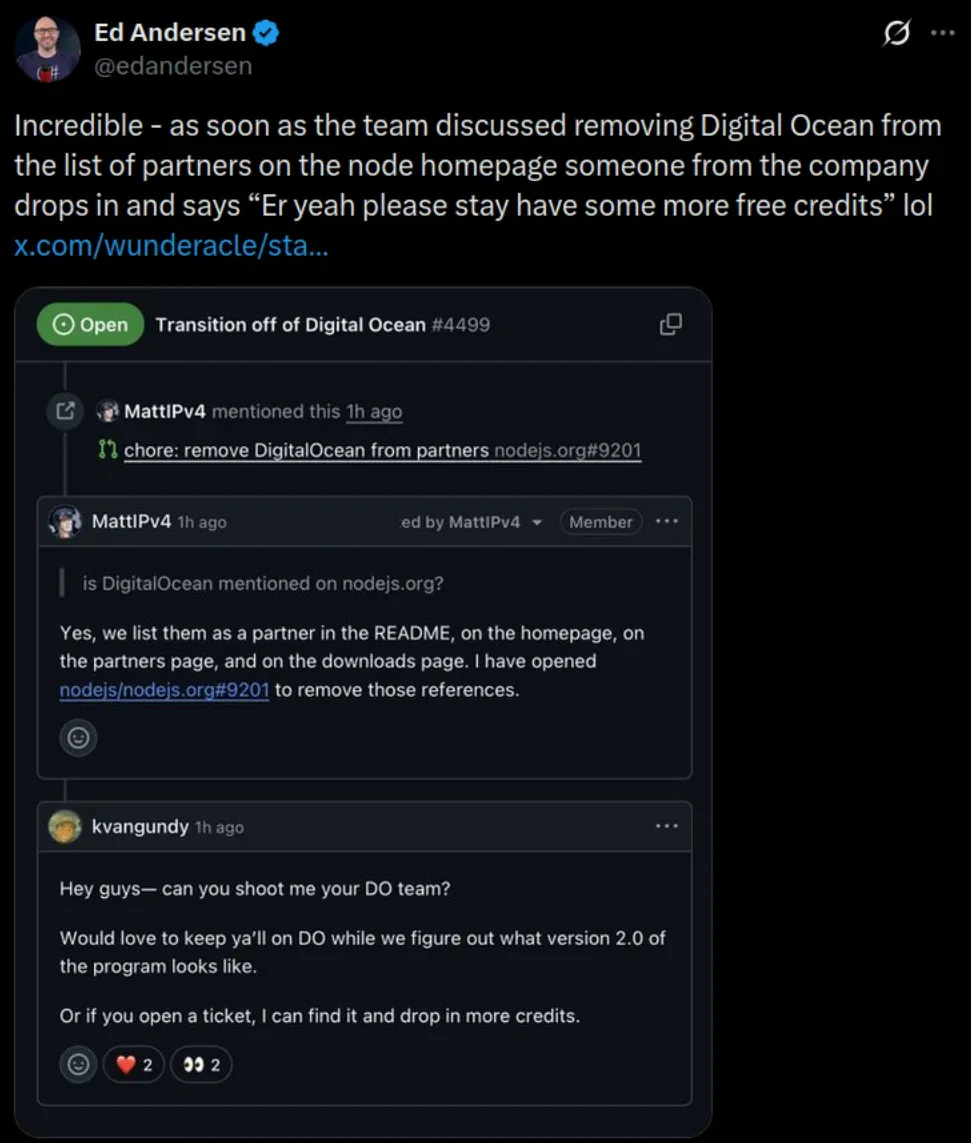
The most public manifestation of this shift occurred within the Node.js project. When maintainers received the sunset notice, they immediately initiated a discussion on GitHub regarding a "transitioning off" strategy. The tone was one of urgency, as the loss of these credits would have forced the project to either find alternative funding or migrate its critical infrastructure to a new provider.
The discussion was candid. Maintainers began drafting plans to remove DigitalOcean branding from the Node.js website and partner pages. It was only after this public move toward dissociation that DigitalOcean intervened. Representatives from the company reached out to the Node.js team, suggesting that a "version 2.0" of the program might be in development.
This intervention caused the Node.js maintainers to rename their tracking issue from "Transitioning off of DigitalOcean" to "Solidify DigitalOcean Partnership." However, for the broader community, the damage to trust had already been done.
A Pattern of Quiet Retrenchment
This is not an isolated event. Observers have noted that DigitalOcean has been steadily trimming its community-facing benefits over the past year. Earlier in 2025, reports emerged that the company had quietly stopped honoring the $200 in free credits previously offered through the GitHub Student Developer Pack.
Similar to the current situation, there was no official press release or public explanation. Students attempting to redeem their benefits simply found the process no longer functional. This pattern of "silent sunsetting" creates a challenging environment for the community, which is left to piece together the company’s strategy through Reddit threads, GitHub issues, and anecdotal evidence.

Implications for the Open Source Ecosystem
The potential total closure of the Open Source Credits program carries profound implications for the software landscape.
The Burden on Maintainers
Open-source maintainers are already facing what many describe as a "crisis of burnout." As noted by industry experts like Daniel Stenberg (the creator of curl), maintainers are increasingly overwhelmed by the influx of "AI slop"—low-quality pull requests and automated bug reports generated by LLMs.
Adding financial uncertainty to this existing burden is a recipe for project abandonment. If a project must suddenly pivot to sourcing funds to pay for its hosting—or worse, migrate its entire build infrastructure—it diverts critical energy away from the software itself. For smaller projects that do not have the clout of Node.js to demand a "version 2.0" conversation, the reality is stark: they must either pay out of pocket or face the prospect of going offline.
The Loss of Goodwill
DigitalOcean built its brand on being the "developer’s cloud." By opting for quiet removal of programs rather than transparent communication, the company risks alienating its core user base. The perception of a company shifting from a community partner to a purely transactional entity can have long-term consequences for its brand equity.
If major projects begin to pull their "powered by" badges and migrate to competitors, the narrative surrounding DigitalOcean could shift from "community champion" to "corporate legacy provider."
Supporting Data: Why Partnerships Matter
The value of these programs is often underestimated by corporate balance sheets. In the case of Node.js, the project serves as a gateway for millions of developers. By hosting their infrastructure, DigitalOcean gained:
- Brand Trust: Association with a foundational technology of the web.
- Talent Pipeline: Developers who grow up using DigitalOcean are more likely to adopt the platform in their professional capacities.
- SEO and Authority: Links from high-traffic open-source documentation sites are invaluable for organic search presence.
When these benefits are quantified, the cost of providing free server credits is often lower than the cost of traditional digital advertising. The decision to cut these programs suggests that corporate leadership may be prioritizing short-term margin improvements over long-term developer loyalty and ecosystem influence.
The Path Forward: What Comes Next?
As it stands, the status of the Open Source Credits program remains in a state of flux. While DigitalOcean has left the door slightly ajar for a potential "2.0" version, the lack of transparency is a cause for concern.
For Affected Projects
If you are a project maintainer who has received a sunset notice, the immediate priority should be auditing your infrastructure costs. Evaluate whether your project can survive on a reduced tier, or if it is time to explore alternative sponsorship programs from other providers like Hetzner, AWS (through their Activate program), or community-focused initiatives like the Cloud Native Computing Foundation (CNCF).
The Demand for Transparency
The open-source community thrives on transparency. If DigitalOcean is indeed revamping its program, it owes the developer community a clear roadmap. Silence only breeds speculation, and in the world of software development, uncertainty is the enemy of stability.
If "version 2.0" is truly coming, it should be launched with the same fanfare that the original program enjoyed. Anything less will be viewed as a hollow attempt to prevent a public relations exodus of high-profile projects.
Conclusion
DigitalOcean stands at a crossroads. By choosing to move away from its historic commitment to open source, it risks dismantling the very community that helped build its reputation. While the Node.js project may have secured a reprieve, the hundreds of smaller, essential libraries and tools that rely on these credits remain in the dark.
The tech industry is watching closely. Whether DigitalOcean chooses to rebuild its relationship with the open-source world or continues its trend of silent retrenchment will define its place in the developer ecosystem for years to come. For now, the message to maintainers is clear: prepare for a more commercialized reality, and ensure your project’s infrastructure is as portable as your code.
Are you an open-source maintainer who has been impacted by these changes? We want to hear from you. Please reach out to our editorial team to share your experience as we continue to track this evolving story.








