
The Impossible Machine: Inside the 8-Bit AVR Laptop Pushing the Boundaries of Microcomputing
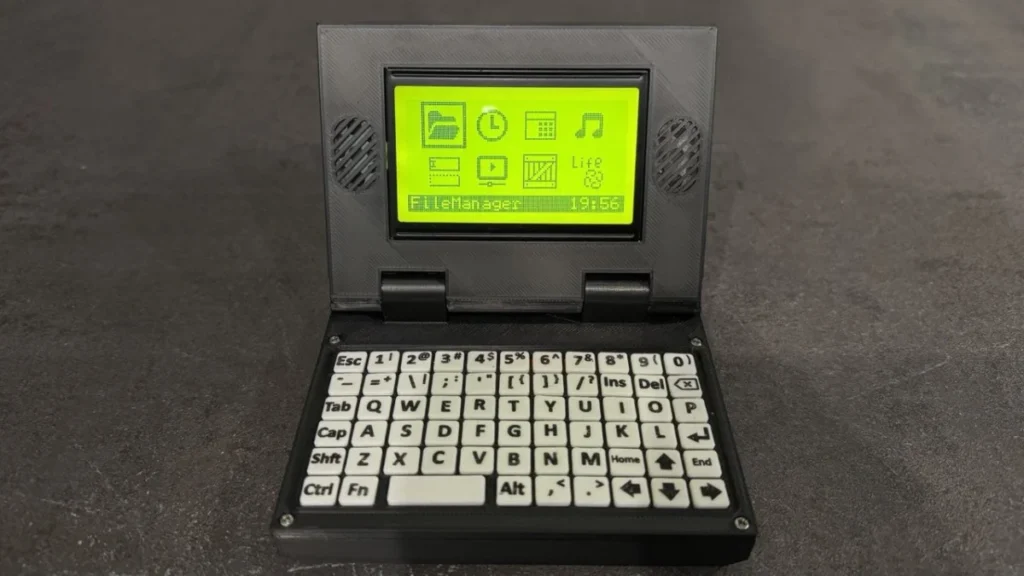
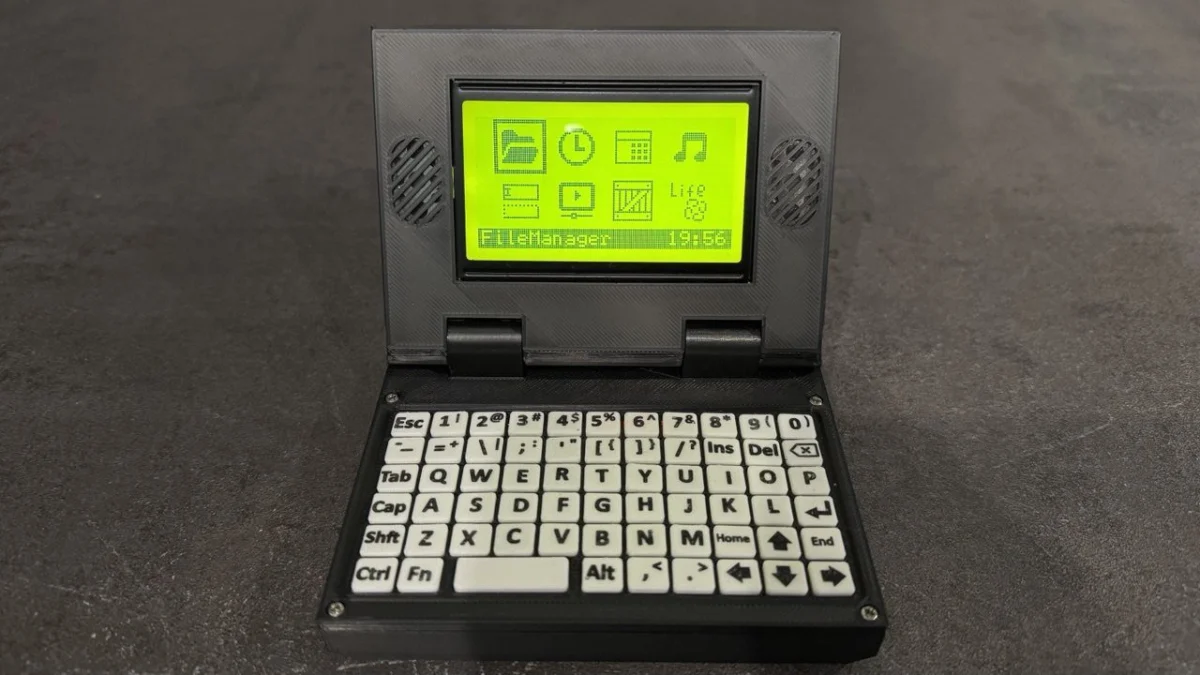
In the modern era of computing, where multi-gigahertz processors and gigabytes of RAM are considered the baseline for even the most basic tasks, the very concept of an "8-bit laptop" feels like a relic of a bygone age. Yet, a new project by developer [Vladimir] has shattered the perceived limitations of low-power hardware. His custom-built "AVR Laptop"—a fully functional, portable computing device powered by an ATmega2560 microcontroller—is currently turning heads across the maker community, demonstrating that with enough ingenuity, even the humblest silicon can perform feats of modern multitasking.
Main Facts: A Symphony of Optimization
At its core, the AVR Laptop is an exercise in extreme engineering. Most laptops rely on complex, multi-core x86 or ARM architectures designed for heavy lifting. Vladimir’s creation, however, utilizes the ATmega2560, a staple of the Arduino ecosystem that typically manages simple sensor arrays or basic automation tasks.
The device functions as a true laptop: it features a display, an input interface, and an operating system capable of multitasking—including gaming, note-taking, and multimedia playback. The system runs on FreeRTOS, a real-time operating system adapted to manage the concurrency required to juggle these tasks. Perhaps most impressively, the laptop achieves 24 frames-per-second (FPS) video playback on a monochrome 128×64 ST7920 LCD. To achieve this, Vladimir had to abandon standard libraries entirely, opting instead for a custom-written driver optimized specifically to squeeze every cycle of performance out of the 8-bit architecture.
Chronology: The Road to the 8-Bit Breakthrough
The development of the AVR Laptop did not happen overnight. It represents the culmination of months of rigorous experimentation, beginning with the fundamental question of whether an 8-bit MCU could handle high-bandwidth data streams like video.
- Phase I: Hardware Foundations: Vladimir began by prototyping the power distribution and interface logic, ensuring the ATmega2560 could communicate effectively with peripheral modules without crashing under the overhead of the I/O.
- Phase II: The Display Hurdle: The primary bottleneck was the display. Standard drivers for the ST7920 were far too bloated for the project’s requirements. Vladimir spent several weeks rewriting the memory management and communication protocols, eventually creating a custom display driver that allowed for direct pixel manipulation at high speeds.
- Phase III: Software Integration: With the display responsive, the focus shifted to the operating system. Implementing FreeRTOS provided the necessary task-switching capabilities, allowing the user to "alt-tab" between a text editor, a game, and a media player.
- Phase IV: Multimedia Optimization: The final phase involved the most difficult task: synchronizing audio and video. By optimizing the data pipeline and minimizing CPU cycles spent on overhead, the device achieved a stable 24 FPS, a feat that, on an 8-bit chip, is functionally equivalent to "magic" for many seasoned firmware engineers.
Supporting Data: Why the ATmega2560?
To understand the gravity of this achievement, one must look at the specifications of the ATmega2560. It features 256KB of flash memory, 8KB of SRAM, and 4KB of EEPROM, running at a clock speed of 16MHz. Compare this to a modern smartphone, which runs in the gigahertz range with gigabytes of RAM, and the discrepancy is staggering.
| Metric | ATmega2560 (AVR Laptop) | Modern Entry-Level Laptop |
|---|---|---|
| Clock Speed | 16 MHz | 2,000 – 3,000 MHz |
| Memory (RAM) | 8 KB | 8,000,000 KB (8GB) |
| Architecture | 8-bit | 64-bit |
| Display Support | 1-bit monochrome | 24-bit / 32-bit color |
The "supporting data" of this project isn’t found in the speed of the chip, but in the efficiency of the code. By utilizing a "bare-metal" approach—where every instruction is accounted for and optimized—Vladimir managed to keep the memory footprint low enough that the OS, the UI, and the media buffers all reside within the 8KB of RAM.
Official Responses and Community Reception
The project, hosted on Hackaday.io, has generated significant buzz. Engineers and hobbyists alike have weighed in on the implications of the build.
"This is the sort of project that reminds us why we started coding in the first place," one community member noted in a forum discussion. "It’s not about the power of the hardware; it’s about the elegance of the solution."
Vladimir has been transparent about the process, documenting the failures and the breakthrough moments on his project log. While the source code is currently pending a final review before public release, the community has already begun analyzing the demo video with scrutiny. The general consensus is one of awe, particularly regarding the display driver, which has been cited as a potential reference implementation for others looking to drive monochrome displays beyond their rated specifications.
Implications: The Future of "Minimalist" Computing
The AVR Laptop serves as a critical counter-narrative to the "bloatware" era of software development. As modern applications become increasingly resource-heavy, often requiring more RAM just to display a text box, the AVR Laptop proves that computing power is often wasted through inefficient abstraction layers.
1. Education and Hardware Literacy
For students and aspiring engineers, this project is a masterclass in hardware-software integration. By removing the safety nets provided by modern high-level operating systems, Vladimir forces the developer to understand exactly how the hardware interacts with memory, display buffers, and interrupts.
2. Embedded Systems Innovation
The techniques used here—specifically the custom display drivers and the real-time task management—have direct applications in the Internet of Things (IoT). As we seek to put more intelligence into low-power devices, the ability to squeeze graphical interfaces and multimedia capabilities out of cheap, 8-bit microcontrollers becomes increasingly valuable for cost-sensitive industrial designs.
3. A Nostalgic Nod to "Funhouse" Computing
The project shares a spirit with legacy systems like SymbOS for the Z80. It explores a "future that never was"—a world where 8-bit machines continued to evolve, becoming increasingly efficient rather than just being replaced by larger, more power-hungry silicon. It challenges the industry to reconsider the definition of "obsolete."
Conclusion: More Than Just a Toy
While the AVR Laptop might not replace a workstation or a MacBook, its value lies in its existence. It stands as a defiant monument to the capability of the individual engineer to master their tools.
When [Vladimir] alt-tabs between a game and a video, he is doing more than just showing off a portable toy; he is demonstrating a fundamental truth about computer science: hardware is a suggestion, but software is the architect. By pushing the ATmega2560 to its absolute physical limits, he has provided a roadmap for what is possible when we strip away the unnecessary layers of the modern computing stack.
As the maker community awaits the release of the source code, the AVR Laptop remains a compelling case study in technical optimization. It serves as an invitation to all developers: look at the hardware you have, strip away the excess, and see what you can truly achieve. The limits of your machine are often only as narrow as your own imagination.







