The Era of Granular Intelligence: OpenAI’s GPT-6 Series and Anthropic’s Claude Opus 5.5 Land on Amazon Bedrock
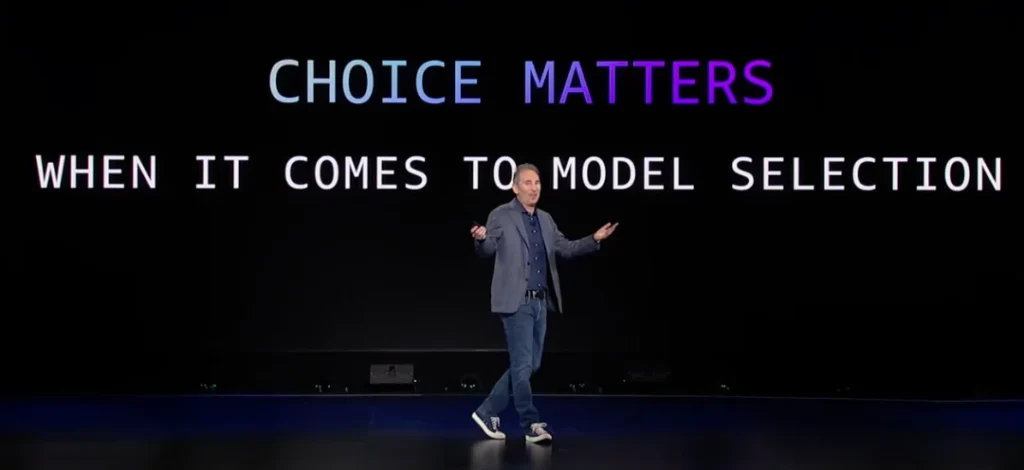
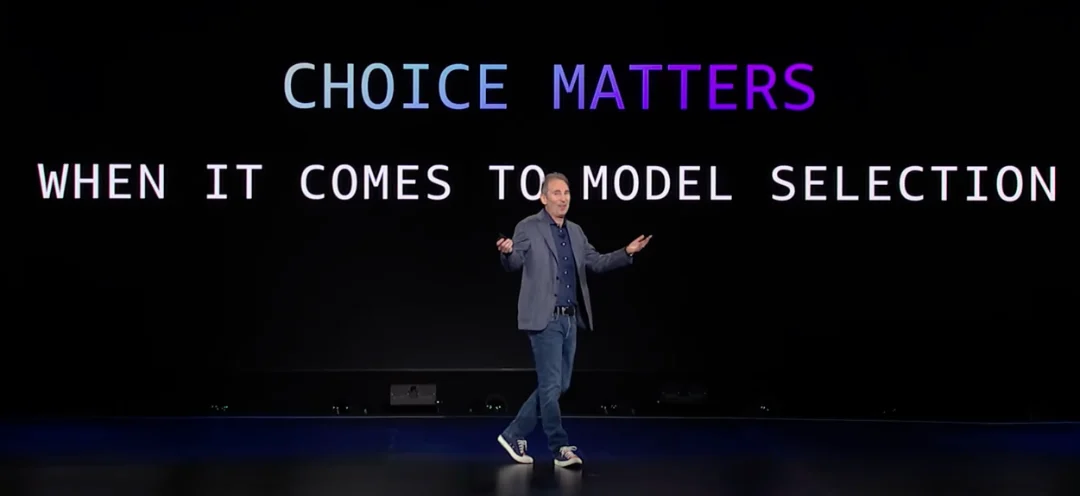
SEATTLE — The defining narrative of the contemporary artificial intelligence landscape has decisively shifted from a raw pursuit of unbounded capability to a nuanced calculus of operational precision. For years, the prevailing industry question centered on a singular metric: How smart is the model? Today, as frontier models proliferate at a dizzying pace, engineering and architectural teams face a far more complex optimization problem: Which specific model fits this exact workflow step, balancing capability, cost, and latency tolerances down to the millisecond?
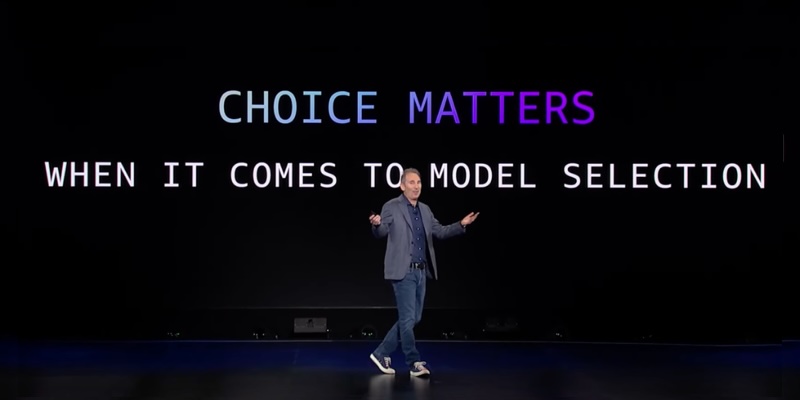
This philosophy of granular choice took center stage this past week as Amazon Web Services (AWS) announced major expansions to its managed AI service, Amazon Bedrock. In a move that underscores the rapid evolution of generative enterprise infrastructure, AWS integrated next-generation powerhouses from industry leaders OpenAI and Anthropic. The new additions include GPT-6 Sol and GPT-6 Luna from OpenAI, alongside Claude Opus 5.5 from Anthropic—the inaugural release in the highly anticipated Claude 5.5 family.
These rollouts represent more than mere incremental version bumps. They signal a maturing ecosystem where enterprises are no longer forced into a binary choice between cost-prohibitive frontier intelligence and less capable, smaller models. Instead, developers are being handed an expansive palette of finely tuned instruments designed to match exact business logic, optimize token economics, and support complex agentic workflows at scale.
Main Facts
The latest updates to Amazon Bedrock introduce three distinct, high-performance frontier models designed to tackle specialized corporate and engineering workloads:
- OpenAI GPT-6 Sol: Engineered specifically for the rigorous, recurring, and context-heavy demands of modern software development and cloud operations (DevOps). It provides advanced reasoning tailored for automated code generation, infrastructure-as-code management, and complex debugging pipelines. Crucially, it debuts at a significantly lower price point than its predecessor, the GPT-5.6 family.
- OpenAI GPT-6 Luna: Optimized for high-volume, focused, and repeatable enterprise tasks. Whether processing customer support streams, extracting structured data from unstructured documents, or executing rapid classification workflows, Luna delivers high-throughput performance at an unprecedented cost-to-performance ratio.
- Anthropic Claude Opus 5.5: The first entry in the Claude 5.5 lineage, this model is fundamentally designed to do more with fewer tokens than its predecessor, Claude Opus 5. Tuned specifically for "agentic coding" and long-running, multi-step autonomous workflows, Opus 5.5 dramatically reduces the operational overhead traditionally associated with maintaining state over extended periods of machine reasoning.
Alongside these model releases, AWS highlighted improvements across its ecosystem, particularly in observability tools designed to monitor, trace, and audit autonomous AI agents operating within enterprise cloud environments.
Chronology: The Acceleration of Managed Model Choice
The journey toward granular enterprise AI on AWS has accelerated dramatically over the past 24 months, transforming Amazon Bedrock from a nascent multi-model hub into the backbone of corporate generative operations.
Early Milestones and the Multi-Model Hypothesis
When AWS initially launched Amazon Bedrock, its core thesis was simple: no single foundation model would rule every use case. Enterprises needed access to diverse architectures—ranging from Amazon’s proprietary Titan models to open-source alternatives and third-party frontier systems like Anthropic’s Claude. This architecture allowed risk mitigation, preventing vendor lock-in while giving developers the freedom to experiment.
The Rise of Reasoning and Agentic Workflows
Throughout the previous year, the industry witnessed the meteoric rise of reasoning-focused models and agentic architectures—systems capable of not just answering prompts, but planning, executing, and correcting multi-step tasks autonomously. As models like DeepSeek-R1 and early versions of OpenAI and Anthropic systems pushed the boundaries of logic, they also exposed bottlenecks in latency and cost. Running heavy reasoning loops for simple classification tasks quickly proved economically unsustainable for large-scale operations.
The Present Watershed: The GPT-6 and Claude 5.5 Era
Last week’s integration of GPT-6 Sol, GPT-6 Luna, and Claude Opus 5.5 marks the current culmination of this trajectory. By introducing models built natively for specific operational tiers—heavy development (Sol), high-volume automation (Luna), and token-efficient agentic execution (Opus 5.5)—AWS and its partners have effectively operationalized the "right-sizing" of artificial intelligence. Enterprises can now orchestrate multi-model pipelines where a fast, cheap model handles initial intake, a mid-tier model manages routine transformations, and a heavy reasoning engine steps in solely when complex architectural decisions are required.
Supporting Data and Economic Mechanics
The economic implications of the latest Amazon Bedrock integrations are stark. For enterprise CIOs and Chief Technology Officers, the economics of generative AI are governed by three primary variables: cost per token, latency (time-to-first-token and throughput), and token efficiency (the number of tokens required to achieve a desired output quality).
Price-Performance Curve Shifts
Historically, moving to a new generation of frontier models meant accepting higher compute costs in exchange for superior intelligence. OpenAI and Anthropic have broken this paradigm with their latest releases:
- GPT-6 Sol and Luna both debut at price points substantially lower than the GPT-5.6 generation. For organizations running millions of API calls daily, this reduction translates directly into margin preservation.
- Claude Opus 5.5 addresses the "token bloat" phenomenon. By achieving higher comprehension and instruction-following capabilities with fewer input and output tokens, enterprises save significantly on both direct API costs and internal networking bandwidth.
Latency and Throughput Reductions
In automated development environments and real-time customer service applications, latency is the ultimate adoption killer. GPT-6 Luna’s architecture has been streamlined for high-frequency operations, cutting execution times for repeatable tasks. Meanwhile, Claude Opus 5.5’s optimization for agentic coding reduces the total number of round-trips required for an AI agent to write, test, and correct a block of code, compressing what used to be a minute-long debugging loop into seconds.
Official Responses and Industry Perspectives
Industry leaders and AWS architects have been vocal about the strategic importance of these rollouts, emphasizing that the era of the monolithic AI deployment is coming to an end.
Daniel Abib, writing in the official AWS News Blog, encapsulated the prevailing sentiment among cloud architects:
"If there’s one theme that defined last week, it’s choice. The frontier models keep arriving, and the interesting question is no longer just ‘how smart is it?’ but ‘which model fits this step, at this cost, at this latency?’ That’s exactly what landed on Amazon Bedrock over the past few days… What I like about all three is that they push toward the same idea: match the model to the job instead of reaching for the biggest one every time."
Enterprise architects using AWS have similarly noted that the availability of fine-grained models on a secure, compliant managed service like Bedrock removes the regulatory friction that often accompanies multi-vendor AI strategies. Organizations can leverage OpenAI’s cutting-edge logic and Anthropic’s deep reasoning capabilities within the secure confines of their existing Virtual Private Clouds (VPCs), ensuring data privacy without sacrificing model performance.

Implications for Enterprise Architecture and the Future of Work
The integration of GPT-6 Sol, GPT-6 Luna, and Claude Opus 5.5 on Amazon Bedrock carries profound implications across multiple dimensions of enterprise technology and business strategy.
1. The Rise of Multi-Model Pipeline Orchestration
Enterprise software architecture is shifting away from single-model integrations toward sophisticated, multi-model routing systems. Rather than routing all user requests to an expensive flagship model, modern applications use lightweight classifiers (such as GPT-6 Luna) to triage incoming workloads. Routine queries are resolved instantly and cheaply; creative writing or advanced coding tasks are dynamically routed to Claude Opus 5.5; and heavy system architecture design is handed off to GPT-6 Sol. This pipeline approach maximizes operational efficiency while keeping cloud AI budgets under strict control.
2. Autonomous Agents Move from R&D to Production
For the past two years, "agentic workflows"—where AI systems execute long-running tasks autonomously—have largely lived in research labs and proof-of-concept environments. The prohibitive cost of token consumption and the tendency of models to drift off-task over extended execution chains made production deployment risky. With Claude Opus 5.5’s token-efficiency tuning and GPT-6 Sol’s robust development capabilities, enterprises now possess the foundational reliability required to push autonomous agents into mission-critical production environments. Software testing, automated CI/CD pipeline remediation, and complex data migration scripts can now be safely delegated to managed AI agents.
3. The Changing Skillset of Cloud Engineers
As AI models become more specialized and granular, the role of the cloud engineer and developer is evolving. The core competency is shifting away from raw prompt engineering toward system orchestration and economic optimization. Engineers must master the art of defining precise model boundaries, establishing rigorous observability frameworks to track agent behavior, and continuously auditing pipelines to ensure that the right model is performing the right task at optimal cost.
Looking Ahead
As the AWS ecosystem continues to expand its offerings—supported by upcoming community events like the AWS Builder Center sessions and developer-focused virtual workshops—the message to builders is clear. The frontier of artificial intelligence is no longer defined by how massive a single model can grow, but by how intelligently an enterprise can harness a diverse ecosystem of specialized models to solve real-world problems.
Stay tuned to the What’s New with AWS and AWS Blogs pages as these capabilities roll out more broadly across global regions in the coming weeks.