
Bridging the Security Gap: How Red Hat’s Lightwell is Revolutionizing Enterprise Dependency Management
In the high-stakes environment of enterprise software, the adage "if it isn’t broken, don’t fix it" has long governed the lifecycle of production applications. However, this stability-first philosophy has created a dangerous byproduct: the "remediation gap." As modern enterprises rely heavily on third-party and open-source libraries—which now account for over 90% of the average codebase—they find themselves trapped between the necessity of keeping systems running and the vulnerability of unpatched code.
Enter Lightwell, a strategic initiative from Red Hat and IBM designed to dismantle this security paradox. By enabling direct, backported patching of essential libraries without forcing upstream version upgrades, Lightwell is fundamentally altering how organizations handle the "known vulnerability" crisis.
The Anatomy of the Remediation Gap
The fundamental problem facing modern IT departments is one of velocity. When a vulnerability is discovered in an open-source library, the timeline between public disclosure and a functional exploit is often measured in days. Conversely, the time required for an enterprise to test, validate, and deploy a new version of that library—which may introduce breaking changes—is often measured in months.
Red Hat’s research indicates that a typical enterprise codebase carries over 500 known vulnerabilities at any given moment. These are not obscure bugs; they are documented security flaws that exist in production codebases, often because the upstream maintainers have moved on to newer versions, leaving older, "pinned" versions without official patches.
"Attacks on known vulnerabilities arrive, on average, a week before any patch even exists," notes the documentation provided by Red Hat. Lightwell serves as the bridge over this chasm. By focusing on backporting security fixes directly into the library versions that enterprises are already running, Lightwell allows organizations to achieve security compliance without the operational risk of a major version upgrade.
Chronology: From Concept to General Availability
The evolution of Lightwell represents a shift in how Red Hat approaches the software supply chain.
- The Conceptual Foundation: Recognizing that AI-driven threats were beginning to scan for and exploit legacy vulnerabilities at machine speed, Red Hat and IBM launched a $5 billion initiative to redefine open-source security in the AI era. Lightwell became the flagship technical response to this challenge.
- The Initial Pilot: For its first phase, Lightwell focused exclusively on foundational Java libraries. By targeting the most pervasive dependencies in the enterprise ecosystem, the team managed to address 400 previously unknown vulnerabilities.
- The Strategic Pivot: Originally, the "Clearinghouse Premier" tier was gated, restricted only to organizations in critical infrastructure sectors. This ensured that the most sensitive data environments were secured first.
- General Availability: As of late 2026, Red Hat has officially lifted the restrictions on Clearinghouse Premier. The Lightwell Network, which offers self-service access to backported patches, has been available since July. With both tiers now generally available, the platform is transitioning from a specialized tool to a standard component of the enterprise security stack.
Supporting Data: Why "Patch-in-Place" is the Future
The shift toward "patch-in-place" is supported by clear economic and technical data. In a legacy update model, an organization must perform a full regression test of their entire application every time a dependency is updated to fix a security flaw.
Lightwell’s methodology bypasses this. By delivering security-only patches that are binary-compatible with the existing, pinned versions of libraries, Red Hat allows the infrastructure to remain identical while the vulnerability surface is reduced.
Furthermore, the scale of the operation is massive. With 400 vulnerabilities already neutralized in the Java ecosystem alone, the impact on the "Total Cost of Ownership" (TCO) for secure software is significant. Instead of spending thousands of engineering hours refactoring code to accommodate new library versions, developers can deploy a verified, backported fix in a fraction of the time.
Official Responses and the AI Threat Vector
The urgency behind the Lightwell initiative is perhaps best articulated by Gunnar Hellekson, Vice President and General Manager for Lightwell at Red Hat. Hellekson has been vocal about the role of Artificial Intelligence in changing the security calculus.
"AI agents shifted the threat landscape overnight," Hellekson stated during a recent press briefing. "They do not care if a codebase is ten years old or otherwise considered stable. They exploit old dependencies at machine speed. They are searching for that one small crack, and once they find it, they chain it together with other vulnerabilities to create a full-scale breach."
This perspective highlights why Lightwell is not just a convenience tool, but a survival mechanism. Red Hat and IBM are positioning the platform as a direct response to the "AI-augmented attacker." By providing an automated pipeline for backported fixes, Red Hat is effectively neutralizing the advantage currently held by automated exploitation tools.

The Clearinghouse: A Tiered Approach to Security
To understand the impact of Lightwell, one must look at its two distinct delivery mechanisms:
The Lightwell Network
The Lightwell Network is the entry point for most organizations. As a self-service subscription, it provides developers and security teams with immediate access to a repository of verified, backported patches. It includes the necessary compliance documentation required for enterprise auditing, making it an essential tool for CI/CD pipelines that need to maintain a "clean" security scan status.
Clearinghouse Premier
Clearinghouse Premier is designed for high-compliance environments. Unlike the broader Network, Premier allows organizations to:
- Prioritize Specific Vulnerabilities: If an enterprise has a unique dependency stack, they can work with the Lightwell team to ensure that the most critical vulnerabilities for their specific environment are addressed first.
- Receive Early Notice: Before a vulnerability becomes public knowledge, Premier subscribers receive notification and, in many cases, early access to the patch.
- Predictable Patching: Organizations gain insight into the roadmap, knowing exactly when a fix for a specific library will be available.
Implications for the Future of Open Source
The success of Lightwell has broader implications for the open-source community. Red Hat has committed to a policy of responsible disclosure and upstream contribution. When Lightwell developers engineer a fix for a legacy library, that fix is not kept behind a corporate wall—it is contributed back to the original upstream project whenever possible.
This creates a virtuous cycle. Even if a project is no longer actively maintained, Red Hat’s investment in backporting ensures that the code remains secure for the entire ecosystem, not just those who pay for the subscription.
Roadmap: Beyond Java
While Java has been the primary beneficiary of Lightwell to date, the roadmap is clear. Red Hat is actively moving to incorporate:
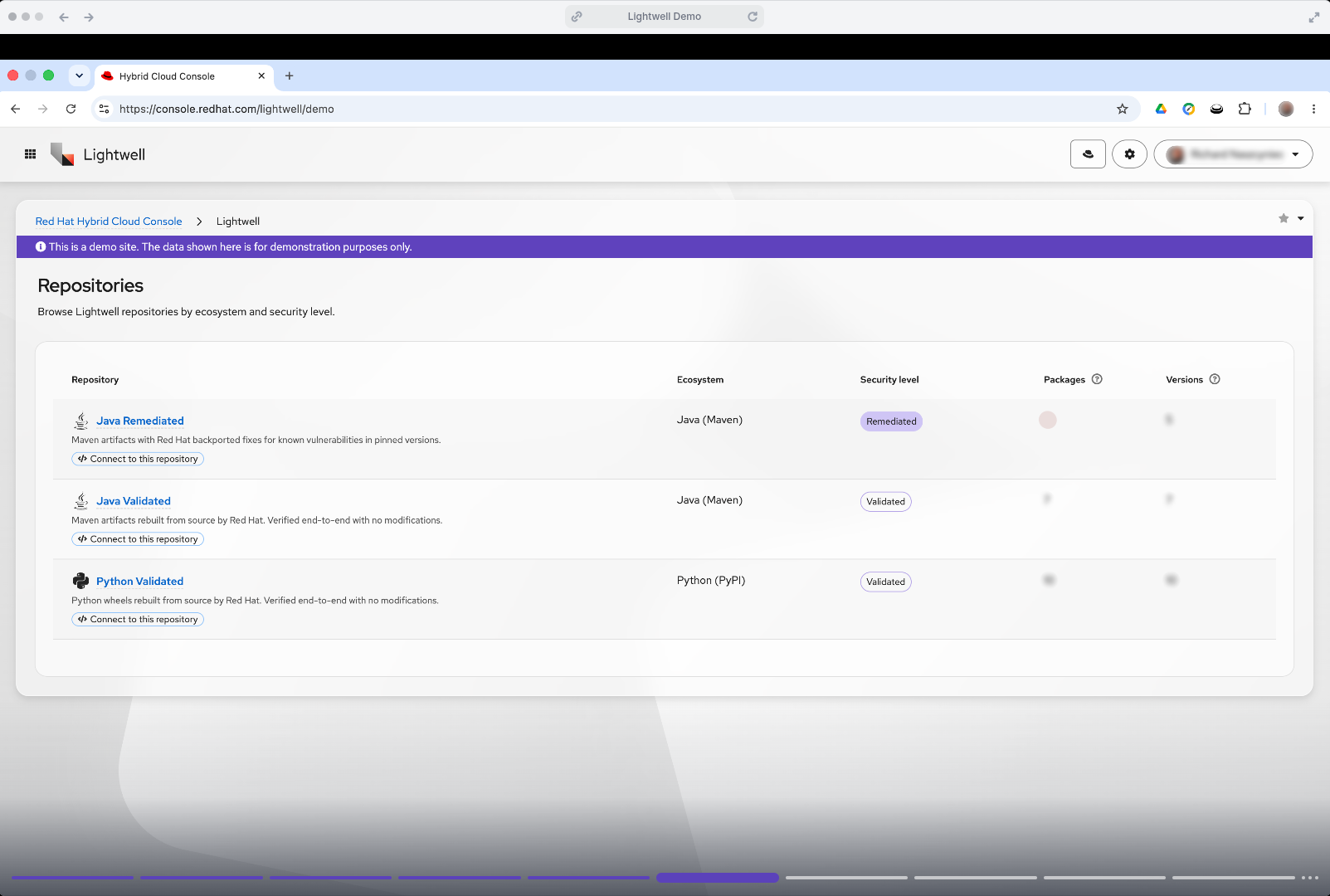
- Python: Addressing the massive number of vulnerabilities in the PyPI ecosystem.
- JavaScript (Node.js): Targeting the complex dependency trees of modern web applications.
- .NET: Expanding into the enterprise-heavy Microsoft development landscape.
Conclusion: A New Standard for Enterprise Resilience
The launch of Lightwell represents a maturation in how we view the relationship between enterprise software and open-source maintenance. For too long, the industry has relied on the hope that upstream maintainers would provide timely patches for legacy code. That hope has proven insufficient in the face of automated, AI-driven cyber warfare.
By taking responsibility for the lifecycle of these dependencies, Red Hat and IBM are not just selling a service; they are providing a necessary service to the digital infrastructure. As the platform expands into Python, JavaScript, and .NET, the barrier to entry for securing legacy systems will drop significantly.
For the CIO, the CTO, and the security architect, the message is clear: the era of the "unpatchable" dependency is coming to an end. Whether through the self-service Lightwell Network or the tailored precision of Clearinghouse Premier, the tools to close the remediation gap are now firmly in place. Organizations that leverage these capabilities will find themselves significantly more resilient in an increasingly hostile digital landscape, turning their once-brittle legacy code into a hardened, defensible asset.








