
Vinix: The Bold Attempt to Build a Minimalist, Non-Linux Future for Apple Silicon
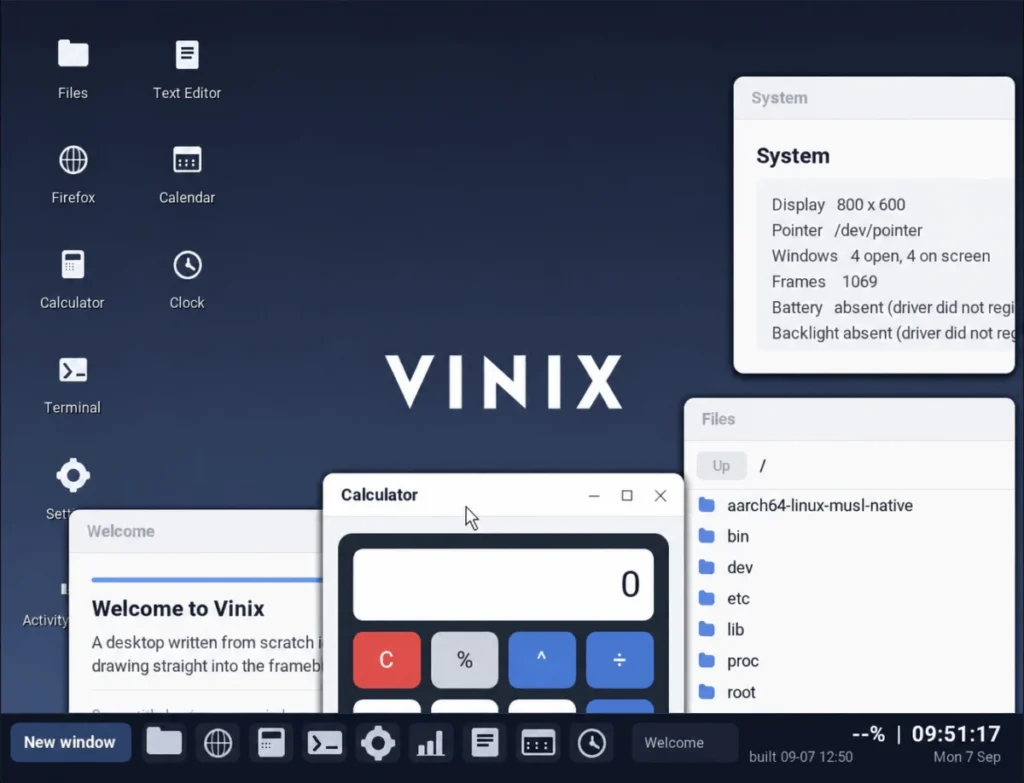
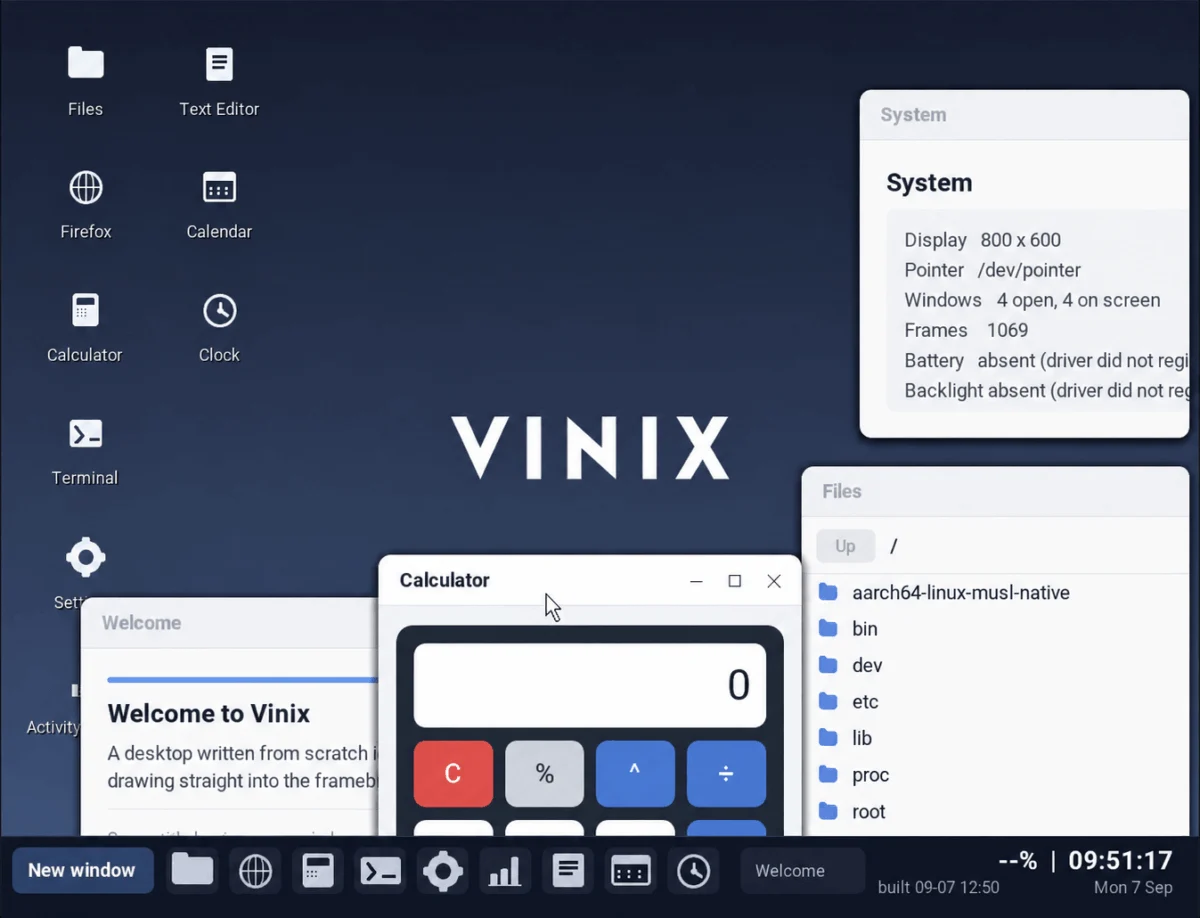
In the landscape of modern computing, the dominance of the Linux kernel is absolute. From the smartphone in your pocket to the supercomputers powering global AI research, Linux is the connective tissue of the digital world. However, a small, ambitious project known as Vinix is challenging the status quo.
Vinix is an experimental, open-source operating system written primarily in the V programming language. It is not a Linux distribution, nor is it a Unix clone in the traditional sense. Instead, it is a custom-built monolithic kernel designed to run on Apple Silicon hardware, offering a minimalist, high-performance alternative to an increasingly bloated macOS. By successfully implementing Linux-compatible features—such as namespaces, cgroups, and system calls—Vinix has achieved the "impossible": running native Linux binaries, including the Alpine Linux Docker engine, without a kernel-level virtualization layer.
The Genesis of a New Ecosystem
To understand the significance of Vinix, one must look at the problem it intends to solve. Modern desktop operating systems, including macOS and many Linux distributions, have grown increasingly resource-intensive. For users of Apple Silicon—the M-series chips that have revolutionized performance per watt—there is a growing desire for an environment that is as lean as the hardware itself.
The project was sparked by a desire to return to "bare metal" efficiency. The core motivation is simple: macOS is becoming heavy, and Linux users are often forced into complex setups involving systemd and massive, multi-layered abstraction stacks. Vinix proposes a different path—an operating system where the kernel is small enough for a single developer to audit, where nothing runs in the background unless explicitly started, and where memory management is handled manually to avoid the performance interruptions associated with garbage collection.
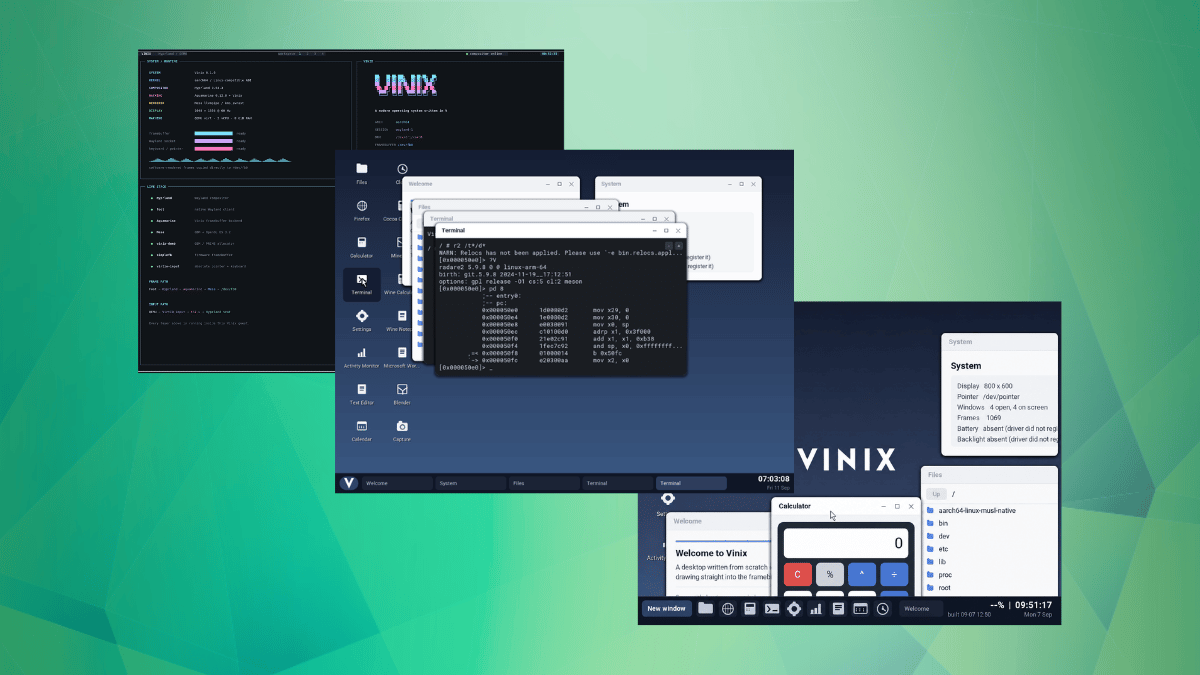
Chronology: From Mintsuki to Vlang
The development history of Vinix is a tale of two distinct eras. The project’s foundations were laid in March 2021 by the developer Mintsuki, the renowned creator of the Limine bootloader. Mintsuki’s initial work established the kernel’s core architecture, specifically the physical and virtual memory managers and the task scheduler.
Following this initial burst of activity, the project entered a two-year hiatus. The silence was broken when Alexander Medvednikov, the creator of the V programming language, assumed the role of maintainer. Medvednikov saw in Vinix not just an operating system, but a "stress test" for the V language itself.
Since the handover, the project has accelerated significantly. The development team has added robust storage, networking, input, and graphics stacks. They transitioned from a proof-of-concept kernel to a functional Unix-style userspace, culminating in the current ability to run Alpine Linux aarch64 packages natively.
Technical Architecture and Implementation
At its core, Vinix is a masterclass in minimalist design. It is booted through the Limine bootloader, which provides a modern, clean interface for loading the kernel image.

The V Language Foundation
The choice of the V programming language is central to the Vinix philosophy. V is known for its fast compilation times and readable, C-like syntax. By using V, the developers have created an environment that avoids the overhead of garbage collectors. In a standard OS, garbage collection cycles can interrupt system calls or cause "stutter" in the compositor. By handling memory manually, Vinix ensures that the OS remains responsive, even under heavy load.
Bridging the Linux Gap
One of the most impressive technical feats of Vinix is its compatibility layer. Despite not being based on the Linux kernel, Vinix implements enough of the Linux system call interface—alongside support for the ELF binary format and the musl C library—to trick Linux binaries into believing they are running on a standard Linux environment.
This has allowed for the implementation of:
- Namespaces and Cgroups: These allow the OS to containerize processes, effectively enabling the Docker engine.
- OverlayFS and Seccomp: Essential security and file system features that ensure Docker containers operate within expected boundaries.
- Native Execution: Unlike virtualization, which incurs a performance tax, Vinix runs these binaries natively.
Performance Metrics
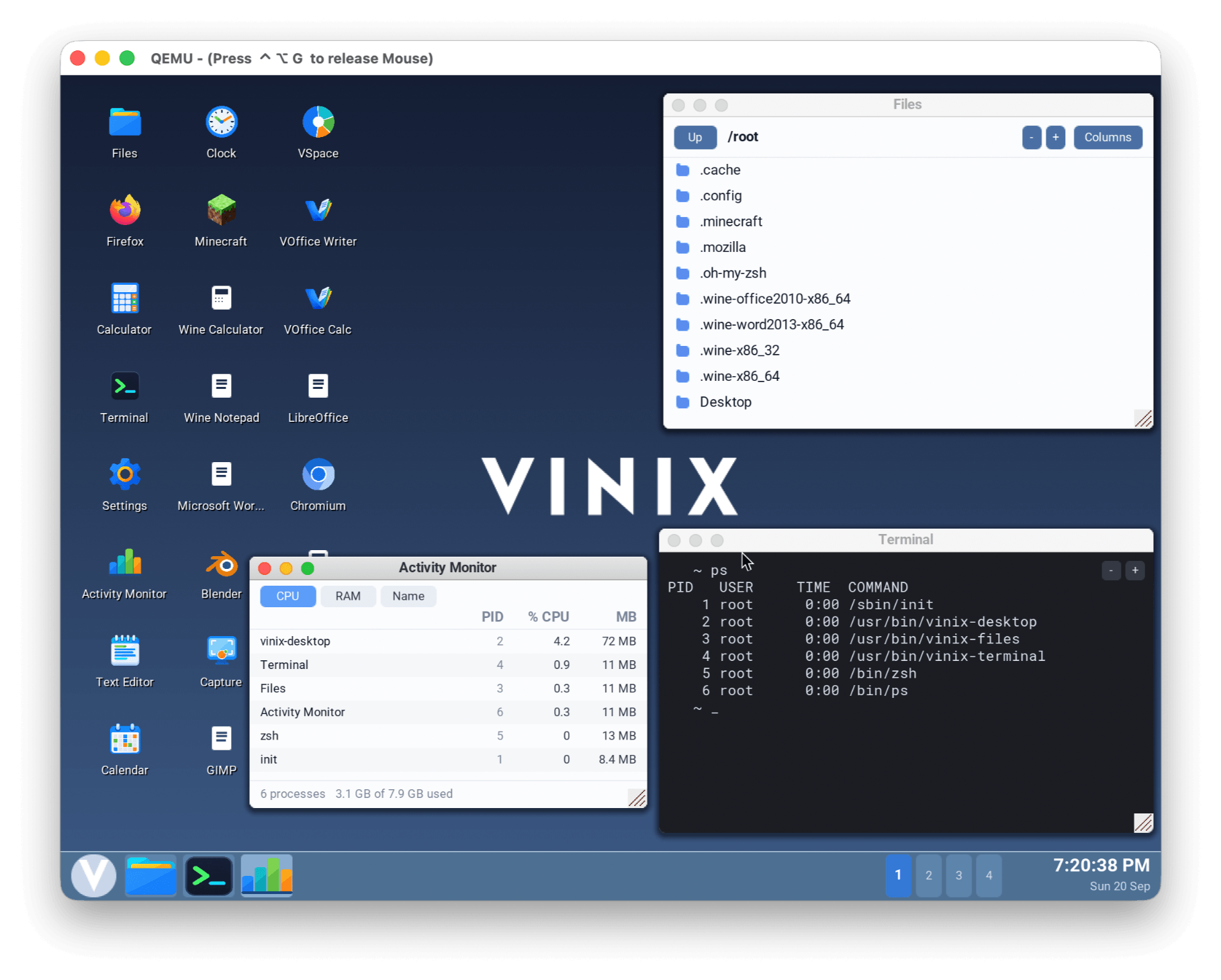
The system is remarkably efficient. Post-boot, the entire OS consumes roughly 50 MB of RAM, and a full installation occupies only about 1 GB of disk space. This is a stark contrast to modern desktop environments that can consume several gigabytes of RAM before a user even opens a web browser.
Current Limitations and Challenges
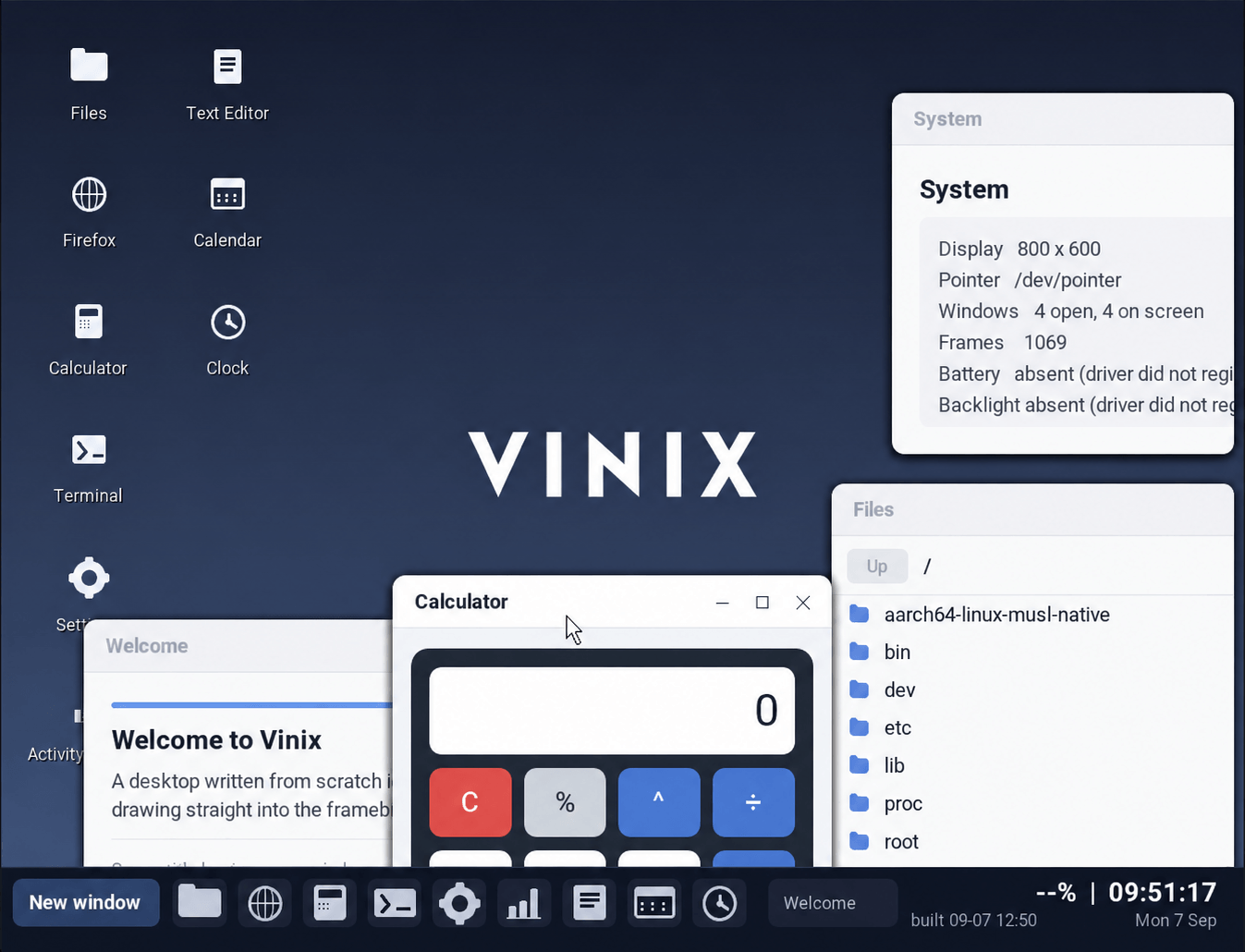
Despite its impressive capabilities, Vinix is strictly early-stage software. It is not currently intended for daily use or production environments. The list of "missing" features is significant:
- Networking and Security: While the Docker engine runs, it currently lacks bridge networking and iptables support, which limits its utility for complex multi-container orchestration.
- GPU and Hardware Support: While it works on M1 chips, drivers for the M3, M4, and M5 generations are still in the early development phases. GPU acceleration is also a work in progress, meaning graphics-heavy applications currently rely on software rendering.
- Security Verification: While the developers have modeled the security architecture after OpenBSD—incorporating features like
pledgeandunveil—the system does not yet support verified boot (checking the integrity of the bootloader, kernel, and root filesystem). - Emulation: QEMU support is currently limited to software emulation, which is sufficient for testing but not for performance-intensive virtualized workloads.
Implications for the Future of Desktop OS
The existence of Vinix poses an interesting question: Do we need a monolithic, bloated kernel to run modern applications?
By proving that a lightweight, custom-built kernel can support the Linux ecosystem, Vinix suggests that the future of operating systems could be far more modular. If a developer can write an OS in a language like V, maintain a tiny footprint, and still run the vast library of Alpine Linux apps, it challenges the necessity of the massive, decades-old Linux kernel for every desktop scenario.
A Testbed for Bare Metal
Beyond being a usable OS, Vinix serves as a living laboratory. It demonstrates that the V programming language is capable of handling the rigors of kernel-level programming. As the project matures, it may influence how other projects approach system-level programming, favoring safety and performance over the traditional, often messy, C-based inheritance found in many Unix-like systems.
Impact on Apple Silicon
For Apple Silicon users who are frustrated by the closed-source nature of macOS and the limitations of existing Linux-on-ARM projects, Vinix offers a third way. It is a "homegrown" OS that respects the hardware’s speed while providing the user with total transparency. It is the antithesis of the "black box" approach favored by Apple.
How to Get Involved
The Vinix team provides several ways for enthusiasts to explore the project.
- For Apple Silicon Users: The official website offers a
.dmginstaller specifically for M1-based Macs. - For Virtualization: The project repository hosts ISOs optimized for QEMU and VirtualBox, making it easy to test on existing x86_64 or ARM64 systems.
- Building from Source: Because the project is transparent, users are encouraged to clone the repository and compile the system themselves. This is the best way to understand the underlying V-language architecture.
Conclusion
Vinix is an audacious project. It is trying to build a modern, high-performance operating system from the ground up, using a young programming language, all while maintaining compatibility with the world’s most popular containerization engine. While it is far from being a "daily driver," its progress to date is a testament to the power of minimalist engineering.
In an age where software complexity is increasing exponentially, Vinix serves as a reminder that speed and efficiency are not just relics of the past—they are achievable goals, provided one is willing to strip away the layers of bloat that have come to define modern computing. Whether Vinix ever becomes a mainstream operating system is secondary to the fact that it proves we can, and perhaps should, demand more from the software that powers our hardware.
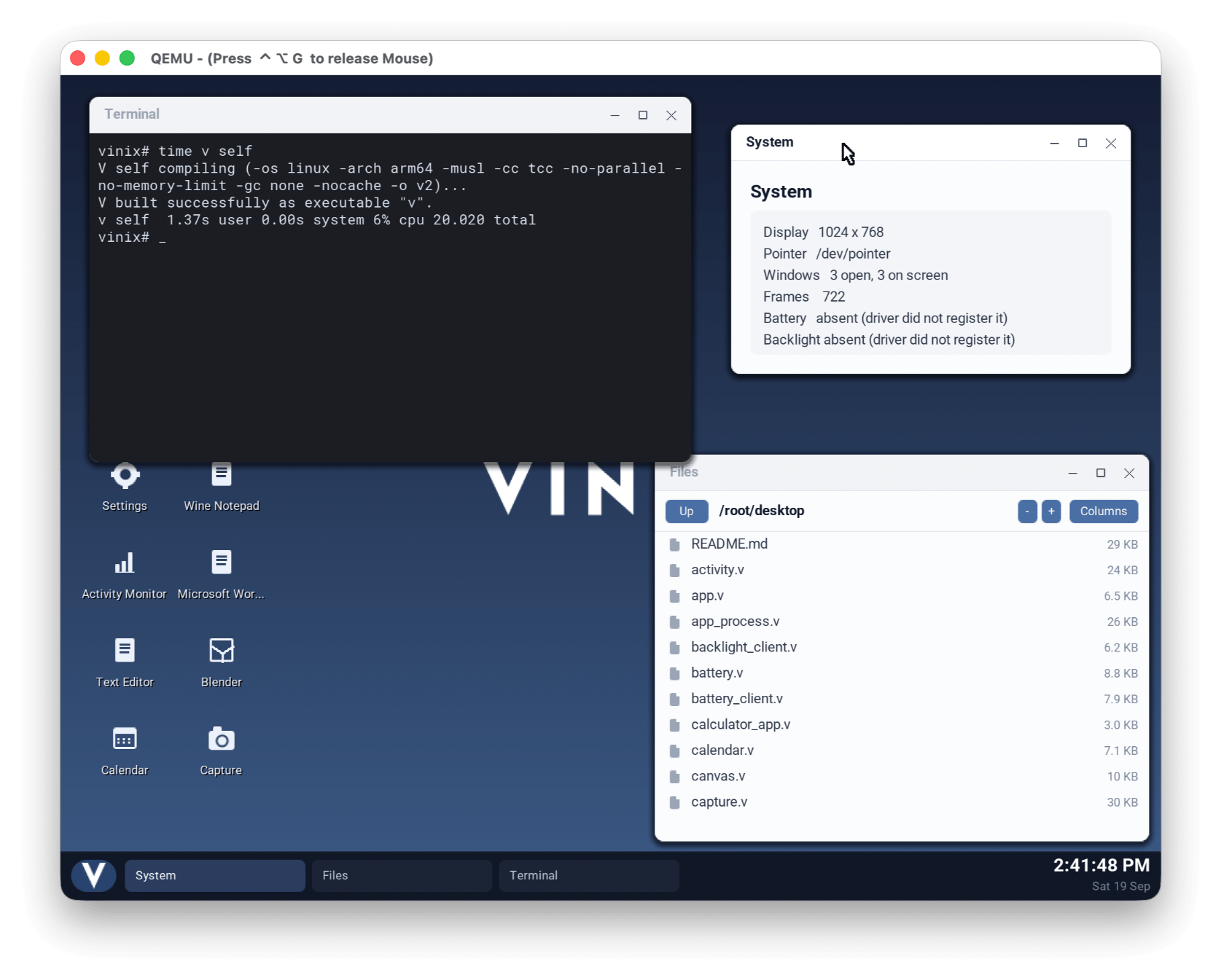
For now, Vinix remains a playground for the bold, a masterclass in the V programming language, and a fascinating look at what an operating system can be when it is built with nothing but efficiency in mind.








