Breaking Down Data Silos: Amazon Aurora PostgreSQL Introduces Direct Querying of Data Lakes via Embedded DuckDB
SEATTLE — In a major development for database administrators and cloud architects alike, Amazon Web Services (AWS) has announced a powerful new capability for Amazon Aurora PostgreSQL. The service now allows direct querying of operational data alongside data stored in data lakes—specifically in Apache Iceberg and Apache Parquet formats—using standard PostgreSQL applications and developer tools.
By embedding the high-performance analytical engine DuckDB directly into Aurora PostgreSQL, AWS has eliminated the historical friction of building, maintaining, and scaling complex Extract, Transform, and Load (ETL) pipelines. Organizations can now query live operational records and archived data lake storage in a single query, entirely from within a unified, familiar interface.
Main Facts
The newly announced feature bridges the traditional gap between transactional relational databases and analytical data lakes. Key elements of the release include:
- Elimination of ETL Pipelines: Organizations no longer need to extract data from operational databases into data lakes—or build reverse-ETL pipelines to pull historical data back into operational systems—saving both engineering hours and infrastructure costs.
- DuckDB Integration: Powered by the technology of DuckLabs (the team behind the DuckDB project, which recently joined Amazon), the analytical engine is embedded directly within Aurora PostgreSQL. This execution happens locally without extra network hops.
- Broad Format and Catalog Support: The feature natively reads Apache Iceberg tables (managed via the AWS Glue Data Catalog or Iceberg REST Catalog-compatible catalogs) as well as Parquet files stored in Amazon S3 and S3 Tables.
- Smart Optimizations: Aurora applies advanced performance techniques, including predicate pushdown and column pruning, ensuring that only relevant data blocks are scanned and read. Frequently accessed data is intelligently cached locally within the Aurora instance.
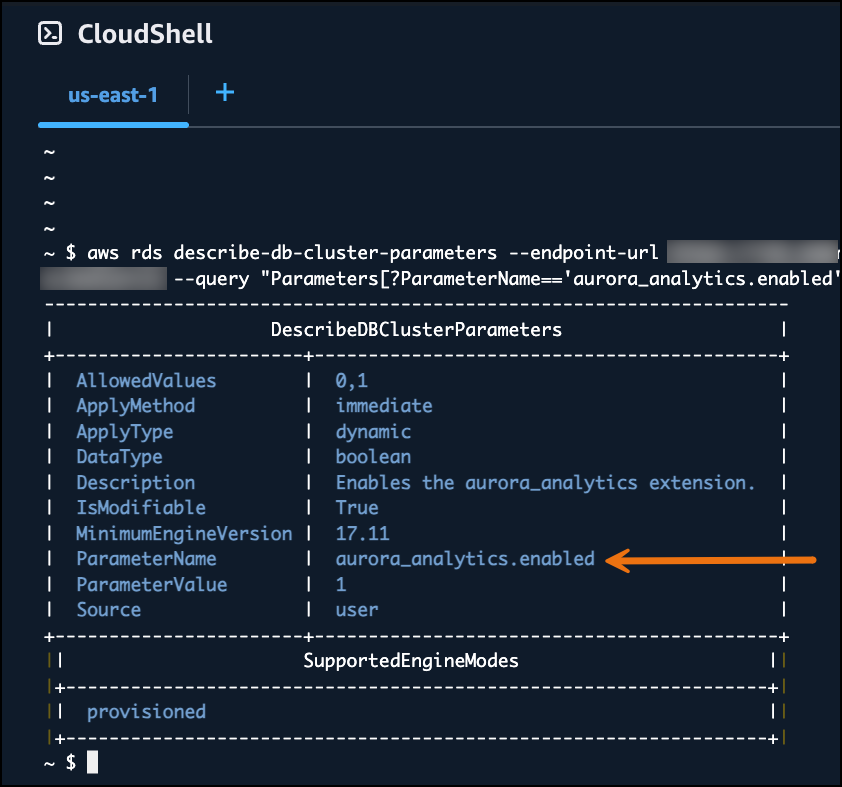
- Version Availability: The capability is supported on Aurora PostgreSQL major versions 17 (starting with version 17.11) and 18 (starting with version 18.6) across all commercial AWS and AWS GovCloud regions at no additional software charge.
Chronology and Strategic Context
The convergence of operational databases and analytical data storage has been a moving target for enterprise architects over the past decade.

- The Historical Era of Silos: Historically, relational databases like PostgreSQL were optimized for low-latency transactional workloads (OLTP), while massive analytical datasets were offloaded to cheap object storage like Amazon S3 and queried via data warehouses or query engines like Amazon Athena.
- The Rise of Reverse ETL: As applications required historical context—such as customer support tools needing five years of purchasing behavior alongside live cart data—developers resorted to complex reverse-ETL pipelines. These pipelines duplicated data, bloated storage expenses, and introduced synchronization delays.
- The AI Imperative: The recent explosion of generative AI and autonomous AI agents accelerated the pain points of traditional architecture. AI agents frequently require dynamic access to both live transactional states and deep historical records. Pre-replicating or predicting every dataset an agent might query became practically impossible.
- The DuckLabs Acquisition & Integration: The turning point arrived when DuckLabs joined Amazon. By integrating the efficient, vector-optimized analytical capabilities of DuckDB directly into the Aurora PostgreSQL engine, AWS bridged the architectural divide, allowing transactional and analytical worlds to coexist natively.
Supporting Data and Technical Architecture
Under the hood, the architecture is designed for transparency and developer familiarity. Setting up the feature requires just a few foundational steps:
- Prerequisites: A user provisions an Aurora PostgreSQL cluster running version 17.11+ or 18.6+, attaches an Identity and Access Management (IAM) role with the
AuroraAnalyticsfeature enabled (granting read permissions to Amazon S3 and the AWS Glue Data Catalog), and creates the extension:CREATE EXTENSION aurora_analytics; - Schema Inferences: Rather than manually mapping columns for external files, users can point to S3 data using foreign tables with automated schema inference:
CREATE FOREIGN TABLE transaction_history () SERVER aurora_analytics_server OPTIONS ( location 's3://<my-bucket>/finance/transaction_history.parquet', format 'parquet' ); - Unified Execution: Developers can write standard SQL queries that perform unions or joins across operational tables and external data lakes seamlessly:
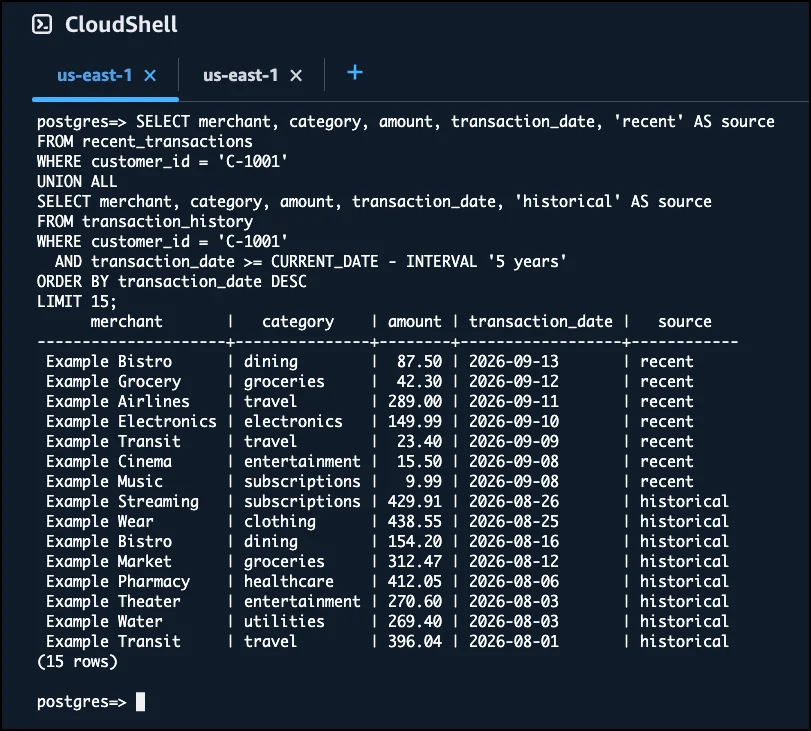
SELECT merchant, category, amount, transaction_date, 'recent' AS source FROM recent_transactions WHERE customer_id = 'C-1001' UNION ALL SELECT merchant, category, amount, transaction_date, 'historical' AS source FROM transaction_history WHERE customer_id = 'C-1001' AND transaction_date >= CURRENT_DATE - INTERVAL '5 years' ORDER BY transaction_date DESC LIMIT 15; - Performance Monitoring: Administrators can inspect runtime execution statistics using
aurora_analytics_stat_statements(), tracking metrics such as rows scanned, bytes read from S3, and local cache hits. Furthermore, for ultra-low-latency requirements, data can be materialized into native Aurora tables via standard commands likeCREATE TABLE AS SELECTorMERGE INTO.
Official Responses and Perspectives
AWS leadership has emphasized that this feature represents a fundamental shift in how developers interact with data ecosystems.
Engineers close to the project highlight that the primary design goal was friction reduction. "Whether you’re powering real-time dashboards, enriching transactions with historical context, or building AI agents that reason over both live and archived data, you can now do it all through a single, familiar interface," AWS noted in its technical announcements.
By utilizing open-source engines like DuckDB and open table formats like Apache Iceberg, AWS is doubling down on open standards. Company representatives have stressed that building this capability around core open-source projects ensures that future performance upgrades to DuckDB will automatically benefit Aurora PostgreSQL users, creating a sustainable innovation feedback loop.

Implications for Enterprises and Developers
The introduction of direct data lake querying inside Amazon Aurora PostgreSQL carries profound implications for software engineering teams, database administrators, and enterprise finance departments.
1. Reduced Infrastructure and Operational Overhead
Managing multiple data pipelines consumes thousands of engineering hours annually. By cutting out intermediate ETL jobs, companies save on pipeline monitoring, orchestration tooling, data duplication storage costs, and error-handling maintenance.
2. Enhanced Capabilities for Generative AI and Agents
AI applications rely on context. Providing AI agents with a single endpoint where they can execute complex reasoning tasks spanning real-time uncommitted writes and five-year-old Apache Parquet archives drastically simplifies agent architecture and broadens their operational scope.
3. Flexibility Without Vendor Lock-In
Because the feature supports Apache Iceberg—an open table format—and integrates with Iceberg REST Catalog-compatible systems via AWS Glue federation, organizations maintain architectural flexibility. They can query external catalogs across multiple environments without being forced to migrate or duplicate their existing data lake investments.
4. Cost Efficiency
From a pricing standpoint, AWS has introduced this capability at no additional software cost. Users pay only for the incremental Aurora compute resources consumed by analytical queries and standard Amazon S3 request fees. Coupled with read-replica offloading—where analytical scans can run on read replicas rather than the primary writer instance—teams can optimize performance without risking core transactional availability.
Summary
Amazon Aurora PostgreSQL’s new direct querying capability marks a mature evolution in cloud database design. By blending the transactional reliability of PostgreSQL with the analytical velocity of DuckDB and the massive scale of Apache Iceberg data lakes, AWS has delivered a unified toolset that empowers developers to build smarter, faster, and leaner applications.