Navigating the Multiomics Frontier: Challenges, Innovations, and the Path Toward Biological Clarity
Multiomics—the ambitious integration of genomics, transcriptomics, proteomics, and epigenomics—has long been hailed as the "Holy Grail" of precision medicine. By layering data from different biological dimensions, researchers aim to move beyond static snapshots of disease to create dynamic, high-resolution maps of human health. Yet, as the field matures toward 2026, the initial enthusiasm is being tempered by the sobering realities of data integration, statistical noise, and the persistent challenge of false-positive findings.
As ambitious multiomics projects scale up, the industry is confronting a pivotal shift. The central question is no longer just "Can we measure this?" but "Can we interpret it meaningfully?" In this report, we synthesize perspectives from leading experts at Bruker Daltonics, 10x Genomics, Thermo Fisher Scientific, Mission Bio, and Mursla Bio to explore the bottlenecks—and the breakthroughs—defining the next generation of multiomics.
The Foundation of Success: Sample Preparation and Standardization
If there is one consensus among industry leaders, it is that the most sophisticated AI models and sequencing platforms are only as good as the samples fed into them. Michael Easterling, PhD, vice president of MALDI/Imaging at Bruker Daltonics, does not mince words regarding the criticality of pre-analytical workflows.
"I sound like a broken record because I can’t stop talking about the importance of sample prep in multiomics work," Easterling says. He points to the inherent variability in sectioning, the difficulty of maintaining internal standards, and the complications introduced by formalin-fixed, paraffin-embedded (FFPE) samples. For multiomics imaging, these issues are particularly acute, as the field lacks the deep, long-standing standardization found in traditional bulk sequencing methods.
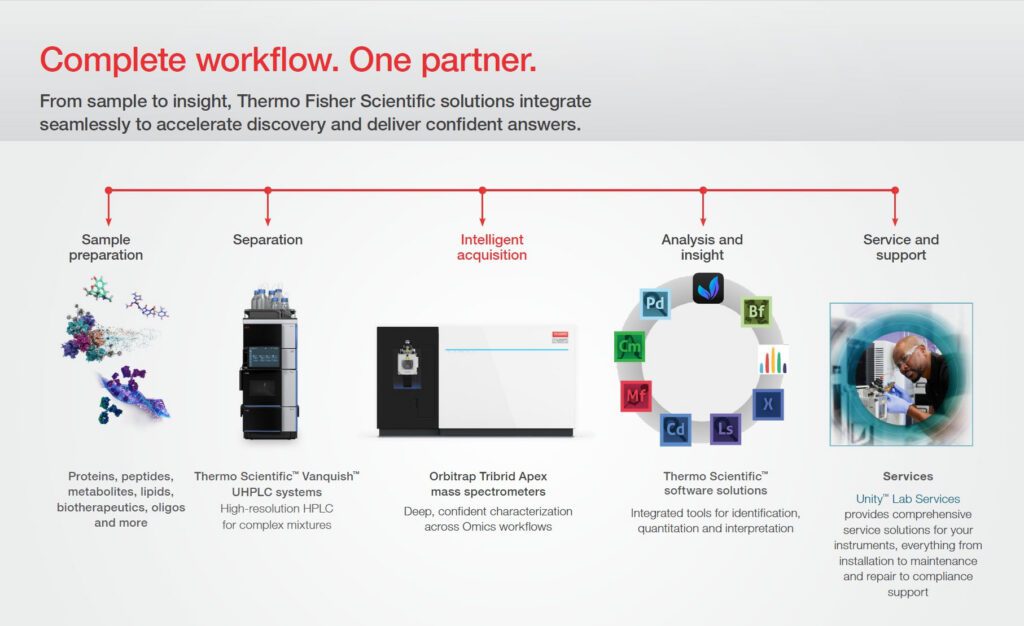
Scott Jelinsky, PhD, senior director of R&D at Thermo Fisher Scientific, echoes this sentiment, emphasizing that different molecular classes—RNA, proteins, and metabolites—have radically different requirements for collection and storage. "Careful experimental design and standardization are essential," Jelinsky notes. "Decisions made early in the study can have a significant impact on what can be measured and how confidently the different datasets can be interpreted together."
The consequences of poor preparation extend beyond mere noise; they can lead to artifacts that look like biological signals. Easterling cites inadequate freezing of biopsies as a frequent culprit, which can disrupt delicate cellular structures and create ice crystal artifacts. He stresses that a "chain of custody" mindset is required from the point of harvest to the analyzer. For researchers feeling overwhelmed, Easterling suggests a collaborative approach: "Get involved with the overall spatial imaging community and network. Find out exactly how to do these things from those who have already navigated the pitfalls."
Chronology of a Bottleneck: From Data Generation to Integration
The trajectory of multiomics can be viewed in three distinct phases: the "Data Generation" era (2010–2018), the "Cross-Modal Integration" era (2019–2024), and the current "Biological Interpretation" era (2025–2026).
Historically, the bottleneck was the physical measurement of different omics layers. Today, that barrier has largely fallen. However, the current bottleneck is the statistical and computational chasm between these datasets. Najiba Mammadova, PhD, associate director of product management at 10x Genomics, observes that while assays have advanced at a breakneck pace, the interpretive tools are only just beginning to catch up.
"Multiomics technologies generate vast amounts of high-resolution data across modalities that often behave differently from a statistical perspective," Mammadova explains. A major hurdle is the spatial and temporal misalignment. Proteins, RNA, and metabolites exist on different kinetic scales; a measurement taken at a single time point might show a protein that is no longer being actively transcribed.
Vanee Pho-Conners, PhD, vice president of global marketing at Mission Bio, highlights that the "plug-and-play" era has not yet arrived for data integration. "Each omics layer has its own data structure, distributions, and variabilities," she says. "Combining them is not plug-and-play." This complexity necessitates a workforce that is rare: researchers who possess deep expertise in biology, biostatistics, and machine learning simultaneously.
Supporting Data and Technical Innovations
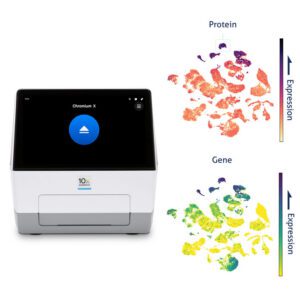
Several companies are deploying novel technical solutions to bridge these gaps. At 10x Genomics, the focus is on measuring multiple modalities from the same cell to eliminate the need for post-hoc "reconstruction" of biological states. By utilizing tools like the MultiPro Human Discovery Panel, researchers can integrate antibody-based protein data with existing single-cell RNA-seq workflows, capturing 326 protein targets simultaneously.
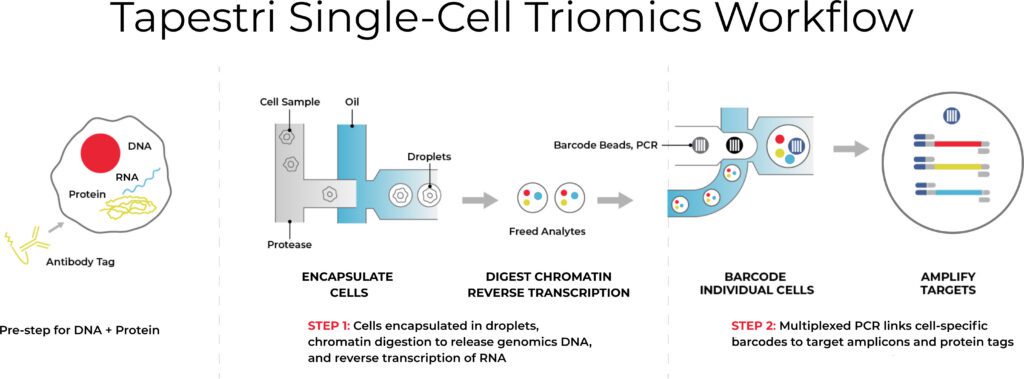
Mission Bio is tackling the "triomics" challenge—DNA, RNA, and protein—within single-cell platforms. Their Tapestri platform uses unique molecular barcodes for each cell, ensuring that the three modalities are tied to the same biological origin before the cell is even lysed.
Meanwhile, in the realm of extracellular vesicles (EVs), Mursla Bio is redefining how we access liquid biopsies. Pierre Arsène, founder and CEO of Mursla Bio, notes that traditional EV analysis often suffers from a lack of "tissue specificity." By using antibody-coated magnetic beads to capture tissue-specific EVs (TS-EVs), they can isolate liver-derived vesicles from a blood draw, shielding the RNA and protein payloads from enzymatic degradation. This "addressed" delivery of biological data allows for more coherent biomarker discovery.
Official Perspectives: The Role and Risks of AI
As the field pivots toward interpretation, Artificial Intelligence (AI) has emerged as the most critical, yet controversial, component of the multiomics stack.
"The rate-limiting questions are shifting from ‘Can we measure this?’ to ‘Can we interpret it?’" says Mammadova. She argues that AI is essential for identifying patterns in high-dimensional space that are invisible to the human eye.
However, there is a strong cautionary note from the experts regarding the "garbage in, garbage out" principle. Easterling warns that AI, if trained on inconsistently prepared samples, will generate "a confident biological story that is completely wrong." In this scenario, the AI’s ability to synthesize data creates a false sense of security for the researcher.
The Medical University of South Carolina has provided a blueprint for the future of AI in this space, using algorithms to assist lasers in targeting specific single cells rather than bulk clusters. Similarly, Mission Bio is using machine learning to perform "joint clustering" of DNA, RNA, and protein.
Jelinsky provides a vital reality check: "I see AI as a tool that can help researchers navigate complexity and generate better hypotheses, rather than as a replacement for scientific judgment. AI does not remove the need for rigorous experimental design or biological validation."
Implications: The Quest for "Coherence"
As we look toward the remainder of 2026 and beyond, the definition of success in multiomics is undergoing a paradigm shift. The industry is moving away from the "more is better" philosophy.
Arsène points to a sobering study of a 50,000-participant cancer trial where adding an additional protein layer only increased sensitivity by 1% (from 15% to 16%). This highlights a critical, often overlooked law of diminishing returns: adding more dimensions to a dataset does not inherently add more biological insight. "More and more layers allow you to gain dimensions, but you end up losing coherence," Arsène warns. "No cohort in the world is large enough to train that coherence back computationally."
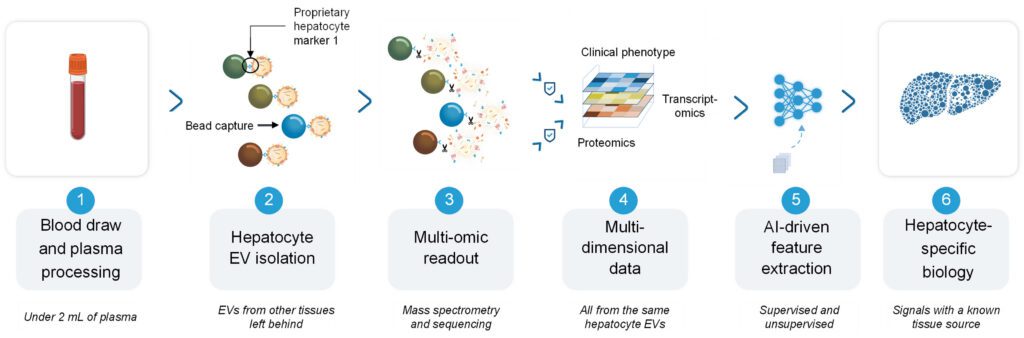
The future, according to these experts, lies in "curated multiomics." It is about selecting the right combination of measurements that address a specific biological question, rather than throwing every available technology at a sample in hopes of finding a signal.
"I think the future of multiomics will be less about generating the largest possible number of measurements and more about determining which combination of measurements provides the most meaningful biological insight," concludes Jelinsky.
As the field matures, the "roadblocks" mentioned at the start of the decade—cost, data silos, and technical variability—are slowly evolving into manageable challenges. By focusing on standardization at the sample level, investing in cross-disciplinary training, and using AI as a hypothesis-generating tool rather than a "black box" oracle, the multiomics community is moving closer to achieving its original promise: a granular, actionable, and coherent map of the biological systems that drive human disease.