Unlocking the Cosmic Silence: Webb Telescope Pinpoints the Farthest Fast Radio Burst Ever Recorded
In the vast, enigmatic theater of the cosmos, few phenomena are as fleeting yet as cataclysmically powerful as Fast Radio Bursts (FRBs). These ultra-fast, intense pulses of radio waves arrive from the deepest reaches of space, lasting only a fraction of a second, yet erupting with the energy output equivalent to what our Sun emits over three full days. For nearly two decades, these signals have baffled the global scientific community. Now, a breakthrough study utilizing the unparalleled sensitivity of the James Webb Space Telescope (JWST) has identified the source of the most distant FRB ever recorded, effectively rewriting our understanding of how these mysterious signals originate.
The Discovery: A Signal from the Dawn of Time
The breakthrough began in 2024 when astronomers utilizing the MeerKAT ground-based telescope array detected a signal designated as FRB 20220610A. It was a record-breaking discovery, representing the most distant FRB detected to date. Unlike previous signals, which typically emanated from relatively "local" cosmic neighborhoods, this particular burst arrived from a distance that challenged existing models of galactic evolution.
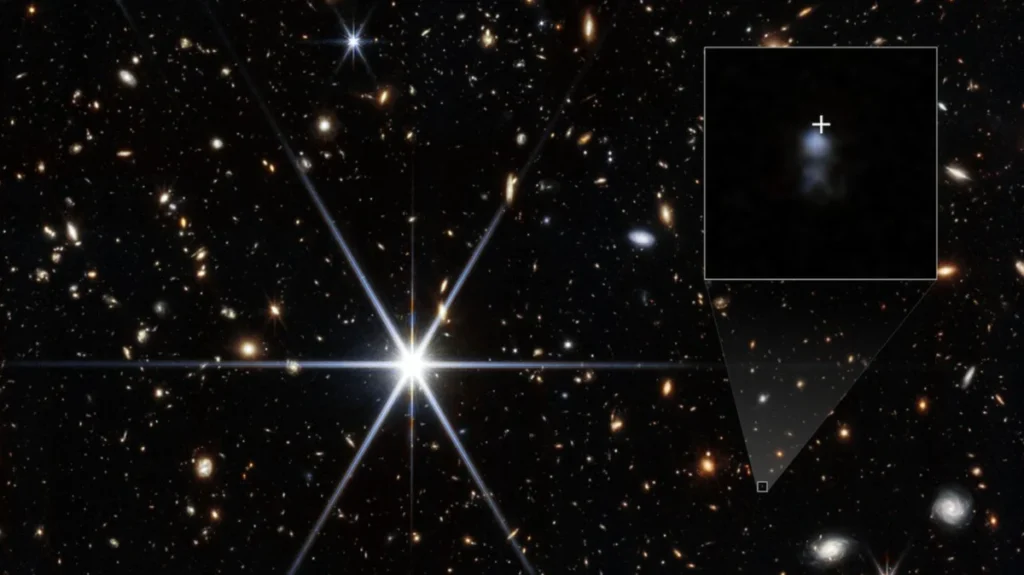
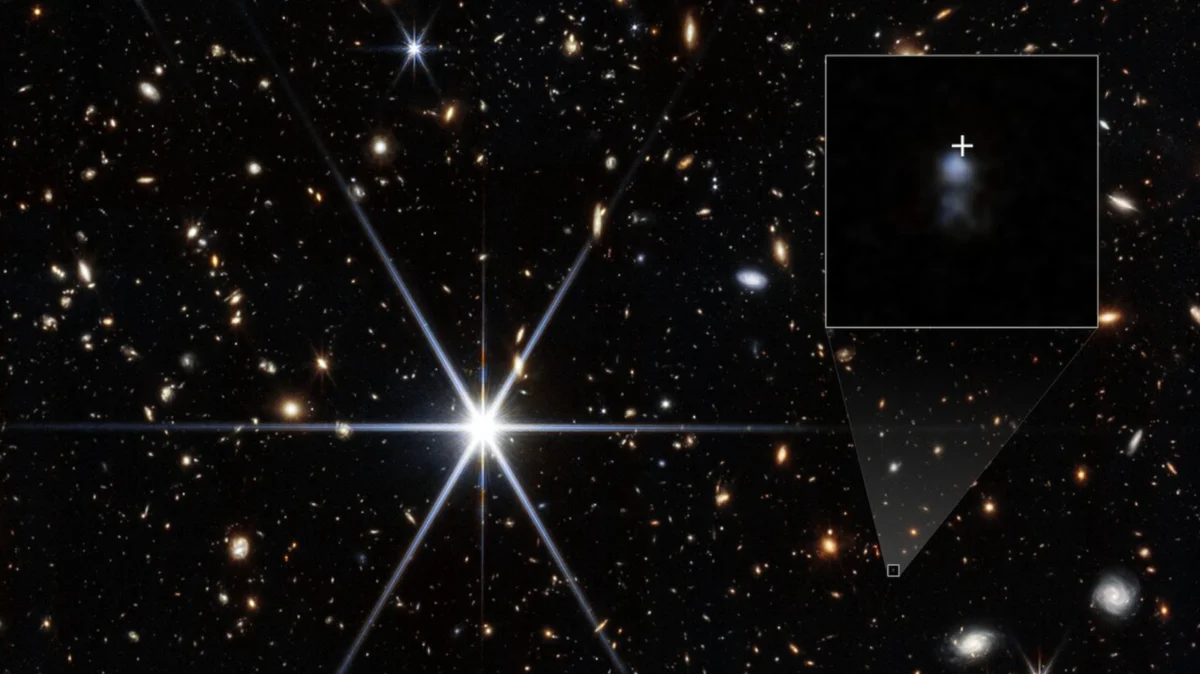
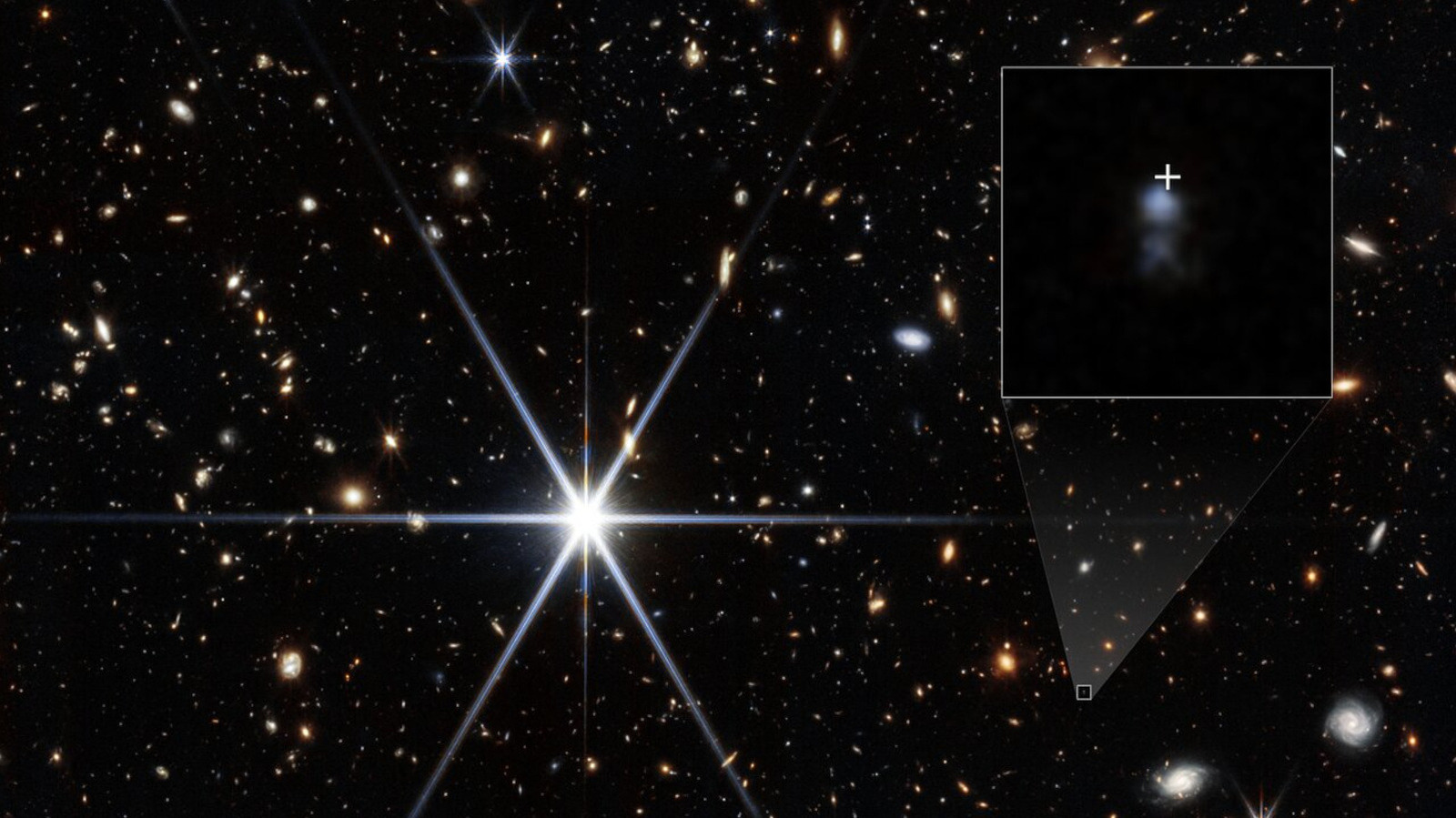
To understand the nature of this signal, researchers turned to the James Webb Space Telescope. By leveraging JWST’s Near-Infrared Camera (NIRCam), astronomers were able to peer through the intergalactic dust to pinpoint the precise host galaxy from which the burst originated. The data revealed that the burst occurred when the universe was merely 3 billion years old—a mere blink of an eye in cosmic time.
Chronology of a Cosmic Enigma
To appreciate the gravity of this discovery, one must look back at the history of FRB research.
- 2007: The first FRB, the "Lorimer Burst," was discovered in archival data from the Parkes Observatory. It was a singular, unexplained pulse that prompted years of skepticism regarding its extraterrestrial origin.
- 2010s: As more radio telescopes came online, researchers began to confirm that these bursts were indeed extragalactic, occurring in distant, massive galaxies that were actively forming stars.
- 2020: Evidence mounted linking some FRBs to magnetars—highly magnetized neutron stars—within our own Milky Way, suggesting that these objects were the primary engine behind the pulses.
- 2024: The detection of FRB 20220610A by the MeerKAT array provided a new challenge. It was significantly older and more distant than any previously studied source.
- The JWST Analysis: Following the detection, the international team led by the University of Sydney deployed the James Webb telescope to conduct high-resolution imaging, confirming that the host galaxy was not only far away but structurally distinct from the "standard" galaxies usually associated with FRBs.
Supporting Data: An Unexpected Galactic Host
The findings published in the journal Science provide a startling contradiction to established theories. Traditionally, FRBs were thought to occur in mature, massive galaxies—environments where the slow processes of stellar evolution and collapse have had billions of years to occur.
However, the galaxy identified by the Webb telescope is roughly 1,000 times smaller than the massive, star-forming galaxies typically associated with such high-energy emissions. This specific host galaxy existed during a period of peak cosmic star formation, yet its modest size suggests that the progenitor of the FRB did not require the stability or the massive population of stars found in larger, older galactic structures.
The light-stretching measurements—known as redshift—allowed scientists to calculate the exact distance of the burst. The fact that this signal traveled across such a vast expanse of time and space to reach our detectors is a testament to the sheer luminosity of the event. It suggests that the mechanism triggering these bursts is not merely a quirk of localized galactic environments but a fundamental, powerful process capable of occurring in the early, turbulent stages of galaxy formation.
Examining the Theories of Origin
For years, the scientific community has been divided between two primary hypotheses regarding the origin of FRBs.
The Merger Theory
The first theory posits that FRBs are the byproduct of binary neutron star mergers. When two dense, collapsed cores of supergiant stars collide, they release an incredible amount of energy. However, this theory relies on the premise that such binary systems take billions of years to decay into a final, explosive collision. Given the age of the galaxy identified by the JWST—a young, compact system—the "merger" explanation appears increasingly unlikely. The timeline simply does not allow for the necessary gravitational orbital decay required for such a catastrophic merger to have occurred so early in the galaxy’s history.
The Magnetar/Supernova Theory
The second theory suggests that FRBs are born from the explosive death of massive stars—a core-collapse supernova. These events leave behind magnetars, which are neutron stars possessing magnetic fields trillions of times stronger than Earth’s. These fields can undergo "starquakes" or magnetic reconnections, releasing the massive, short-lived pulses of radio energy we observe.
Official Responses and Expert Insight
Manisha Caleb, a researcher at the University of Sydney and the lead author of the study, summarized the significance of the findings with cautious optimism. "Our work suggests that it’s very unlikely that this [fast radio burst] was produced by a merger," Caleb stated. By effectively ruling out the merger hypothesis for this specific event, the study provides the strongest evidence to date that the magnetar-supernova pathway is the dominant mechanism for creating these elusive signals.
Dr. Caleb’s team argues that because the galaxy is so small and young, it would not have had the time to produce the binary systems required for a merger-based explosion. Instead, the rapid, violent life cycle of massive stars provides a much more logical source. This finding aligns with the observation that some FRBs in our own galaxy are indeed linked to magnetars, effectively bridging the gap between local observations and the deeper, ancient history of the cosmos.
Implications: A New Era of Astronomy
The discovery has profound implications for how we view the evolution of the universe. If FRBs can be used as "beacons" that signal the presence of specific types of star deaths, they can be utilized as tools to map the distribution of matter in the early universe.
Furthermore, this study highlights the critical role of the James Webb Space Telescope in bridging the gap between radio astronomy and optical/infrared astronomy. While ground-based radio arrays like MeerKAT are excellent at detecting the timing and frequency of these bursts, they often lack the resolution to identify the specific galactic "homes" of these events. By combining the strengths of both, scientists can now place these high-energy phenomena within a specific historical and structural context.
What Lies Ahead?
The next phase of research will likely focus on finding more of these "early-universe" FRBs. If the team can locate a population of such bursts from the same era, they may be able to determine if the early universe was more prone to these explosions than the modern era. This would inform models of how galaxies formed and how stars lived and died in the infancy of space-time.
Moreover, the study of FRBs may eventually allow us to measure the "missing" baryonic matter in the universe. Since these signals travel through intergalactic space, they are affected by the plasma they encounter along the way. By analyzing the "dispersion measure" of these signals, astronomers can estimate the density of the intergalactic medium, providing a map of the invisible matter that connects the stars and galaxies.
Conclusion
The James Webb Space Telescope has once again proven its worth, not just by looking at distant stars and nebulae, but by acting as a cosmic detective to solve one of the most enduring mysteries of the last two decades. By pinpointing the origin of this record-breaking fast radio burst, the research team has moved us closer to understanding the violent, brilliant life cycles of stars that occurred billions of years ago.
While the "merger vs. supernova" debate may continue in some academic circles, the data provided by the Webb telescope offers a compelling, evidence-backed narrative that favors the magnetar-supernova theory. As we continue to gaze into the deep, dark expanse of the past, these fleeting flashes of radio energy serve as vital, if temporary, illumination—guiding us toward a more complete understanding of the universe’s history, its structural evolution, and the spectacular, high-energy events that define it. The mystery of the Fast Radio Burst is far from solved, but with each new signal and each new discovery, the silence of the cosmos is slowly yielding its secrets.