Unlocking the Biological Clock: How the Dog Aging Project is Decoding the Secrets of Longevity

On a quiet Thursday in August 2026, a scene unfolded at Mirabella at ASU that perfectly encapsulated the intersection of human-canine companionship and cutting-edge science. Sophie, a 12-year-old resident dog, found herself sizing up Homer, a much larger dog accompanying his owner, Noah Snyder-Mackler. While the two dogs navigated the complexities of their social interaction, their human counterparts were engaged in a far more profound dialogue about the very nature of time itself.
Dr. Noah Snyder-Mackler, a Professor at Arizona State University and co-lead of the groundbreaking Dog Aging Project, had just delivered a lecture to residents, detailing why our four-legged friends are the key to understanding the biology of aging. The research presented—a monumental study of nearly 900 dogs—has provided the most compelling evidence to date that the secret to why some dogs live significantly shorter lives than others may be written directly into their epigenomes.
The Mystery of the Aging Canine
For centuries, the domestic dog has been humanity’s most intimate companion, sharing our homes, our diets, and often our medical care. Yet, despite living in the same environment, the disparity in lifespan between breeds is startling. A Great Dane may live for seven to ten years, while a Jack Russell Terrier can easily reach fifteen or older. This "lifespan compression" in larger breeds has long puzzled scientists.
"Aging is a universal process, but its pace and biological mechanisms differ substantially, even within the same species," explains Dr. Snyder-Mackler. The fundamental question driving the Dog Aging Project is this: Do shorter-lived individuals simply die earlier due to external factors, or are they experiencing a literal acceleration of biological aging throughout their entire lives?
The recent study, published in the journal Science under the title "Epigenetic aging and transposon dysregulation reflect size-related lifespan compression in dogs," suggests the latter. By utilizing domestic dogs as a translational model, researchers are finally beginning to map the molecular drivers that dictate the velocity at which an animal ages.
Chronology of a Scientific Breakthrough
The path to these findings was paved by years of meticulous data collection and molecular analysis. The Dog Aging Project, a longitudinal study of unprecedented scale, provided the infrastructure necessary for this discovery.
- Early Research: Scientists had long suspected that DNA methylation (DNAm)—a biological process where methyl groups are added to DNA—could serve as a "clock" to measure biological age.
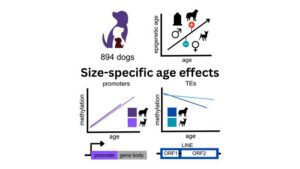
- The Cohort Formation: The team, led by Dr. Snyder-Mackler and first author Dr. Blaise Mariner, recruited 894 dogs, creating a massive, diverse cohort that represented a wide spectrum of breeds, sizes, and sexes.
- Data Generation: The researchers generated 1,640 methylomes, combining this molecular data with exhaustive genetic and demographic records.
- The Breakthrough (2026): By analyzing these methylomes, the team identified distinct epigenetic patterns that correlate strongly with both body size and biological sex, providing a quantitative framework for understanding why these factors influence longevity.
Epigenetic Clocks: Reading the Molecular Blueprint
At the heart of this research is the "epigenetic clock." These clocks are not mechanical, but chemical; they track the patterns of DNA methylation that change as an organism progresses through life.

"DNA methylation has emerged as a robust molecular biomarker of age," the researchers noted. "It offers a quantitative framework for identifying the factors that accelerate or decelerate biological age."
The team discovered that molecular aging does not occur at a steady, linear rate. Instead, it happens most rapidly during the early stages of a dog’s life. By observing these fluctuations, the team was able to pinpoint where and how the "ticking" of the clock differs between demographic groups.
Sex-Linked Aging
The study revealed that male dogs, who generally have shorter life expectancies than their female counterparts, exhibit accelerated molecular aging. Specifically, these changes were found to be highly concentrated on the X chromosome. This finding suggests that the biological pathways involved in sex-related lifespan differences are distinct and evolutionarily ancient.
The Size-Longevity Paradox
Perhaps the most significant discovery pertains to the relationship between body size and lifespan. Larger dogs, which are known to live shorter lives, showed prominent methylation changes at transposable elements (TEs).
Transposable elements, often referred to as "jumping genes," are sequences of DNA that can move around the genome. When these TEs are not properly suppressed, they can lead to genomic instability and gene dysregulation. The study found that larger dogs exhibit a faster loss of repression of these TEs. This implies that the rapid aging seen in larger breeds is linked to a breakdown in the cellular mechanisms that keep the genome stable.
Supporting Data: By the Numbers
The statistical rigor of the study provides a high degree of confidence in the conclusions drawn:
- Study Size: 894 individual dogs were analyzed.
- Molecular Scope: 1,640 methylomes were generated and processed.
- The Correlation: The data provided evidence that within the same species, groups with shorter expected lifespans show consistently faster epigenetic aging.
- The Gap: By studying dogs, the researchers bypassed the limitations of cross-species studies, which often fail to isolate the specific molecular drivers of aging because of the vast environmental and physiological differences between disparate species.
Implications for Human Medicine
The implications of this study extend far beyond veterinary medicine. Because dogs share our environment, consume our food, and receive similar medical treatments, they serve as an ideal "translational model" for human aging.
"Our findings broadly establish companion dogs as a translational model for uncovering molecular mechanisms of lifespan variation, epigenomic instability, and age-related disease," the authors stated. By understanding how the epigenome regulates aging in dogs, researchers hope to gain insights that could eventually be applied to humans. If we can identify the triggers for accelerated epigenetic aging, we might one day be able to develop interventions to slow the clock, not just for our pets, but for ourselves.
Perspectives from the Lab: Official Responses
The research has been met with excitement within the scientific community. Dr. Snyder-Mackler, reflecting on the broader impact of the work, emphasized the collaborative nature of the project. "It is well established that size and sex influence lifespan in dogs," he noted during his presentation at Mirabella. "But for a long time, we didn’t know if this was just a byproduct of disease susceptibility or something deeper."
The work of Dr. Blaise Mariner and the wider team has essentially confirmed that it is something deeper—a fundamental difference in how the body maintains its own genetic integrity over time. By providing a clear, molecular explanation for size-related lifespan compression, the study provides a roadmap for future investigations into the "why" of aging.
Looking Ahead: The Future of the Dog Aging Project
As the Dog Aging Project continues, the researchers intend to look deeper into how lifestyle factors, such as diet, exercise, and social interaction, interact with the epigenetic clock. Sophie and Homer, the dogs from the Mirabella lecture, may eventually be part of a generation of pets whose lives are better understood and, perhaps, extended through the knowledge gained today.
The study serves as a poignant reminder of the fragility and beauty of life. Whether a dog is large or small, male or female, they are all subject to the same molecular forces. By decoding these forces, science is not only honoring the companionship these animals provide but also unlocking a deeper understanding of the biological journey that we all share.
As the sun sets on the ASU campus, the work continues in the lab. The epigenetic clock keeps ticking, but for the first time, we have the tools to read the time, understand the speed, and perhaps, one day, turn back the hands.