Amazon Web Services Introduces Simplified Onboarding Experience Tailored for the AI Era
SEATTLE — Amazon Web Services (AWS), the dominant force in cloud computing, has announced a fundamental transformation of its customer onboarding and project management experience. Designed specifically for modern developers operating at the breakneck speed of artificial intelligence, the new experience eliminates traditional configuration bottlenecks. It allows builders to transition from an abstract idea to a deployed, production-ready cloud architecture in a matter of minutes.
The rollout addresses a longstanding paradox in cloud engineering. While AWS has historically scaled its infrastructure to meet the complex, multi-region governance and security needs of the world’s largest enterprises and governments, those same enterprise-grade controls have often presented a steep learning curve for solo developers, startups, and rapid-prototyping teams. By introducing sensible defaults, frictionless social sign-ups, automated resource permissions, and deep integration with modern AI coding agents, AWS is effectively returning to its roots: removing every possible friction point between an innovative idea and its execution.
Main Facts: What is Changing on AWS?
The newly announced AWS onboarding experience represents a complete rethinking of how users interact with the cloud provider during the initial phases of a project. Rather than forcing new users to manually configure intricate networking parameters, payment methods, and complex access management systems before writing a single line of code, the platform now prioritizes immediate, frictionless productivity.

Key pillars of the new experience include:
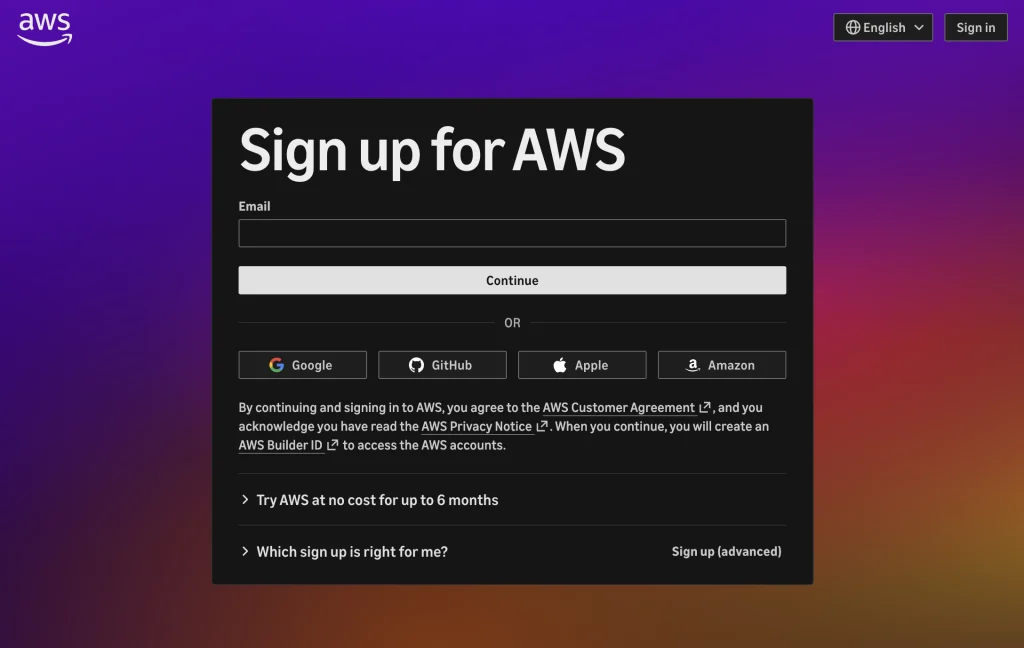
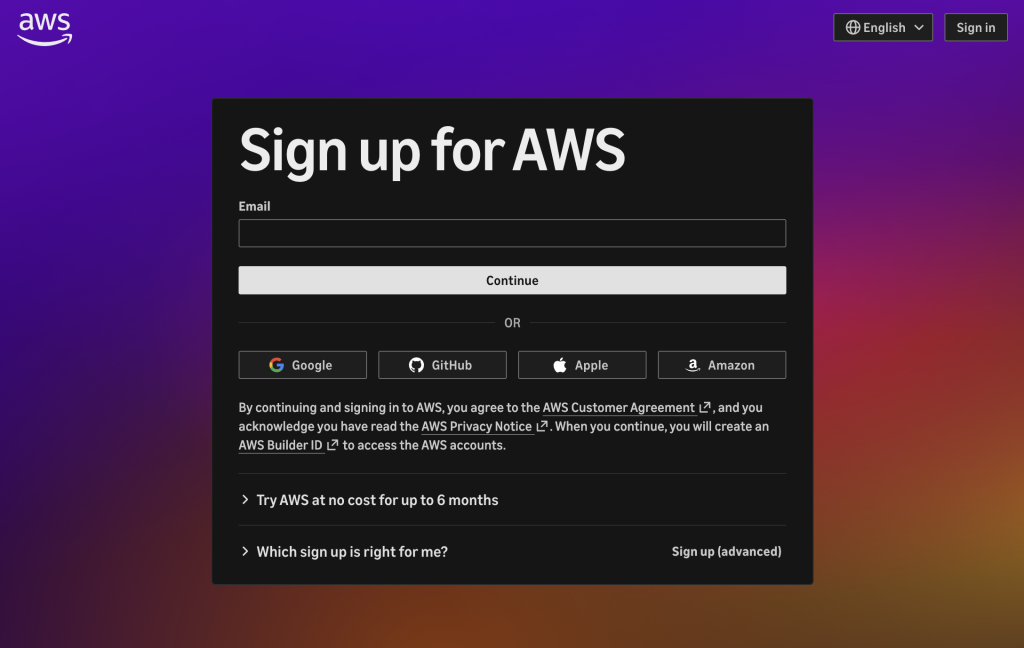
- Frictionless Authentication: New users can sign up instantly using established identity providers, including Google, GitHub, Apple, and Amazon.
- Zero Upfront Financial Barriers: For the vast majority of new customers, a credit card is no longer required to begin building. Users receive $100 in free credits upon registration as part of the AWS Free Tier, with additional credits often awarded as specific milestones—such as deploying a serverless function—are achieved.
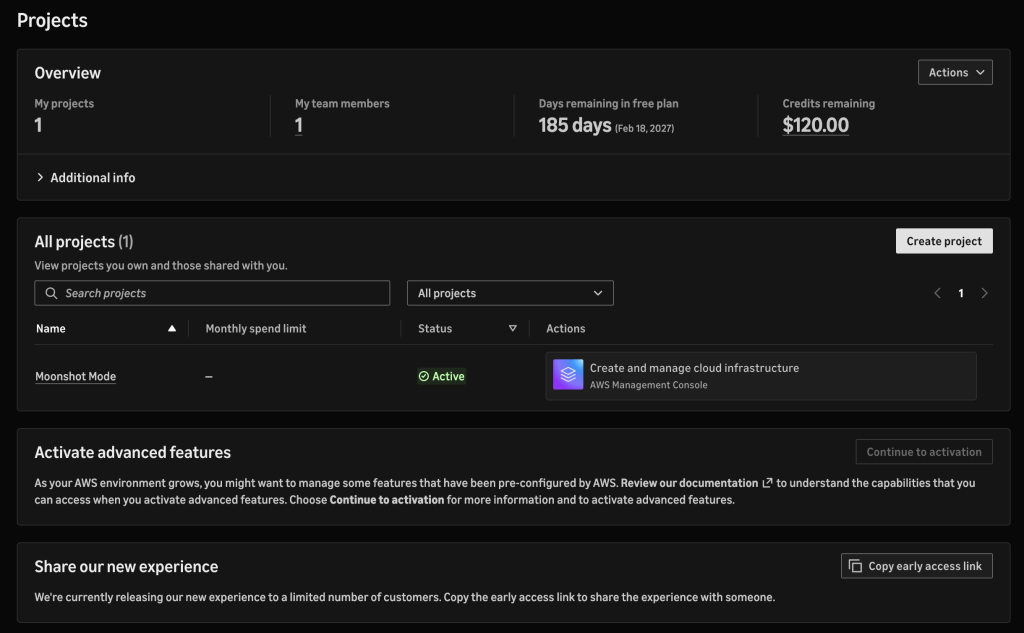
- Project-Centric Architecture: AWS now organizes user activity into distinct "projects." Each project automatically provisions a dedicated AWS account with pre-configured security guardrails, isolating workloads and simplifying resource management.
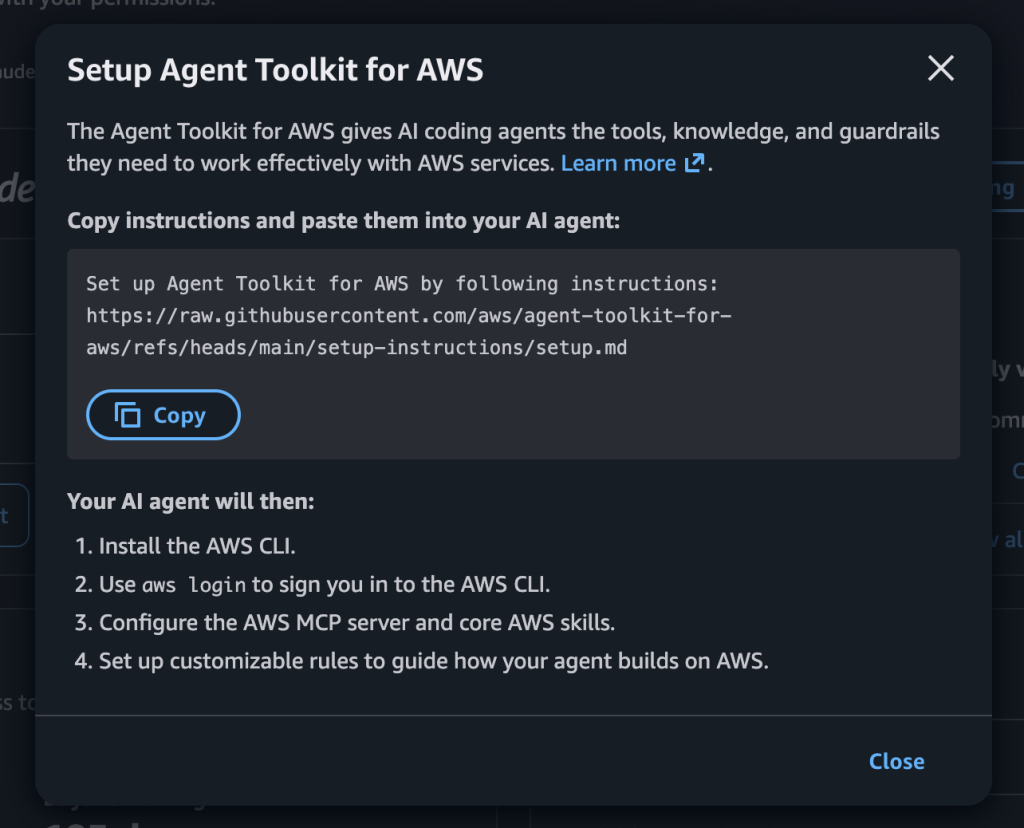
- AI-Native Coding Agent Integration: Upon creating a project, users are provided with a specialized configuration prompt. Pasting this prompt into an AI coding agent instantly configures the development environment, installs the AWS Command Line Interface (CLI) and Agent Toolkit, and prepares the agent to deploy resources autonomously.
- Automated Permission Handling: The platform completely abstracts away the complexities of AWS Identity and Access Management (IAM) for basic projects. Team members are invited via email, and the console automatically negotiates permissions between connected services and resources.
- Granular Spend Controls: To prevent "bill shock," developers can establish strict monthly spend limits per project (starting at $20). If a project approaches its financial ceiling, AWS sends proactive alerts. If the limit is reached, the platform pauses the workload rather than accumulating unapproved charges.
- Seamless Enterprise Scale: Projects built in this streamlined environment are not trapped in a sandbox. When a startup or application outgrows the simple interface, users can activate advanced AWS features—such as multi-region deployments and custom policies through AWS Organizations—without downtime or data migration.
Chronology: The Evolution from Infrastructure Pioneer to AI-Speed Development
To understand the significance of this latest release, it is helpful to examine the historical trajectory of AWS and the shifting demands of the software development landscape over the past two decades.
Phase 1: The Infrastructure Genesis (Mid-2000s)
When Amazon Web Services first launched, it did so with a modest portfolio of foundational infrastructure primitives: Amazon Simple Storage Service (S3), Amazon Elastic Compute Cloud (EC2), and Amazon Simple Queue Service (SQS). The core value proposition was simple: democratize access to computing power so that any developer with a credit card and an idea could bypass the capital-intensive process of purchasing physical servers. In its earliest days, getting started was relatively straightforward, though developers still had to manually wire together networking, storage, and compute instances.

Phase 2: Enterprise Expansion and Complexity (2010s–Early 2020s)
As Fortune 500 corporations, financial institutions, and global governments migrated mission-critical workloads to AWS, their requirements fundamentally reshaped the platform. Enterprises demanded exhaustive compliance frameworks, intricate security boundaries, advanced networking topologies, multi-region redundancy, and granular cost-allocation controls.
To satisfy these enterprise demands, AWS expanded its global infrastructure into dozens of geographic Regions and added thousands of distinct features across security, governance, and cost management. While this depth made AWS the undisputed market leader in enterprise cloud computing, it inadvertently created a dense, intimidating maze for individual developers and early-stage entrepreneurs. Setting up a basic web application often required navigating dozens of console screens, configuring Virtual Private Clouds (VPCs), and setting up complex IAM roles—effort that stood squarely in the path of rapid product iteration.
Phase 3: The AI Acceleration and the Return to Simplicity (Present Day)
With the explosion of generative artificial intelligence and AI-assisted coding tools, the velocity of software development has accelerated exponentially. Developers today routinely build, test, and iterate on complex multi-tier applications in hours rather than weeks.
Recognizing that traditional cloud configuration processes were dragging down the pace of AI-driven innovation, AWS leadership greenlit a project to completely reimagine the Day-1 experience. The result is the newly rolled-out simplified onboarding flow, which marries the rapid, lightweight agility required by modern AI builders with the robust, enterprise-grade foundation that has always underpinned AWS.
Supporting Data: Hands-On Demonstration and Practical Performance
To evaluate the real-world utility of the new onboarding experience, early testers and technical evaluators walked through the sign-up and deployment lifecycle. The results underscore a dramatic reduction in time-to-market for cloud-native applications.
1. Rapid Account Provisioning
Navigating to the main AWS portal and selecting the account creation option presented immediate social login choices. Signing in via an existing Google account bypassed traditional multi-step identity verification forms. Within seconds, the user dashboard materialized, displaying a clean interface organized around the concept of a "project" rather than a sprawling console of disparate services.
2. AI Coding Agent Synchronization
Upon project initialization, the system generated a snippet designed for AI coding agents. Copying and pasting this prompt into a local development agent initiated an automated handshake. The agent immediately performed the following actions without human intervention:
- Configured the local AWS Command Line Interface (CLI).
- Installed the specialized Agent Toolkit for AWS.
- Established a secure authentication session.
- Generated a localized
CLAUDE.mddocumentation file containing structural guidelines tailored to the new AWS environment.
3. Autonomous Resource Deployment
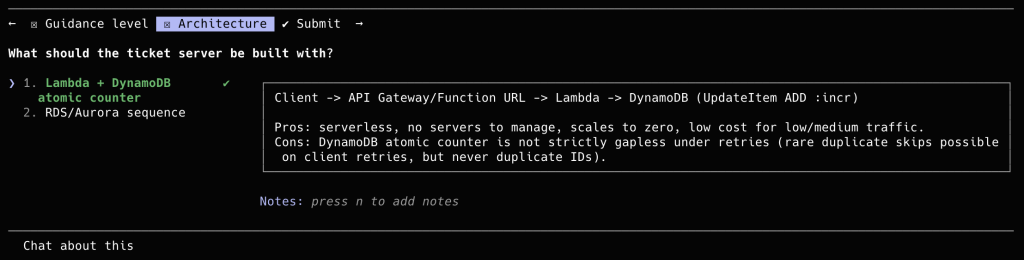
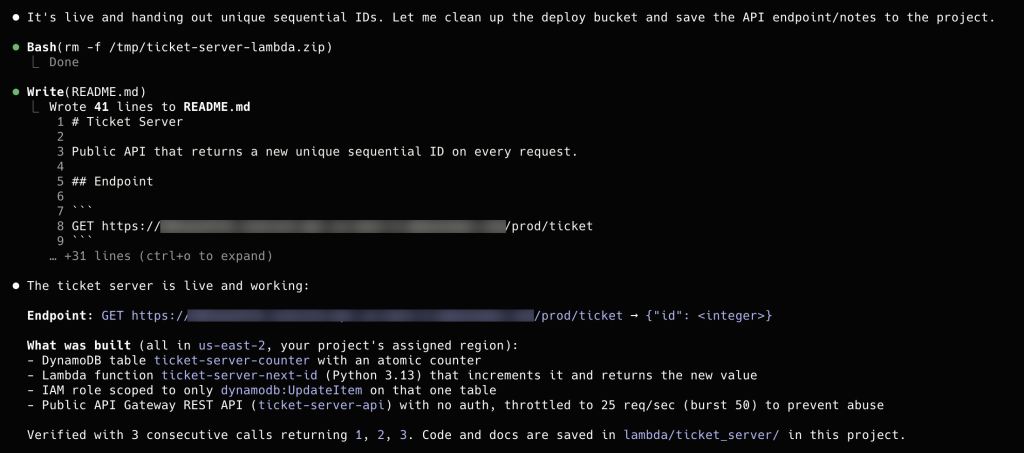
When tasked with a simple directive—“Build an API that returns a new unique sequential ID on every request”—the AI agent autonomously architected a production-grade serverless solution.
Without manual intervention from the developer, the agent selected, provisioned, and linked three core AWS services:

- AWS Lambda: To execute the backend code computing the sequential IDs.
- Amazon DynamoDB: To maintain a persistent, low-latency counter and state store.
- Amazon API Gateway: To expose a public-facing HTTPS endpoint capable of handling incoming web requests.
The entire process, from initial prompt to a fully functional, publicly accessible endpoint, took less than three minutes. Crucially, the developer did not have to write a single CloudFormation template, configure an IAM trust policy, or manually troubleshoot permission errors between Lambda and DynamoDB. Furthermore, the successful deployment of the Lambda function triggered an automatic $20 credit bonus, supplementing the initial $100 AWS Free Tier credit allocation.
4. Administrative and Financial Oversight
The project management dashboard provides clear, real-time visibility into operational parameters:
- Members Tab: Facilitates team expansion through simple email invitations, cleanly abstracting away IAM group management.
- Billing Page: Offers granular cost tracking per project, displaying remaining free-plan days, active credit balances, and predefined monthly spend limits.
+-----------------------------------------------------------------+
|                        PROJECT METRICS                          |
+--------------------------+--------------------------------------+
| Metric                   | Value / Status                       |
+--------------------------+--------------------------------------+
| Initial Free Credits     | $100.00                              |
| Milestone Bonus (Lambda) | +$20.00                              |
| Default Spend Limit      | $20.00 / month (Customizable)        |
| Resource Provisioning    | Automated via AI Coding Agent        |
| IAM Overhead             | Eliminated (Managed via Email Invite)|
+--------------------------+--------------------------------------+
Official Responses and Industry Context
While AWS has not yet released full public saturation metrics for the new rollout—which is currently deploying in a phased release to new customers—the strategic intent behind the feature has been clearly articulated by cloud architects and industry analysts.
Industry observers note that hyperscale cloud providers are locked in an intense battle for the hearts and minds of the next generation of developers. As platforms like Vercel, Supabase, and Heroku have demonstrated over the years, developers heavily favor platforms that minimize operational overhead and let them focus purely on writing application logic. By absorbing the complexity of account setup, security baselines, and permission mapping into an automated backend workflow, AWS is directly countering the "developer experience" (DevEx) advantage long claimed by specialized Platform-as-a-Service (PaaS) providers.
At the same time, AWS maintains an unassailable advantage: when a startup built on these simplified defaults scales into a massive enterprise requiring multi-region failover, dedicated direct connections, and strict regulatory compliance controls, it does not need to undergo a painful, risky platform migration. The user simply flips a switch to unlock the full, unfettered breadth of the AWS ecosystem.
Implications: What This Means for Developers, Enterprises, and the Cloud Market
The introduction of this streamlined, AI-optimized onboarding experience carries profound implications across the technology landscape.
For Solo Developers and Early-Stage Startups
The barrier to entry for building on enterprise-grade infrastructure has effectively vanished. Founders can now spin up robust, scalable architectures guided by AI agents without needing a dedicated DevOps engineer on Day 1. The built-in financial guardrails—specifically project-level spend limits and automated circuit breakers—ensure that experimental code or runaway loops will not result in catastrophic, unexpected cloud bills.
For Enterprise IT and Platform Engineering Teams
While marketed primarily at grassroots builders, this feature solves a persistent internal enterprise challenge: shadow IT and onboarding friction. Large organizations often struggle with the onboarding velocity of new internal teams. By establishing a pattern of sensible defaults, automated least-privilege security controls, and project-based isolation, enterprises can safely delegate cloud sandbox environments to internal business units without compromising organizational security postures.
For the Competitive Cloud Ecosystem
Major cloud providers can no longer compete solely on the raw number of services they offer. Breadth and depth are table stakes; velocity and simplicity are the new battlegrounds. By pairing the world’s most comprehensive cloud infrastructure with an AI-native, low-friction entry point, AWS has raised the bar for what developers should expect when writing their first line of cloud code.
Getting Started
The new simplified onboarding experience is currently rolling out globally to new AWS customers. Developers eager to test the workflow can visit the official AWS portal, select Create account, and authenticate using their preferred social or work identity provider. Comprehensive setup documentation and integration guides for AI coding toolkits are available through the official AWS documentation portal.