The Era of Choice: Android Studio Launches "Bring Your Own Agent" (BYOA) to Redefine AI-Assisted Development
The landscape of software engineering is undergoing a seismic shift. As artificial intelligence evolves from simple autocomplete utilities into sophisticated, autonomous "coding agents" capable of planning, architecting, and debugging entire modules, the role of the Integrated Development Environment (IDE) is being redefined. Today, Google has announced a major strategic pivot for Android Studio, introducing "Bring Your Own Agent" (BYOA) support. This initiative marks a departure from closed, proprietary AI ecosystems, offering developers the agency to integrate their preferred coding intelligence directly into the Android development workflow.
The Core Transformation: Breaking Down Proprietary Silos
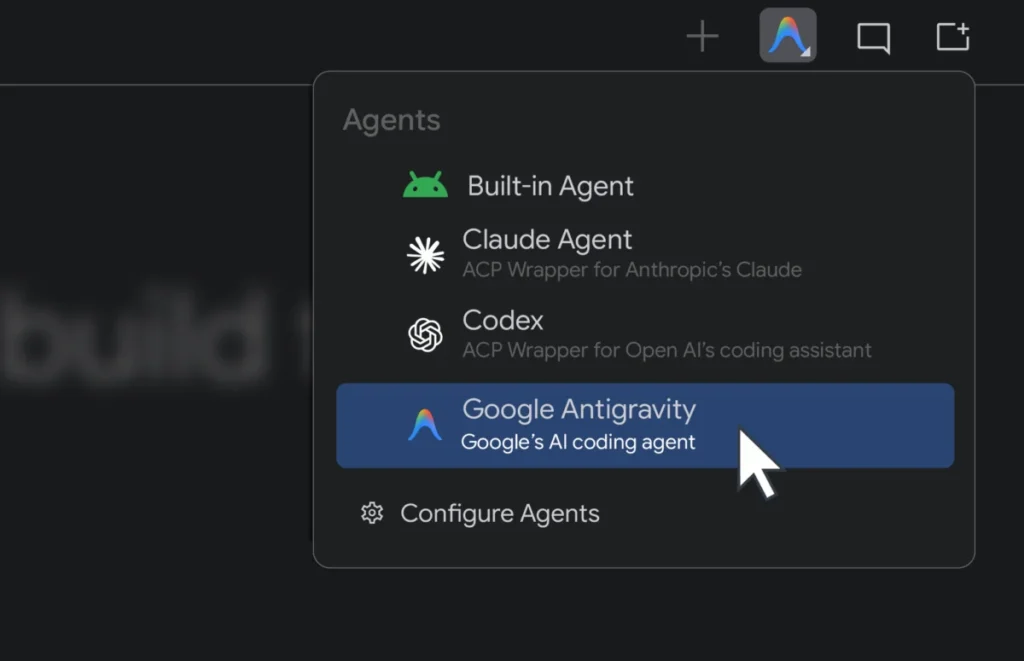
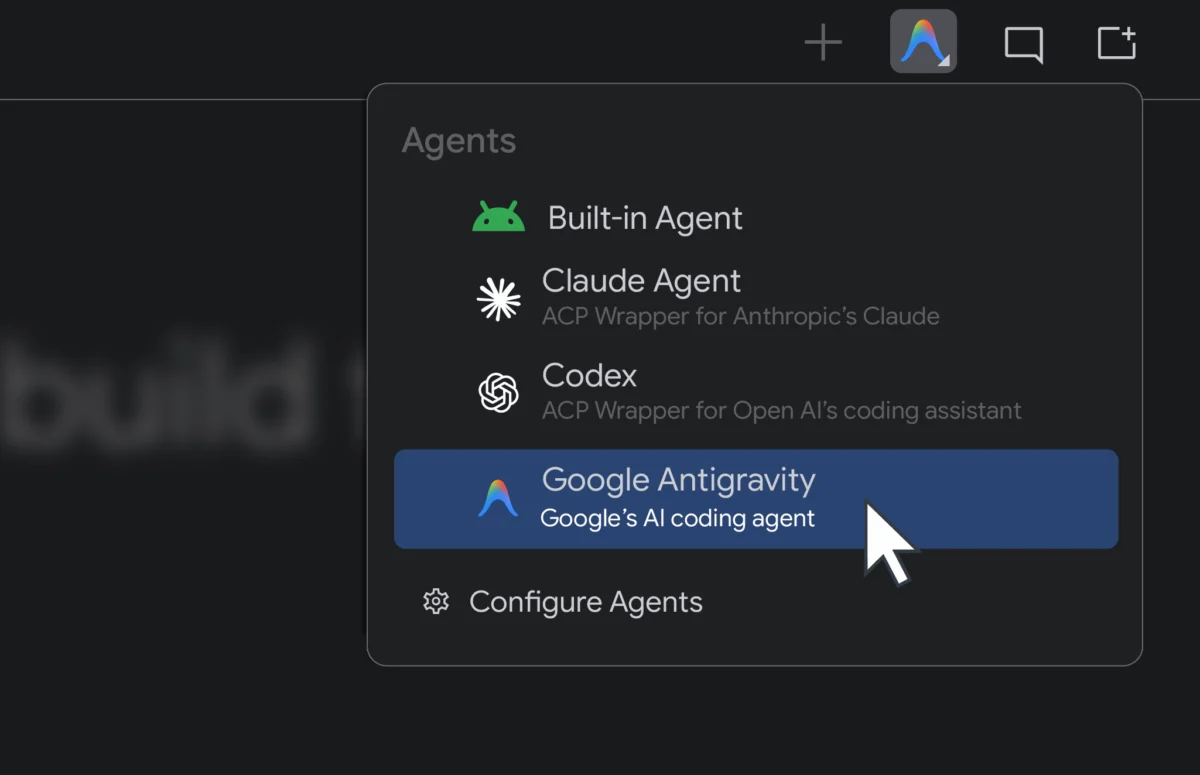
For years, developers have been constrained by the AI models pre-bundled into their development tools. While these integrations offered convenience, they often lacked the nuance required for specialized enterprise workflows or individual preferences. The new BYOA feature in Android Studio flips this paradigm, allowing developers to connect third-party agents—including Anthropic’s Claude Agent, OpenAI’s Codex, and Google’s own Antigravity—directly into the Android Studio infrastructure.
By decoupling the AI "brain" from the IDE "body," Google is positioning Android Studio as a neutral platform. This move acknowledges a fundamental truth in modern engineering: there is no "one size fits all" model. A team building a high-security banking application may require the specific reasoning capabilities of one model, while a solo developer building an experimental game might prioritize the speed and creative flexibility of another. With BYOA, the IDE acts as a high-performance harness that provides the AI with deep context—ranging from local codebase analysis to the latest Android SDK documentation—without forcing the user into a specific AI provider’s walled garden.
A Chronology of AI Integration in Android Development
The journey toward this announcement has been iterative and rapid, reflecting the breakneck pace of AI advancement.

- 2023: The Advent of IDE-Native AI: Android Studio began its journey into AI integration with the debut of early Gemini-based features, focusing on code completion and basic refactoring suggestions. This established the foundation for IDE-aware AI, where the tool understood the structure of an Android project.
- 2024: The Shift to "Model Agnosticism": Recognizing that developers were already experimenting with external models, Android Studio introduced support for "any AI model" via remote model APIs. This was the first step toward the modularity seen today.
- Early 2025: The Rise of Agentic Workflows: The industry saw a transition from simple "chat" interfaces to "agentic" workflows, where AI agents could navigate file trees, execute terminal commands, and perform multi-step technical tasks autonomously.
- Present Day (September 2026): The BYOA Revolution: With the launch of Android Studio "Rabbit 2" (Canary), Google officially moves to a plugin-based architecture for AI agents. This allows for standardized communication protocols between the IDE and external agents, ensuring that even third-party models benefit from the IDE’s deep knowledge of Android architecture.
Supporting Data: Why "Agentic" Matters
The shift toward agents is not merely a trend; it is a response to the increasing complexity of modern mobile development. According to internal Google benchmarks and third-party developer surveys, the introduction of agentic workflows has shown significant measurable improvements in engineering velocity.
The Impact of Context-Aware Agents
The primary advantage of running an agent inside the IDE, rather than in a separate browser tab, is contextual density. An agent integrated via BYOA has direct, secure access to:
- The Android Knowledge Base: Ensuring that code suggestions are compliant with the latest version of the Android SDK and best practices.
- Project-Specific Architecture: Agents can "read" build scripts (Gradle), manifest files, and local dependencies, allowing them to provide solutions that actually compile within the specific project environment.
- Real-Time Diagnostics: By tying into the Android Studio build system, agents can analyze error logs as they happen, suggesting fixes for build failures or runtime crashes in real-time.
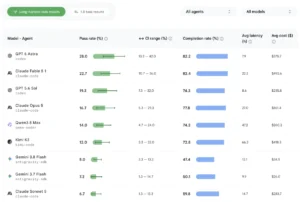
Recent data from the updated Android Bench 2—a suite of long-horizon tasks designed to test how well AI can navigate complex engineering challenges—indicates that agents with deep IDE integration successfully complete multi-file refactoring tasks 40% faster than those operating in isolation. Furthermore, the error rate for suggested code changes drops significantly when the agent has access to the project’s local dependency tree.
Official Responses and Strategic Intent
During the announcement, Google’s engineering leads emphasized that this move is about "meeting the developer where they are."

"We understand that engineering productivity is a deeply personal and organizational choice," said a representative from the Android Studio team. "Some teams have deeply invested in Anthropic’s ecosystem; others rely on the specialized capabilities of OpenAI’s models. By building the BYOA harness, we are not asking you to abandon your tools—we are inviting you to bring them into the most powerful environment for building Android applications."
The introduction of the Google Antigravity agent serves as the "gold standard" implementation. For users who prefer to stay within the Google ecosystem, Antigravity provides an optimized experience with access to the latest Gemini Flash 3.8 models. For enterprise clients, Google has ensured that security remains paramount. Whether using a third-party agent or the native Antigravity agent, the data-handling policies remain consistent with Google Cloud’s enterprise-grade privacy standards, ensuring that intellectual property is never used to train public models without explicit authorization.
Implications for the Future of Software Engineering
The implications of the BYOA initiative are profound, affecting everything from developer workflows to the economics of software development.
1. The Commoditization of AI Models
By allowing developers to swap agents as easily as they change themes or plugins, Google is signaling the commoditization of large language models. The competitive advantage for AI providers will no longer just be the model’s raw intelligence, but its ability to integrate seamlessly into the developer’s "daily driver" environment. This creates a healthy marketplace where models must compete on accuracy, speed, and cost-effectiveness.

2. The Rise of the "Architect-Developer"
With agents handling the mundane aspects of coding—such as boilerplate generation, unit test writing, and dependency management—the role of the human developer is shifting toward that of an architect. The developer’s value now lies in their ability to define system requirements, verify the agent’s output, and manage the high-level logic of the application. This "human-in-the-loop" model ensures that while productivity soars, code quality remains under the watchful eye of an experienced engineer.
3. Enterprise-Wide Standardization
Large organizations stand to gain the most from this development. Enterprise IT departments can now curate a list of "approved" agents for their developers, ensuring that code generated within the company is compliant with internal security and architecture guidelines. This creates a standardized, yet flexible, AI policy that can be deployed across global teams.
4. Financial Optimization
The BYOA model allows for granular control over costs. Because the agents can be connected via API keys or individual subscription plans (like Google AI Pro or Ultra), organizations can tailor their AI spending to the actual needs of their engineers. A junior developer might use a more cost-effective agent, while a lead architect might have access to the highest-performing, high-token-limit models, ensuring an efficient allocation of resources.
Moving Forward: Getting Started
As the feature rolls out in the Android Studio Rabbit 2 canary release, the barrier to entry is intentionally low. To configure an agent, developers simply navigate to the new "AI Agents" menu in the IDE settings, select their provider, and input their authentication credentials.

The flexibility offered by this release is a testament to the maturation of the AI era. As we move toward a future where "agentic coding" becomes the standard, the ability to switch between models, experiment with new technologies, and maintain control over one’s own workflow will be the defining trait of the modern developer.
Google’s message is clear: The future of development is not dictated by a single model or a single company. It is a collaborative, open, and highly personalized experience. As the industry watches how developers utilize this new freedom, one thing is certain—the way we build apps for the billions of Android devices worldwide will never be the same again. Whether you are building a simple utility or a complex, distributed system, the power to choose your AI partner is now in your hands.