Beyond the Raspberry Pi: Analyzing the Radxa Dragon Q8B and the Future of High-Performance SBCs
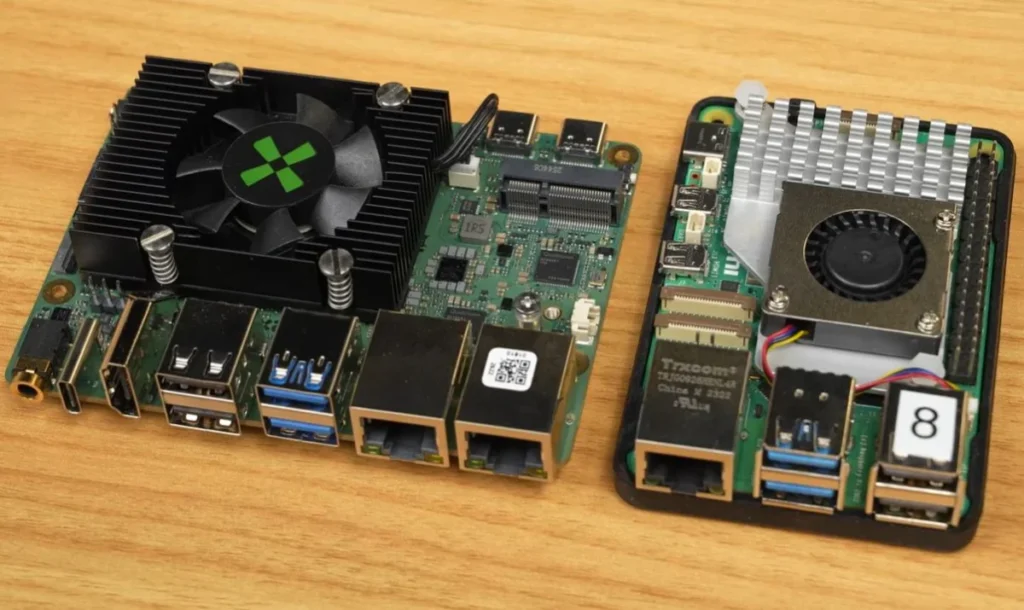
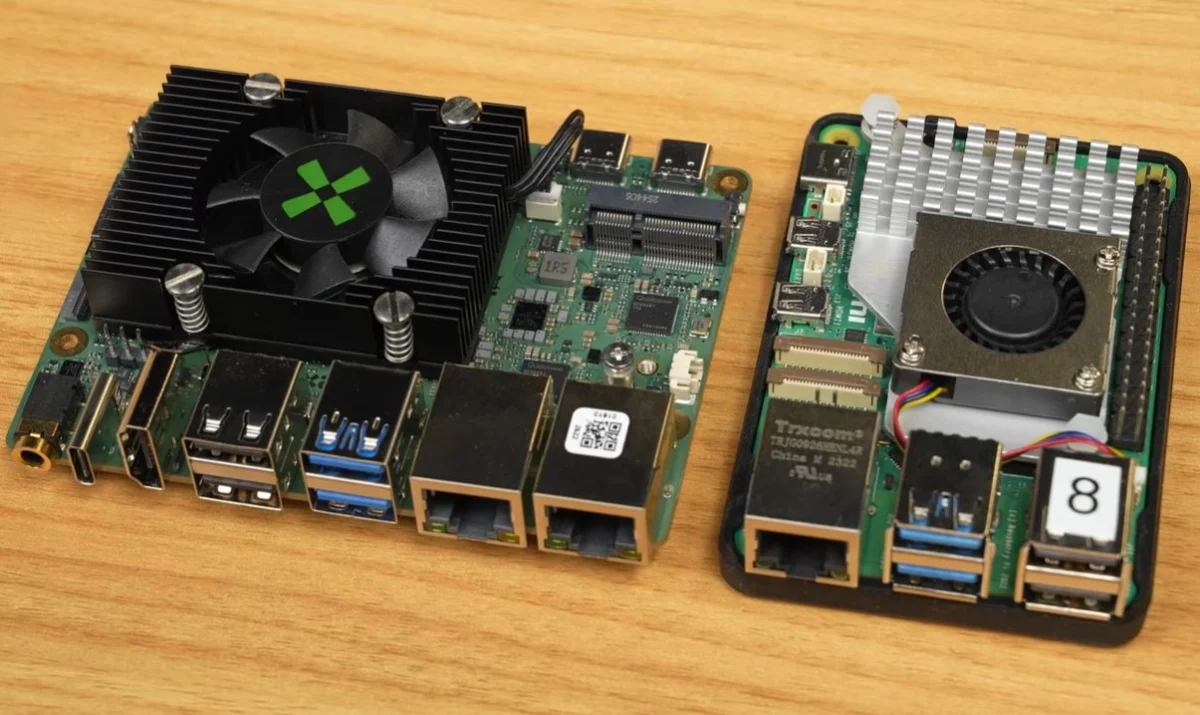
In the evolving landscape of Single Board Computers (SBCs), the Raspberry Pi has long reigned as the undisputed king of accessibility, community support, and ubiquity. However, the year 2026 presents a starkly different economic and technical reality. With the global "RAMpocalypse"—a sustained period of component scarcity and price volatility—driving the cost of an 8 GB Raspberry Pi 5 to a staggering $175, the market has finally opened a window for high-performance challengers. Enter the Radxa Dragon Q8B, a board powered by the Qualcomm SC8280XP (Snapdragon 8cx Gen 3) that is forcing a serious conversation about what a "premium" hobbyist computer should look like.
Renowned SBC enthusiast and hardware analyst Jeff Geerling recently put the Dragon Q8B through its paces, sparking a rigorous debate on whether the extra $34—bringing the total to $209—is a worthy investment for power users. While the barrier to entry is higher, the performance delta between this Qualcomm-powered powerhouse and the Raspberry Pi 5 suggests that the era of the "standard" SBC might be splitting into two distinct categories: the educational/embedded tier and the high-performance workstation tier.
Main Facts: A New Contender in the Silicon Arena
The Radxa Dragon Q8B is not merely another ARM-based development board; it is a significant departure from the standard Broadcom-centric ecosystem. At its heart lies the Qualcomm SC8280XP, an SoC originally engineered for high-end, always-connected Windows laptops. This chip, while announced back in 2021, brings a level of raw compute power that the Raspberry Pi 5’s Broadcom BCM2712 simply cannot match.
Outfitted with 8 GB of LPDDR4X RAM (with variants supporting up to 32 GB), the Dragon Q8B aims to bridge the gap between hobbyist tinkering and legitimate desktop-class performance. Key specifications include:
- Processor: Qualcomm SC8280XP (Snapdragon 8cx Gen 3).
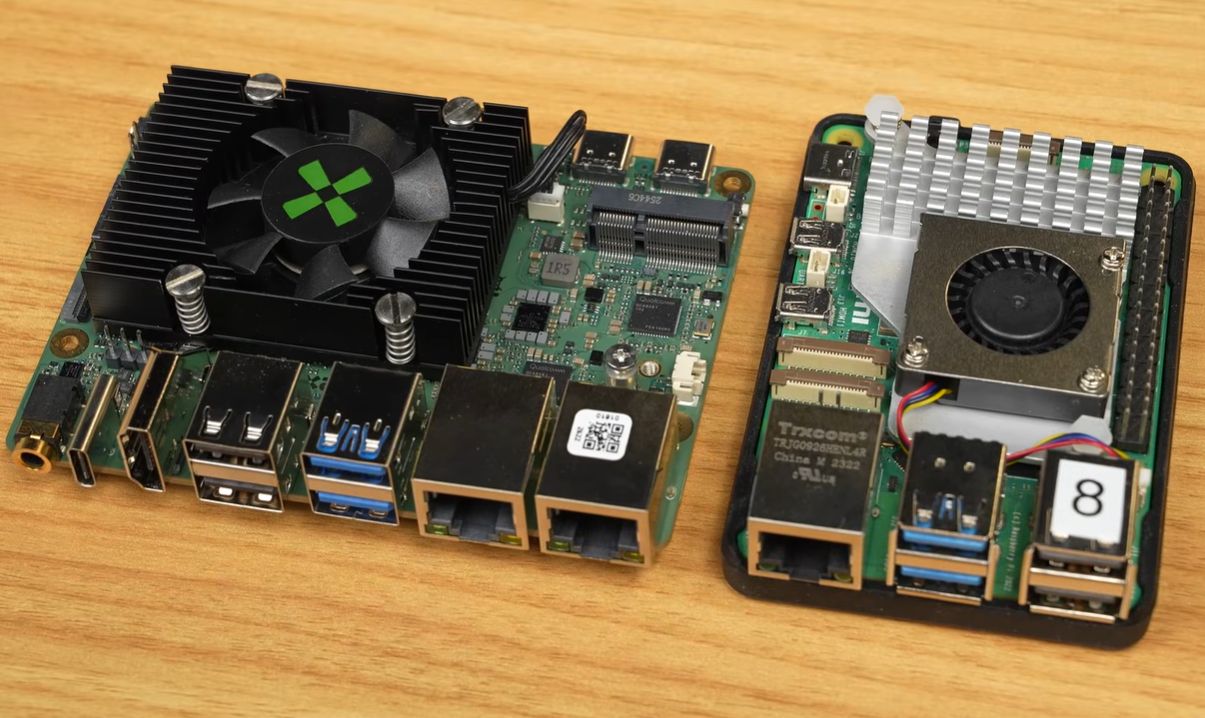
- Networking: Dual 2.5 Gbit Ethernet ports, offering robust potential for networking projects, firewalls, or high-speed NAS setups.
- Connectivity: Expanded PCIe lanes, allowing for high-speed peripherals that would otherwise choke on the bandwidth limitations of traditional SBCs.
- Compatibility: Native UEFI support, which theoretically allows for a more standard boot experience than the often-proprietary bootloaders found in the RPi ecosystem.
However, the hardware’s brilliance is currently tempered by its software maturity. Unlike the Raspberry Pi’s "plug-and-play" experience, the Dragon Q8B requires a more surgical approach, often necessitating custom Linux images and reliance on Radxa’s internal update tools, such as Rsetup.
Chronology: The Journey to the Dragon Q8B
The development of the Dragon Q8B is a reflection of the broader shift in the ARM ecosystem. For years, the SBC market was dominated by chips designed for low-power media devices. As demand for AI processing, home servers, and edge computing grew, manufacturers began looking toward mobile and laptop silicon.
- 2021: Qualcomm announces the Snapdragon 8cx Gen 3, a mobile-focused SoC that set a new benchmark for Windows-on-ARM efficiency.
- 2024-2025: The global semiconductor market experiences extreme volatility. The cost of memory, specifically LPDDR, skyrockets due to high demand for AI-specific hardware, leading to what industry insiders refer to as the "RAMpocalypse."
- Mid-2026: Radxa, seeking to capitalize on the performance gap in the SBC market, launches the Dragon Q8B. By repurposing high-end mobile silicon for the enthusiast community, they address the demand for "Raspberry Pi killers."
- October 2026: Jeff Geerling publishes his comprehensive analysis, documenting the board’s performance, BIOS frustrations, and the harsh reality of its availability.
The chronology of this board is not one of a sudden breakthrough, but rather a calculated response to a supply-constrained market where the "standard" option (the Pi 5) has become surprisingly expensive, effectively subsidizing the viability of more expensive, higher-performance alternatives.
Supporting Data: Benchmarking the Performance Leap
When we strip away the marketing, the raw numbers tell a compelling story. In his testing, Geerling performed a head-to-head comparison between the Pi 5 and the Dragon Q8B. The results are decisive.
Multi-Core Performance
In Geekbench 6, the Dragon Q8B effectively triples the multi-core performance of the Raspberry Pi 5. While the Pi 5 is a commendable evolution, the SC8280XP architecture, with its focus on sustained, high-intensity laptop workloads, simply operates in a different league. For users looking to compile large software projects, host high-traffic web services, or run virtualization containers, this is a night-and-day difference.
Power Efficiency
Perhaps more surprisingly, the Dragon Q8B holds its own in efficiency. Geerling’s HPL (High-Performance Linpack) efficiency tests revealed that the Dragon Q8B hits 3.73 Gflops/W, compared to the Raspberry Pi 5’s 2.75 Gflops/W. This implies that not only is the board more powerful, but it is also more efficient at converting electricity into compute.
The Network Advantage
The inclusion of dual 2.5 Gbit Ethernet ports is a game-changer. For many enthusiasts, the bottleneck of the Pi 5—even with its performance gains—remains its networking throughput. The Dragon Q8B’s ability to handle high-speed data transfer makes it a much more viable candidate for home lab infrastructure, such as dedicated routers, software-defined storage (SDS), or Proxmox clusters.
Official Responses and Developer Friction
The reception from the enthusiast community has been a mixture of excitement and caution. While Radxa has provided a technical manual and documentation, the "out-of-the-box" experience is undeniably rougher than that of the Raspberry Pi.
Radxa’s current strategy involves providing curated Linux images. This has been a point of contention for many users who were drawn to the promise of "UEFI support." Ideally, a UEFI-compliant board should allow a user to download a standard ISO—like Ubuntu or Debian—and boot it without specialized drivers or patched kernels. Currently, however, the Dragon Q8B’s UEFI BIOS feels like a work-in-progress.
In discussions documented on GitHub and within the developer community, it is clear that Radxa is actively iterating on their firmware. The company appears to be in a transition phase, moving from a "custom-image" model to a more open, standardized boot process. For the early adopters, this means regular BIOS updates are mandatory, and "kinks" are a part of the daily routine. For the average hobbyist, this is a significant barrier.
Implications: The Future of the SBC Market
The Dragon Q8B serves as a microcosm of a larger trend: the "professionalization" of the SBC. As the lines between an embedded board and a desktop computer blur, the expectations placed on these devices are rising.
The AI-Induced Collapse and Scarcity
The mention of the "AI-induced personal computing collapse" in Geerling’s review is not hyperbole. The massive demand for high-bandwidth memory (HBM) and specialized AI chips has diverted manufacturing capacity away from the consumer-grade components used in SBCs. As long as this supply chain imbalance continues, low-cost boards will remain scarce or overpriced. The Dragon Q8B represents a pivot to "premium" components that may be less susceptible to the exact same supply-chain pressures as the Pi, or at the very least, offer enough value to justify the inflated price tag.
A Two-Tiered Future
We are likely witnessing the bifurcation of the SBC market. On one side, we have the Raspberry Pi, which remains the gold standard for education, hardware interfacing, and community-driven documentation. Its value proposition is not just the silicon, but the ecosystem.
On the other side, we have boards like the Dragon Q8B. These devices are for the "Power User" who needs sustained multi-core performance, massive networking throughput, and the flexibility of UEFI boot. These users are less concerned with the "GPIO pin-out" and more concerned with "Gflops per watt" and "PCIe bandwidth."
Final Verdict: Is it a "Pi Killer"?
To call the Radxa Dragon Q8B a "Raspberry Pi killer" is perhaps a misnomer. It is not trying to kill the Pi; it is trying to occupy the space that the Pi has vacated by becoming a more expensive, mainstream product. The Dragon Q8B is a specialized tool for a specific demographic. If you are building a robot or learning Python, the Pi 5 remains the superior choice due to its massive library of tutorials and support. But if you are building a high-performance home server, a virtualization node, or a desktop replacement that happens to fit in the palm of your hand, the Dragon Q8B is a compelling, albeit raw, powerhouse.
As Radxa continues to refine their BIOS and improve the user experience, the gap between the Dragon Q8B and the "standard" SBC will likely widen in favor of the former. For now, it stands as a testament to what is possible when high-end mobile silicon meets the enthusiast board market—a bold, complex, and highly capable machine that signals the next stage of our computing evolution.