TensorFlow Lite Unlocks Quadrupled CPU Inference Performance with XNNPack Dynamic Range Quantization
By Alan Kelly, Software Engineer (Adapted for publication)
In a major leap forward for edge artificial intelligence, the TensorFlow team has announced that XNNPack—the core CPU backend for TensorFlow Lite (TFLite)—now officially supports dynamic range quantization for its Fully Connected and Convolution 2D operators. By pairing this newly optimized backend with dynamic range quantization, developers have achieved up to a fourfold increase in inference performance compared to single-precision floating-point baselines.
This breakthrough represents a watershed moment for on-device machine learning. Because CPUs remain the most ubiquitous hardware target, offering the widest possible reach across billions of mobile devices globally, supercharging CPU inference performance means that sophisticated, resource-heavy AI features can now be efficiently deployed onto older, lower-tier, and budget hardware. Already trusted to power features in flagship products like Google Gemini, Google Meet, and Chrome OS audio denoising, this high-performance infrastructure is now fully accessible to the broader open-source developer community.
Main Facts: A New Era for Edge AI
At its core, the latest update to TFLite’s XNNPack backend radically transforms how machine learning models execute on central processing units.

- Quadrupled Performance: Through the introduction of dynamic range quantization for Fully Connected and Convolution operators, XNNPack delivers up to a 4x speed-up compared to standard single-precision (fp32) floating-point baselines.
- The Power of Mixed Precision: Developers can now combine dynamic range quantization with half-precision (fp16) inference. This allows compute-intensive floating-point operators (such as Softmax and Batch Matrix Multiply) to execute at double the speed on modern devices featuring native hardware fp16 support.
- Exceptional Efficiency for Complex Models: Heavy generative architectures, such as the diffusion model in Stable Diffusion, run up to 6.2 times faster than their original float32 counterparts when optimized using these new XNNPack kernels.
- Seamless Compatibility: Unlike full integer quantization, dynamic range quantization does not require a representative calibration dataset, dramatically lowering the barrier to entry for non-expert developers.
Chronology: The Evolution of On-Device Quantization
To understand the significance of this milestone, it is helpful to trace the evolution of inference optimization within the TensorFlow Lite ecosystem:
- The Single-Precision Baseline (fp32): Historically, most machine learning models were deployed using 32-bit floating-point precision. While offering high accuracy, fp32 operations are computationally expensive and memory-heavy, restricting complex AI tasks to high-end hardware.
- The Introduction of Quantization Alternatives: Previously, developers had to choose between full integer quantization (storing both weights and activations as signed 8-bit integers) or half-precision (fp16) floating-point inference. While full integer quantization yielded impressive speed gains, it required complex calibration using representative datasets and frequently suffered from accuracy degradation or unsupported operator failures.
- The Rise of Half-Precision (Late 2023): TensorFlow highlighted massive performance gains achieved by leveraging half-precision inference on modern mobile silicon. However, fp16 alone could not capture the maximum hardware efficiencies inherent to 8-bit integer arithmetic.
- The XNNPack Dynamic Range Integration (Mid 2024): TensorFlow introduced highly optimized, architecture-specific implementations of Fully Connected and Convolution 2D operators supporting dynamic range quantization within XNNPack.
- Native Integration (TensorFlow 2.17+): Beginning with TensorFlow 2.17, dynamically quantized XNNPack inference is enabled by default in prebuilt binaries, bringing these sweeping optimizations to developers automatically.
Supporting Data: Benchmarking the Performance Leap
To quantify the impact of these changes, the TensorFlow engineering team benchmarked four public models across common computer vision and generative tasks.
Dynamic Range vs. Full Integer Quantization
Conventionally, engineers assumed that full integer quantization would consistently outperform dynamic range quantization because all internal operations are computed using pure integer arithmetic. Dynamic range quantization introduces minor overhead by converting floating-point activations into quantized 8-bit integers on the fly.
Surprisingly, benchmark profiling revealed that dynamic range quantization often matches—and occasionally exceeds—the performance of full integer models. For instance, Stable Diffusion’s diffusion model, which could not even be converted using traditional full integer quantization due to unsupported operators, achieved a staggering 6.2x speed-up over the original float32 baseline when processed via XNNPack’s dynamically quantized operators.

Profiling via the TFLite Profiler uncovered why certain fully-quantized models lagged behind: quantization artifacts and suboptimal ratios between input and output scales forced models down less efficient execution paths. Dynamic range quantization sidesteps many of these bottlenecks by keeping non-weight tensors in float32 format, preserving higher overall accuracy while harvesting integer-level performance boosts for heavy layers.
Preserving Quality in Mixed Precision
A common concern with aggressive model quantization or mixed-precision strategies (combining dynamic range quantization with fp16 activations) is the potential degradation of output quality.
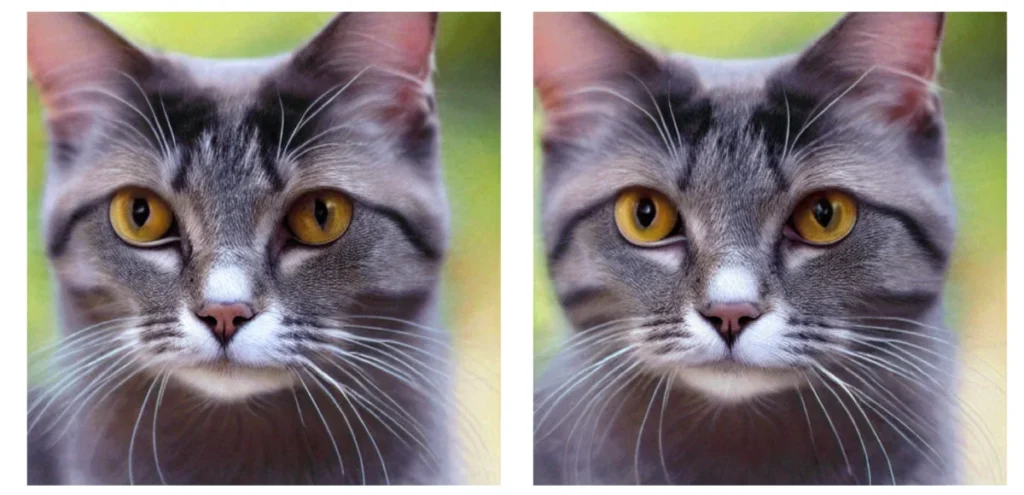
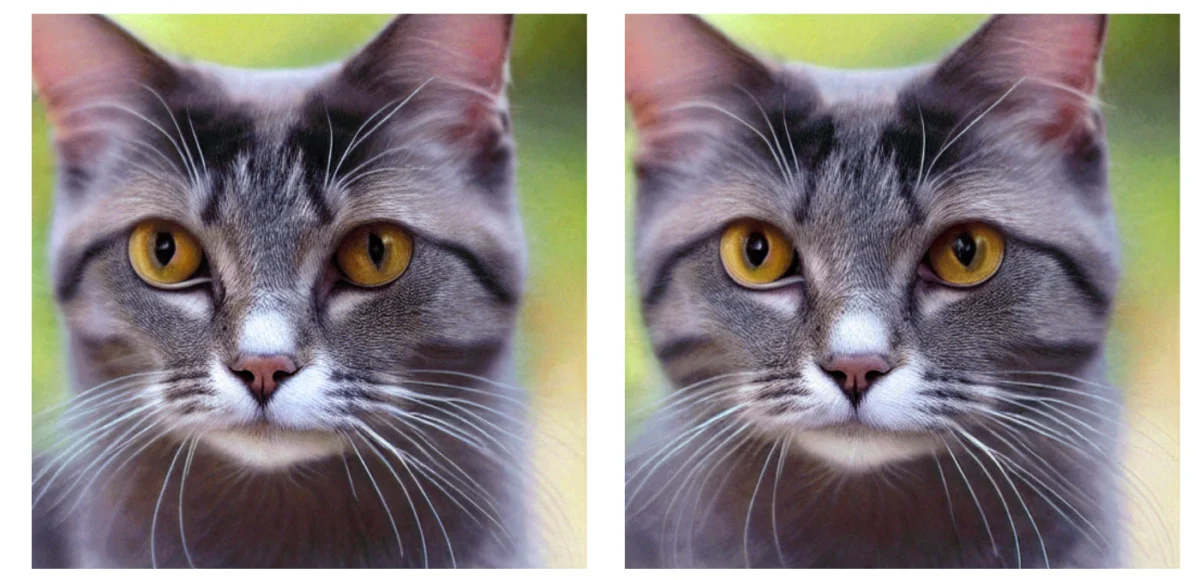
To test this, researchers generated images using the Stable Diffusion model under two conditions: utilizing fp32 activations versus fp16 activations, with the random number generator seeded identically. Visual comparisons of the output—featuring detailed, complex subjects like cats requested via text prompts—showed that the generated images were virtually indistinguishable. This confirmed that utilizing fp16 activations for the diffusion model introduces negligible visual impact while significantly cutting computational costs. (Note: The engineering team stresses that while visual parity was achieved here, all production networks should undergo validation across large, diverse validation datasets).
Official Responses and Engineering Insights
The integration of dynamic range quantization into XNNPack is the result of focused, collaborative engineering within the core TensorFlow team. Software Engineer Alan Kelly emphasized the accessibility and democratization of this technology:

"Full integer quantization is hard; converting models is difficult, error-prone, and accuracy is not guaranteed. The representative dataset must be truly representative to minimize quantization errors. Dynamic range quantization offers a pragmatic compromise… giving game-changing performance improvements without the steep learning curve."
Engineering contributions from core developers Frank Barchard and Quentin Khan were instrumental in pushing these high-performance, architecture-specific kernels across the finish line. By writing heavily optimized assembly and vector code tailored for modern instruction sets—including ARM, ARM64, x86 SSE/AVX/AVX512, and WebAssembly—the team ensured that processors ranging from older legacy handsets to cutting-edge silicon (such as the Pixel 8’s Tensor G3 and the OnePlus 11’s Snapdragon 8 Gen 2) can seamlessly leverage the speed-ups.
Implications for Developers and the Mobile Ecosystem
The deployment of XNNPack’s dynamic range quantization has profound implications for the software development landscape:
1. Lowering the Barrier to Entry for AI Developers
Previously, achieving high-performance on-device inference required deep expertise in model quantization, calibration datasets, and hardware-specific compilation flags. By enabling dynamic range quantization through a simple configuration flag (converter.optimizations = [tf.lite.Optimize.DEFAULT]) without requiring a representative dataset, sophisticated model optimization is now accessible to mainstream and non-expert developers alike.

2. Expanding the Device Horizon
As machine learning models grow increasingly sophisticated—encompassing generative text, audio denoising, real-time computer vision, and on-device assistants—hardware limitations have historically excluded budget-conscious or legacy smartphone users from experiencing these features. By quadrupling CPU inference efficiency, developers can now deploy advanced AI capabilities to millions of older or lower-tier devices currently active in the global market.
3. Production-Proven Reliability
This is not merely an experimental feature; the exact same optimization stack is already actively running behind the scenes in some of Google’s most demanding consumer applications, including the Gemini assistant, Google Meet’s real-time audio filters, and Chrome OS audio processing subsystems. Open-source developers can thus adopt these tools with high confidence in their stability and production readiness.
How to Get Started
Developers wishing to harness these performance gains can do so immediately. For models already converted using dynamic range quantization, no reconversion is necessary—simply updating to TensorFlow 2.17 (or utilizing the latest nightly builds) will automatically route execution through XNNPack’s newly optimized CPU operators. For new models, setting the standard TFLite converter optimization flag is all it takes to unlock a new tier of mobile machine learning performance.