The New Frontier of Choice: Amazon Bedrock Expands with OpenAI’s GPT-6 Line and Anthropic’s Claude Opus 5.5
Main Facts
The landscape of enterprise artificial intelligence is undergoing a profound structural shift. For years, the prevailing question in machine learning adoption centered primarily on raw capability: How smart is the model? However, as frontier models proliferate at a breathtaking pace, the paradigm has shifted toward optimization, cost-efficiency, and surgical precision. Organizations are no longer asking simply whether a model can perform a task, but rather which specific model fits a precise operational step—balancing capability, cost, and latency.
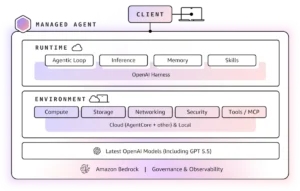
Reflecting this industry-wide evolution, Amazon Web Services (AWS) announced major expansions to Amazon Bedrock, its fully managed service for building and scaling generative AI applications. The latest updates introduce powerful new choices for enterprise architects, developers, and data scientists:
- OpenAI’s GPT-6 Sol and GPT-6 Luna: Two cutting-edge models offering distinct points on the intelligence-versus-efficiency curve, arriving at significantly lower price points than their GPT-5.6 predecessors.
- Anthropic’s Claude Opus 5.5: The flagship debut of the Claude 5.5 family, engineered to maximize token efficiency and excel in complex, agentic coding workflows and long-running autonomous tasks.
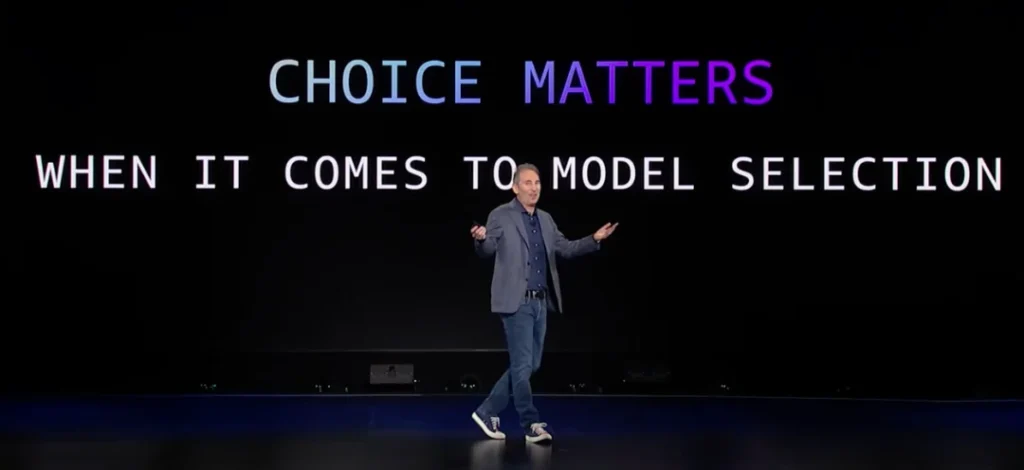
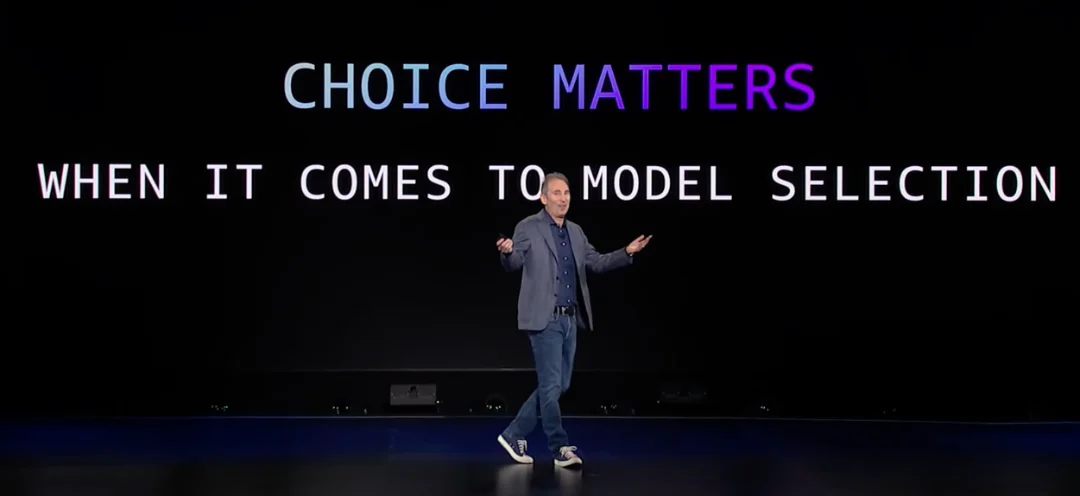
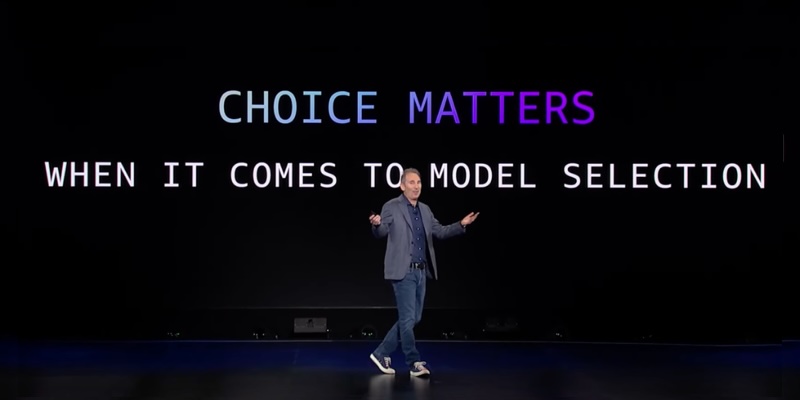
These additions underscore a broader philosophy taking root across the cloud computing ecosystem: moving away from a one-size-fits-all approach toward a targeted, multi-model strategy. Instead of defaulting to the largest, most resource-intensive model for every application layer, enterprises can now dynamically route workloads to the most cost-effective and performant engine for the job.
Chronology
The rapid acceleration of model integration on cloud platforms did not happen in a vacuum. It represents the culmination of years of iterative development, platform scaling, and strategic partnerships between hyperscalers and frontier AI laboratories.
- Early-Stage Generative AI Adoption: AWS initially established Amazon Bedrock to give developers secure, API-driven access to a curated selection of foundation models from leading AI companies, including Anthropic, Cohere, Meta, and Stability AI.
- The Shift Toward Multi-Model Flexibility: As use cases matured from simple text generation and summarization to complex software engineering, multi-step reasoning, and autonomous agent workflows, the limitations of deploying a single generalized model became apparent. Latency bottlenecks and operational overhead spurred demand for specialized architectures.
- The Arrival of GPT-5 Generations: Previous iterations set benchmarks for reasoning depth, but also highlighted the acute need for pricing models that made high-frequency, automated enterprise tasks economically viable.
- The Current Milestone (Recent Weeks): Amazon Bedrock integrated OpenAI’s GPT-6 Sol and GPT-6 Luna, alongside Anthropic’s Claude Opus 5.5. This rollout represents a synchronized industry push toward granular cost control, heightened token efficiency, and advanced agentic capabilities, captured in recent AWS architecture briefs and engineering updates authored by technical leads such as Daniel Abib.
Supporting Data & Technical Breakdown
To fully appreciate the significance of these platform updates, one must examine the specific design goals and technical advantages of each newly integrated model.
1. OpenAI GPT-6 Sol
- Target Workload: Demanding, recurring software development, DevOps orchestration, and complex system troubleshooting.
- Profile: Built for deep reasoning and intricate problem-solving, Sol handles code generation, architectural validation, and automated debugging workflows where precision is paramount.
- Economic Advantage: Despite its advanced capabilities, Sol is priced significantly lower than its GPT-5.6 counterpart, lowering the barrier to entry for continuous development pipelines.
2. OpenAI GPT-6 Luna
- Target Workload: Focused, repeatable, high-volume tasks.
- Profile: Luna is optimized for speed and throughput. It excels at structured data extraction, content categorization, transactional classification, and routine customer interaction workflows where latency and scale matter more than deep philosophical reasoning.
- Economic Advantage: Like its sibling, Luna arrives at a radically reduced price point, making massive parallel processing financially sustainable for enterprise applications.
3. Anthropic Claude Opus 5.5
- Target Workload: Agentic coding, multi-step planning, and long-running autonomous tasks.
- Profile: As the inaugural release in the Claude 5.5 family, Opus 5.5 is engineered to do significantly more work with fewer tokens. It demonstrates superior context retention and coherence over extended execution horizons, making it exceptionally well-suited for autonomous software agents that must read, write, test, and debug codebases over hours or days without losing track of project state.
| Model | Primary Use Case | Efficiency & Pricing Profile | Architectural Focus |
|---|---|---|---|
| GPT-6 Sol | Dev/Ops, complex code generation, debugging | Significantly lower than GPT-5.6 | Deep reasoning & reliability |
| GPT-6 Luna | High-volume, repeatable tasks, data extraction | Highly optimized for scale | Speed, latency, & cost-reduction |
| Claude Opus 5.5 | Agentic coding, long-running tasks | Higher token efficiency than Opus 5 | Extended context & autonomy |
Beyond raw model integration, the supporting ecosystem on AWS has evolved to address the unique observability challenges posed by multi-model, agentic architectures. Tracking token consumption, latency drift, and agent execution paths across disparate foundational models requires sophisticated monitoring tools that have recently matured within the AWS management and governance portfolio.
Official Responses & Industry Perspectives
The integration of these frontier models into Amazon Bedrock has drawn widespread commentary from cloud architects, enterprise leaders, and developer communities.
Industry analysts have noted that the strategy reflects a maturing cloud market. "Enterprise AI is transitioning from an exploratory science project to a rigorous discipline of supply chain management," notes one cloud infrastructure researcher. "You wouldn’t use a heavy-duty freight truck to deliver a single envelope, and organizations can no longer afford to route trivial text-classification tasks through massive, high-latency frontier models. Bedrock’s expansion gives builders the granular control they desperately need."
Within the AWS ecosystem, technical communicators and platform advocates have emphasized the democratization of choice. In recent developer advisories, AWS representatives highlighted that the unifying theme of these deployments is alignment: matching the specific cognitive profile and cost structure of a model to the exact requirements of a workflow step.
Furthermore, community hubs such as the AWS Builder Center have reported a surge in developer engagement. Builders are increasingly sharing architectural blueprints that leverage multi-model chaining—using lightweight models like GPT-6 Luna for initial data filtration and formatting, routing complex logic errors to GPT-6 Sol, and handing off overarching software engineering projects to Claude Opus 5.5.
Implications
The convergence of OpenAI’s latest GPT-6 architecture and Anthropic’s Claude 5.5 series on Amazon Bedrock carries profound implications for software engineering, enterprise economics, and cloud infrastructure strategy.
1. The Death of the Monolithic LLM Strategy
For years, organizations sought to standardize their entire generative AI strategy around a single foundational model. The rapid expansion of Bedrock signals that this era is drawing to a close. Enterprises are adopting poly-model architectures, where different tasks within the same software application are handled by entirely different models. This requires robust orchestration layers, standardized APIs, and sophisticated routing logic—all capabilities natively supported by Amazon Bedrock.

2. Radical Margin Expansion for AI-Driven SaaS
High inference costs have historically squeezed the profit margins of software-as-a-service (SaaS) companies attempting to embed generative AI into their core products. With GPT-6 Sol, GPT-6 Luna, and Claude Opus 5.5 offering drastically better cost-to-performance ratios and token efficiencies, companies can scale their AI features without incurring punishing cloud bills. This economic relief will likely accelerate feature velocity and unlock entirely new categories of high-frequency AI applications that were previously cost-prohibitive.
3. Acceleration of Autonomous Agent Workflows
The architectural refinements found in Claude Opus 5.5—specifically its ability to operate effectively over long horizons with fewer tokens—pave the way for true agentic automation. As software agents become more reliable, capable of managing multi-hour coding or data-processing sessions without human intervention, enterprises will see a fundamental shift in workforce productivity. Developers will transition from writing raw code to managing fleets of specialized AI agents.
4. The Rising Imperative of Observability and Governance
As organizations deploy multiple models from different providers simultaneously, the complexity of monitoring system behavior multiplies. Debugging a failure in an autonomous multi-agent pipeline requires unprecedented visibility into token flows, intermediate prompt outputs, and latency spikes. The maturation of AWS observability tooling alongside these model launches is not merely a convenience; it is an absolute operational necessity.
Looking Ahead
As the generative AI landscape continues its relentless march forward, the defining competitive advantage for cloud providers will no longer be exclusivity to a single headline-grabbing model. Instead, it will be the frictionless ability to orchestrate a vast, heterogeneous ecosystem of specialized intelligence.
With the arrival of GPT-6 Sol, GPT-6 Luna, and Claude Opus 5.5 on Amazon Bedrock, AWS has reinforced its position as a central clearinghouse for enterprise innovation. Developers and enterprise architects now possess the modular building blocks required to construct smarter, faster, and radically more cost-effective AI systems.
For ongoing updates, technical deep-dives, and announcements regarding upcoming virtual and in-person developer events, practitioners are encouraged to monitor the official What’s New with AWS page, explore the AWS Blogs, and connect with peers through the AWS Builder Center.