AWS Unveils Managed Agents for OpenAI on Bedrock, Expanding Frontier AI Capabilities and Updating Service Lifecycles
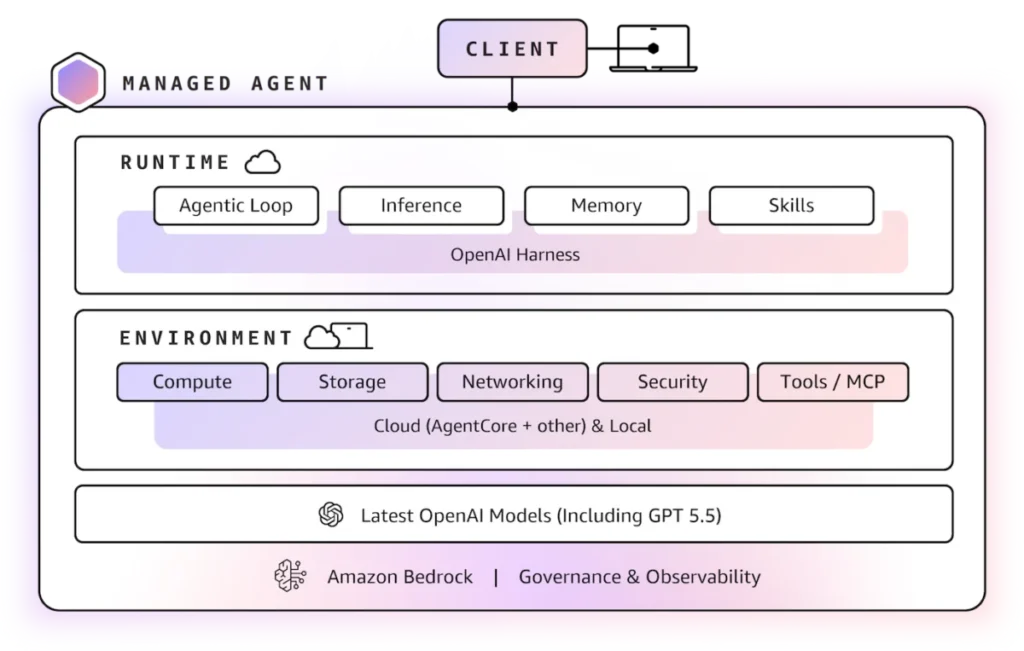
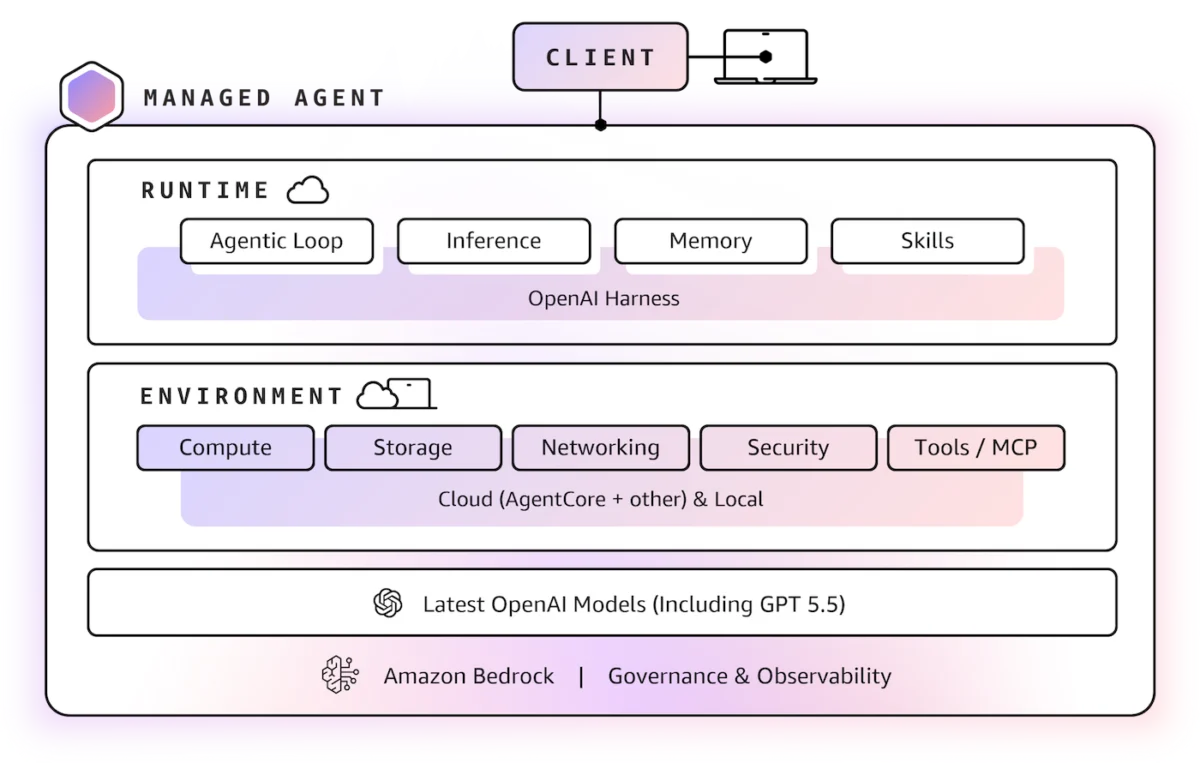
SEATTLE — Amazon Web Services (AWS) has announced a major expansion of its generative artificial intelligence portfolio with the public preview of Amazon Bedrock Managed Agents powered by OpenAI. Revealed last week by principal developer advocate Channy Yun, the new offering brings a customized version of OpenAI’s Agents API directly into the AWS ecosystem.
Designed to be deeply AWS-native, the integration allows organizations to construct, deploy, and scale intelligent AI agents optimized for OpenAI models while leveraging their existing AWS security postures, identity frameworks, and governance protocols. Alongside this major artificial intelligence rollout, AWS detailed its latest suite of frontier model expansions, upcoming developer events, and critical updates to its product lifecycle policies affecting several legacy services.
Main Facts: Bridging OpenAI and AWS Infrastructure
The centerpiece of last week’s announcements is the introduction of Amazon Bedrock Managed Agents powered by OpenAI. Until now, organizations utilizing OpenAI’s advanced agent architectures often had to manage disparate multi-cloud configurations, stitching together external APIs with internal data stores while navigating complex security and compliance hurdles.
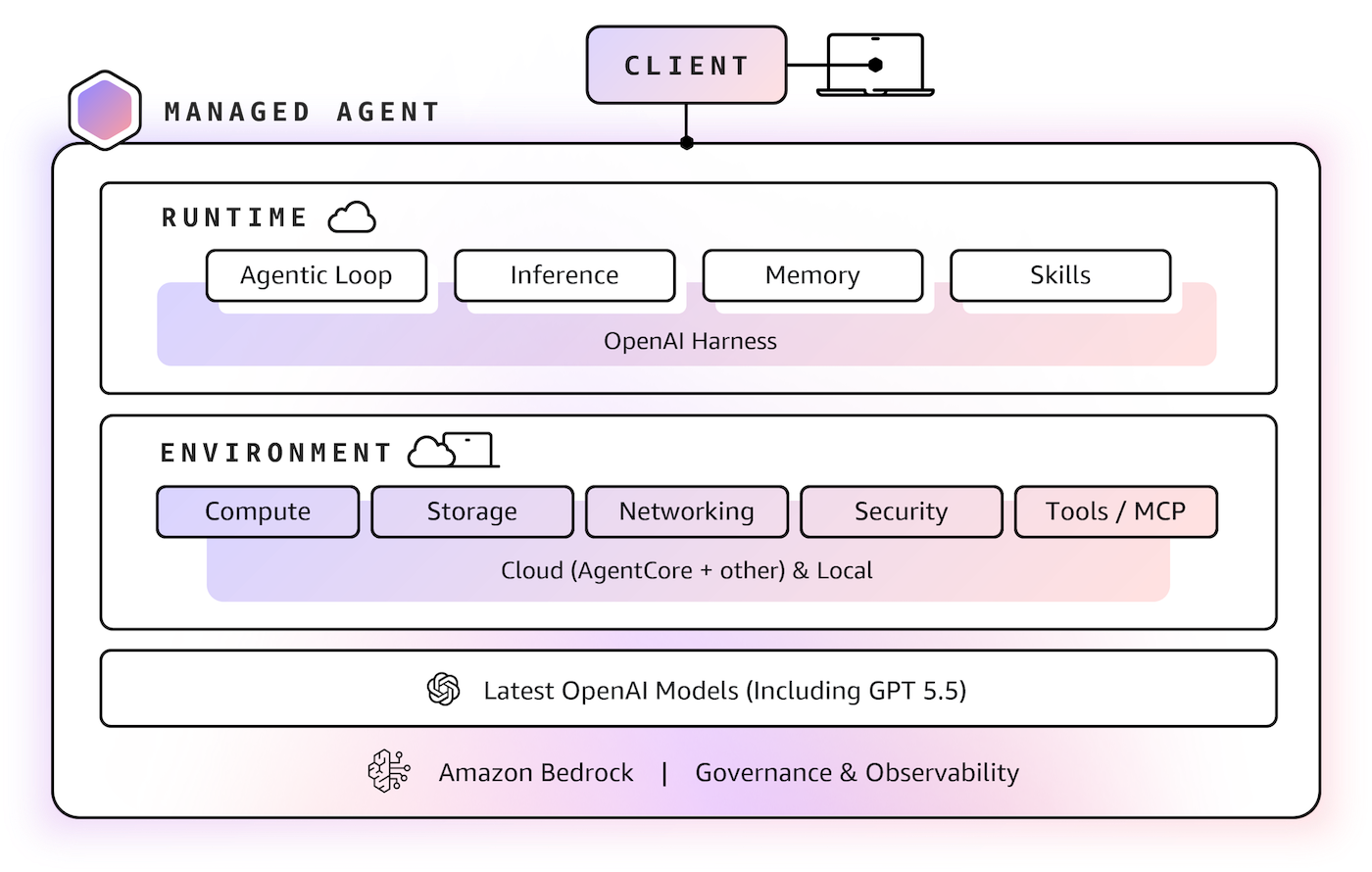
The new managed service changes that paradigm by embedding OpenAI’s agent capabilities directly into Amazon Bedrock. Key architectural highlights include:
- Native AWS Integration: Agents built on the platform operate entirely within the user’s AWS environment. This guarantees seamless integration with standard AWS identity and access management (IAM), resource permission boundaries, and centralized governance controls.
- Flexible Execution Environments: Developers can choose between two distinct deployment modalities:
- Self-Hosted Compute: Ideal for development phases, allowing engineers to run and test agents on local development machines, custom containers, or existing compute environments.
- Amazon Bedrock AgentCore Runtime: A fully managed runtime environment that handles session management, state handling, and configurable data storage directly inside the user’s AWS account.
- Expanded Frontier Models: In tandem with the OpenAI agents preview, AWS continues to broaden its model selection on Amazon Bedrock, introducing new frontier foundational models to give developers granular control over cost, latency, and capability.
Chronology of Recent AWS Developments
To fully understand the trajectory of AWS’s product ecosystem, it is helpful to examine the timeline of recent releases, updates, and upcoming milestones shaping the cloud computing landscape:
- Mid-September 2026: AWS publishes comprehensive updates to its Product Lifecycle Changes documentation, outlining upcoming maintenance phases, sunset schedules, and end-of-support milestones for select legacy services.
- September 29, 2026: Official lifecycle updates take effect. Several legacy offerings officially reach End of Support, while others transition into Maintenance or Sunset phases to pave the way for modern, cloud-native alternatives.
- Early October 2026: AWS officially launches the public preview of Amazon Bedrock Managed Agents powered by OpenAI, supported by deep-dive documentation, architectural diagrams, and developer guides.
- Upcoming October 29, 2026: The strict deadline for services moving into Maintenance mode; these tools will officially become inaccessible to new customers.
- Late 2026 and Beyond: The tech community prepares for upcoming industry flagships, including AWS re:Invent and regional AWS Community Days, where further advancements in generative AI and cloud infrastructure are expected to take center stage.
Supporting Data: Navigating AWS Product Lifecycle Changes
As AWS continues to innovate rapidly in fields like generative AI, cloud-native serverless architectures, and advanced data analytics, older services occasionally make room for modern alternatives. AWS provides structured guidance through its Product Lifecycle Changes framework to help organizations minimize operational disruptions.
Service Maintenance and Sunsetting
During the latest update cycle on September 29, 2026, AWS outlined critical shifts in service availability:
- Entering Maintenance Mode: Services transitioning into this phase will remain accessible to existing users for a limited transition window, but will no longer be accessible to new customers starting October 29, 2026. AWS encourages teams currently utilizing these tools to evaluate recommended migration pathways and modern alternatives.
- Entering Sunset Phase: Products designated for the sunset phase are on a definitive timeline for retirement. Customers are strongly urged to migrate workloads to recommended AWS equivalents to maintain security patches and continuous uptime.
- Reached End of Support: Effective September 29, 2026, specific legacy integrations and older service tiers have officially reached their End of Support milestone, meaning no further technical assistance, bug fixes, or security updates will be provided by AWS.
AWS representatives emphasize that while service evolution is necessary for technological progress, customer continuity remains a top priority. Organizations impacted by these lifecycle changes are advised to consult the official AWS Product Lifecycle documentation or reach out directly to AWS Support for tailored migration roadmaps.
Official Responses and Developer Engagement
The introduction of OpenAI-powered managed agents within Amazon Bedrock signals a pragmatic shift in the cloud industry, acknowledging that enterprises often demand multi-model strategies coupled with unified infrastructure.
Writing on the official AWS News Blog, Channy Yun highlighted the flexibility the new architecture brings to development teams. By allowing engineers to deploy advanced agent logic within secure, governed AWS perimeters, developers no longer need to choose between cutting-edge AI models and strict enterprise compliance frameworks.

To support this transition, AWS has mobilized its global builder network. Developers looking to dive deeper into the technical mechanics of Amazon Bedrock Managed Agents can access comprehensive tutorials, whitepapers, and reference architectures via the official Amazon Bedrock documentation portal.
Furthermore, AWS continues to foster community collaboration through various upcoming initiatives:
- The AWS Builder Center: A collaborative hub for developers to share code snippets, architectural solutions, and troubleshooting advice.
- Global Events and Conferences: Registration is open for major industry gatherings, including the upcoming AWS re:Invent conference, localized AWS Community Days, and dedicated startup and developer events designed to showcase the latest breakthroughs in cloud technology.
Implications for Enterprise Architecture and AI Strategy
The convergence of OpenAI’s sophisticated agent frameworks with AWS’s robust enterprise infrastructure carries profound implications for Chief Technology Officers (CTOs), cloud architects, and enterprise security officers.
1. Breaking Down Silos in Generative AI
Historically, organizations adopting generative AI faced an architectural dilemma: build atop flexible external model APIs that lacked deep integration with corporate data lakes, or restrict themselves solely to native models available within a single cloud provider.
By introducing managed agents optimized for OpenAI models natively on Bedrock, AWS bridges this gap. Enterprises can now orchestrate complex multi-step AI workflows—such as automated customer service dispatchers, intelligent code generation pipelines, and autonomous data analysis agents—while keeping all data processing securely inside their designated AWS Virtual Private Clouds (VPCs).
2. Enhanced Security, Identity, and Governance
Security remains the primary barrier to entry for enterprise AI adoption. Because Amazon Bedrock Managed Agents inherit existing AWS IAM policies, customer-managed encryption keys (KMS), and comprehensive logging via AWS CloudTrail, security teams retain total visibility and control. Administrators can audit agent actions, restrict data access down to the table or file level, and enforce strict compliance mandates without sacrificing the creative output of frontier AI models.
3. Streamlined Operations and Lower Total Cost of Ownership (TCO)
With flexible execution choices—ranging from local developer setups via self-hosted compute to fully managed sessions utilizing the Amazon Bedrock AgentCore Runtime—teams can right-size their operational overhead. Organizations can prototype rapidly without provisioning expensive persistent infrastructure, scaling up only when workloads demand production-grade reliability.
Looking Ahead
As the cloud computing landscape accelerates toward autonomous, agentic artificial intelligence, announcements like the integration of OpenAI agents into Amazon Bedrock demonstrate the industry’s movement toward hybrid, interoperable ecosystems.
Developers and enterprise leaders are encouraged to review the latest architectural blueprints, evaluate their current cloud environments against upcoming service lifecycle deadlines, and engage with the global builder community as AWS prepares for its flagship winter events.
For a comprehensive, real-time log of all platform updates, developers should monitor the What’s New with AWS portal, while ongoing architectural discussions and deep dives can be followed across the official AWS Blogs.