The CSS Frontier: A Deep Dive into the Latest Web Layout and Styling Innovations
The landscape of web development is shifting at an unprecedented pace. As browser vendors continue to push the boundaries of what is possible within the browser’s rendering engine, developers are finding that yesterday’s "impossible" CSS challenges are today’s standard practices. From advanced text manipulation to revolutionary scrolling behaviors and the evolution of the <img> element, the current wave of CSS features is fundamentally changing how we architect the modern web.
This report examines the latest breakthroughs in CSS, covering everything from the Custom Highlight API to the granular control provided by the lh unit, and explores the implications of these tools for performance, design, and user experience.
Main Facts: The New Toolkit for Modern Developers
The recent influx of CSS specifications has empowered developers to move away from JavaScript-heavy solutions for visual effects. The core pillars of this recent evolution include:
- The CSS Custom Highlight API: A sophisticated way to style arbitrary text ranges, allowing for persistent, dynamic highlights that are decoupled from the DOM.
- The
lhUnit: A precise measurement based on the computed line-height of an element, enabling fluid, typography-driven layouts. - Navigation Matching: A declarative approach to styling navigation states, signaling a move toward browser-native routing styles.
- Advanced Scroll Control: New properties like
scroll-axis-lockthat break the traditional constraints of 1D scrolling.
These features collectively signal a transition toward a more "declarative" web, where the browser handles complex state management that previously required hundreds of lines of client-side scripting.
Chronology of Development
The evolution of these features has been a collaborative effort between the W3C, browser engine teams (Chromium, WebKit, Gecko), and the broader developer community.
July 2026: The Navigation Breakthrough
The month began with a significant announcement from Bramus regarding CSS Navigation Matching. This allows developers to hook into the browser’s navigation lifecycle. By matching routes declaratively, developers can now style active links and transitions without manual state synchronization. This development is considered a "missing link" in the quest for a seamless single-page application experience built entirely on standards.
Early August 2026: The Skeleton UI Debate
Lea Verou ignited a community-wide discussion on the architectural challenges of Skeleton UIs. By experimenting with text-decoration, mask properties, and box-decoration-break, she demonstrated that creating loading placeholders that are both performant and responsive is a surprisingly complex feat. The resulting discourse highlighted the community’s desire to standardize how "loading" states are presented to users.
Mid-August 2026: The "Worst Element" Inquiry
Following the technical deep dives, the community shifted its focus toward the foundational aspects of the web. Zach Leatherman’s query regarding the "worst HTML element" sparked a debate that, while humorous, touched on the technical debt inherent in legacy elements like <marquee> or the misuse of <div> as a catch-all container. This discussion serves as a reminder that even as we adopt new CSS features, we must remain critical of the underlying HTML structures we use to support them.
Supporting Data: Technical Implementation
The CSS Custom Highlight API
While the name implies a purely CSS solution, the implementation relies heavily on the Highlight object in JavaScript. As Sunkanmi Fafowora noted, this API is now supported across all major browsers. It allows for the creation of multiple, overlapping highlights, which can be styled using the ::highlight() pseudo-element. This is a game-changer for search functionality, code editors, and accessibility tools.
Overflowing Images: The Hidden Reality
Temani Afif provided a revelation regarding the <img> element: it is, in effect, a container. Because the image source is "replaced content," it can be manipulated independently of the element’s box model. This allows for techniques such as:
- Dynamic Source Swapping: Using the
contentproperty to swap images on the fly. - Responsive Image Sets: Defining high-density image sets directly in CSS rather than relying solely on
srcset.
The text-stroke and paint-order Fix
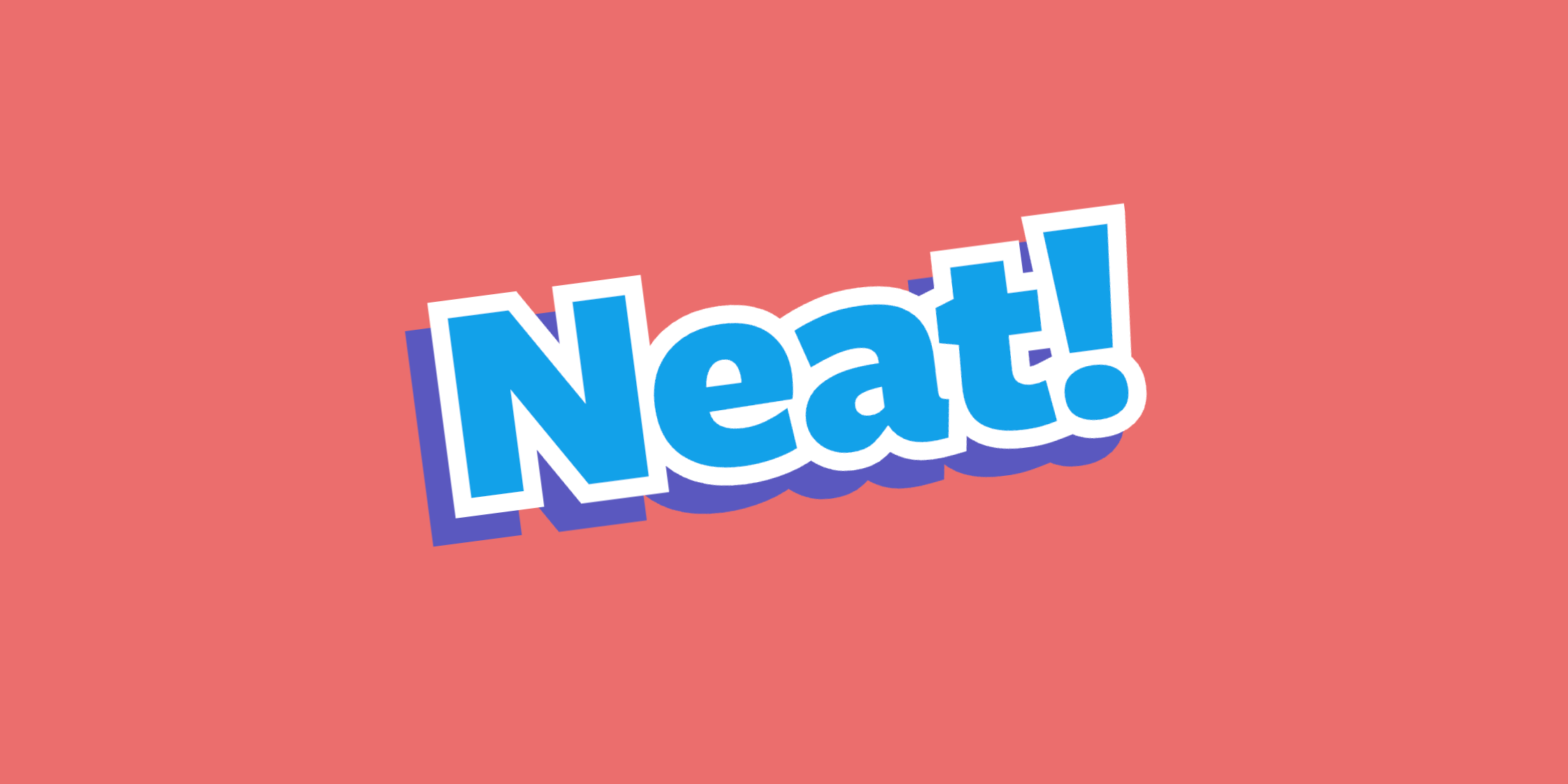
Tyler Sticka’s work on text-stroke addresses a long-standing visual issue. Historically, the text-stroke property has been center-aligned, meaning it cuts into the letterforms, often creating a muddy, illegible appearance at small sizes. By using the paint-order property, developers can ensure that the stroke is painted behind the fill, preserving the integrity of the typography.
Official Responses and Industry Perspectives
The reception from the web standards community has been overwhelmingly positive.

- Bramus (Google Developer Relations): Has been a primary voice in advocating for
scroll-axis-lock, noting that users are increasingly expecting a "fluid" experience on touch devices. The ability to scroll diagonally—a behavior previously restricted by browser defaults—is seen as a major UX improvement for map applications and data visualization dashboards. - Ahmad Shadeed: His analysis of the
lhunit has clarified how designers can achieve "vertical rhythm." By tying the height of containers (like images or sidebars) to thelhunit, developers can ensure that elements always align perfectly with the baseline of the surrounding text, regardless of font size changes or user zoom settings.
Implications: The Future of the Web
Architectural Shifts
The shift toward CSS-native features means that the "JavaScript-first" approach to UI is losing its dominance. By offloading rendering logic—such as navigation state, highlighting, and scroll behavior—to the browser, we are seeing a significant reduction in the amount of "glue code" required to make a website function.
Performance Gains
Lowering the reliance on JavaScript reduces the main thread workload. When a browser handles navigation matching or skeleton UI animations through optimized internal engines, the site becomes more performant, particularly on low-powered mobile devices. This is a critical victory for "Core Web Vitals," as it minimizes layout shifts and improves the responsiveness of the page.
Accessibility and Design
The ability to style highlights via the ::highlight() API allows for better accessibility. Developers can now provide high-contrast search result highlighting that respects user preferences, rather than forcing a "one-size-fits-all" style. Similarly, fixing typography via paint-order is not just an aesthetic choice; it is a readability requirement for users with visual impairments who rely on clear, high-contrast text.
The Path Forward
As we look toward the end of 2026, the question is no longer "what can we do with CSS?" but rather "how do we organize these tools to maintain code quality?" The move toward declarative CSS means that stylesheets are becoming increasingly complex. Developers will need to adopt more rigorous naming conventions and architectural patterns to manage this power effectively.
The debate sparked by Zach Leatherman serves as a necessary check: as we add these sophisticated tools, we must ensure that our underlying HTML remains semantic and accessible. A beautifully styled, high-performance UI is of little value if the document structure beneath it is fragile or inaccessible to assistive technologies.
In conclusion, the state of CSS is robust and evolving. The tools provided this quarter allow for a level of design precision that was once the domain of native applications. By mastering these new primitives—lh, paint-order, scroll-axis-lock, and the Custom Highlight API—developers are not just writing code; they are defining the next generation of the web user experience.