The Backbone of Modern Software: A Comprehensive Guide to Database Testing, Methodologies, and Industry Best Practices
Abstract: As software applications grow exponentially in complexity—driven by mobile ecosystems, cloud-native architectures, and high-frequency transaction engines—the burden on backend data layers has never been heavier. Ensuring the security, integrity, and performance of these underlying systems requires a rigorous approach to database (DB) testing. This article explores the fundamental pillars of database validation, examining core concepts such as ACID properties, CRUD operations, schemas, triggers, and stored procedures, while providing an actionable, step-by-step roadmap for software quality assurance (QA) professionals.
1. Main Facts: The Growing Imperative of Backend Validation
In the contemporary digital landscape, user-facing applications are merely the tip of the iceberg. Whether powering a mobile shopping app, a healthcare portal, a high-frequency financial trading platform, or mission-critical aerospace systems, the true heavy lifting occurs behind the scenes in the database.

As front-end interfaces become more intricate—accommodating multi-platform environments, responsive designs, and offline capabilities—the corresponding back ends must scale in sophistication. Traditional database management systems (DBMS) are frequently pushed to their limits by the sheer volume and velocity of Big Data. To manage this paradigm shift, organizations deploy a diverse array of enterprise tools, including MS SQL Server, Oracle, MySQL, PostgreSQL, DB2, and specialized utilities like Toad and Adminer.
However, introducing advanced database features—such as relational constraints, custom triggers, and complex stored procedures—also increases the attack surface for bugs, data corruption, and security vulnerabilities. Consequently, database testing has transitioned from an afterthought into a core, specialized discipline within software engineering.

2. Chronology and Evolution of Database Testing
The practice of database testing has evolved in tandem with software development methodologies over the past several decades.
- The Early Era (Monolithic Systems): In the early days of client-server computing, database testing was largely manual and reactive. Database administrators (DBAs) or developers ran ad-hoc SQL scripts to verify that tables were populated correctly after a desktop application crashed or saved a record. Testing was siloed from front-end QA.
- The Web and Enterprise Expansion: With the rise of web applications and multi-tier architectures in the late 1990s and 2000s, the separation between UI and backend blurred. Data mapping and interface-to-database integration testing became critical. QA engineers began adopting automated scripting languages (such as VBScript and early test automation frameworks) to validate data persistence systematically.
- The Modern Cloud and Big Data Era: Today, modern software operates on distributed databases, microservices, and continuous integration/continuous deployment (CI/CD) pipelines. Database testing is no longer restricted to final staging environments; it is embedded throughout the development lifecycle. Automated regression suites execute complex SQL queries, validate ACID compliance across distributed nodes, and run security scans automatically with every code commit.
3. Supporting Data and Core Concepts: What to Test
Effective database testing requires a granular understanding of what elements demand validation. Industry standards generally group these into four critical pillars: Data Mapping, ACID Properties, Data Integrity, and Business Rule Conformity.

Data Mapping and Integration
Data rarely stays static; it travels continuously between the user interface (UI) and the backend database. Testers must verify that every field on a front-end form accurately maps to its corresponding column in the database schema. When a user performs any Create, Retrieve, Update, or Delete (CRUD) operation, the system must reflect those changes precisely in the underlying tables without data truncation or type mismatch errors.
Validating ACID Properties
Every database transaction must strictly adhere to the four ACID principles to guarantee data reliability:

- Atomicity: Ensures that a transaction is all-or-nothing. If a multi-step financial transfer fails midway, no partial updates are written to the database.
- Consistency: Guarantees that any transaction brings the database from one valid state to another, maintaining all predefined integrity constraints (e.g., ensuring a sum total across columns always equals 100).
- Isolation: Ensures that concurrent transactions execute independently without interfering with one another, preventing dirty reads or race conditions.
- Durability: Confirms that once a transaction has been committed, its changes are permanent, surviving system crashes, power failures, or software errors.
Data Integrity and CRUD Operations
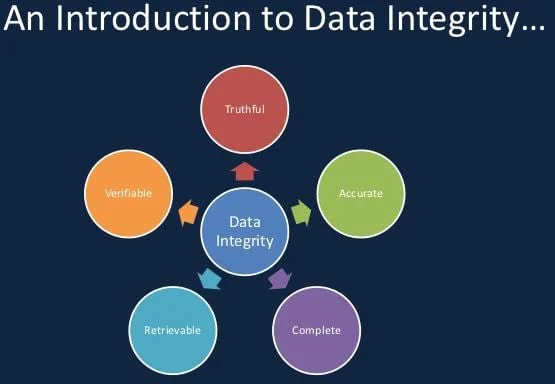
Data integrity ensures that shared data remains synchronized across all modules, screens, and forms of an application. When an end-user executes CRUD actions, the system must update records uniformly:
- Create (C): Saving a new transaction or entity record.
- Retrieve (R): Searching or viewing saved records via queries or UI elements.
- Update (U): Modifying existing entries without introducing stale data on secondary screens.
- Delete (D): Safely removing records while preserving referential integrity.
Business Rule Conformity
Modern databases store significant business logic via relational constraints, triggers, and stored procedures. Testers must write specialized SQL queries to validate that these server-side scripts execute precisely as intended under various business scenarios.

4. Official Checklists and Methodologies: How to Test
Implementing a structured testing methodology ensures comprehensive coverage. Below is a practical checklist and step-by-step process for QA professionals.
The Database Testing Checklist
- Transactions: Execute test scripts utilizing
BEGIN TRANSACTION,COMMIT, andROLLBACKstatements. Verify that rollback operations successfully revert the database to a clean, consistent state upon failure. - Database Schemas: Validate table structures, column definitions, data types, indexes, and primary/foreign key relationships against the system requirements specification (SRS).
- Triggers: Test automated code blocks that execute in response to specific table events (e.g., automatically enrolling a new student into class-specific tables when added to the main student directory). Compare independent SQL query outputs against trigger-generated results using both black-box and white-box testing strategies.
- Stored Procedures: Evaluate user-defined functions and stored procedures for error handling, execution time, and correctness of return result sets.
- Field Constraints: Verify default values, unique constraints, and foreign key restrictions. For instance, attempt to input duplicate values into a unique field via both the UI and direct backend loads to ensure the system throws the appropriate validation error.
Step-by-Step Testing Process
- Step 1: Prepare the Environment: Configure the test database, seed it with representative test data sets, and establish secure access credentials.
- Step 2: Run a Test: Execute the test case, whether through a manual UI workflow, an automated script, or a direct SQL execution.
- Step 3: Check Test Result: Query the database using SQL
SELECTstatements to observe the immediate backend impact of the test action. - Step 4: Validate Against Expected Results: Compare actual database states against architectural specifications, design documents, and business requirements.
- Step 5: Report Findings: Document anomalies, performance bottlenecks, or data corruption bugs and report them to development stakeholders.
5. Industry Implications and Practical Recommendations
As organizations increasingly rely on data-driven decision-making, the implications of faulty database architecture or inadequate testing can be catastrophic, leading to data breaches, regulatory non-compliance, and severe financial loss.

To mitigate these risks, industry experts recommend several practical strategies for QA teams:
- Cultivate SQL Proficiency: Testers should not rely solely on developer-provided queries. Writing custom Data Manipulation Language (DML) statements and leveraging tools like SQL Query Analyzer empowers testers to achieve deeper test coverage and independently verify data integrity.
- Adopt Database Automation Tools: For enterprise environments handling massive transaction volumes, manual testing is insufficient. Integrating specialized database testing tools into CI/CD pipelines ensures continuous validation of schemas, performance, and security constraints.
- Exercise Caution with Developer Queries: While collaborating with developers for complex queries is essential, blindly trusting pre-written scripts can leave blind spots. Testers must verify the semantic accuracy of any query used in validation routines.
Conclusion
Database testing is a cornerstone of modern software engineering quality assurance. Despite historical misconceptions that treating backend validation as a distinct discipline adds unnecessary overhead or development bottlenecks, the reality is clear: a secure, high-performing database is the ultimate guarantor of application reliability. By mastering core concepts like ACID properties, data mapping, and schema validation, technical professionals can safeguard modern software ecosystems against failure in an increasingly data-centric world.