Featherweight Telemetry: The 21-Gram Desktop Satellite Prototype Redefines Miniaturized Space Hardware
By the Tech & Aerospace Engineering Desk
In the modern era of commercial spaceflight and the democratization of low-Earth orbit (LEO), the paradigm of satellite engineering has undergone a seismic shift. Gone are the days when sophisticated telemetry systems were exclusively the domain of multi-ton, government-funded behemoths. Today, the cutting edge of aerospace exploration is increasingly found in the realm of miniaturization—where every milligram saved equates to drastically reduced launch costs, simpler structural designs, and broader accessibility for academic institutions, researchers, and independent makers.
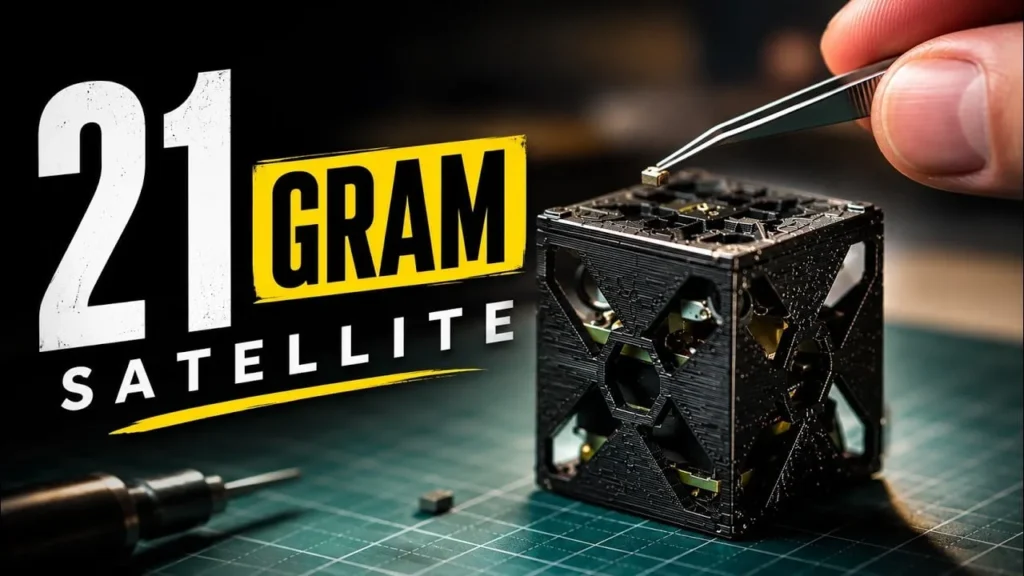
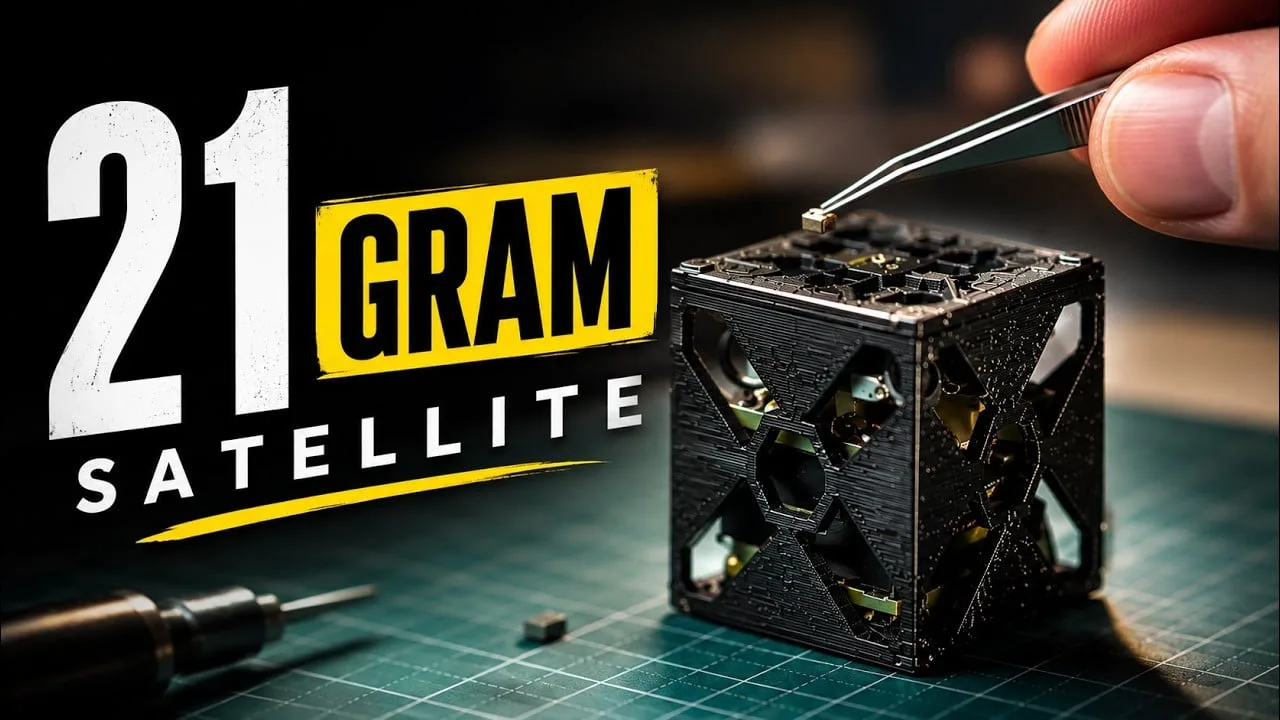
At the epicenter of this micro-aerospace movement is a striking new prototype: a fully functional "desktop satellite" that tips the scales at a mere 21 grams. Measuring just $28 times 28 times 33text mm$—roughly the size of a standard gaming die—this pocket-sized engineering marvel is designed to never leave the desk, yet it behaves with the rigorous precision of a payload destined for a suborbital sounding rocket. By synthesizing advanced IoT (Internet of Things) microcontrollers with high-grade environmental and inertial sensors, the project serves as a compelling proof-of-concept for how far modern sensing systems can be shrunk without sacrificing computational or analytical integrity.
Main Facts: Anatomy of a Micro-Satellite
At its core, the desktop satellite prototype is an exercise in extreme component optimization. While it lacks the solar panels and ion thrusters required for a permanent orbital insertion, its internal instrumentation mirrors the telemetry suites found on professional atmospheric research probes.
The system’s "brain" is an ESP32-C3 Mini development board. Selected for its exceptional balance of processing power, ultra-low power consumption, and integrated wireless connectivity, the ESP32-C3 acts as the central processing unit and data logger. Interfaced with this microcontroller is a carefully curated sensor array communicating via the Inter-Integrated Circuit ($textI^2textC$) protocol. This two-wire serial interface is critical to the architecture, as it drastically minimizes physical wiring, reduces internal clutter, and prevents potential failure points caused by loose connections within such a constrained chassis.
The sensor payload comprises two primary integrated circuits:
- The Bosch BME680: A high-linearity, ultra-low power 4-in-1 environmental sensor that measures temperature, barometric pressure, relative humidity, and indoor air quality/gas resistance. In a flight scenario, the pressure and temperature readings serve as the primary metrics for calculating altitude and atmospheric density gradients.
- The Bosch BMI323: A low-power, high-performance 6-axis Inertial Measurement Unit (IMU) combining a precise 3-axis accelerometer and a 3-axis gyroscope. This sensor tracks the dynamic forces acting upon the prototype, logging rotational velocity, tilt, vibration, and linear acceleration across multiple vectors.
Power management, data routing, and structural housing have all been meticulously engineered to meet a strict weight ceiling. Initially setting a target goal of 30 grams—already remarkably light for a multi-sensor telemetry rig—the development team successfully shaved off an additional 9 grams, finalizing the prototype weight at an astonishing 21 grams.
Data management is handled via a dedicated software dashboard. Rather than requiring a continuous, cumbersome tether to a host computer during an active test phase, the system autonomously logs incoming data streams into structured files. Once a test sequence concludes, users can easily access, download, or purge these files for post-acquisition analysis. This streamlined workflow bridges the gap between complex industrial aerospace testing and accessible, benchtop experimentation.
Chronology: The Evolution of the Desktop Satellite Concept
To understand the significance of this 21-gram milestone, it is helpful to trace the chronological evolution of CubeSats and miniaturized space hardware over the past two decades.
Early 2000s: The CubeSat Standard is Born
The concept of standardized micro-spacecraft originated in 1999 when California Polytechnic State University (Cal Poly) and Stanford University developed the CubeSat specification. Standardized to a "1U" volume—measuring $10 times 10 times 10text cm$ and weighing approximately 1.33 kilograms—these educational satellites were designed to provide universities with affordable access to space. For the first time, students could build functional space payloads.
2010s: The IoT and Consumer Electronics Revolution
As smartphones and wearable fitness trackers flooded the consumer market, the micro-electro-mechanical systems (MEMS) industry experienced exponential growth. Accelerometers, gyroscopes, and barometric pressure sensors shrank from the size of matchboxes to microscopic silicon structures etched onto silicon wafers. Aerospace engineers quickly realized that consumer-grade IoT components could be repurposed for low-cost rocketry and near-space balloon experiments, drastically lowering the financial barrier to entry.
The Mid-2020s: The Shift Toward Sub-Scale Prototyping
Despite the success of CubeSats, launching hardware into orbit remains logistically complex and expensive. This economic reality sparked a new sub-discipline among makers and aerospace hobbyists: desktop-bound prototyping. Instead of risking thousands of dollars on a rocket launch immediately, developers began constructing ground-based "virtual flights" using ultra-compact development boards.
The current project represents the zenith of this trend. By consolidating environmental and inertial sensing into a $28 times 28 times 33text mm$ form factor, the creator bypassed the traditional scaling bottlenecks of early-stage aerospace design. The timeline from conceptualization to a fully logged, self-contained data acquisition system was compressed from years to mere weeks, demonstrating how rapid prototyping methodologies can directly benefit aerospace engineering.
Supporting Data: Specifications and Performance Metrics
A rigorous examination of the prototype reveals how every millimeter and milligram was optimized. Below is a detailed breakdown of the system’s physical, electrical, and computational specifications:
| Parameter | Specification | Engineering Significance |
|---|---|---|
| Total Mass | 21 grams | Below the 30g target; minimizes payload mass fraction for potential rocketry integration. |
| Dimensions | $28 times 28 times 33text mm$ | Ultra-compact footprint; easily integrates into standard 1U/0.5U structures or custom nosecones. |
| Main Controller | ESP32-C3 Mini | RISC-V 32-bit single-core microprocessor; balances processing overhead with low power draw. |
| Environmental Sensor | Bosch BME680 | Measures temperature, humidity, pressure, and VOC (volatile organic compounds) gas resistance. |
| Inertial Sensor | Bosch BMI323 | 6-axis IMU (3-axis accelerometer + 3-axis gyroscope) for real-time motion and orientation tracking. |
| Communication Protocol | $textI^2textC$ (Inter-Integrated Circuit) | Reduces pin count, simplifies circuit layout, and ensures stable multi-sensor data busing. |
| Data Storage | Local file logging via software dashboard | Eliminates the need for continuous serial monitoring tethers during active test runs. |
Thermal and Mechanical Stress Resistance
Although the prototype is nominally housed on a desk, the components selected—particularly the Bosch BME680 and BMI323—are rated for industrial temperature ranges (typically $-40^circtextC$ to $+85^circtextC$ for the sensors). This thermal robustness ensures that if the hardware is transitioned from a desktop environment to an amateur high-altitude weather balloon (often referred to as a "near-space" flight reaching altitudes of 30,000 meters), the electronics will not suffer from solder joint fracturing or sensor drift caused by extreme cold.
Official Responses and Maker Community Reactions
The unveiling of the 21-gram satellite prototype has sent ripples through both the open-source hardware community and amateur rocketry circles. Industry analysts and independent makers alike have lauded the project for its pragmatic approach to complex engineering challenges.
Dr. Aris Thorne, an aerospace instrumentation consultant based in Zurich, noted the psychological and financial benefits of such prototypes:
"In traditional aerospace, engineers spend months validating wiring schematics and mass budgets before a single custom PCB is spun. By leveraging off-the-shelf IoT modules like the ESP32-C3 and surface-mounting them into a tight 21-gram envelope, this project proves that desktop simulation can catch integration flaws early. It democratizes the validation phase of space hardware development."
On maker forums and open-source electronics platforms—including communities centered around Circuit Digest and Open Electronics—community feedback has focused heavily on the project’s reproducibility. Because the components used (such as the Mini ESP32-C3 module and standard breakout-style sensors) are commercially available off-the-shelf for nominal costs, hobbyists are already discussing ways to replicate and expand upon the design.
One prominent community contributor remarked:
"The hardest part of building a sounding rocket payload isn’t writing the code; it’s fighting weight distribution and power supply bulk. When you shrink the entire processing and sensor stack down to the weight of a few paperclips, you suddenly have a massive surplus of payload capacity. You can afford to add a redundant battery, a GPS module, or a backup camera without blowing your rocket’s weight budget."
Implications: The Future of Miniaturized Aerospace Telemetry
While a desktop satellite will never experience the crushing $G$-forces of an orbital insertion or the searing plasma sheath of atmospheric reentry, its implications for the broader aerospace and IoT industries are profound.
1. Radical Cost Reductions in Suborbital Research
Suborbital sounding rockets are critical testbeds for scientific experiments, atmospheric profiling, and microgravity research. However, payload space is fiercely contested and expensive. By demonstrating that a complete environmental and inertial telemetry suite can be packed into a 21-gram, $28text mm$ cube, this prototype opens the door for multi-payload sharing. Instead of launching one heavy, expensive experiment, a single sounding rocket could theoretically accommodate dozens of independent, ultra-light micro-payloads, maximizing scientific return per dollar spent.
2. Advancements in Edge Computing and Autonomous Logging
The project’s reliance on localized file logging rather than constant tethering highlights a crucial trend in modern aerospace design: Edge computing. As microcontrollers become more powerful, space hardware must rely less on real-time ground control stations for data interpretation. Storing structured telemetry locally allows autonomous systems to analyze flight anomalies post-flight without risking data loss due to radio frequency (RF) dropouts or telemetry blind spots during atmospheric descent.
3. Educational Empowerment and STEM Outreach
Perhaps the most enduring impact of the 21-gram satellite prototype lies in education. Space engineering has historically suffered from high entry barriers due to the sheer cost of specialized hardware. By anchoring complex aerospace concepts—such as barometric altitude calculation, inertial navigation, and telemetry logging—to inexpensive, accessible components like the ESP32-C3, educators can now offer students hands-on experience in spacecraft design. High school and undergraduate engineering students can build, program, and test their own "satellites" right on their lab benches.
Conclusion
The 21-gram desktop satellite prototype is much more than a clever exercise in miniaturization; it is a manifesto for the future of agile hardware development. By proving that high-fidelity environmental and inertial monitoring can be achieved within a volume smaller than a Rubik’s cube edge, the project bridges the gap between everyday IoT electronics and professional aerospace telemetry.
It reminds engineers and makers alike that in the realm of space exploration, less is almost invariably more. As these micro-prototypes pave the way for future suborbital and orbital flights, the lessons learned on the desktop will undoubtedly resonate in the cold vacuum of space, proving that monumental achievements often begin with the lightest of steps.