Revolutionizing Edge AI: Harvard Researchers Unveil Wake Vision, a Massive 6-Million-Image Dataset for TinyML Computer Vision

CAMBRIDGE, Mass. — In the rapidly evolving landscape of artificial intelligence, a quiet revolution is taking place at the very edge of computing. TinyML—the burgeoning field of machine learning designed to operate on ultra-low-power microcontrollers and resource-constrained edge devices—promises to embed ambient intelligence into everyday objects, from smart home appliances to wearable medical monitors.
Yet, for years, the growth of this transformative discipline has faced a severe bottleneck: a glaring scarcity of high-quality, large-scale training data tailored specifically to the unique constraints of tiny, under-parameterized models.
To bridge this critical gap, a team of researchers from Harvard University—including Colby Banbury, Emil Njor, Andrea Mattia Garavagno, and Vijay Janapa Reddi—has officially introduced Wake Vision. Comprising approximately 6 million images, Wake Vision represents a monumental leap forward, arriving as a high-quality, large-scale dataset engineered specifically to supercharge computer vision applications in TinyML, with an initial focus on person detection.
Main Facts: What is Wake Vision?
At its core, Wake Vision is a breakthrough open-source dataset designed to solve the data scarcity crisis in ultra-low-power machine learning. While massive mainstream datasets like ImageNet serve complex, cloud-scale neural networks featuring millions or billions of parameters, TinyML models are fundamentally different. They are compact, highly efficient architectures often constrained to just a few hundred kilobytes of memory and minuscule computational budgets.
Until now, the TinyML community has largely relied on foundational resources like the Visual Wake Words (VWW) dataset, introduced in 2019. While VWW successfully laid the groundwork for person-detection tasks on microcontrollers, its modest size and inherent limitations make it insufficient for training robust, production-grade models capable of handling the complexities of the physical world.

Wake Vision shatters these previous boundaries by offering:
- Massive Scale: Spanning roughly 6 million images, the dataset is nearly 100 times larger than its predecessor, VWW.
- Dual Training Splits: It provides two distinct training sets, allowing researchers to explore the intricate dynamics between dataset scale and label purity.
- Fine-Grained Benchmarks: Comprehensive evaluation suites that test model resilience across diverse real-world conditions, lighting variations, and demographic contexts.
- Open Accessibility: Distributed under a permissive Creative Commons (CC-BY 4.0) license and integrated into major dataset repositories, ensuring frictionless adoption for global researchers and engineers.
Chronology of the Breakthrough: From Visual Wake Words to Wake Vision
The journey toward Wake Vision reflects the maturation of the edge AI community over the past half-decade.
The 2019 Foundation
The milestone release of the Visual Wake Words (VWW) benchmark in 2019 marked the inception of standardized person detection for microcontrollers. For the first time, researchers had a dedicated target for models operating under strict memory and energy limitations. However, as edge hardware grew more capable and consumer expectations for reliability soared, the limitations of VWW became increasingly apparent. Models trained on VWW frequently struggled with edge-case scenarios, diverse lighting, and varied physical distances.
The Harvard-Led Initiative
Recognizing that hardware innovation was outpacing data availability, a dedicated research team at Harvard University embarked on an ambitious multi-year project to curate a next-generation dataset. The objective was clear: construct a corpus large enough to support modern machine learning pipelines, yet meticulously filtered to meet the rigorous quality standards required by resource-constrained architectures.
The Late 2024 Launch and Ecosystem Integration
Culminating in its public rollout, Wake Vision debuted alongside dedicated community infrastructure, including a live performance leaderboard and seamless integration into popular machine learning frameworks and dataset repositories. The launch immediately captured the attention of the global TinyML community, establishing a new empirical standard for edge-based computer vision research.

Supporting Data: Why Data Quality Trumps Mere Quantity in TinyML
In the traditional realm of massive deep learning models—where networks are heavily over-parameterized—conventional wisdom holds that data quantity matters far more than data quality. The prevailing theory suggests that over-parameterized models possess enough capacity to memorize, adapt to, and ultimately smooth over errors or noise present in training labels.
However, empirical data emerging from the Wake Vision project reveals a fascinating paradigm shift when applied to TinyML: under-parameterized models behave entirely differently.
The Quality vs. Quantity Dilemma
Extensive evaluations conducted by the Harvard team demonstrate that high-quality labels (characterized by exceptionally low error rates) yield significantly greater performance dividends for smaller models than simply piling on massive quantities of noisy data. Because tiny networks lack the excess capacity to filter out conflicting signals or erroneous annotations, label noise acts as a toxic constraint, severely degrading final accuracy.
At the same time, the research highlights that larger, noisier datasets are far from useless. When integrated into sophisticated, multi-stage training pipelines—such as utilizing a massive, noisy dataset for initial pre-training followed by a highly curated, pristine dataset for fine-tuning—practitioners can unlock the best of both worlds. Wake Vision’s provision of dual training sets directly enables researchers to experiment with and optimize these advanced training paradigms.
Granular Real-World Benchmarks
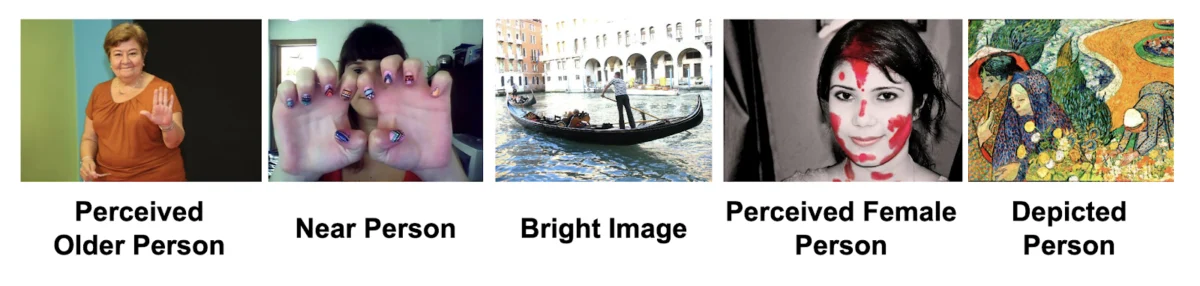
Beyond raw accuracy metrics, Wake Vision introduces rigorous, fine-grained testing categories designed to evaluate model robustness across distinct operational scenarios. These benchmarks assess performance relative to:

- Proximity: Distinguishing between near-range and far-range subjects.
- Lighting Conditions: Maintaining efficacy in brightly lit environments versus challenging low-light settings.
- Demographic and Appearance Variations: Ensuring equitable performance across perceived age groups, genders, and physical depictions.
By surfacing these metrics early in the development cycle, the dataset empowers engineers to identify, diagnose, and mitigate demographic biases and environmental blind spots before deployment.
Official Responses and Perspectives from the Research Community
The introduction of Wake Vision has been met with widespread acclaim from academic institutions and industrial pioneers alike.
Lead researchers Colby Banbury, Emil Njor, Andrea Mattia Garavagno, and Vijay Janapa Reddi have emphasized that the dataset was built not merely as an incremental upgrade, but as a fundamental shift in how the industry approaches edge data engineering.
"TinyML has reached an inflection point," notes the research collective in their foundational documentation. "As microcontrollers gain neural processing units (NPUs) and edge accelerators, our primary bottleneck is no longer processing power—it is the fidelity and scale of the data used to train these models. Wake Vision provides the empirical foundation necessary to bridge the gap between academic research and reliable, real-world deployment."
Industry analysts have similarly lauded the initiative, noting that the inclusion of a transparent, community-driven leaderboard fosters a collaborative ecosystem where researchers can openly benchmark breakthroughs, share training recipes, and collectively elevate the state of the art in ultra-low-power computer vision.

Implications: The Future of Edge AI and Ambient Computing
The launch of Wake Vision carries profound implications for multiple industries, signaling a major leap forward for ambient intelligence, consumer electronics, and sustainable computing.
1. Ubiquitous, Privacy-Preserving Smart Devices
By enabling highly accurate person detection on low-power microcontrollers, Wake Vision paves the way for smart devices that can operate entirely offline. This local processing model eliminates the privacy risks and latency issues associated with streaming continuous video feeds to cloud servers. Home automation systems, smart displays, and occupancy sensors can now react instantaneously and securely to human presence while consuming negligible standby power.
2. Democratizing Advanced Machine Learning Research
By making Wake Vision freely available via standard dataset APIs and pairing it with a permissive CC-BY 4.0 license, the Harvard team has effectively lowered the barrier to entry for academic institutions, independent developers, and resource-limited startups. Researchers no longer need massive industrial compute clusters to experiment with state-of-the-art vision pipelines; they can train, validate, and optimize robust models targeting edge silicon with unprecedented ease.
3. Energy Efficiency and Sustainability
As the global tech industry grapples with the escalating carbon footprint of data centers and large-scale AI training, TinyML offers a sustainable alternative. Processing data locally at the edge minimizes energy transmission loss and slashes cloud infrastructure dependencies. Wake Vision ensures that the models driving these green technologies are built on rigorous, high-fidelity foundations, reducing the trial-and-error waste historically associated with edge model development.
Getting Started with Wake Vision
For researchers, engineers, and machine learning enthusiasts eager to push the boundaries of ultra-low-power edge computing, the Wake Vision ecosystem is fully accessible today.

- Explore the Data and Code: Visit the official Wake Vision Website to access comprehensive documentation, dataset downloads, and open-source training repositories.
- Track the Leaderboard: Check out the Wake Vision Leaderboard to review current state-of-the-art model rankings, analyze top-performing architectures, and submit your own custom models for validation.
- Community Integration: Easily pull the dataset into your preferred machine learning pipelines via popular dataset hosting platforms and leverage the permissive CC-BY 4.0 license for academic and commercial innovation.
As Wake Vision catalyzes the next wave of discoveries in TinyML, the boundary between the physical world and intelligent edge computing continues to blur—ushering in an era where ambient intelligence is truly ubiquitous, efficient, and accessible to all.