Resurrection of the Relic: The Audacious Quest to Bring Linux to the Nokia E6
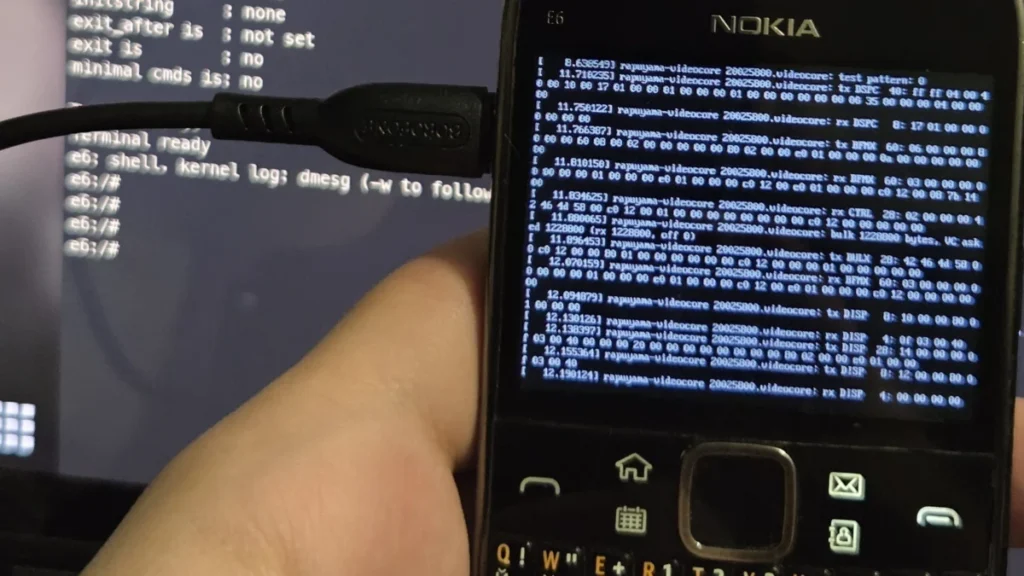
In the landscape of modern mobile computing, where operating systems are increasingly walled off and hardware is locked down with cryptographic shackles, the spirit of "tinkering" often feels like a dying art. Yet, in the quiet corners of the open-source community, developers continue to challenge the obsolescence of legacy hardware. The latest endeavor in this tradition comes from a developer known as [fluffleswaffled], who has set their sights on a device that defined an era: the Nokia E6.
Once a flagship of the Symbian OS era, the Nokia E6 was a titan of productivity in 2011. Today, however, it is largely relegated to the status of a museum piece. [fluffleswaffled] is looking to change that, spearheading a project to port a functional Linux kernel to this ancient handset. The project, titled "Rapuyama-Linux," represents a masterclass in reverse engineering, demonstrating that even the most closed-off, legacy platforms can be coaxed into running modern, open-source software.
Main Facts: The Anatomy of a Symbian Bypass
The primary challenge in porting Linux to the Nokia E6 is the absence of an unlocked bootloader. Unlike modern devices that allow for custom recovery environments or unlocked partition tables, the E6 was built in an age where the manufacturer maintained complete hegemony over the device’s boot sequence.
Rather than attempting the nearly impossible task of cracking the bootloader, [fluffleswaffled] opted for an ingenious "side-load" approach. By utilizing a custom-built Symbian application, the developer can inject a Linux kernel and device tree directly into the device’s RAM. Once the data is loaded, the application triggers a transition that disables the Memory Management Unit (MMU) and CPU caches, effectively "hijacking" the processor and jumping into the Linux environment.
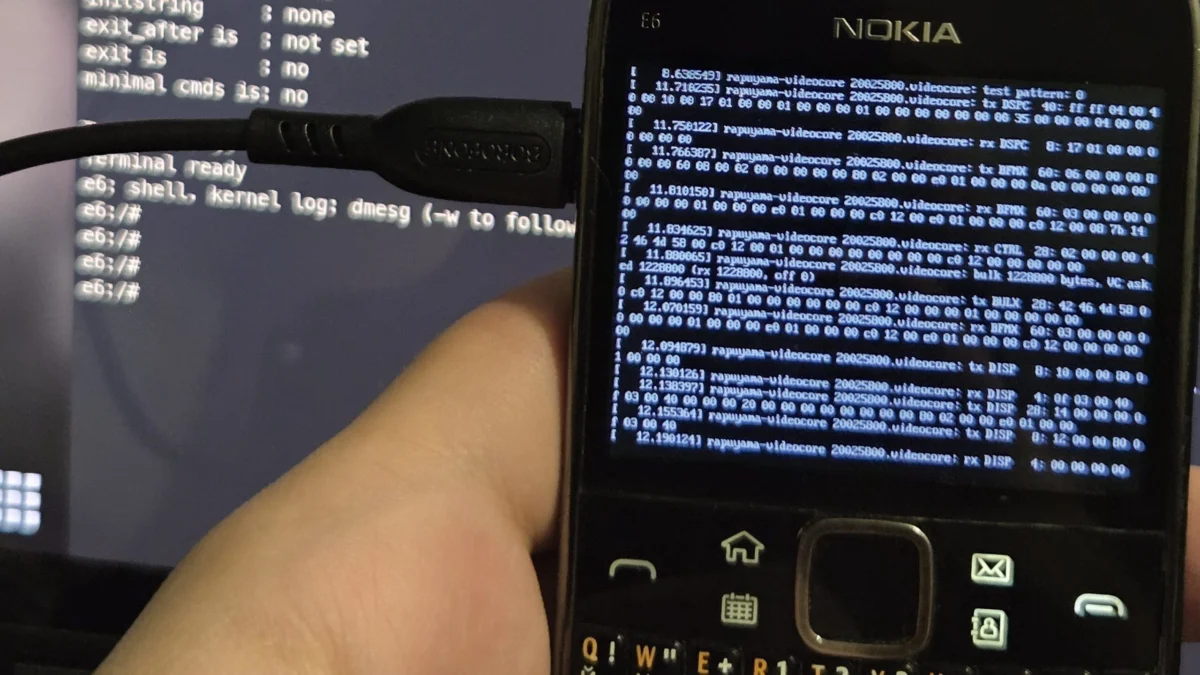
This is a one-way street. Once the transition occurs, the original Symbian OS is effectively purged from the processor’s control, and the phone resides entirely within a Linux kernel. To return to the stock OS, the user must perform a hard power cycle. Despite the limitations, the results are technically impressive: the Linux terminal appears on the device’s native screen, and both the tactile QWERTY keyboard and the capacitive touchscreen remain fully functional.
Chronology of the Project
The journey of Rapuyama-Linux has been one of incremental, painstaking discovery. The development timeline can be categorized into four distinct phases:
Phase I: Initial Research and Hardware Identification
The project began with a deep dive into the E6’s hardware architecture. The device is powered by an ARM-based processor and utilizes a Broadcom VideoCore III for graphics processing. The most significant hurdle here was the display; Nokia’s proprietary display drivers were entirely undocumented. [fluffleswaffled] spent weeks capturing traffic from the original display driver to decipher how the phone initialized the panel, eventually writing a custom kernel driver that replays these commands to initialize the display under Linux.
Phase II: The Injection Mechanism
Once the display was operational, the next phase involved the "bootloader bypass." The development of the Symbian-based loader application was crucial. This phase required an intimate understanding of the Symbian OS’s memory management, allowing the developer to reserve space in RAM for the Linux kernel without triggering an immediate system crash.
Phase III: Kernel Initialization
After successfully jumping from Symbian to Linux, the team faced the challenge of getting the device to stay awake. Early builds would hang during the kernel initialization phase due to hardware-specific power management calls that the Linux kernel was not yet equipped to handle.
Phase IV: The Baseband Conflict (The Current Stage)
Currently, the project is in a state of stabilization. While the system boots successfully, it suffers from a critical flaw: a hard reset occurring approximately 3.5 minutes after the jump to Linux. This has shifted the focus of the project from "booting" to "maintaining stability."
Supporting Data: Understanding the Baseband "Watchdog"
The 3.5-minute reboot cycle is not a random software glitch; it is a feature of the phone’s architecture. [fluffleswaffled] has identified that the Nokia E6 utilizes a distinct baseband processor—a dedicated chip responsible for cellular communications—that acts as a supervisor to the main application processor.
In the design of the Nokia E6, the baseband chip maintains a heartbeat connection with the Symbian OS. If the baseband chip detects that the Symbian mobile stack has stopped reporting or has ceased to function, it interprets this as a critical system failure. To prevent the device from becoming a "brick" or entering an unresponsive state, the baseband chip issues a forced reset command to the application processor.
Essentially, the E6 is "too smart for its own good." The hardware is designed to self-correct by rebooting if it suspects the OS has crashed. Because the Linux kernel does not (and likely cannot) communicate with the proprietary, encrypted baseband firmware, the baseband chip assumes the OS has died and initiates the kill-switch sequence.
Implications for Legacy Hardware Preservation
The implications of the Rapuyama-Linux project extend far beyond the nostalgia of the Nokia E6. This project serves as a case study for "Digital Preservation through Liberation."
1. Breaking the Manufacturer’s Monopoly
When a manufacturer ends support for a device, the device’s lifecycle is effectively terminated. By porting Linux, developers like [fluffleswaffled] ensure that the hardware remains functional, secure, and customizable long after the original manufacturer has abandoned it. This is a critical step in reducing e-waste and keeping functional hardware out of landfills.
2. The Educational Value of Reverse Engineering
Projects like this act as an educational bridge. Students and junior engineers interested in low-level programming can study the Rapuyama-Linux repository to understand how kernel drivers are built from scratch, how MMUs function, and how to interface with undocumented hardware. It is a masterclass in troubleshooting complex, embedded systems.
3. Community-Driven Security
While the E6 is not a modern security-hardened device, the ability to run an open-source Linux distribution means that users can, in theory, audit the software running on their device. In an era of black-box proprietary mobile operating systems, the ability to "own" your hardware—down to the kernel level—is a vital principle for digital sovereignty.
Expert Perspectives: The Road Ahead
Industry observers and veteran kernel hackers have expressed cautious optimism regarding the project. While the baseband issue is significant, it is not necessarily insurmountable. Experts suggest three potential avenues for [fluffleswaffled] to explore:
- Firmware Patching: Some researchers suggest that if the baseband firmware could be extracted and modified to ignore the lack of a Symbian heartbeat, the reset could be bypassed entirely. However, this would require advanced expertise in mobile radio firmware, which is notoriously difficult to reverse-engineer.
- Kernel Emulation: Others have proposed creating a "shim" or a thin hypervisor layer that fools the baseband chip into thinking Symbian is still running. This would involve feeding the baseband fake "heartbeat" signals from within the Linux kernel.
- Hardware Modification: A more drastic, albeit effective, approach would be to physically isolate the baseband chip from the application processor. While this would render the phone incapable of making calls, it would allow it to function as a tiny, persistent Linux handheld computer, effectively turning the E6 into a "Pocket Linux Machine."
Conclusion: The Hustle Continues
The Nokia E6 may be a relic of a bygone era, but the efforts of [fluffleswaffled] prove that legacy hardware still has a pulse. Whether or not the 3.5-minute reset issue is ever fully resolved, the project has already succeeded in its primary goal: pushing the boundaries of what is possible.
For those in the home lab, the message is clear: the hardware you own is only as limited as your knowledge of it. As [fluffleswaffled] continues to probe the depths of the E6’s firmware, they invite input from anyone with experience in Nokia’s legacy baseband architecture. It is a reminder that in the world of open-source, the most fascinating discoveries often happen on the devices the rest of the world has forgotten.
If you have insights into the baseband heartbeat protocols of Nokia’s 2011-era handsets, the community is watching. The Nokia E6 may be small, but it represents a massive opportunity to learn, experiment, and keep the spirit of open computing alive.