Echoes of the Cold War: The Resurrection of the Soviet ES-4001 Mainframe
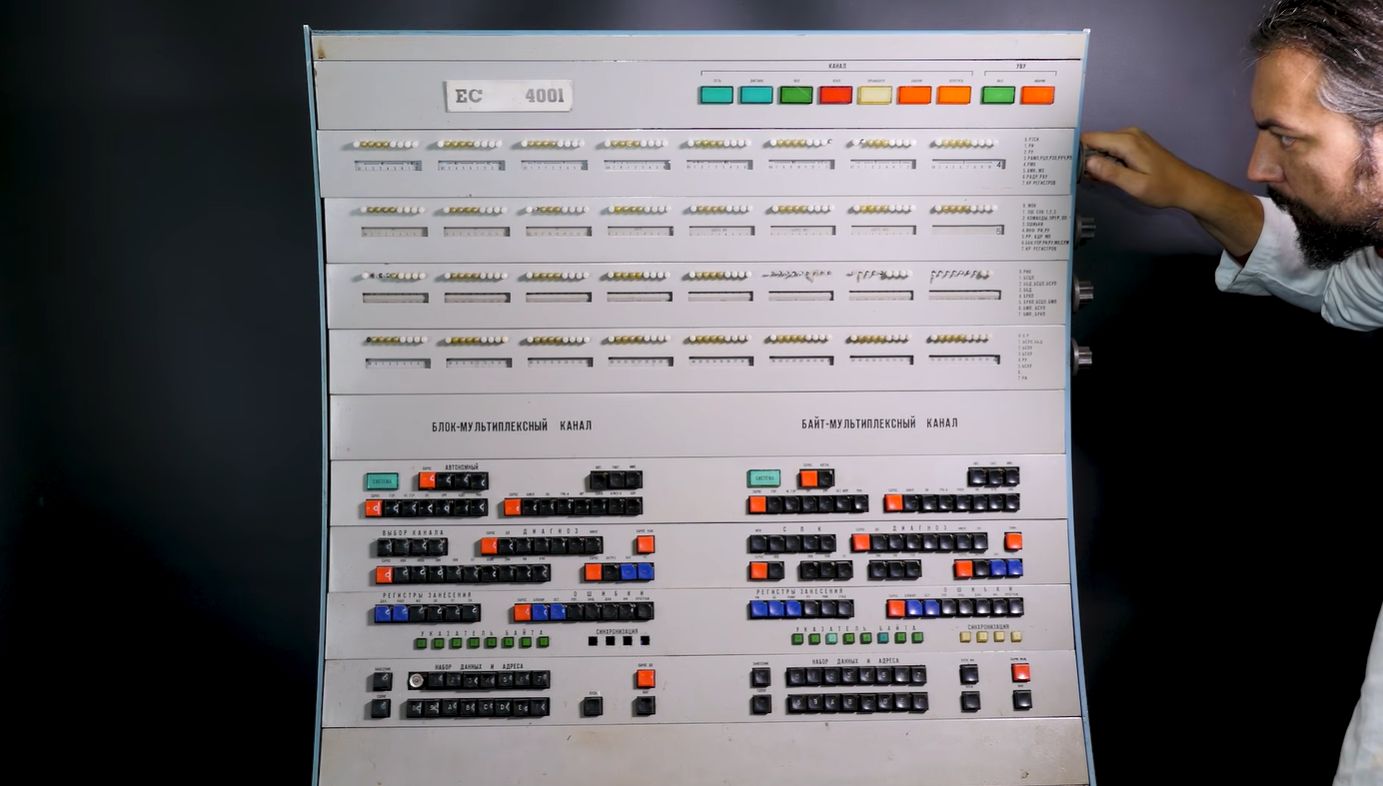
In the shadowed, radiation-dusted corridors of history, few relics possess as much technological and cultural gravity as the hardware that powered the Soviet Union’s most ambitious—and paranoid—endeavors. Recently, the preservationists behind the "Chornobyl Family" collective achieved a feat of electronic archaeology: the acquisition and successful restoration of an ES-4001 control panel. This device, once the nerve center for a 1970s-era Soviet mainframe, serves as a tangible link to a vanished era of digital competition, specifically the ES EVM series, which sat at the heart of the Duga-1 early warning radar system near the Chernobyl Nuclear Power Plant.
For the modern observer, this restoration is more than a hobbyist’s curiosity. It is an act of historical preservation, saving a piece of computing heritage that was never intended to survive the collapse of the USSR or the catastrophic industrial failure at Chornobyl.
The Genesis of Soviet Computing: The ES EVM Legacy
To understand the significance of the ES-4001, one must first understand the geopolitical climate of the 1970s. The Soviet Union, locked in an ideological and technological death match with the United States, faced a daunting reality: its domestic computing industry was lagging behind the rapid innovation of IBM and the burgeoning American mainframe market.
The Clone Wars: IBM and the ES EVM
In a strategic decision that prioritized speed over pure originality, the Soviet leadership mandated the development of the Yedinaya Sistema (Unified System) or ES EVM. This project was effectively a state-sanctioned cloning operation, designed to replicate the architecture of the IBM System/360 and System/370. By adopting the IBM instruction set, the Soviets aimed to achieve software compatibility with Western systems, thereby accelerating their own digital infrastructure.
The ES-1060—the mainframe associated with the Duga-1 radar—represented the pinnacle of this initiative. These machines were monumental in scale, requiring massive, climate-controlled halls and a small army of engineers to maintain. The ES-4001 control panel was the human-machine interface for these behemoths, a sprawling landscape of toggle switches, status indicators, and archaic hexadecimal displays that allowed operators to monitor the health and performance of the processor in real-time.
Chronology: From the Duga Radar to the Workbench
The history of the specific hardware now being restored by the Chornobyl Family is a narrative of two distinct lives.
The Shadow of the Duga-1
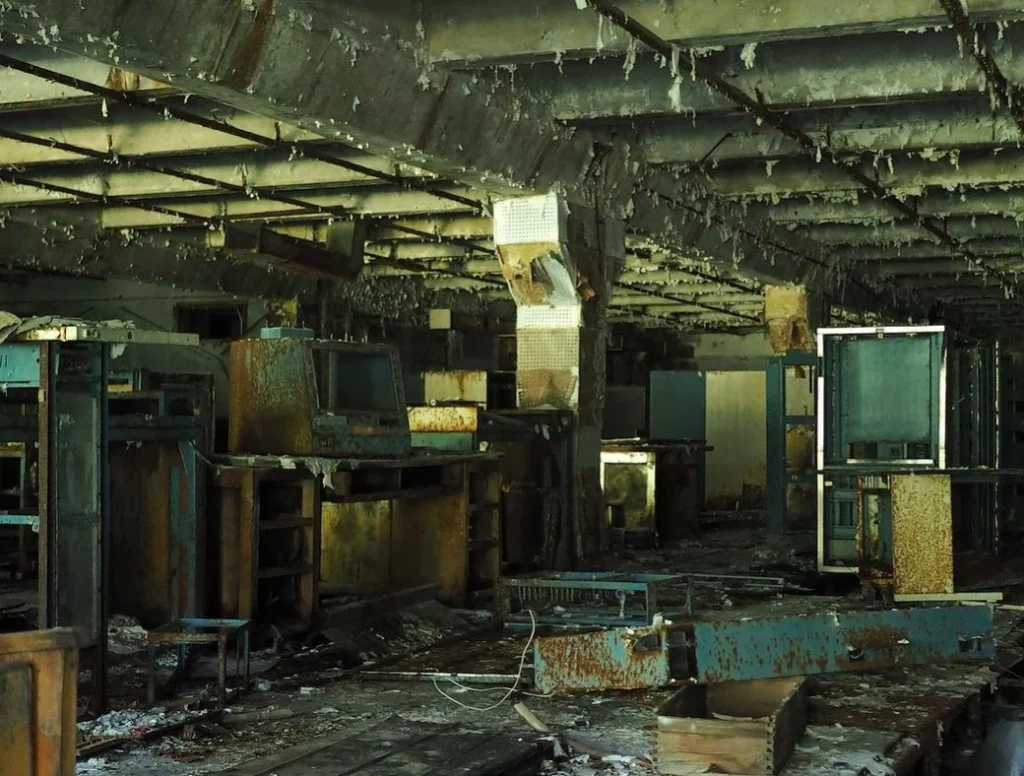
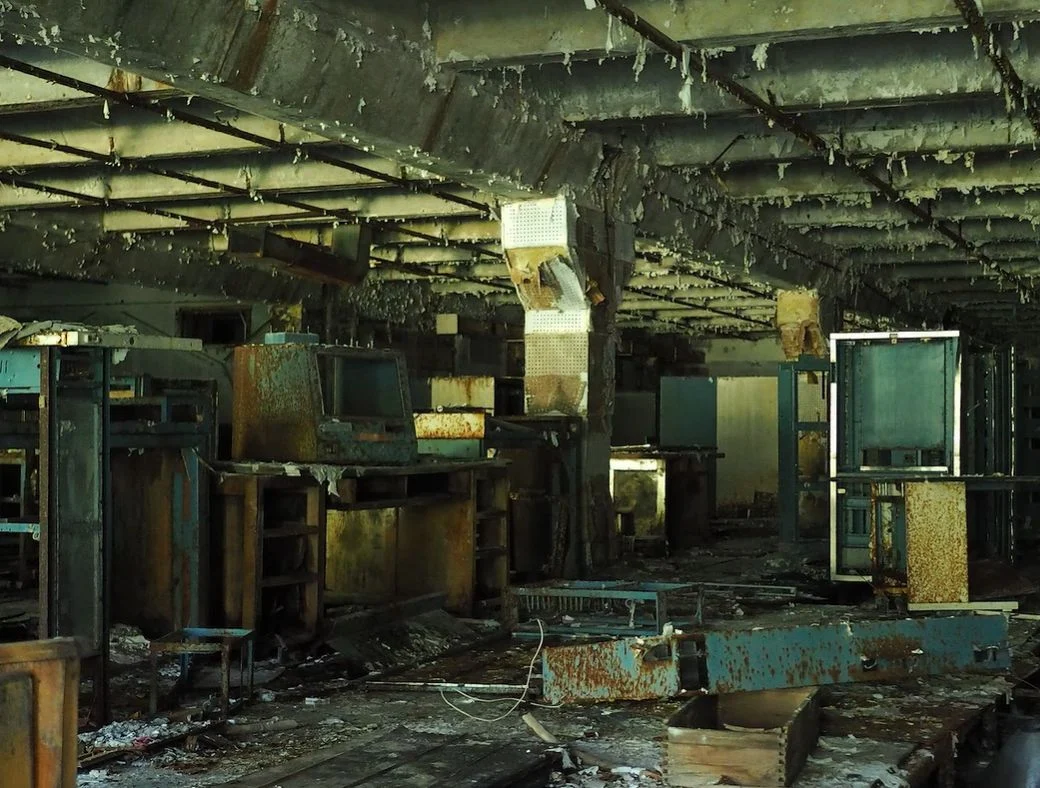
The Duga-1 radar, often called the "Russian Woodpecker" due to the distinct rhythmic pulse it emitted, was designed to detect incoming intercontinental ballistic missiles. The computer center below the array was the brain of this defensive shield. The ES-1060 installed there was a masterpiece of Soviet industrial might, intended to process vast amounts of telemetry data. However, the catastrophic explosion of ChNPP Unit-4 in 1986 brought the operations at Duga-1 to a permanent, chaotic halt. The mainframe was abandoned, picked apart by scavengers, and left to rot in the radioactive silence of the Exclusion Zone.
The "Gentle" Life of the ES-4001
The panel currently undergoing restoration did not come from the irradiated remains of the Duga-1 site itself; instead, it was sourced from a datacenter that operated in more conventional conditions during the early 1980s. While it escaped the fate of its counterpart in the Exclusion Zone, it was still subject to the "violent" decommissioning common in the post-Soviet collapse era. When massive computing centers were shuttered in the 1990s, hardware was often ripped from consoles with little regard for future historical value. The panel arrived in the hands of the Chornobyl Family in a state of disrepair, with severed cables and missing components, necessitating a rigorous and forensic approach to its rehabilitation.
Supporting Data: The Anatomy of a Soviet Mainframe
The ES-4001 is a study in Cold War engineering aesthetics. Unlike modern computers that hide their complexity behind sleek, black-glass interfaces, the ES-4001 wears its architecture on its sleeve.
Technical Specifications and Interface
- Logical Architecture: Based on the IBM System/370, the ES-1060 utilized a 32-bit architecture.
- Interface Control: The panel features a bank of high-quality mechanical switches for manual memory entry and instruction cycle control.
- Indicators: The use of distinct, vibrant incandescent and LED displays provided immediate visual feedback on the state of the registers, memory addresses, and error codes.
- Scarcity: With only approximately 300 ES-1060 mainframes ever produced, the control panel represents a rare survivor of a production run that was decimated by the rapid transition to personal computing and the dissolution of the USSR.
The restoration process, documented by the Chornobyl Family, involves a meticulous "reverse-engineering" of the documentation—much of which was written in technical Russian and has been lost or discarded over the decades. By tracing the logic board paths and re-establishing power delivery, the team is slowly breathing life back into the silicon.
Official Responses and Preservation Ethics
While the Chornobyl Family’s project is a private endeavor, it has garnered significant attention from the computer history community, including experts at the Computer Museum in Russia and various Ukrainian cultural heritage organizations.
The Ethics of Exclusion Zone Artifacts
There is a complex dialogue surrounding the removal of hardware from the Exclusion Zone. Official authorities, such as the State Agency of Ukraine on Exclusion Zone Management (SAUEZM), generally prohibit the removal of artifacts from the territory. This serves two purposes: safety (the threat of radioactive contamination) and heritage preservation.
The Chornobyl Family has been transparent about the sourcing of their specific panel, noting that it was acquired through legal channels from a site outside the immediate contamination zone. This distinction is vital, as it allows for the study of the hardware without the ethical and legal complications associated with "looting" the Exclusion Zone.
"The goal," notes a representative of the preservation effort, "is to honor the engineers who worked on these systems. They were brilliant minds working under immense political pressure. To let their work be forgotten is to lose a chapter of human progress, regardless of the ideological system that commissioned it."
Implications: Why We Remember the ES-4001
The restoration of the ES-4001 has implications that reach far beyond the novelty of booting up an old machine.
A Lesson in Global Computing
The ES EVM series proves that the "Information Age" was not a purely Western phenomenon. The Soviet Union’s attempt to replicate the IBM architecture highlights the universality of certain technological solutions. By studying the ES-4001, researchers can see where the Soviets diverged from IBM in their implementation, offering a glimpse into the specific constraints—such as material shortages and varying component quality—that shaped Soviet engineering.
Cultural Resilience
In the context of the current geopolitical environment in Ukraine, the act of preserving a piece of technology that was integral to the Soviet-era infrastructure is a poignant statement on the nature of history. It reminds us that technology, while developed for the purposes of war and defense, eventually becomes part of the shared heritage of the people living in those regions.
Educational Value
For a new generation of computer scientists who have only ever known high-level abstraction, the ES-4001 offers a visceral lesson in the "bare metal." Interacting with a physical control panel—where a single switch controls the flow of electrons through a specific gate—fosters a deeper understanding of the fundamental logic that governs all modern computing.
Conclusion
The Chornobyl Family’s restoration of the ES-4001 is a testament to the enduring power of human curiosity. As they continue to document the process, they are effectively building a digital library of a hardware architecture that was nearly erased from history.
In the quiet, methodical flicking of a toggle switch and the glow of an indicator light, the past is being brought into the present. The ES-4001 will likely never calculate missile trajectories or radar signatures again, but it has found a new purpose: as a silent, blinking witness to the complexity of the Cold War and the remarkable ingenuity of the engineers who navigated it. By saving this control panel, the preservationists ensure that when we look back at the history of the 20th century, we see not just the rubble of broken systems, but the sophisticated, humming heart of the technology that defined an entire generation.