Revolutionizing Intermodal Logistics: How FlexiVan and Hoopo are Transforming National Chassis Fleets Through Advanced IoT Intelligence
By Erik Linask (Adapted and Expanded)
October 2026
Main Facts: Bridging the Visibility Gap in Container Logistics
In the vast, fast-paced ecosystem of global and domestic supply chains, intermodal chassis are the unsung workhorses. These specialized trailers are essential for moving shipping containers seamlessly between maritime ports, rail terminals, vast distribution centers, and customer facilities. Yet, despite their critical role, they have historically operated as unpowered, difficult-to-track assets. Once dispersed across massive, congested yards or complex logistical corridors, finding a specific chassis—let alone knowing its operational status—was a persistent industry headache.
For years, logistics operators suffered from a fundamental "visibility gap." Traditional tracking offered little more than a static dot on a map. While knowing a chassis is somewhere in a state or region is helpful, it fails to answer the critical questions that drive efficient fleet management:
- Is the chassis bare or currently carrying a heavy container?
- How long has it been sitting dormant in a specific yard?
- Is its movement tracking along the expected commercial route?
- Does its mileage or utilization pattern indicate an impending mechanical failure?
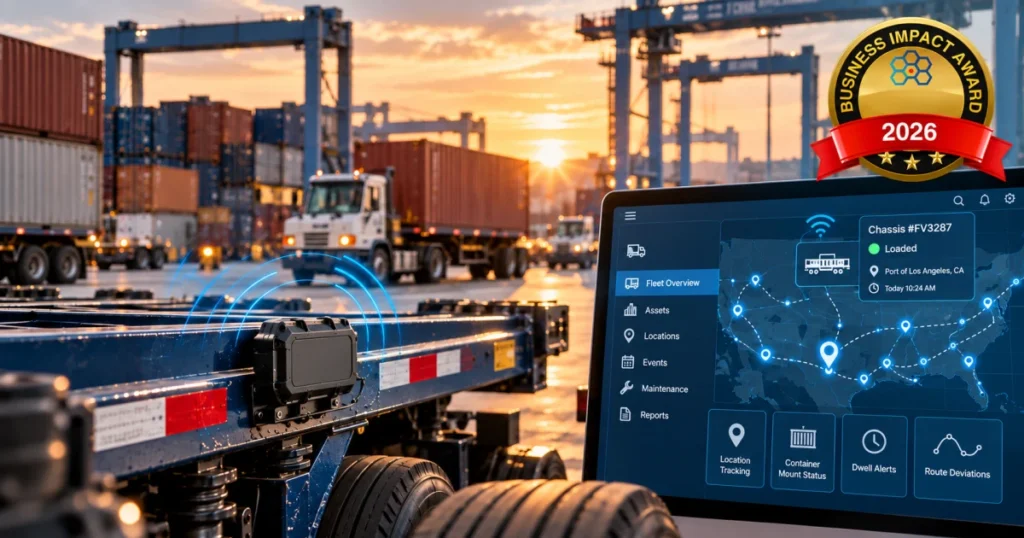
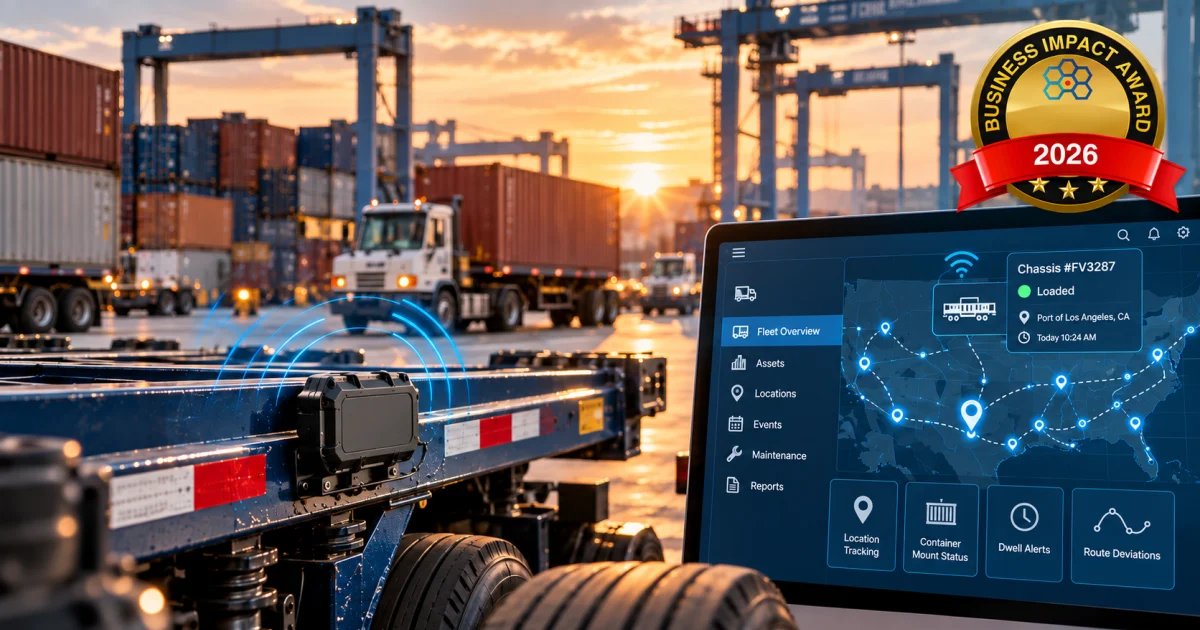
To eradicate these operational blind spots across a major share of its nationwide SmartChassis fleet, FlexiVan Leasing—a premier intermodal equipment provider—implemented a sweeping transformation. FlexiVan partnered with Hoopo, deploying the advanced hoopoSense Titan unpowered-asset tracker. By integrating this hardware with its proprietary AIM360 operating environment, FlexiVan has successfully bridged the divide between physical hardware and digital intelligence.
The deployment directly targets one of the Internet of Things (IoT) industry’s toughest engineering challenges: how to maintain reliable, real-time observability across tens of thousands of mobile assets that do not possess an internal power source and frequently operate in notoriously difficult radio frequency environments, such as dense port yards stacked high with steel containers.
Chronology: The Journey to SmartChassis Scale
The realization of FlexiVan’s modern smart fleet did not happen overnight. It represents the culmination of a strategic multi-year digital transformation roadmap aimed at transitioning the company from a traditional asset leasing model to a data-driven, technology-forward logistics powerhouse.
Phase 1: Laying the Digital Foundation (Pre-2024)
FlexiVan recognized early on that scale requires systemic software integration. The company began building its centralized GPS-agnostic platform, AIM360, designed to handle telematics, maintenance, billing, and customer-facing analytics. Over the years, this ecosystem expanded to ingest data feeds from nearly 8,000 geofenced intermodal facilities across North America, processing well over half a billion chassis and shipment data events annually.
Phase 2: Expanding Partnerships and Testing Edge Hardware (2024–2025)
As the SmartChassis fleet grew past the milestone of 75,000 units, FlexiVan sought out best-in-class hardware partners to complement its existing relationships (such as BlackBerry Radar). The company needed a specialized solution capable of monitoring unpowered assets with extreme precision. Through rigorous testing, Hoopo’s multi-modal sensing technology emerged as a prime candidate to solve the elusive problem of container mount detection and reliable signal capture in congested port facilities.
Phase 3: The Nationwide hoopoSense Titan Rollout (2025–2026)
FlexiVan deployed the hoopoSense Titan across its extensive fleet, bridging direct-to-customer and pool-based operational models. Rather than operating as an isolated technical trial, the deployment was fed directly into AIM360. This ensured that data flowed seamlessly to every relevant internal department—including Telematics, Maintenance, Business Intelligence, Commercial, and Loss Prevention teams.
Phase 4: Recognition and Industry Impact (Late 2026)
Culminating in widespread industry acclaim, the FlexiVan and Hoopo deployment earned prestigious Business Impact Award recognition. The collaborative project proved that long-life IoT hardware, when paired with an intelligent software backend, can fundamentally alter how unpowered heavy transport assets are managed on a national scale.
Supporting Data: Engineering at the Asset Edge
The success of the FlexiVan rollout hinges on the sophisticated technology packed inside the hoopoSense Titan device. Managing an unpowered asset fleet over a decade-long deployment lifecycle requires hardware that is both rugged and resource-efficient.
Multi-Modal Sensing and Signal Resilience
The Titan tracker is a rugged, battery-operated IoT device purpose-built for chassis, trailers, and other unpowered transport equipment. To overcome signal loss in dense, stacked container yards—where traditional GPS often fails—the device utilizes a hybrid positioning framework combining:
- GNSS (Global Navigation Satellite System) for broad outdoor tracking.
- Wi-Fi Observation to capture location data in urban canyons or near facility structures.
- Bluetooth Low Energy (BLE) for close-range asset tagging and yard management.
- Advanced Cellular Communications for long-range data transmission.
Precision Mount Detection and Machine Learning
Beyond merely knowing where a chassis is, operators need to know what it is doing. The Titan features an integrated radar system designed to accurately detect whether a container is mounted or if the chassis is running empty.
Raw location coordinates are processed through Hoopo’s proprietary machine learning rules engine, which automatically classifies critical operational events, including:
- Container mounting and dismounting actions.
- Facility gate entries and exits.
- Cross-border movements and state-line transitions.
- Prolonged idle periods and unexpected yard dwell times.
Durability and Power Management
Designed to withstand harsh weather, road vibrations, and extreme temperatures, the Titan carries an IP67 waterproof and dustproof rating. Despite transmitting regular updates, the device boasts an extraordinary battery life of up to 10 years, achieved through intelligent transmission policies that conserve energy while preserving vital operational data flows. Hoopo reports that the hardware maintains greater than 99% accuracy for both location tracking and event detection.
Official Responses: Insights from Industry Leadership
The integration of advanced IoT devices into heavy logistics requires alignment across technical, operational, and executive teams. Industry leaders have emphasized that the true value of these deployments lies not in the data collected, but in the actionable insights generated.
Don Alfarone, Vice President of Technical Services at FlexiVan, highlighted the strategic philosophy guiding the company’s technology investments:
"Our goal has always been to enable true operational intelligence rather than simply capturing static location data. By integrating advanced edge sensing with our AIM360 platform, our technology directly supports core business tasks—such as optimizing routing, identifying stalled assets, and proactively scheduling field repairs before minor issues become costly breakdowns."
Logistics analysts and industry commentators have similarly lauded the collaboration. Erik Linask, noting the significance of the deployment for IoT Evolution World, pointed out that the project successfully answers the industry’s long-standing demand for unified systems:
"The FlexiVan deployment demonstrates how the Internet of Things creates undeniable value when sensing, backend software integration, and workflow design are treated as a single, cohesive system."
Implications: The Future of Intermodal Equipment Management
The successful implementation of the hoopoSense Titan within FlexiVan’s SmartChassis network carries profound implications for the broader supply chain and logistics sector.
1. Moving from Reactive to Proactive Maintenance
Historically, chassis maintenance was predominantly reactive. A driver would pick up a unit only to discover a mechanical issue, leading to costly delays at terminal gates. With continuous breadcrumb histories, automated event classification, and health-monitoring analytics feeding into AIM360, fleet managers can now schedule preventative maintenance based on actual asset utilization and mileage, dramatically reducing downtime.
2. Eliminating Lost Assets and Reducing Detention Costs
Unpowered assets frequently get "lost" in massive intermodal pools, leading to inventory disputes, missed revenue opportunities, and wasted labor hours spent searching yards. Real-time visibility and dwell anomaly alerts ensure that every unit’s location is known, dramatically improving asset velocity and turns—the foundational metrics of chassis leasing profitability.
3. Setting a New Benchmark for Interoperability
As supply chains become increasingly digitized, the era of proprietary, closed-loop tracking silos is coming to an end. FlexiVan’s ability to ingest data from multiple GPS and telematics partners (including Hoopo and BlackBerry Radar) into a unified platform proves that open, interoperable architectures are the key to scaling modern logistics.
Conclusion
By transforming anonymous, unpowered steel frames into "smart" assets that communicate their status, location, and operational health, FlexiVan and Hoopo have raised the bar for the intermodal industry. As this technology scales across national transport corridors, the days of operational blind spots beneath container logistics are rapidly drawing to a close, paving the way for a more efficient, transparent, and resilient supply chain.