Google Releases TensorFlow GNN 1.0: Bringing Enterprise-Scale Graph Neural Networks to Deep Learning
MOUNTAIN VIEW, CA — In a major development for the artificial intelligence and machine learning communities, Google Research and CoreML have officially announced the release of TensorFlow GNN 1.0 (TF-GNN). This production-tested, highly scalable library is designed to bridge the gap between traditional deep learning architectures and the complex, interconnected world of graph-structured data.
Developed through a collaborative effort spanning Google Research, CoreML, and Google DeepMind, TF-GNN aims to democratize the use of Graph Neural Networks (GNNs), providing engineers and researchers with the native primitives required to process irregular, highly relational data at web scale.
Main Facts: What is TensorFlow GNN 1.0?
At its core, TF-GNN 1.0 is a robust framework built directly into the TensorFlow ecosystem, enabling developers to model, train, and deploy Graph Neural Networks efficiently.
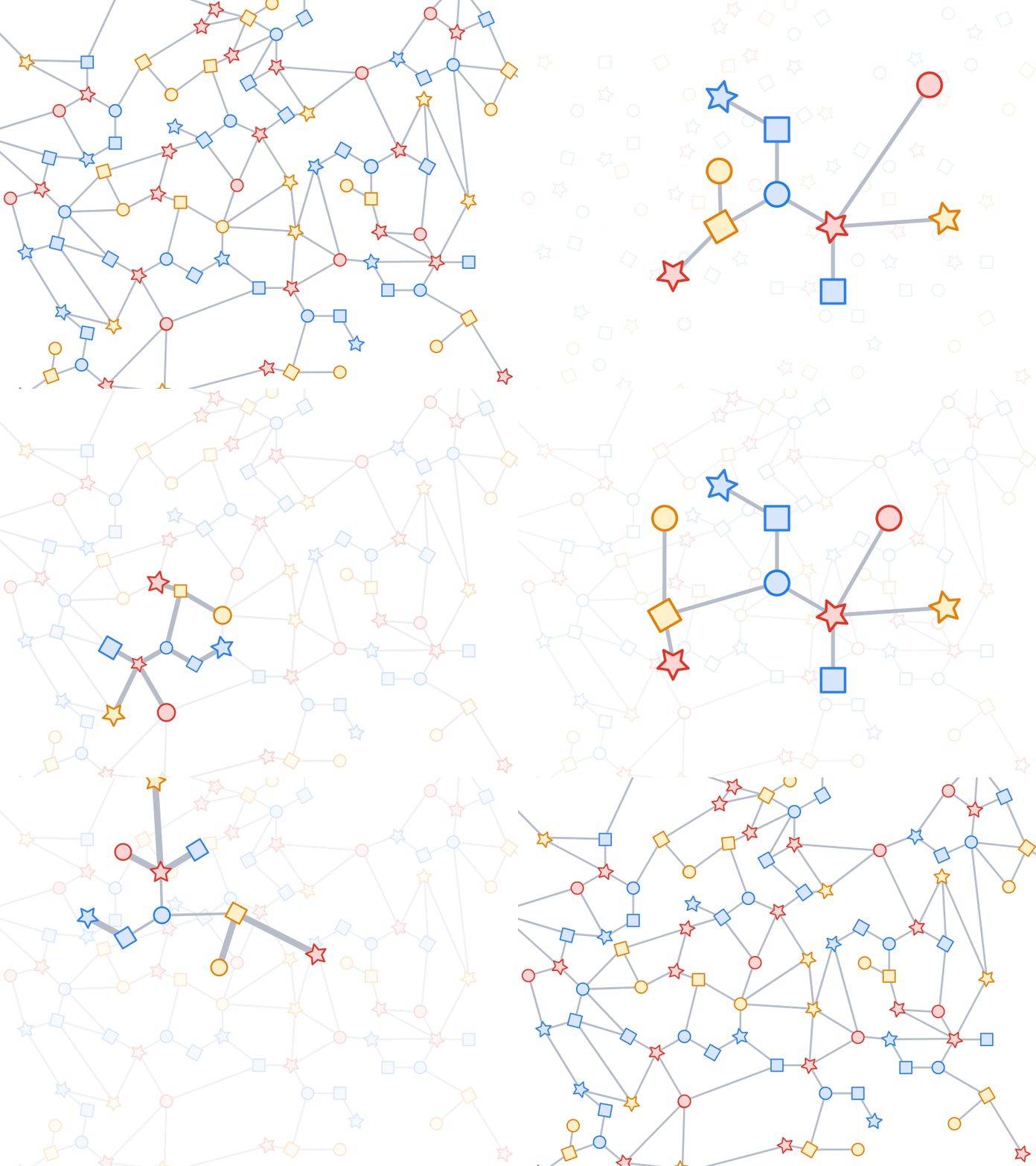
While traditional machine learning algorithms excel at processing regular, uniform inputs—such as pixel grids in computer vision or linear word sequences in natural language processing—they have historically struggled with the irregular, interconnected realities of real-world data. Networks of all kinds, including transportation grids, supply chain production networks, digital knowledge graphs, and social platforms, are fundamentally composed of objects (nodes) and their relationships (edges). In mathematics and computer science, these are formalized as graphs.
TF-GNN addresses this limitation by introducing tfgnn.GraphTensor, a composite tensor type that acts as a first-class citizen within standard TensorFlow tools like tf.data.Dataset and tf.function. This object seamlessly stores both the structural topology of a graph and the multi-dimensional features attached to its nodes, edges, and the overarching graph entity itself.
Furthermore, TF-GNN is built from the ground up to support heterogeneous graphs—networks featuring multiple, distinct types of nodes and edges. This structural flexibility allows developers to model real-world scenarios more accurately without stripping away contextual nuance.

Chronology: The Evolution of Relational Learning
The journey toward native graph machine learning within mainstream frameworks like TensorFlow has been a gradual evolution over the past decade:
- Early Graph Embeddings (Mid-2010s): Pioneering algorithms like DeepWalk and Node2Vec laid the groundwork by attempting to learn continuous vector representations of nodes based on random walks across graph structures. However, these methods largely divorced structural connectivity from rich input features.
- The Rise of GNNs: Academic and industrial research quickly converged on Graph Neural Networks, which combine network topology with node and edge attributes. Methods like Message-Passing Neural Networks (MPNNs) enabled localized feature aggregation, allowing models to learn contextual meanings based on a node’s immediate neighborhood.
- Initial Prototyping and Internal Use: Recognizing the need for scalable graph processing across Google’s diverse ecosystem—from search indexing to recommendation systems—teams across Google Research, CoreML, and DeepMind began developing internal abstractions for graph tensors.
- Open-Source Incubation: As methodologies matured, the need for a standardized, production-ready library became evident. Engineers began releasing modular components, leading to iterative versions of TF-GNN on GitHub.
- The 1.0 Milestone (2024): The official release of TensorFlow GNN 1.0 marks the stabilization of the library’s API, offering enterprise-grade training orchestration, dynamic subgraph sampling, and deep integration with the Keras high-level API.
Supporting Data & Architectural Mechanics
Scaling machine learning models to massive graphs containing hundreds of millions of nodes and billions of edges presents severe computational challenges. While a GNN might be trained on a dataset comprising millions of labeled entities, a single training step typically consumes only a small batch of hundreds of examples.
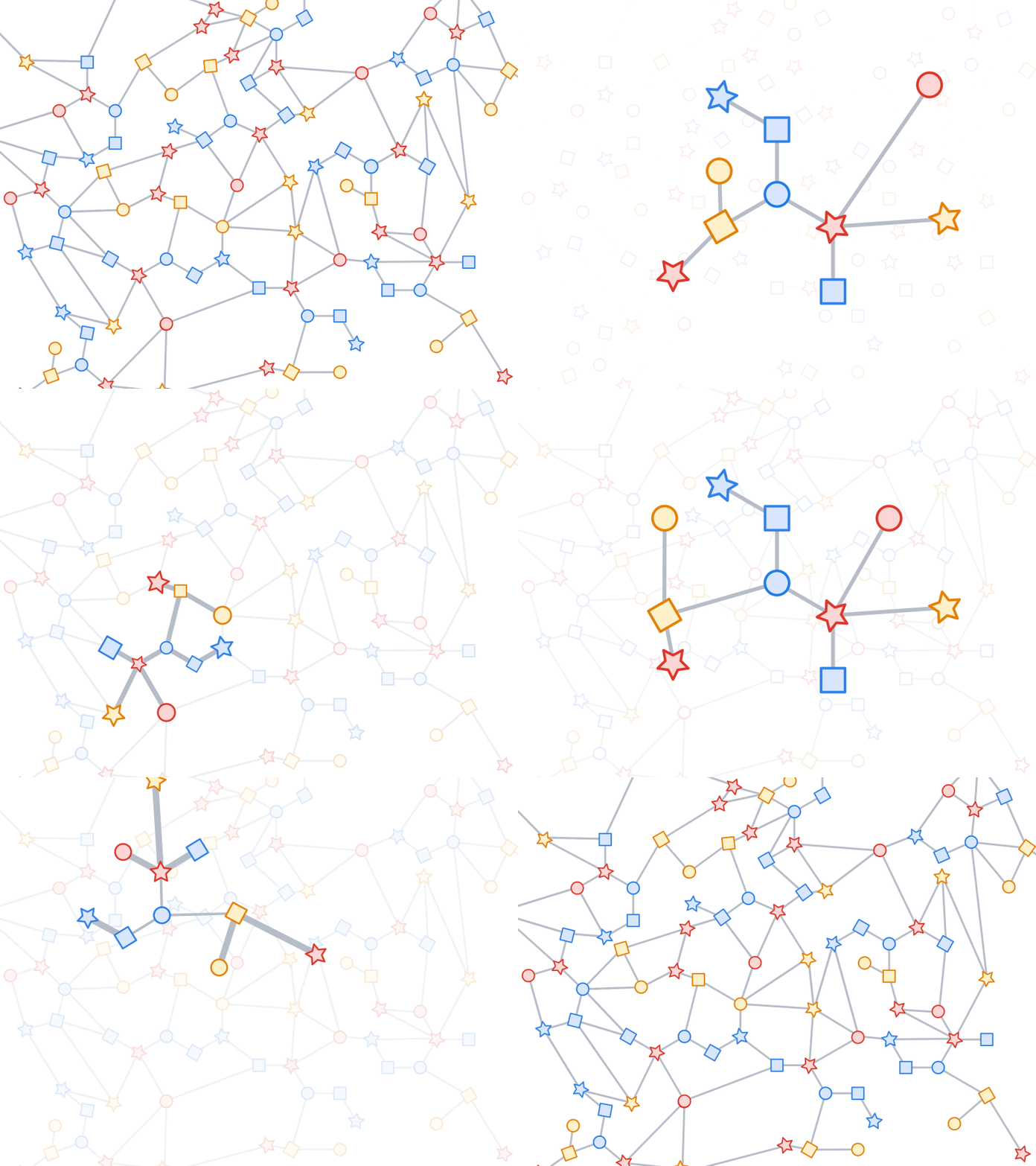
To solve this, TF-GNN implements advanced subgraph sampling. Rather than loading an entire massive network into memory, the library extracts small, tractable subgraphs that contain enough localized data to compute accurate neural updates for a target root node.
TF-GNN 1.0 offers flexible Python APIs for this sampling process across three distinct operational scales:
- Interactive Notebooks: For local experimentation within Google Colab environments.
- In-Memory Sampling: For efficient execution on a single training host with moderate datasets.
- Distributed Apache Beam Pipelines: For massive datasets stored on network filesystems, capable of scaling to hundreds of millions of nodes.
Message-Passing and Architectural Abstraction
Once subgraphs are sampled, TF-GNN utilizes message-passing architectures. In each round of message passing, nodes aggregate information from their immediate neighbors along incoming edges to update their internal "hidden states." After $n$ rounds, a root node’s hidden state mathematically encodes the aggregate information of all nodes situated within $n$ hops.
The library supports GNN development at multiple levels of abstraction:
- High-Level Keras API: Users can leverage pre-packaged model templates (such as the MtAlbis architecture) or established research models with minimal boilerplate code.
- Low-Level Primitives: Engineers can build custom architectures from scratch using fine-grained primitives that control data broadcasting and pooling across nodes and edges, unlocking paradigms like general GraphNets.
Official Responses and Collaborative Development
The release of TF-GNN 1.0 is the result of an extensive cross-organizational collaboration within Google. The official announcement, penned by Software Engineers Dustin Zelle (Google Research) and Arno Eigenwillig (CoreML), highlights the framework’s versatility in bridging discrete relational data with continuous deep learning workflows.
The project development team represents a powerhouse of machine learning expertise, drawing contributors from three distinct divisions:
- Google Research: Sami Abu-El-Haija, Neslihan Bulut, Bahar Fatemi, Johannes Gasteiger, Pedro Gonnet, Jonathan Halcrow, Liangze Jiang, Silvio Lattanzi, Brandon Mayer, Vahab Mirrokni, Bryan Perozzi, Anton Tsitsulin, and Dustin Zelle.
- Google Core ML: Arno Eigenwillig, Oleksandr Ferludin, Parth Kothari, Mihir Paradkar, Jan Pfeifer, and Rachael Tamakloe.
- Google DeepMind: Alvaro Sanchez-Gonzalez and Lisa Wang.
While Google has not released a commercial pricing model—as TF-GNN 1.0 is a free, open-source library hosted under the Apache 2.0 license on GitHub—the corporate backing ensures long-term maintenance, integration with TensorFlow’s roadmap, and optimization for enterprise hardware such as Cloud TPUs.
Implications for the AI and Enterprise Landscape
The introduction of a standardized, production-grade GNN library carries profound implications for multiple industries:
1. Enhanced Fraud Detection and Cybersecurity
Financial institutions and cybersecurity firms rely heavily on transaction and communication networks. By utilizing TF-GNN’s heterogeneous graph modeling, systems can better detect complex, multi-layered fraud rings or lateral cyberattacks where individual data points appear benign in isolation, but malicious within a connected context.
2. Biomedical and Pharmaceutical Research
In drug discovery, molecular structures are naturally represented as graphs where atoms act as nodes and chemical bonds act as edges. TF-GNN’s ability to run supervised and unsupervised tasks—including contrastive losses and deep graph infomax—empowers researchers to predict molecular properties, forecast drug interactions, and accelerate pharmacological breakthroughs.
3. Recommendation Systems and Knowledge Graphs
Modern search engines, e-commerce platforms, and streaming services depend on vast knowledge graphs linking users, products, queries, and media. By encoding discrete relational data into continuous embeddings, TF-GNN allows recommendation engines to ingest graph-based inductive biases, drastically improving personalization and context-aware suggestions.
4. Interpretability via Integrated Gradients
A historically difficult hurdle in deep learning has been model interpretability—understanding why a neural network arrived at a specific conclusion. TF-GNN 1.0 incorporates native support for integrated gradients, outputting a GraphTensor where feature values are replaced by gradient attribution scores. This allows developers to audit which specific structural connections and node attributes heavily influenced the model’s predictions.
Getting Started
For engineers and researchers eager to explore the capabilities of TensorFlow GNN 1.0, Google has provided a wealth of documentation, guides, and interactive resources:
- Hands-On Demo: An end-to-end tutorial using the popular OGBN-MAG benchmark is available via Google Colab, requiring zero local installation.
- Source Code & Documentation: The complete library, along with user guides for in-memory and Beam-based sampling, can be accessed on the official TensorFlow GNN GitHub Repository.
- Academic Reference: Detailed theoretical foundations are outlined in the accompanying research paper available on arXiv (2207.03522).