The Slurptop: Where Cyberpunk Aesthetics Meet Industrial Utility
In the burgeoning world of "cyberdeck" enthusiasts—a niche community dedicated to building custom, portable computing rigs inspired by the neon-drenched pages of William Gibson’s Neuromancer—there has long been a dichotomy. On one side, you have the "Rule of Cool" builds: machines laden with glowing LEDs, impractical acrylic chassis, and purely aesthetic flourishes that serve little purpose beyond looking like a prop from an 80s sci-fi film. On the other, you have the workhorses: the practical, rugged, and modular devices designed for real-world heavy lifting.
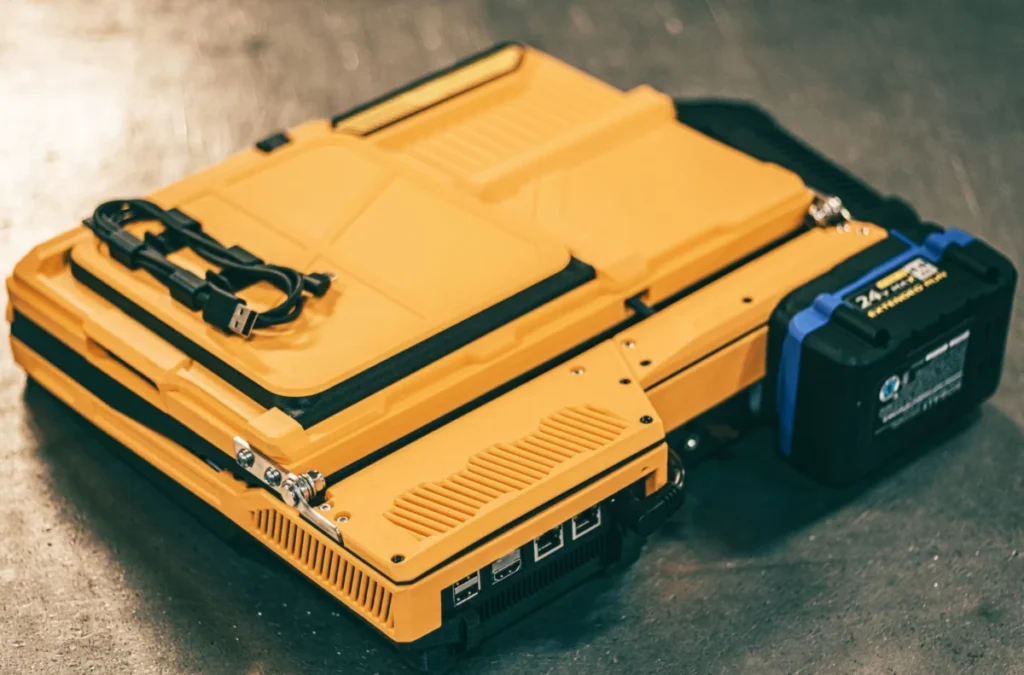
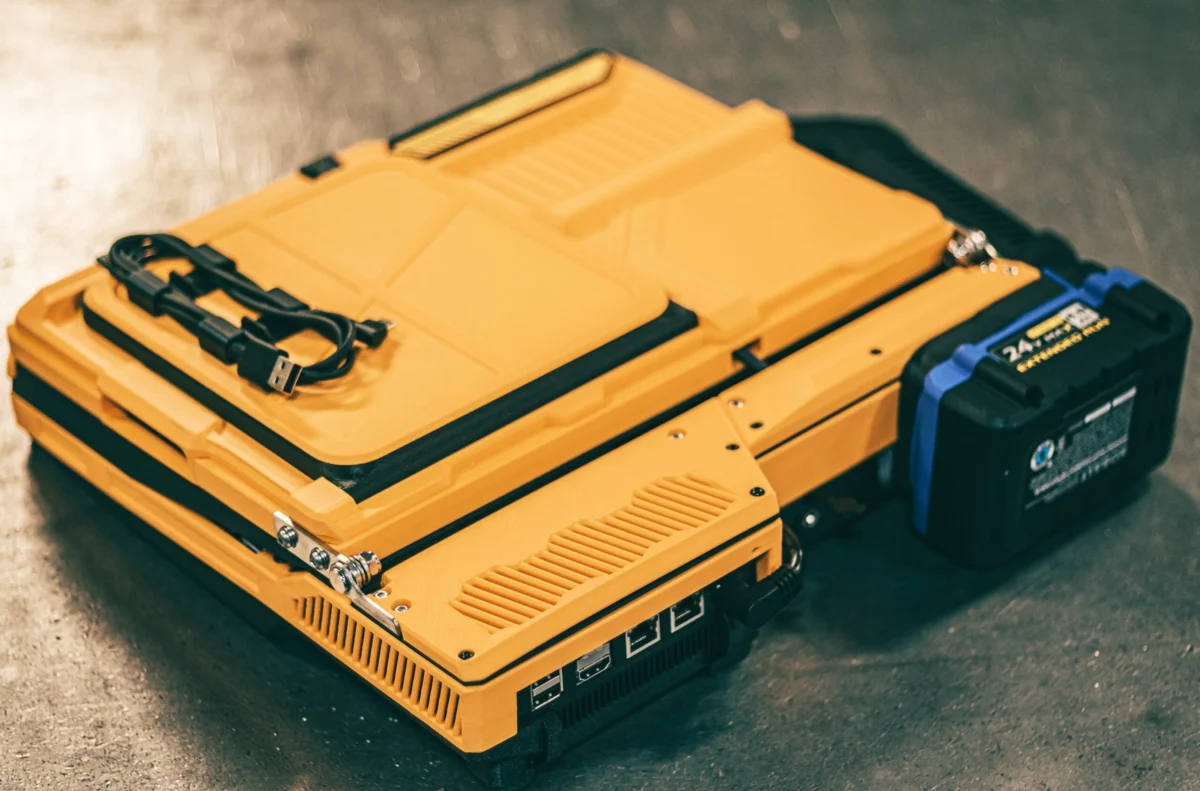
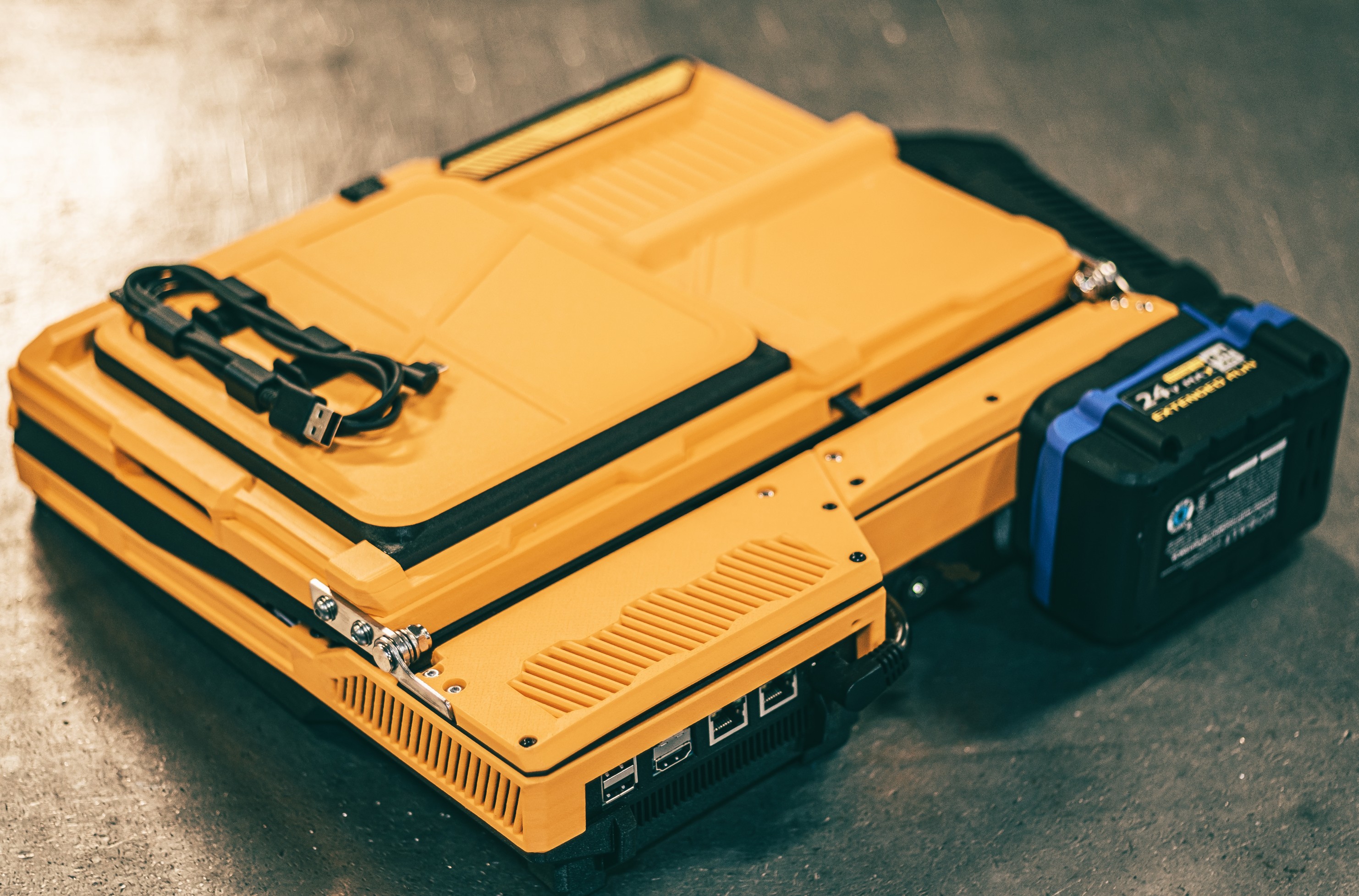
The "Slurptop," a newly unveiled cyberdeck by the maker known as [Slurpburgers], occupies a fascinating middle ground. It manages to capture the gritty, utilitarian "future-of-the-past" aesthetic while functioning as a genuine, x86-based portable powerhouse. By integrating heavy-duty power-tool batteries into a custom-built chassis, [Slurpburgers] has created a device that feels less like a toy and more like a tool one might find in a high-tech scavenger’s kit.
Main Facts: Architecture of the Slurptop
The Slurptop is not merely a laptop; it is a statement on modularity. At its heart lies a GMKtec MiniPC, an x86-based micro-computer that provides the processing power necessary for actual productivity—a significant step up from the common Raspberry Pi-based decks that populate the community.
The most striking feature of the build is its power management system. Rather than relying on fragile, proprietary lithium-ion internal cells, [Slurpburgers] has opted for standardized power-tool battery packs. These packs provide a rugged, swappable energy source that elevates the device’s "cyberpunk" credibility. The deck is physically imposing, ergonomic, and unapologetically utilitarian, featuring a mechanical keyboard layout and an integrated trackball salvaged from a gaming mouse.
Chronology: The Development Cycle
The journey of the Slurptop began as a desire for a portable machine that didn’t succumb to the "squishy" keyboard syndrome of modern ultra-portables.
- Conceptualization: [Slurpburgers] sought to combine the raw processing power of an x86 mini-PC with the industrial durability of field-equipment. The core constraint was power: mini-PCs are power-hungry, necessitating a robust, high-amperage solution.
- Chassis Design: The builder opted for a custom build that would accommodate both the motherboard and the massive battery interface. The design phase focused heavily on ergonomics, specifically the hand-rest positioning for the trackball and the mechanical keys.
- Integration: The transition from off-the-shelf components to a unified system took place over several months. The trackball mechanism was particularly challenging, requiring the delicate transplantation of high-precision optical sensors from a gaming mouse into a custom-printed housing.
- Refinement: Testing revealed that while the power-tool battery solution was effective, it wasn’t a "hot-swap" system. This led to the secondary integration of a UPS (Uninterruptible Power Supply) module, allowing the user to transition to wall power without crashing the OS.
- Final Assembly: The build concluded with the integration of the display and the final aesthetic "polishing," resulting in the drool-worthy machine currently making waves in the maker community.
Supporting Data: Power, Performance, and Input
The Power Paradigm
The Slurptop operates for roughly four hours on a single power-tool battery charge. This is an impressive feat considering the draw of the x86 hardware. While the system does not support true hot-swapping—meaning the battery must be removed while the device is connected to an alternative power source or while it is powered down—the implementation of a UPS module is a masterclass in pragmatic engineering. It allows the user to switch to mains power seamlessly, mirroring the "assemble at need" ethos of classic cyberpunk fiction.
Mechanical Precision
Modern laptop manufacturers have largely abandoned the tactile feedback of mechanical switches in favor of thin, low-profile, "chiclet" style keys. The Slurptop serves as a rebuke to this trend. The keyboard is fully mechanical, providing the audible "clack" and physical travel distance that enthusiasts crave. The trackball, repurposed from gaming hardware, provides high-DPI tracking that outperforms standard laptop trackpads, catering to users who require precise input for CAD, coding, or graphical editing on the go.
Official Responses and Community Impact
The response from the broader hardware hacking community, including platforms like Hackaday, has been overwhelmingly positive. The Slurptop has been hailed as a pinnacle of "functional cybernetics."
"The Slurptop is a perfect example of what happens when form follows function," noted one lead contributor on the project’s feedback forum. "By using tool batteries, the builder has solved the biggest issue with portable computing: the proprietary battery trap. If your battery dies, you don’t buy a new laptop; you buy a new pack at the hardware store."
While some purists have questioned the choice of an x86 mini-PC over lower-power ARM-based alternatives, the consensus is that for a "pro" cyberdeck, the compatibility of x86 is paramount. The device is not just for show; it is designed to run the same software environments as a desktop workstation.
Implications: The Future of the Cyberdeck
The success of the Slurptop suggests a shift in the DIY computing landscape. We are moving away from the era of "I built this to look cool" toward "I built this to solve a problem."
1. The Death of the Proprietary Battery
The integration of power-tool batteries (like those from Milwaukee, DeWalt, or Makita) is a trend that could revolutionize portable DIY builds. These batteries are designed for extreme environments, possess high energy density, and are ubiquitous in the retail market. By standardizing these as the power source for home-brewed laptops, makers are effectively future-proofing their devices.
2. Ergonomics as a Priority
The Slurptop highlights a growing dissatisfaction with the standard "slate" form factor. As mobile workers become more reliant on complex software, the need for high-quality, tactile input devices becomes non-negotiable. The return of the trackball and the mechanical switch signifies a rebellion against the aesthetic minimalism of modern electronics.
3. Sustainability through Modularity
Perhaps the most significant implication is sustainability. Modern laptops are notoriously difficult to repair; they are glued shut, soldered, and proprietary. The Slurptop, by design, is a collection of parts that can be removed, upgraded, and replaced. If the GMKtec board becomes obsolete, it can be swapped for a newer iteration without discarding the chassis, the battery system, or the input peripherals.
This build is more than just a nod to fiction—it is a blueprint for a more resilient, repairable, and customizable future. As we look at the trajectory of the Slurptop, it is clear that the most "cyberpunk" thing an individual can do is not to mimic the neon aesthetics of a movie set, but to build a machine that they truly own—down to the last screw and battery cell.
In conclusion, the Slurptop serves as a poignant reminder that the "future of the past" is something we can build today. Whether it’s the satisfying tactile resistance of the mechanical keys or the rugged, swappable power source, [Slurpburgers] has successfully bridged the gap between fantasy and reality, proving that the best tools are the ones that reflect the personality and the needs of the hands that hold them.