AI-Driven Breakthrough: New Roadmap Emerges for Treating Hard-to-Beat Colorectal Cancer
Executive Summary: A Paradigm Shift in Oncology
In a landmark development for precision medicine, an international coalition of scientists has unveiled a sophisticated new strategy to combat microsatellite stable (MSS) colorectal cancer (CRC)—a subset of the disease that has historically proven resistant to many of the modern therapeutic breakthroughs seen in other cancer types.
Led by researchers at the RCSI University of Medicine and Health Sciences and The Institute of Cancer Research (ICR), London, the study utilized a massive, multi-dimensional dataset and a novel artificial intelligence tool, "iPhenMap," to deconstruct the biological complexity of CRC. By identifying previously unknown vulnerabilities within these tumors, the team has paved the way for a new era of personalized treatment, suggesting that existing, FDA-approved drugs could be repurposed to achieve significantly better clinical outcomes for patients who currently face limited options.
The Clinical Challenge: Why MSS CRC Remains a Stubborn Adversary
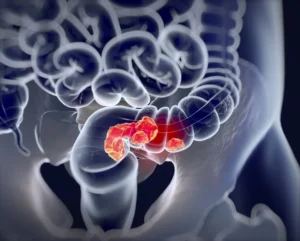
Colorectal cancer remains a leading cause of cancer-related mortality globally. In Ireland alone, approximately 2,500 new cases are diagnosed annually. Of these, 80% to 85% fall into the category of "microsatellite stable" (MSS) tumors. Unlike their "microsatellite instability-high" (MSI-H) counterparts, which have seen remarkable success with modern immunotherapy, MSS tumors have largely remained impervious to these advances.
The situation is further complicated by the genetic landscape of these cancers. Between 40% and 50% of MSS CRC cases harbor mutations in the RAS gene superfamily. Patients with RAS-mutant (RAS-mt) tumors consistently exhibit inferior survival rates compared to those with RAS-wild-type (RAS-wt) tumors. Despite decades of clinical trials combining chemotherapy with targeted agents, progress has been incremental at best. The scientific community has long recognized that standard, one-size-fits-all treatments are insufficient, necessitating a deeper, more granular understanding of the disease’s "phenome"—the observable characteristics of the cancer cells themselves.
Chronology of the Research: From Data Silos to Holistic Mapping
The journey to this breakthrough began with the recognition that the medical community was suffering from "data fragmentation." While researchers had access to genomic, proteomic, and clinical data, these were often studied in isolation.
Phase I: Aggregating the "Big Data"
The international team, involving experts from across Europe—including the Vall d’Hebron Institute of Oncology in Barcelona—amassed a staggering dataset of 2,000 CRC tumor samples. This included over 300 MSS CRC samples that had never before been profiled. By pooling resources, the researchers ensured that the dataset was not only large but also diverse, capturing the heterogeneous nature of the disease across different patient populations.
Phase II: The Development of iPhenMap
To synthesize this vast amount of information, the team developed iPhenMap, a machine-learning-based AI tool. Unlike traditional statistical models that look at single data streams, iPhenMap was designed to "map" the tumor by integrating:
- Genomics: DNA mutations and alterations.
- Epigenomics: Changes that affect how genes are turned on or off.
- Proteomics: The study of protein expression.
- Metabolomics: The metabolic processes driving cancer growth.
- Single-nucleus/single-cell RNA sequencing (sn/scRNA-seq): A high-resolution look at the individual cells within a tumor.
Phase III: Identifying Vulnerabilities
Using iPhenMap, the researchers were able to see "invisible" connections—biological dependencies that were previously masked by the sheer complexity of the data. The AI identified pathways through which cancer cells divide, adapt to environmental stress, and resist standard treatments. This led to the identification of specific drug combinations that could disrupt these pathways, effectively "trapping" the cancer cells in a vulnerable state.
Supporting Data: Validating the AI Predictions
The strength of this study, published in the journal Cancer Cell under the title "Multiomic characterization of microsatellite-stable colorectal cancer reveals distinct biology and targetable vulnerabilities," lies in its iterative testing.
The researchers did not stop at computer modeling. They transitioned to in vivo laboratory models to test the drug combinations suggested by the AI. A notable success involved trametinib, a targeted therapy already approved for conditions like melanoma, lung cancer, and thyroid cancer. When administered in specific combinations identified by the iPhenMap tool, trametinib demonstrated a marked reduction in tumor growth and a statistically significant increase in survival rates within the laboratory models.
This confirms that the roadmap is not merely theoretical; it is a translational framework capable of being moved toward human clinical trials. The integration of clinical parameters with molecular data ensures that the findings are not just biologically interesting, but clinically actionable.
Official Perspectives: The Experts Speak
Professor Annette Byrne, RCSI University of Medicine and Health Sciences
As co-lead of the study and head of the RCSI Precision Cancer Medicine Group, Professor Byrne emphasizes the urgency of the findings. "Patients with MSS RAS-mutant metastatic colorectal cancer urgently need better treatment options, particularly when their disease no longer responds to standard therapy," she notes.
While tempering expectations with the necessary scientific caution that these findings are currently preclinical, she underscores the long-term vision: "These findings highlight promising therapeutic opportunities and provide a strong foundation for further development. The next step will be to identify the biological features that predict response and determine how these approaches can be advanced safely towards clinical evaluation."
Professor Anguraj Sadanandam, The Institute of Cancer Research, London
Co-senior author Professor Sadanandam points to the collaborative nature of the success. "A major strength of this research is the scale and diversity of the dataset," he states. He highlights that the future of oncology lies in the marriage of biological research and artificial intelligence: "AI and machine learning will increasingly help cancer researchers to bring these complex data together, not just to classify tumors, but to understand how they behave, identify their vulnerabilities and guide the development and repurposing of treatments."
Implications for Future Oncology
The implications of this study extend far beyond colorectal cancer. The successful application of iPhenMap provides a "blueprint" for how cancer research can be conducted in the future.
1. Drug Repurposing as a Fast-Track
By identifying that drugs already approved for other cancers (such as trametinib) can be effective against CRC, the researchers have significantly reduced the time and cost associated with drug development. Repurposed drugs have known safety profiles, which can potentially accelerate their move into clinical trials for new indications.
2. The Rise of Precision Oncology
The study shifts the focus from treating "colorectal cancer" as a single entity to treating specific "molecular subtypes." By defining the biological map of a patient’s specific tumor, clinicians can move closer to the "holy grail" of precision medicine: selecting the right combination of drugs for the right patient at the right time.
3. A New Resource for the Community
The researchers have explicitly stated that their work is intended to be a "rich resource for the CRC research community." By making their integrated datasets available, they hope to catalyze further studies, enabling other labs to test their own hypotheses against the iPhenMap findings.
4. Overcoming Intractable Disease
For the millions of patients currently facing the "dearth of available effective treatments" for MSS CRC, this research offers more than just data; it offers hope. The researchers conclude that their findings represent the foundation for a new "precision oncology treatment framework."
As the medical community shifts its focus toward these newly identified vulnerabilities, the potential for improving survival rates and quality of life for CRC patients is substantial. The marriage of AI-driven data synthesis and rigorous biological validation has proven that even the most stubborn diseases may eventually yield to a more intelligent, targeted, and collaborative approach to medicine.
Moving forward, the primary goal remains clear: translating these laboratory-proven combinations into safe, effective clinical protocols that can transform the standard of care for one of the world’s most challenging oncological landscapes.