The Hairy Vanguard: Reimagining Combat Robotics Armor through 3D-Printed Bristles
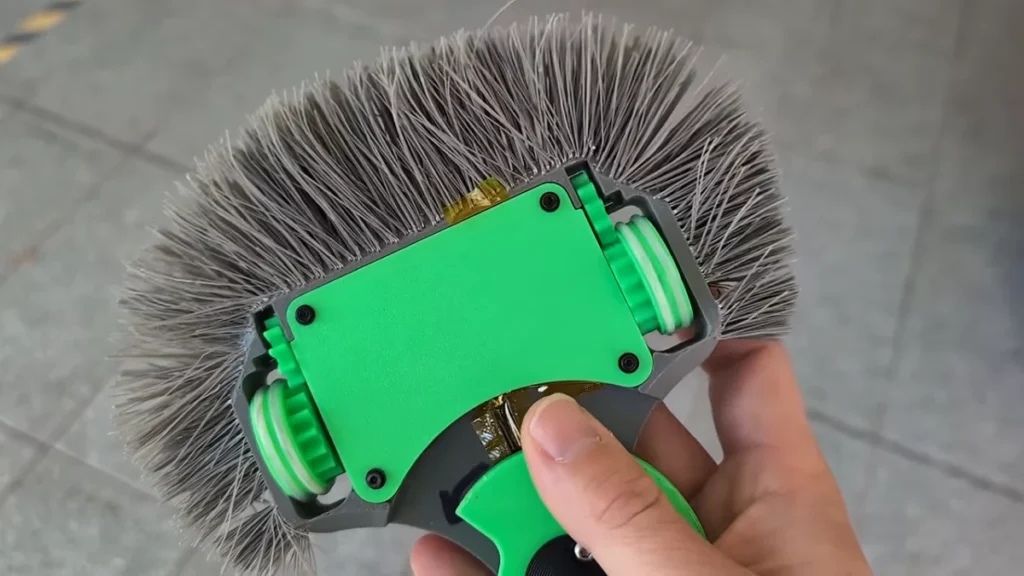
In the high-stakes, high-impact world of combat robotics, weight is the ultimate constraint. Engineers and hobbyists spend thousands of hours shaving grams off their chassis to accommodate more powerful motors, heavier batteries, or more destructive weaponry. Within the "plastic antweight" (or "plant") division—where machines must weigh 150 grams or less and be constructed almost entirely from polymers—the pursuit of effective, lightweight armor has traditionally been a game of geometry and material science.
However, Angus, the creative force behind the popular Maker’s Muse channel, recently challenged conventional wisdom. By trading traditional solid-shell armor for a dense, flexible "mane" of 3D-printed bristles, he has sparked a conversation about structural integrity, impact dissipation, and the potential for biomimicry in miniature warfare.
Main Facts: The "Hairy" Hypothesis
The core premise of Angus’s experiment is deceptively simple: Can a sacrificial, ablative layer of rigid plastic filaments act as an effective shield against the spinning blades and hammers of a combat robot?
In combat robotics, "ablative" armor is designed to be destroyed or deformed to protect the vital components beneath. While traditional plate armor is designed to deflect, it often transfers the kinetic energy of a blow directly into the chassis, leading to catastrophic cracks. Angus hypothesized that a thick, forest-like array of bristles would decouple the kinetic impact from the structural frame.
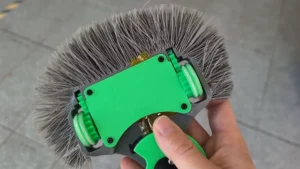
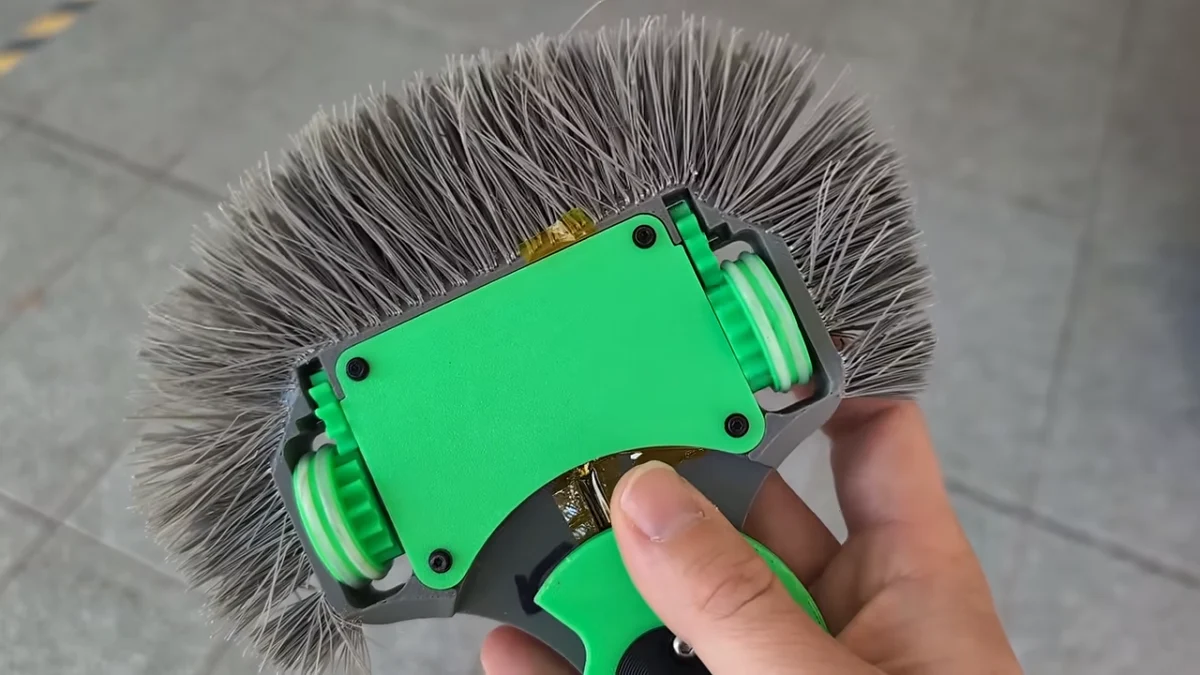
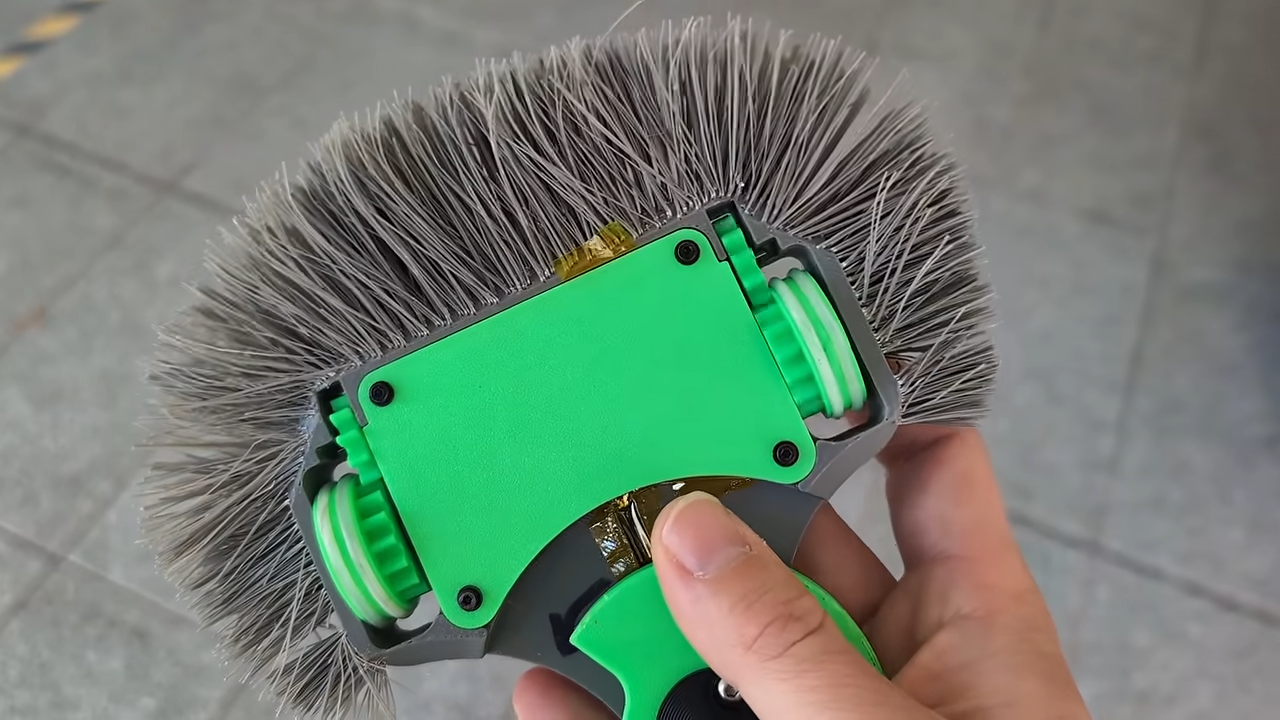
By utilizing a 3D-printing technique commonly used to create decorative lion’s manes—bridging filament between the core model and an outer support structure that is later removed—Angus created a robot encased in a stiff, hair-like exterior. When a weapon strikes this "mane," the individual bristles flex, bend, and break, theoretically absorbing the impact energy before it reaches the robot’s core, acting as a structural buffer zone.
Chronology: From Concept to Combat
The project, documented extensively across his digital platforms, followed a rapid iteration cycle characteristic of the hobbyist engineering community.
Phase 1: Conceptualization
Angus began by questioning the limitations of standard 3D-printed shells. After observing how brittle traditional shells performed under the stress of a direct hit, he looked toward unconventional geometries. Inspired by nature’s ability to use fiber and hair to protect delicate structures, he conceptualized the "hairy" robot as a way to spread a localized strike across a wider surface area.
Phase 2: Design and Fabrication
The process involved a specialized 3D-printing workflow. The "hairs" were not printed individually; instead, the printer was instructed to create long, thin bridges of filament stretching from the robot’s main body to a sacrificial outer ring. Once the print was complete, the outer ring was excised, leaving the stiff, protruding strands intact.
Phase 3: The Trial
The robot was subjected to testing against a spinning weapon in an arena setting. The results were immediate and surprising: whereas previous iterations of his machines suffered from shattered shells and fractured internal components, the bristled design remained largely operational. The bristles effectively "caught" the spinning weapon, dampening the shock and preventing a clean cut through the chassis.
Phase 4: Refinement
Following the initial success, Angus returned to his CAD software. Recognizing that the first iteration was a proof-of-concept, he spent time refining the "hair-generating" process, experimenting with bristle density, filament types (such as PETG versus PLA), and bristle length to maximize the energy-absorption-to-weight ratio.
Supporting Data: Why Bristles Work
To understand the efficacy of this design, one must look at the physics of combat robotics. Most antweight combat consists of "spinners"—robots that use high-speed discs to impart kinetic energy. When a spinner hits a flat surface, the force is localized. If the shell is rigid, the energy is transmitted through the material, causing it to shatter.
The bristled armor operates on two mechanical principles:
- Energy Dissipation: By increasing the time it takes for the weapon to reach the chassis, the bristles reduce the peak force of the impact. The "hairs" act like a crumple zone in an automobile, albeit on a micro-scale.
- Weapon Entanglement: The bristles often act as an interference pattern. They can clog the weapon’s teeth or interfere with the rotation of the opponent’s spinner, effectively turning the weapon’s own energy against itself.
While the "hairy" armor does not prevent the bristles themselves from being destroyed, the sacrificial nature of the design is its greatest strength. It is significantly cheaper and faster to print a new set of bristles than to print a new structural chassis.
Industry and Community Responses
The engineering community has responded with both skepticism and intrigue. Combat robotics forums have been alight with discussions regarding the "hair" method. Some veteran builders argue that the bristles could be stripped away too easily, leaving the robot vulnerable. Others have lauded the creative use of 3D-printing limitations to solve a weight-to-protection paradox.
The Maker’s Muse video documentation served as a catalyst for a broader trend. Since the publication of the project, several amateur builders in the antweight circuit have begun experimenting with similar "sacrificial surface geometries." The consensus among hobbyists is that while the hairy armor may not be the ultimate solution for every weight class, it represents a significant leap forward in "unorthodox" design.
Implications: The Future of Hobbyist Engineering
The success of the hairy robot underscores a fundamental shift in the hobbyist landscape. 3D printing has moved beyond mere rapid prototyping; it is now a primary manufacturing method for competitive robotics.
Democratization of Innovation
When combat robotics first gained popularity, the barrier to entry was high: one needed access to CNC mills, welding equipment, and expensive materials like titanium or aluminum. Today, a student with a $200 printer can compete on a level playing field. Angus’s experiment highlights that in this new era, the most effective weapon is not necessarily the most expensive metal, but the most creative application of software and material physics.
A New Paradigm for Design
The "hairy" robot suggests that we may be entering an era of "biomimetic robotics." By mimicking the structures found in nature—such as fur, scales, or feathers—engineers can create armor that is far lighter than traditional solid plates. The implications for this go beyond small-scale combat robots; researchers in soft robotics and drone technology are already looking at ways to use flexible, sacrificial materials to protect sensitive electronics in high-impact environments.
The Evolution of the "Plant" Division
As the plastic antweight division continues to grow, we can expect to see more "living" designs. The competition is no longer just about who has the fastest motor, but who can best manage the physics of impact. As Angus continues to refine his process, it is likely that "hairy" armor will become a staple, or at the very least, a standard testing benchmark for new builders.
In conclusion, what started as a whimsical "funny idea" has blossomed into a legitimate engineering experiment. By challenging the necessity of solid, impenetrable shells, Angus has invited the combat robotics community to reconsider the definition of armor. Whether through hair, lattice structures, or complex geometric bracings, the future of combat robotics is looking increasingly like a study in creative, sacrificial, and highly efficient design. As the technology behind 3D printing continues to evolve, so too will the ingenuity of those who use it to push the boundaries of what a 150-gram machine can survive.