AWS Unveils Lambda MicroVMs: Bridging the Gap Between Serverless Flexibility and Virtual Machine Isolation
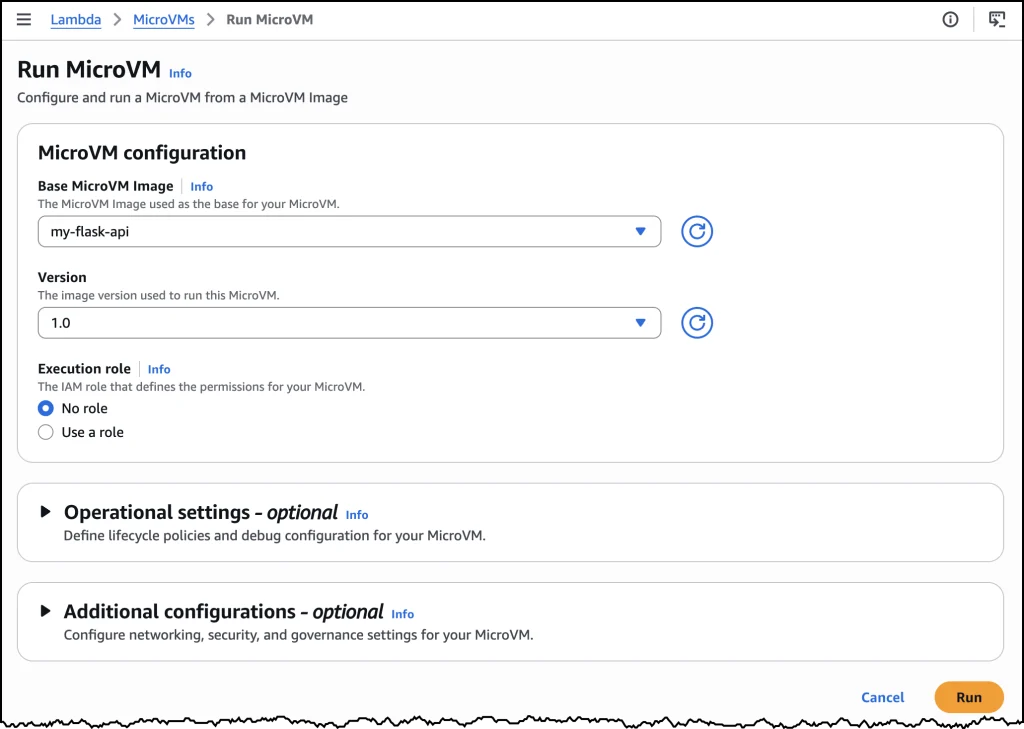
In a significant expansion of its serverless ecosystem, Amazon Web Services (AWS) today announced the launch of AWS Lambda MicroVMs, a new compute primitive designed to fundamentally alter how developers build multi-tenant applications. By leveraging the industry-standard Firecracker virtualization technology, Lambda MicroVMs provide a unique middle ground: the granular, stateful control of a virtual machine combined with the operational ease and rapid scaling characteristic of serverless computing.
This launch addresses a critical pain point for modern developers: the "isolation-versus-performance" dilemma. As AI-powered coding assistants, interactive data science notebooks, and user-driven game servers become ubiquitous, the requirement to run untrusted code in secure, isolated environments has moved from a niche concern to a mainstream architectural necessity.
The Core Innovation: What are Lambda MicroVMs?
At its heart, AWS Lambda MicroVMs represent a paradigm shift in the serverless lifecycle. Unlike traditional Lambda functions—which are typically ephemeral, event-driven, and stateless—MicroVMs are designed for long-running, interactive sessions.
Each MicroVM provides a dedicated execution environment for a single end-user or session. This environment offers true virtual machine-level isolation, ensuring that even if a user executes malicious or poorly written code, it cannot breach the boundaries of their container or access the underlying host infrastructure.
The Technological Foundation
The service is built upon Firecracker, the open-source virtualization technology developed by AWS that already underpins the massive scale of standard Lambda and Fargate. By utilizing Firecracker, AWS delivers:

- True VM Isolation: Unlike container-based solutions that share a kernel, MicroVMs utilize independent kernels, providing a robust security boundary.
- Near-Instant Launch: Through a sophisticated "snapshot-and-restore" mechanism, the service boots environments from pre-initialized states, bypassing the time-consuming cold-start processes typical of standard virtual machines.
- Stateful Persistence: For the first time in the Lambda ecosystem, memory and disk states can be preserved, suspended, and resumed, allowing for sessions that span hours without losing work-in-progress data.
Chronology: The Evolution of Serverless Compute
To understand the magnitude of this release, one must look at the evolution of cloud compute primitives over the last decade.
Phase 1: The Virtual Machine Era (Pre-2014)
Developers relied primarily on Amazon EC2. While powerful, this required significant "undifferentiated heavy lifting"—patching operating systems, managing security groups, and scaling clusters.
Phase 2: The Serverless Revolution (2014–2020)
The introduction of AWS Lambda allowed developers to run code without provisioning servers. This was transformative for request-response APIs and event-driven data processing but proved inadequate for persistent, stateful, or interactive sessions.
Phase 3: The Containerization Struggle (2020–2025)
As applications grew more complex, developers turned to containers. However, containers introduced a "shared-kernel" risk profile, necessitating complex hardening efforts to safely execute user-provided code.
Phase 4: The MicroVM Era (2026–Present)
With today’s launch, AWS is formalizing the "MicroVM" as a first-class citizen in the developer’s toolkit. By moving the virtualization boundary down to the individual session level, AWS has effectively solved the security/performance trade-off that has hindered the growth of interactive multi-tenant platforms for years.

Addressing the Developer Dilemma: Why Now?
The surge in Generative AI has accelerated the need for this technology. When an AI coding assistant runs user-generated code to verify a solution, or when a data analytics platform allows a user to run custom SQL queries or Python scripts, the developer is forced to choose between:
- High-Latency VMs: Secure, but painfully slow to spin up for every user interaction.
- Insecure Containers: Fast, but difficult to secure when running untrusted, user-supplied code.
- Heavy Engineering Overhead: Building and managing a custom virtualization layer—a process that pulls engineering talent away from core product features.
Lambda MicroVMs eliminate these compromises. By automating the lifecycle management—from image creation to state snapshots and automatic suspension—AWS allows developers to focus on application logic while the infrastructure layer handles the security and resource orchestration.
Technical Deep Dive: Implementation and Performance
The workflow for implementing a Lambda MicroVM is streamlined to integrate with existing Docker-based workflows.
The Build Process
- Packaging: Developers define their environment using a standard Dockerfile.
- Snapshotting: When the image is created, AWS Lambda executes the Docker build, initializes the application, and captures a Firecracker snapshot of the entire memory and disk state.
- Deployment: When a user triggers the session, the system resumes from that snapshot. This is why the app is "already running" the moment the launch completes.
Lifecycle Management
A standout feature is the Idle Policy. Developers can configure a maxIdleDurationSeconds parameter, allowing the system to automatically suspend a MicroVM when the user is inactive. When the user returns, the system resumes the session instantly, with all memory and local variables preserved. This model significantly lowers costs while ensuring a seamless, low-latency experience.
Implications for Industry Sectors
The implications of this technology extend far beyond standard web development.

- AI and Machine Learning: Platforms can now provide personalized, sandboxed environments for users to run inference or fine-tuning scripts without risking the stability of the central model.
- Cybersecurity Training: Educational platforms and vulnerability scanners can deploy hundreds of ephemeral, isolated environments for students to test exploits in a "walled garden" that can be wiped and restored in milliseconds.
- Data Analytics: Platforms can now offer "workspace-style" interactive sessions where users keep their datasets loaded in memory throughout their session, without the constant reload times associated with serverless functions.
- Gaming: Multiplayer backends can spin up "instance-per-player" environments for custom modding or script execution, providing a level of personalization that was previously cost-prohibitive.
Official Perspective and Availability
In a statement accompanying the launch, AWS emphasized that this service is intended to complement, not replace, traditional Lambda Functions. "Lambda Functions remain the gold standard for event-driven, request-response workloads," the company noted. "Lambda MicroVMs are purpose-built for the next generation of interactive, multi-tenant applications."
Availability and Pricing
As of June 2026, Lambda MicroVMs are available in the following regions:
- US East (N. Virginia, Ohio)
- US West (Oregon)
- Europe (Ireland)
- Asia Pacific (Tokyo)
The service supports the ARM64 architecture, offering a high performance-per-watt ratio. Configurations scale up to 16 vCPUs and 32 GB of memory, providing enough headroom for resource-intensive AI models and complex data processing tasks. Pricing is tiered based on the duration of active use and the duration of suspended, idle states, incentivizing developers to optimize their resource utilization through lifecycle policies.
Future Outlook: A New Standard for Isolation
The introduction of Lambda MicroVMs is more than just a new service; it is a declaration of the future of cloud computing. As we move further into an era where software is increasingly generated by AI and customized by end-users, the "execution boundary" becomes the most important security parameter in the stack.
By abstracting the complexities of Firecracker and virtualization, AWS has effectively democratized high-performance, high-security computing. Developers no longer need to be kernel engineers to ensure user-to-user isolation. As the service matures, we can expect to see further integration with existing CI/CD pipelines, enhanced observability tools, and perhaps even more granular control over the snapshotting lifecycle.
For organizations currently struggling with the burden of maintaining custom-built sandbox infrastructure, the path forward is clear: Lambda MicroVMs offer a path to modernize, secure, and accelerate their applications, all while reclaiming valuable engineering time for the innovations that truly matter.
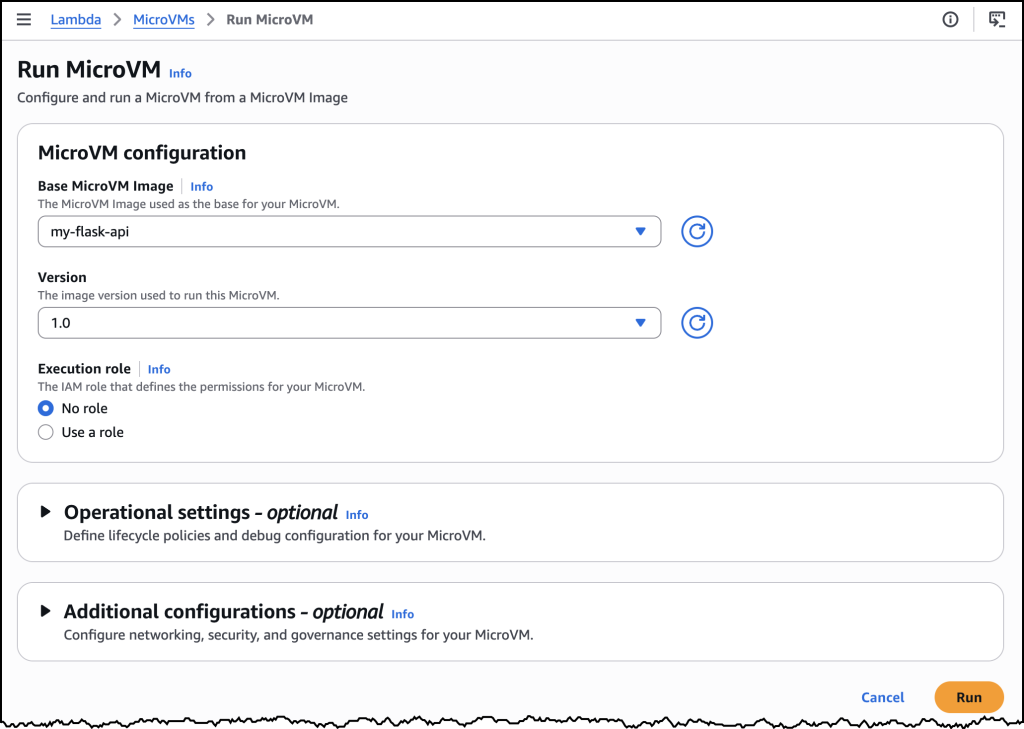
For more information, developers are encouraged to consult the Lambda MicroVMs Developer Guide and experiment with the service via the AWS Lambda Console.