Google Play Unveils Major Business Model Overhaul: A New Era for Global Developers
By Editorial Staff
In a strategic pivot that signals a fundamental shift in the digital economy, Google Play has announced a comprehensive restructuring of its business model. As the Android ecosystem continues to expand, Google is moving to provide developers with unprecedented flexibility in billing, a new fee structure, and enhanced incentive programs. The initiative, led by Paul Feng, Vice President of Google Play Engineering and Product, aims to balance the platform’s commitment to a seamless user experience with the evolving commercial needs of its global developer community.
Main Facts: Redefining the Billing Landscape
The core of Google’s announcement centers on the decoupling of its service fees from its billing fees—a move that effectively lowers the barrier to entry for developers while providing them with the autonomy to manage their own digital commerce pipelines.
Under the new policy, developers operating in the United States, the United Kingdom, and the European Economic Area (EEA) will be the first to experience these changes, effective June 30, 2026. The primary transformation is the introduction of a dual-fee system. Regardless of the payment processing method chosen—whether it is Google Play’s native billing, an alternative third-party billing system, or an external link to a developer’s website—a base service fee will apply.

The base service fee is structured to support small businesses: 10% on the first $1 million (USD) in annual earnings. This 10% rate is also extended to all auto-renewing subscriptions, providing long-term revenue stability for SaaS-based developers and content creators. For transactions exceeding the $1 million threshold, the service fee scales, reflecting the platform’s investment in the Android infrastructure.
Chronology of Implementation
The rollout of these updates is not instantaneous. Recognizing the complexities of global financial compliance, tax regulations, and technical infrastructure, Google has adopted a staggered, region-specific release schedule.
- June 30, 2026: The official launch date for the new fee structure and billing flexibility in the United States, the UK, and the EEA.
- September 30, 2026: The activation date for the revamped "Games Level Up" and the inaugural "Apps Experience" program. This date marks the deadline for developers to ensure their apps meet the new quality and experience guidelines required to qualify for reduced rates.
- Post-2026 Expansion: Following the initial launch in major Western markets, Google Play has committed to a global expansion plan. The company intends to roll out these options to additional territories, with specific timelines to be determined by local market conditions and regulatory alignment.
Supporting Data: Understanding the Fee Breakdown
To ensure transparency, Google has provided a granular breakdown of how these fees interact. For developers who opt to use Google Play’s billing system, an additional 5% billing fee is applied in the U.S., UK, and EEA markets. This fee covers the cost of maintaining a robust payment infrastructure that handles over 300 local payment methods across 195+ global markets.
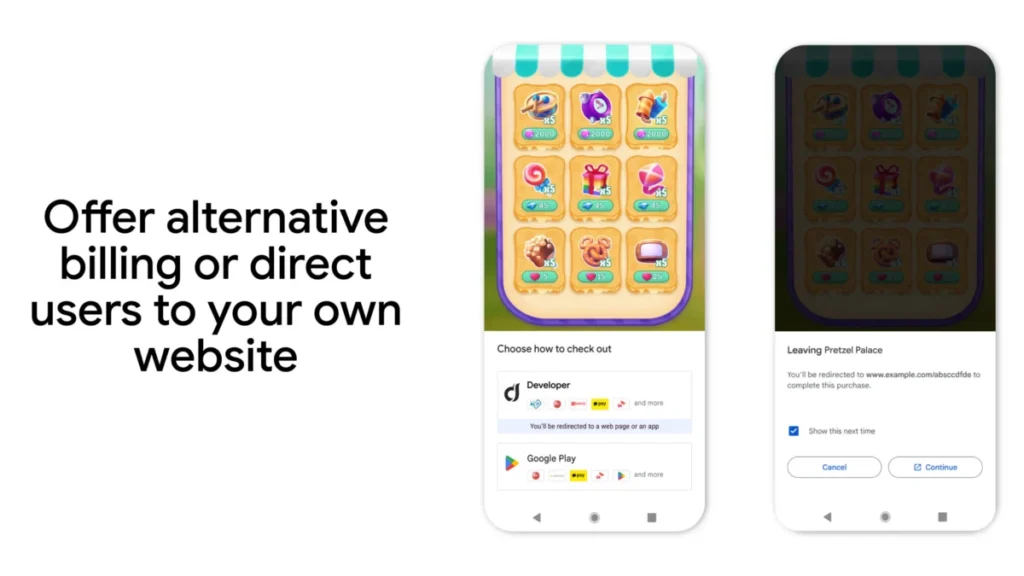
Crucially, for those who choose to integrate alternative billing systems or provide users with direct links to external websites for transactions, the 5% billing fee is waived. This creates a clear economic incentive for developers to manage their own payment flows if they have the technical capability to handle tax compliance, fraud prevention, and regional currency conversion on their own.

The "Games Level Up" and "Apps Experience" Advantage
Perhaps the most significant incentive for developers is the introduction of specialized program rates. By participating in the updated Games Level Up program or the new Apps Experience initiative, developers can qualify for even lower service fees. These programs are designed to reward developers who prioritize high-quality user experiences, maintain high security standards, and provide engaging, stable content.
The tiered structure for these programs offers a lower cost of doing business, specifically for high-performing apps that adhere to Google’s latest UX and performance guidelines. Developers are encouraged to review these requirements immediately to prepare their portfolios before the September 30 cut-off.
Official Responses and Strategic Rationale
In his official statement, Paul Feng, VP of Google Play Engineering, emphasized that the decision was driven by a need for "choice and openness."
"At Google Play, we are committed to delivering the best possible experience to users, while ensuring developers have the tools and adaptability to succeed," Feng stated. He acknowledged that while Google Play’s proprietary billing system offers immense value through its handling of global tax and compliance complexities, the modern digital economy requires more bespoke solutions.

Google’s strategic move can be viewed as a proactive response to the shifting regulatory landscape in the European Union and the United States. By preemptively offering choice, Google is aiming to maintain its position as a preferred platform while neutralizing potential antitrust criticisms. The company is positioning itself not merely as a marketplace, but as a flexible infrastructure provider that can accommodate both the high-volume, automated nature of global app distribution and the specialized needs of boutique digital commerce.
Implications for the Developer Ecosystem
The implications of these changes are far-reaching, affecting everything from financial planning to product design.
1. Financial Planning and Revenue Optimization
The separation of service fees from billing fees requires developers to rethink their unit economics. For many, the choice between using Google’s billing (with its 5% fee) versus a proprietary system involves a "break-even" analysis. Developers must weigh the convenience and trust of the Google Play brand against the costs and risks of implementing their own payment gateway.
2. UX and Design Freedom
The allowance for custom "choice screens" is a significant departure from previous strictures. Developers can now design the payment flow to align with their brand identity, provided it adheres to Google’s UX guidelines. This will likely lead to more cohesive user journeys, where the transition from "app use" to "purchase" feels less like a platform interruption and more like an integrated experience.

3. Focus on Quality Over Quantity
With the introduction of the Apps Experience and Games Level Up programs, the platform is signaling a pivot toward quality control. Developers who invest in optimization, load times, and user engagement will be rewarded with lower fees. This creates a "virtuous cycle" where the highest-performing apps are also the most profitable, theoretically raising the standard of the entire Android library.
4. Regulatory Resilience
By moving to a modular fee structure, Google is building a buffer against future legal challenges. By providing options—such as the ability to link to external sites—the platform is aligning its business practices with the increasing global demand for "open" app stores.
Moving Forward: Preparing for the Transition
As the industry prepares for the June and September milestones, the consensus among developers is one of cautious optimism. The complexity of the new rules necessitates a thorough audit of existing app billing systems.
For developers, the immediate next steps are clear:

- Audit Current Billing: Determine whether your current transaction volume in the U.S., UK, and EEA makes the shift to alternative billing financially viable.
- Align with Guidelines: Review the new UX requirements for the Apps Experience program to ensure that your UI/UX design is eligible for the lower rate card.
- Monitor Regional Rollouts: For developers with a global footprint, keep a close watch on the upcoming release schedule for markets outside the initial launch regions to ensure consistent business strategy across all territories.
The transformation of Google Play is not merely a change in pricing; it is a fundamental reconfiguration of the relationship between a platform provider and its creators. As we look toward the 2026 rollout, the success of this initiative will be measured by the ability of developers to leverage this newfound flexibility to drive growth, innovation, and a richer, more diverse Android experience for users worldwide.