Beyond Nature: How AI is Architecting the Next Generation of CRISPR Gene-Editing Tools
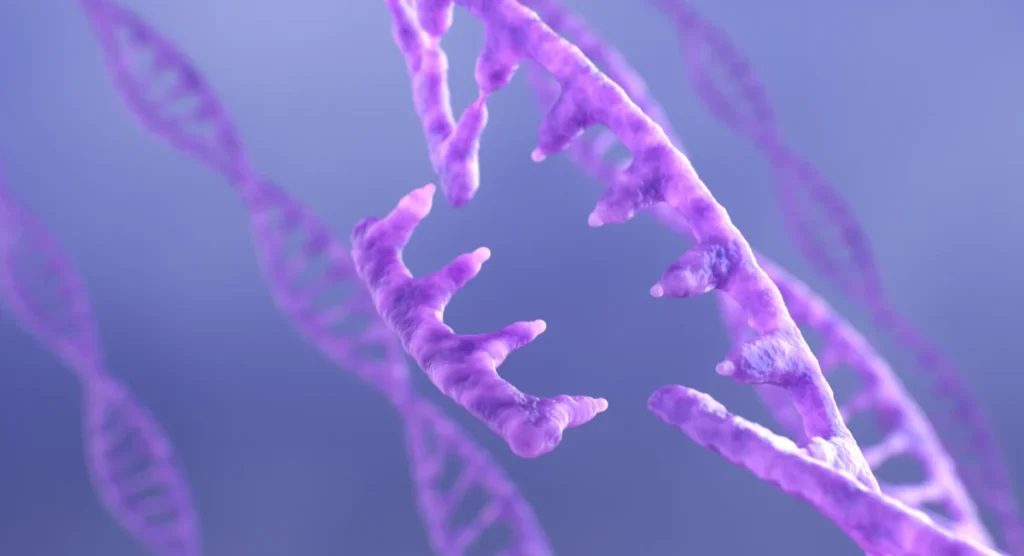
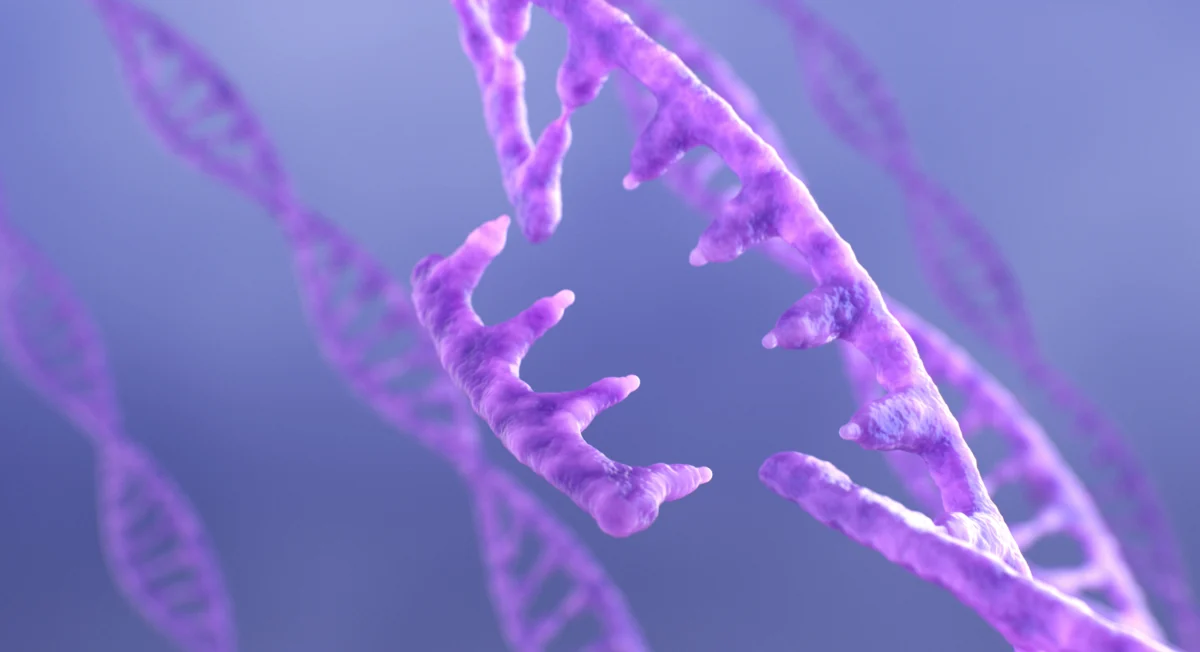
In a landmark achievement for synthetic biology, researchers have successfully utilized artificial intelligence to design functional, synthetic RNA-guided nucleases—the molecular "scissors" at the heart of CRISPR technology—that perform with precision equal to or greater than their naturally occurring counterparts. The findings, published in the journal Science, represent a paradigm shift in protein engineering, moving beyond the mere mimicry of biological systems toward the intentional design of entirely novel molecular machines.
The study, titled "Structure and evolution-guided design of minimal RNA-guided nucleases," involved a multi-institutional collaboration led by experts from the Innovative Genomics Institute and the California Institute for Quantitative Bioscience (QB3) at the University of California, Berkeley. By leveraging advanced machine learning models, the team has successfully bypassed the limitations of traditional protein design, unlocking a new frontier where "designable" protein space is no longer tethered to the evolutionary constraints of nature.
The Challenge of Complexity: Why Nature’s Blueprints Are Hard to Rewrite
To understand the magnitude of this breakthrough, one must appreciate the inherent complexity of RNA-guided nucleases. These proteins are not static structures; they are dynamic, multi-domain machines that must perform a precise, choreographed sequence of events. They must recognize a specific RNA guide, scan the genome for a matching DNA sequence, undergo a major conformational change to bind the DNA, and finally execute a site-specific cleavage.
For decades, protein designers have struggled with this complexity. Traditional methods generally fell into two categories:
- Sequence-based biological language models: These AI models analyze vast databases of existing protein sequences to predict how to build new ones. While effective at creating functional proteins, they suffer from a "creative rut." Because they rely on inferring relationships from existing data, they often produce sequences that are more than 99% identical to natural proteins. They essentially "copy-paste" evolutionary history rather than creating something truly novel.
- Structure-guided rational design: This approach focuses on the 3D geometry of proteins. It is excellent for creating simple switches or static DNA binders. However, because RNA-guided nucleases rely on complex, multi-step conformational shifts, even a minor alteration in the amino acid chain can lead to a "domino effect," causing the entire enzyme to misfold or lose its functional coordination.
The UC Berkeley team sought a third path: a method that could honor the complex structural requirements of a nuclease while venturing deep into the "sequence dark matter" of proteins never before seen in nature.
The Chronology of Discovery: A Hybrid AI Approach
The research project was built upon the integration of two sophisticated computational strategies: the ESM Inverse Folding (ESM-IF1) model and evolution-informed residue constraints.
Phase 1: The Computational Design Strategy
The researchers chose the TnpB family of nucleases as their test case. TnpB proteins are essentially the ancestors of the Cas12 family—the "minimalist" versions of the massive CRISPR-Cas systems. Because TnpB proteins possess a compact, modular architecture, they were the perfect candidate for testing the limits of AI-driven redesign.
By combining the ESM-IF1 model—a powerful tool for predicting amino acid sequences based on a target 3D structure—with constraints that account for how proteins have evolved to function, the team created a design environment that favored stability and functionality over sequence similarity.
Phase 2: Generating "SynTnpBs"
The AI generated a library of "SynTnpBs" (Synthetic TnpB nucleases). Unlike previous models, these AI-generated designs were radical departures from the norm. The team successfully engineered DNA- and RNA-interacting lobes with only 83% and 72% identity, respectively, to their closest natural relatives. In the world of protein engineering, a 28% divergence is a staggering distance from the original template, yet the proteins remained fully functional.
Phase 3: Benchmarking and Validation
Once the designs were generated, the researchers moved from the computer screen to the laboratory bench. They screened the SynTnpB candidates in bacterial cell assays to determine which variants could successfully cut DNA. The most promising candidates were then moved into more complex environments, including plant and human cells, to verify if these synthetic proteins could operate within the sophisticated intracellular environment of a eukaryote.
Supporting Data: Proof in the Molecular Architecture
The validation of these designs went beyond mere functional testing. To understand why the SynTnpBs worked despite their unconventional sequences, the team employed cryo-electron microscopy (cryo-EM).
The microscopy data revealed a fascinating insight: the AI had successfully "invented" entirely new electrostatic and hydrogen-bonding networks. These networks acted as a structural scaffolding that stabilized the interface between the RNA and the DNA. In natural proteins, this interface is stabilized by specific amino acid interactions honed over millions of years of evolution. The AI-designed nucleases achieved the same, and in some cases better, stability using entirely different chemical "glue."

This demonstrates that the AI did not simply stumble upon a working sequence; it understood the fundamental physical requirements of the enzyme’s mechanism and engineered a unique solution to satisfy those requirements.
Official Responses and Expert Perspective
The implications of this study have been received with significant enthusiasm within the biotechnology sector.
"The results establish a strategy for creating non-natural RNA-guided nucleases and conformationally active nucleic acid binders, enlarging the designable protein space," the authors noted in their Science paper.
Independent experts in the field have lauded the research for its ability to address the "conformational bottleneck." While previous studies have shown that AI can fold proteins—such as the success of AlphaFold—this paper marks a move from predicting how a protein looks to predicting how a protein acts. By demonstrating that an AI can design a machine that moves, changes shape, and performs work, the Berkeley team has opened the door for a new generation of custom-built biological tools.
Implications: A New Era for Gene Therapy and Synthetic Biology
The success of the SynTnpB project has profound implications for the future of medicine and biotechnology.
1. Tailor-Made Therapeutics
Current CRISPR therapies are limited by the properties of the nucleases we find in nature. Some are too large to be delivered into cells efficiently, while others are too "promiscuous," cutting DNA at unintended sites (off-target effects). With this new AI approach, scientists can theoretically design "bespoke" nucleases that are smaller, more specific, and better suited for clinical delivery via viral vectors or lipid nanoparticles.
2. Beyond Genome Editing
The methodology is not restricted to nucleases. Because the researchers have mastered the design of proteins that undergo complex conformational changes, this same AI framework could be applied to develop novel biosensors, molecular motors, or synthetic enzymes capable of degrading plastic, synthesizing rare chemicals, or regulating gene expression with unprecedented precision.
3. Democratizing Protein Engineering
The reliance on "evolutionary constraints" within the AI model suggests that we are learning the "grammar" of protein language. As these models improve, the barrier to entry for designing high-performance proteins will drop. This could catalyze a massive surge in innovation, where small labs are capable of designing complex molecular machines that once required decades of evolutionary biology and serendipitous discovery.
Conclusion: The Horizon of Programmable Biology
The integration of AI into protein design is no longer a speculative future; it is an active, transformative reality. By successfully creating nucleases that function as well as, or better than, those found in nature, the UC Berkeley researchers have proven that we are no longer limited to the library of proteins provided by evolution.
We are entering an era of "programmable biology," where the limitations of the past—the rigidity of natural structures and the difficulty of mimicking complex conformational changes—are being dismantled by machine learning. As the CRISPR toolbox continues to expand, the SynTnpBs serve as the first generation of a new breed of biological tools, designed not by the slow process of natural selection, but by the rapid, calculated intelligence of human-guided AI.
The next frontier will be to observe how these synthetic enzymes fare in long-term clinical applications, but for now, the message is clear: the architecture of life is becoming a canvas, and we are finally learning how to paint.