
Beyond the Mechanical: The Rise of TTP223 Touch Sensors in Modern DIY Electronics
In the landscape of modern electronics, the tactile click of a mechanical switch has long served as the gold standard for user interaction. However, as the ubiquity of capacitive touchscreens on smartphones and tablets shapes our expectations for intuitive design, makers and engineers are increasingly looking for alternatives to the traditional "clunky" switch. Enter the TTP223 capacitive touch sensor—a low-cost, high-versatility module that is rapidly becoming the go-to component for hobbyists aiming to modernize their projects.
By replacing physical moving parts with capacitive fields, the TTP223 allows for sleek, seamless interfaces that can function through glass, plastic, and even wood. This shift represents a broader movement in the DIY space toward "invisible" technology, where functionality is integrated directly into the housing of a device rather than protruding from it.
Main Facts: The Anatomy of a Capacitive Revolution
The TTP223 is a single-key touch detection IC designed to replace traditional push-button switches. At its core, the sensor functions by detecting changes in capacitance when a conductive object—most notably, a human finger—nears the surface of the sensor pad.
Key Technical Specifications:
- Low Power Consumption: In its idle state, the TTP223 consumes less than 2 microamps, making it an ideal candidate for battery-operated devices that require long-term reliability without frequent maintenance.
- Material Versatility: The sensor can detect a touch through non-conductive materials. This allows makers to embed the sensor behind 3D-printed enclosures or wooden panels, creating a clean aesthetic devoid of visible buttons.
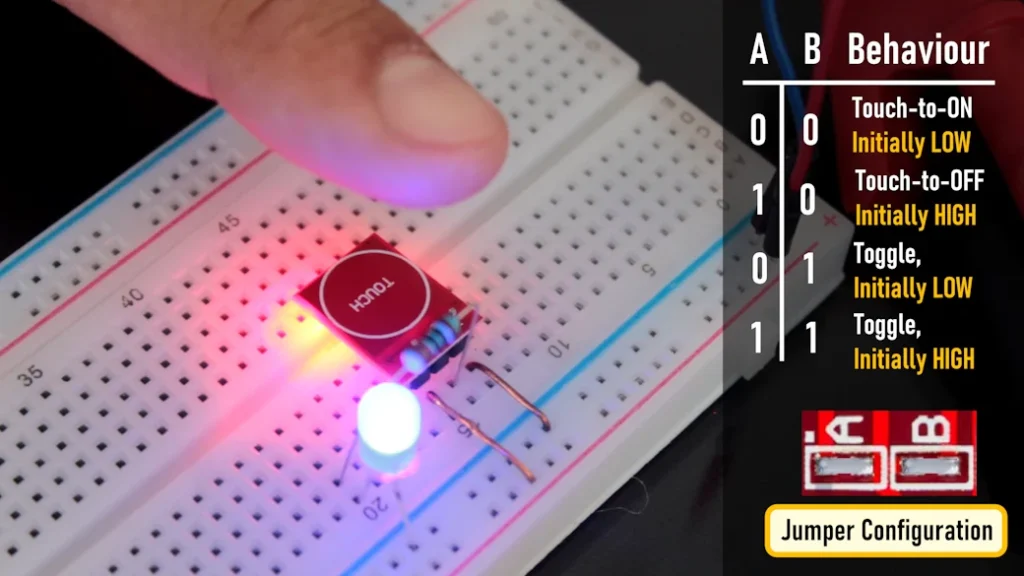
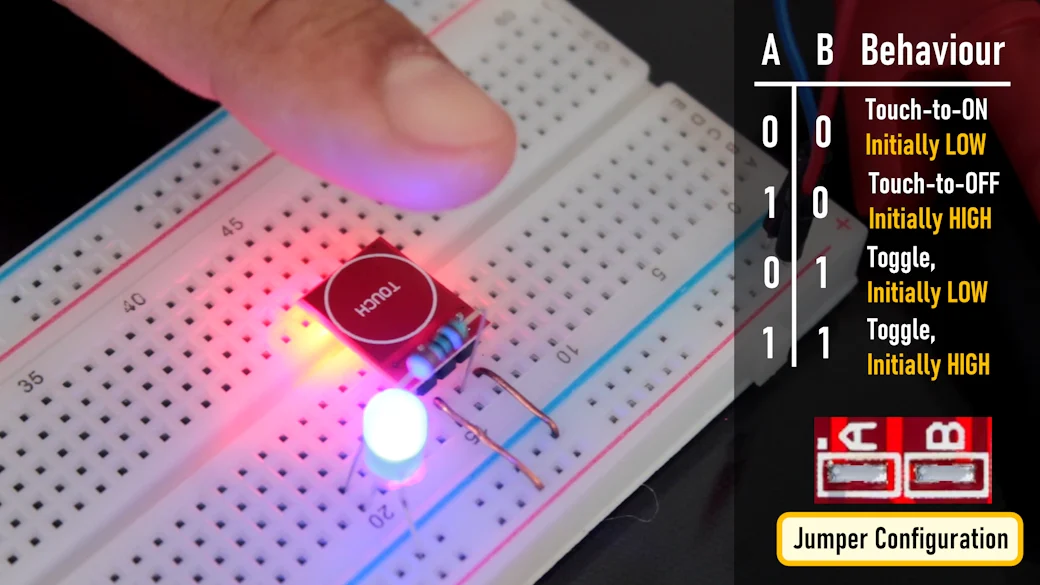
- Configurability via "Hardware Scripting": Eschewing software-heavy dependencies, the module is configured through physical jumpers. By soldering or desoldering two primary points (Jumper A and Jumper B), users can dictate the behavioral logic of the switch, ranging from momentary action to toggle functionality.
Chronology: From Mechanical Reliance to Touch-Based Integration
The evolution of user interface (UI) components in the hobbyist sphere has moved in three distinct phases.
The Era of Mechanical Dominance (Pre-2015): For decades, the tactile switch was the only reliable option for DIYers. These components were robust but suffered from mechanical wear and tear, eventually succumbing to oxidation or internal spring failure.
The Rise of Specialized Modules (2015–2020): As Arduino and Raspberry Pi projects gained mainstream traction, the demand for "plug-and-play" modules grew. During this period, capacitive touch sensors emerged as high-end components, often requiring significant coding knowledge to filter out noise and manage sensitivity.
The TTP223 Standard (2020–Present): The introduction of the TTP223 module fundamentally lowered the barrier to entry. By packaging the IC onto a tiny, inexpensive PCB with pre-configured settings, it moved capacitive sensing from the realm of advanced electrical engineering into the toolbox of every beginner. Today, projects are increasingly characterized by their "stealth" interfaces, where the boundary between the chassis and the control mechanism has effectively vanished.
Supporting Data: Tuning and Optimization
While the TTP223 is touted for its simplicity, professional implementation requires an understanding of its physical limitations and environmental sensitivities.
Sensitivity Management
The effectiveness of the TTP223 is inversely proportional to the thickness of the material covering it. A thicker panel creates a larger air gap, which disperses the capacitive field. For developers, this creates a design trade-off:
- Panel Thickness: While thicker materials offer a more premium, rigid feel, they require higher sensitivity.
- Pad Size: Reducing the surface area of the touch pad can act as a natural filter for sensitivity if the sensor is proving "too jumpy."
- External Capacitance: If the default sensitivity is too high, adding an external capacitor to the circuit can dampen the response, ensuring that the sensor only triggers under deliberate pressure rather than accidental proximity.
Stability and Filtering
One of the most common complaints regarding capacitive sensors is the "false trigger." Electronic noise—often introduced by switching power supplies—can bleed into the capacitive circuit, leading to phantom inputs. The consensus among advanced users is to include a small decoupling capacitor across the power pins of the module. This simple addition filters out high-frequency ripple from the power source, significantly improving the stability of the sensor in noisy environments.
Official Responses and Community Feedback
Within the DIY community—specifically platforms like Hackaday and various open-source design forums—the reception to the TTP223 has been overwhelmingly positive, though not without nuance.
Proponents argue that the module’s ability to work "through-material" is its most significant advantage. By embedding these sensors into 3D-printed parts, designers can create "drop-in" touch panels that are sealed against dust and moisture. Because there are no holes in the casing, the resulting device is far more durable than one utilizing a traditional switch.
However, some power-user critics have noted that the TTP223 is not a "magic bullet." For applications requiring high-security or life-critical reliability, the potential for electromagnetic interference (EMI) remains a concern. The community consensus is clear: the TTP223 is an exceptional tool for consumer-facing hobby projects, but it should be tested thoroughly in the intended final enclosure before full-scale production.
Implications: The Future of "Invisible" Interfaces
The shift toward touch-based sensors like the TTP223 suggests a fundamental change in how we perceive electronic interfaces. As these components continue to drop in price and increase in reliability, we are likely to see several shifts in the broader technology sector:
1. The Death of the Physical Cutout
For years, the design of a device was dictated by its components. You needed a hole for the button, a hole for the LED, and a hole for the potentiometer. With capacitive sensors, we are moving toward "monolithic" design, where the housing is a single, seamless piece of material. This not only improves the aesthetic but also enhances structural integrity.
2. Democratization of High-End UI
Techniques once reserved for high-end automotive or smartphone design are now available to the garage tinkerer. This democratization encourages a new level of creativity. A 3D-printed lamp, a custom gaming controller, or a home automation switch can now look as professional as a mass-produced consumer electronic device.
3. Energy Efficiency in IoT
The sub-2 microamp consumption of the TTP223 is a significant implication for the Internet of Things (IoT). As we build more battery-powered sensors that are intended to remain in "deep sleep" for months or years, the ability to wake up a system via a touch event—without draining the battery while waiting—is essential. The TTP223 provides a low-energy gateway that allows IoT devices to remain dormant until the exact moment of human interaction.
4. Integration with 3D Printing
Perhaps the most exciting implication is the synergy between additive manufacturing and touch technology. Because 3D printers can create cavities and thin-wall structures, they are the perfect partner for the TTP223. We are seeing a new wave of "smart" prints where the structure itself acts as the interface. By printing a thin membrane or a specific icon into the surface of an object, makers can create interactive surfaces that were previously impossible to achieve with traditional injection molding.
Conclusion
The transition from mechanical switches to capacitive modules like the TTP223 is more than a simple parts swap; it is a shift in design philosophy. By prioritizing the user experience and the aesthetic integrity of the device, makers are moving toward a future where technology is integrated, silent, and seamless. Whether used for a simple power switch or a complex, multi-sensor input array, the TTP223 proves that the most effective tools are often the ones that disappear into the design itself, leaving behind only the intuitive power of human touch.







