Bridging the Gap: Canonical Brings Livepatch to ARM64 Architectures
In a significant milestone for Linux enterprise infrastructure, Canonical has officially expanded its Livepatch service to support ARM64 (AArch64) architectures. This development allows administrators to apply critical kernel security updates to Ubuntu 26.04 LTS and Ubuntu Core 26 systems without the requirement of a system reboot. While AMD64 (x86_64) users have enjoyed this capability for years, the inclusion of ARM64 represents the culmination of a multi-year, cross-industry engineering effort to standardize live-patching across diverse hardware ecosystems.
Main Facts: What is Changing?
For system administrators managing large-scale server fleets or mission-critical edge devices, the "reboot cycle" has long been a necessary evil. Security vulnerabilities in the Linux kernel often necessitate a patch that, under normal circumstances, requires a system restart to take effect. In high-availability environments, even a few minutes of downtime can translate to significant service degradation or financial loss.
Canonical’s Livepatch technology solves this by patching the kernel in memory. It essentially "hot-swaps" the vulnerable code segments with secure ones while the operating system continues to run. Until now, this was exclusive to the x86 architecture. With the current update, Ubuntu 26.04 LTS and Ubuntu Core 26 users running on ARM-based hardware—ranging from cloud instances powered by AWS Graviton or Ampere processors to ARM-based edge IoT gateways—can now maintain 100% uptime while remaining fully patched against high-severity security threats.
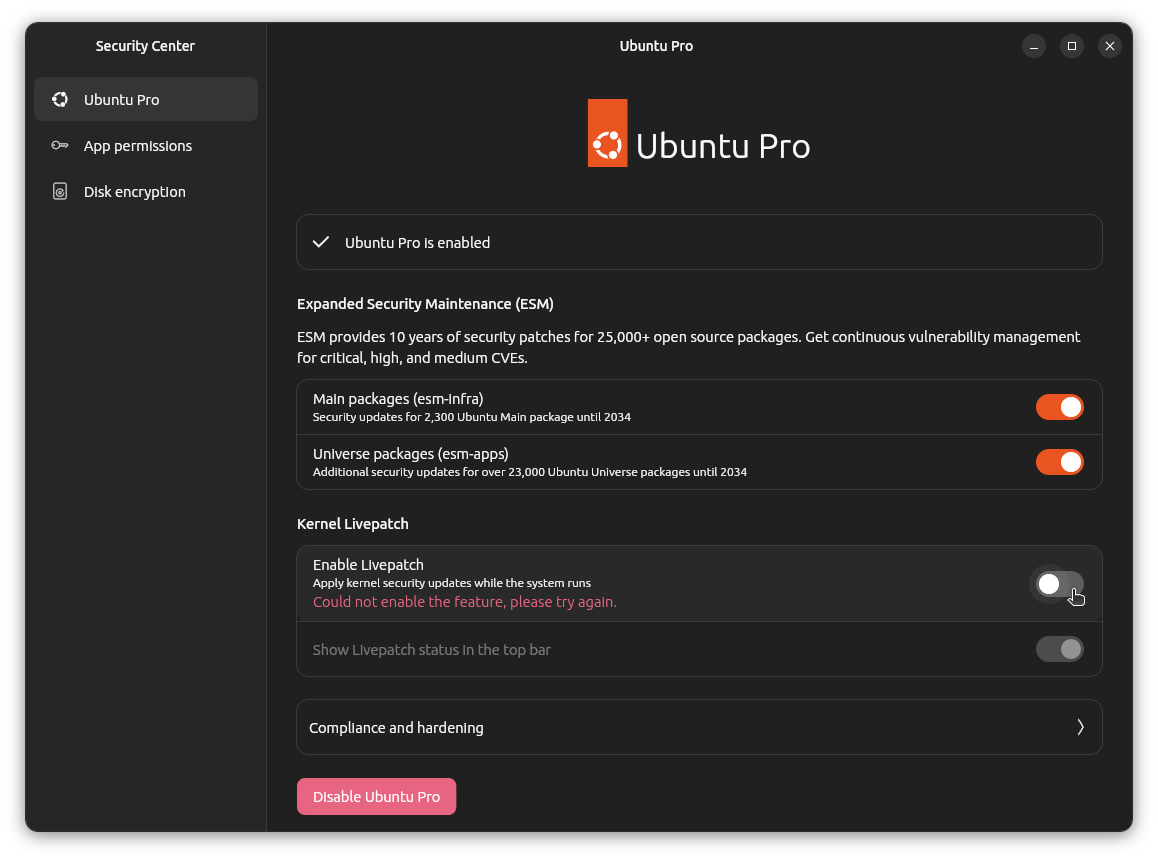
The service is integrated directly into Ubuntu Pro, Canonical’s comprehensive security and compliance subscription. Notably, Canonical maintains a "Free for Personal Use" tier, which allows individual users to enable Livepatch on up to five machines at no cost, democratizing high-end enterprise security features for home labs and small-scale developers.
Chronology: A Multi-Year Engineering Marathon
The journey to bring Livepatch to ARM64 was not a simple porting exercise; it was a fundamental struggle against architectural limitations that had existed for over a decade.
2023: The Gap Analysis
The project officially gained momentum in 2023 when Canonical engineers conducted a formal "gap analysis" of the ARM64 ecosystem. The results were sobering. The upstream Linux kernel for ARM64 lacked the robust infrastructure required for reliable live-patching. Specifically, there was no stable implementation of reliable stacktraces.
A reliable stacktrace is the bedrock of kernel live-patching; it allows the system to determine exactly when it is safe to swap a function. If the system cannot accurately identify the state of the kernel stack, it risks applying a patch while a process is mid-execution, which could trigger a kernel panic or data corruption.
2024: Building the Toolchain
Throughout 2024, the scope of the challenge widened. It became clear that the kernel itself wasn’t the only hurdle; the supporting software ecosystem was equally unprepared. Canonical identified critical gaps in:
- GCC (GNU Compiler Collection): Lacked the specific support for generating the relocation records necessary for live-patching.
- Objdump/Kpatch: The utility suite used to manage and apply these patches lacked ARM64-specific integration.
As the demand for ARM64 in cloud data centers surged, the urgency for a solution intensified. Canonical began collaborating with ARM engineers and upstream kernel maintainers to upstream the necessary features into the mainline Linux kernel.
2025–2026: The Final Push
By the start of 2026, the pieces began to fall into place. With the arrival of Ubuntu 26.04 LTS in April, the foundation was laid. By late February of this year, Canonical’s internal testing environments were successfully applying ARM64 live-patches, proving that the years of upstream lobbying and code development had finally borne fruit.
The Technical Hurdles: Why ARM64 Was Difficult
To understand the complexity of this achievement, one must look at how live-patching functions. A "live" patch works by redirecting function calls. When a vulnerability is found in a function, the patch creates a new, secure version of that function in memory and inserts a "jump" instruction at the start of the old, vulnerable function to redirect the CPU to the new one.
On ARM64, this process is fraught with complexity compared to x86_64:

- Instruction Set Differences: ARM’s instruction set architecture (ISA) has different constraints regarding branch distances and memory alignment compared to the more flexible x86.
- Stack Unwinding: ARM64’s stack unwinding process is highly optimized, but it is notoriously difficult to guarantee "reliability" during a dynamic code swap. If the system cannot unwind the stack perfectly to determine if a thread is currently inside the function being patched, the patch must be aborted.
- Tooling Parity: The "Kpatch" ecosystem was heavily optimized for the x86 world. Porting this meant rewriting significant portions of the binary inspection logic to understand ARM64’s specific instruction patterns.
Implications for Cloud and Edge Computing
The implications of this rollout are profound, particularly for two major sectors: the hyperscale cloud and the IoT/Edge market.
The Cloud Economy
Cloud providers have been aggressively shifting to ARM-based silicon (like the Graviton family) due to their superior performance-per-watt metrics. Previously, an enterprise running a massive fleet of ARM-based Kubernetes nodes on Ubuntu faced a dilemma: either perform rolling reboots (which is resource-intensive and risky) or delay security patching (which creates a security liability). Livepatch effectively removes this trade-off, allowing cloud-native environments to maintain strict security compliance without disrupting the orchestration layer.
The Edge and IoT Frontier
Ubuntu Core 26 is a cornerstone of the edge computing world, powering everything from smart traffic lights to industrial robotics. These devices are often deployed in locations that are physically inaccessible. If an edge device requires a kernel update, a failed reboot—perhaps due to a power flicker or a corrupted bootloader—could effectively "brick" the device. By enabling Livepatch, Canonical is providing a critical safety net for these remote systems, ensuring they remain secure without the physical risks associated with power-cycling.
Canonical’s Official Stance: The Ubuntu Pro Strategy
Canonical’s strategy for Livepatch is deeply intertwined with the growth of Ubuntu Pro. By bundling Livepatch into this subscription, Canonical is positioning itself as the "Enterprise Linux" of choice for the modern, diverse-architecture data center.
In their official communications, Canonical has emphasized that while Livepatch is a powerful tool, it is not a "get out of jail free" card for general system maintenance. A common misconception is that Livepatch makes reboots entirely obsolete. Canonical explicitly warns against this.
"Livepatch only touches the kernel," the company notes. It does not address long-term memory leaks, issues with userspace applications, or the accumulation of system state bloat that naturally occurs over long periods of uptime. Canonical recommends that even with Livepatch enabled, administrators should still schedule periodic reboots to clear the system state and ensure that non-kernel updates (such as library patches or firmware updates) are applied correctly.
Conclusion: A New Era of Stability
The arrival of ARM64 support for Livepatch is a testament to the maturation of the ARM ecosystem. It signifies that ARM64 is no longer a "niche" or "mobile-first" architecture, but a first-class citizen in the data center.
For the average Ubuntu user, this update may seem like an incremental change. However, for the systems engineer managing thousands of servers or the developer maintaining critical edge infrastructure, it represents a fundamental shift in how security is managed. By eliminating the necessity of downtime for kernel security fixes, Canonical has effectively raised the bar for what is expected of a modern, professional-grade Linux distribution.
As we move forward into 2026 and beyond, the collaboration between Canonical, Arm, and the upstream Linux community serves as a blueprint for how technical debt can be managed—not by avoiding it, but by systematically dismantling the obstacles that hinder the evolution of open-source infrastructure. For those running ARM64 hardware, the "reboot-less" future is no longer a promise; it is finally a reality.