Digital Sovereignty: How France’s DINUM is Leveraging NixOS to Reshape Public Infrastructure
In a rapidly shifting geopolitical landscape where data privacy and technological autonomy have become pillars of national security, the French government is making a decisive move. The Interministerial Directorate for Digital Affairs (DINUM) has officially stepped into the spotlight, revealing its long-term commitment to a secure, open-source workstation environment powered by NixOS.
This move follows the recent momentum seen in the Netherlands with their DAWO initiative, signaling a broader European trend: moving away from proprietary, foreign-controlled software stacks toward reproducible, vendor-neutral infrastructure. For France, this isn’t just about software; it is a calculated effort to reclaim control over the digital tools that keep the state running.
The Genesis of the Pivot: Main Facts
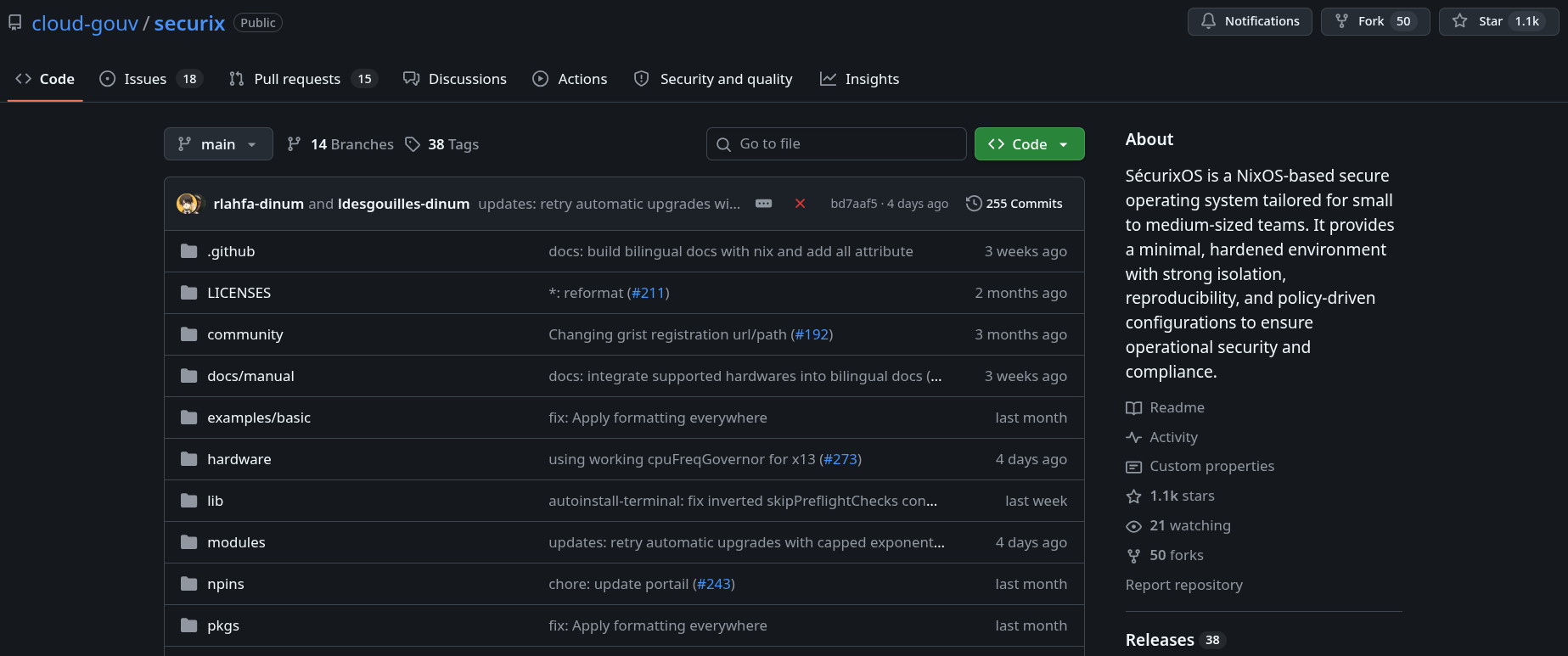
At the heart of this transition is Sécurix, a hardened, security-focused configuration of the NixOS operating system. Unlike a traditional Linux distribution that users might download and install on their laptops, Sécurix acts as a robust, reproducible foundation for system administrators to manage government workstations.
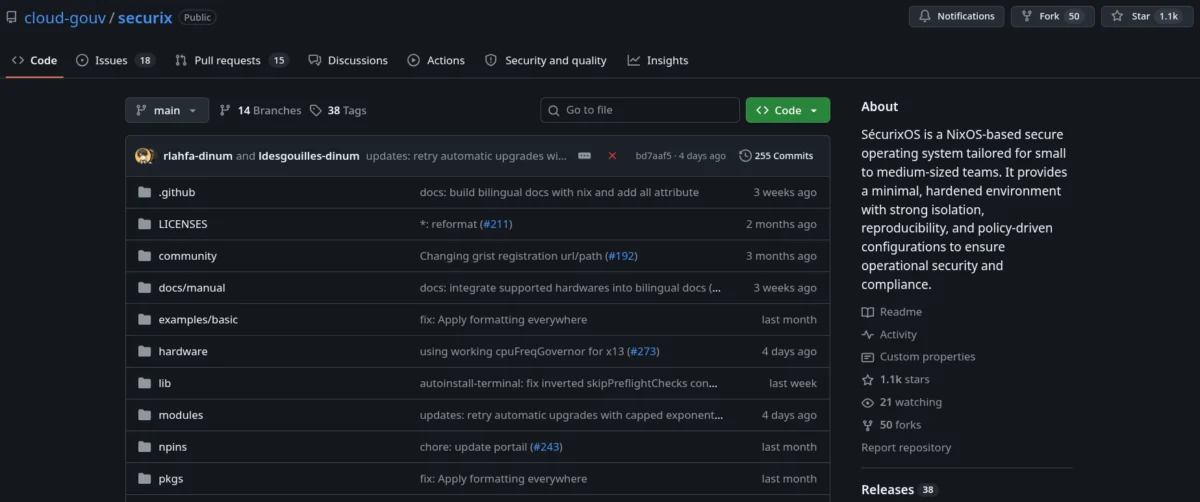
The project, which is currently in its alpha phase (version 0.20.1), is hosted under the cloud-gouv organization on GitHub. By utilizing the Nix package manager’s unique functional approach to software deployment, DINUM is ensuring that every workstation across its ministries can be deployed with identical, verifiable, and immutable configurations.
Key Technical Pillars of the Initiative
- Hardening: Sécurix adheres strictly to the security guidelines established by ANSSI (Agence nationale de la sécurité des systèmes d’information), France’s premier cybersecurity authority.
- Hardware Security: Moving away from traditional password-only authentication, the platform prioritizes FIDO2 hardware security keys, alongside support for TPM2 and YubiKey, creating a multi-layered barrier against unauthorized access.
- Reproducibility: By leveraging NixOS’s deterministic build model, the state can ensure that the software running on a machine in Paris is identical to one in Marseille, eliminating "configuration drift" and simplifying security audits.
Chronology: From Pilot to Implementation
The transition to NixOS did not happen overnight. It is the culmination of months of internal development and rigorous testing.
Early 2025: The Pilot Phase
DINUM initiated a pilot program, testing the NixOS-based infrastructure on 70 workstations. The primary goal was to determine if an open-source, Nix-based environment could handle the daily administrative and technical demands of government employees without sacrificing usability.
April 2026: The Strategic Briefing
By the spring of 2026, the success of the pilot program led to a major strategic pivot. According to reports from The Stack, following a DINUM briefing, it was revealed that the initiative had been greenlit for a rollout across approximately 250 internal workstations. This marks a transition from experimental technology to a legitimate production environment.
September 2026: The Public Reveal
With the release of Sécurix v0.20.1, the project has entered a more public-facing stage of development. While the project remains in alpha, the transparency of its development—conducted openly on GitHub—suggests that France is looking to foster a collaborative ecosystem rather than keeping its "digital sovereignty" tools locked behind closed doors.

Supporting Data: Why NixOS?
To understand why DINUM chose NixOS over more established distributions like Debian or Fedora, one must look at the unique architectural advantages of the Nix ecosystem.
The Problem with "Foreign" Distros
Mainstream Linux distributions are often tethered to corporate entities with complex ownership structures. Fedora, for instance, is the upstream project for Red Hat, a subsidiary of the US-based IBM. OpenSUSE has ties to SUSE, based in Luxembourg, while Ubuntu is the product of the UK-based Canonical.
For a nation-state, relying on these distributions creates a "dependency risk." If a government becomes reliant on a software ecosystem controlled by a foreign corporation, it remains susceptible to changes in corporate strategy, shifting geopolitical alliances, or legislative mandates in the country of origin (such as the US CLOUD Act).
The NixOS Advantage
NixOS is fundamentally different. It is a declarative, functional operating system. Because it uses a specialized language (Nix) to describe the entire system state, it allows for:
- Atomic Upgrades/Rollbacks: If a system update causes a failure, the user can instantly revert the entire operating system to the previous known-good state.
- Environment Isolation: Applications can be isolated in a way that prevents conflicts, ensuring that security patches for one component do not inadvertently break another.
- European Roots: Created by Eelco Dolstra at Utrecht University, the project is maintained by a Dutch non-profit, the NixOS Foundation. This European lineage aligns perfectly with the current push for "Digital Sovereignty" within the European Union.
Official Responses and Strategic Philosophy
The French government has been characteristically pragmatic about this rollout. DINUM’s documentation emphasizes that Sécurix is not intended to be a general-purpose Linux distribution for the masses. Instead, it is a specialized tool for the state.
The Role of Bureautix
Accompanying the Sécurix core, DINUM has released Bureautix. This is described in their documentation as a "dummy example" or a reference template for office workstations. It comes pre-configured with KDE Plasma (the desktop environment) and a suite of office tools, including LibreOffice, ONLYOFFICE, and WPS Office.
The strategy here is clear: DINUM provides the secure "skeleton" (Sécurix) and a modular "office suite template" (Bureautix), which individual ministries and departments are encouraged to fork and adapt for their specific internal needs. This decentralized approach allows for high security (enforced by the core) while maintaining the flexibility required for the diverse roles within the French public sector.
Broader Implications: A New European Paradigm
France is not acting in a vacuum. The rise of these initiatives suggests a significant turning point in how European governments view technology.

The End of the "One-Size-Fits-All" Vendor Era
For decades, public sector IT was dominated by a handful of American software giants. This reliance created a "vendor lock-in" that was both expensive and insecure. By shifting toward NixOS, countries like France, the Netherlands, and Denmark are demonstrating that there is a viable, high-performance alternative to proprietary software.
The Rise of Reproducible Infrastructure
The adoption of NixOS signals a shift toward "Infrastructure as Code" (IaC) at the desktop level. When an entire government’s workstation fleet can be defined by a set of version-controlled configuration files, the cost of maintenance drops, and the speed of security patching increases exponentially. If a zero-day vulnerability is discovered, a single change to the core configuration can be pushed to every government machine simultaneously, effectively neutralizing the threat.
Geopolitical Sovereignty
The move toward open-source, sovereign, and reproducible software is the digital equivalent of establishing an independent energy grid. By owning their software stack, these nations are ensuring that their bureaucratic functions—ranging from tax processing to national security communications—remain under their own jurisdiction.
Conclusion: A Blueprint for the Future
The DINUM initiative is more than just a migration to Linux; it is a profound change in the philosophy of public digital administration. By prioritizing reproducibility, security-first configurations, and open-source transparency, France is building a robust foundation for the future of digital governance.
While the project is still in its alpha stages and currently limited to a few hundred machines, the path forward is clear. As the success of Sécurix continues to demonstrate the efficiency and security of the NixOS model, it is likely that we will see other nations looking to adopt similar architectures. The era of blind dependence on foreign, proprietary software is waning. In its place, a more resilient, transparent, and sovereign digital infrastructure is beginning to take shape—one line of Nix code at a time.
For the open-source community, this is a vindication of years of work. For the French government, it is a necessary evolution. And for the rest of the world, it serves as a compelling blueprint for what is possible when a nation decides to take full control of its digital destiny.