Discord’s Searchable Shift: How Public Conversations Are Moving to the Open Web


In a significant evolution of its platform architecture, Discord is fundamentally altering how its most populous communities interact with the broader internet. The platform, long considered a “walled garden” for real-time, private-leaning communication, is now bridging the gap between its internal servers and global search engine results. This shift, which marks a departure from Discord’s historical insularity, promises to make the platform’s "Discoverable Servers" as indexable and searchable as a Reddit thread or a niche forum.
The Core Transformation: From Walled Garden to Public Square
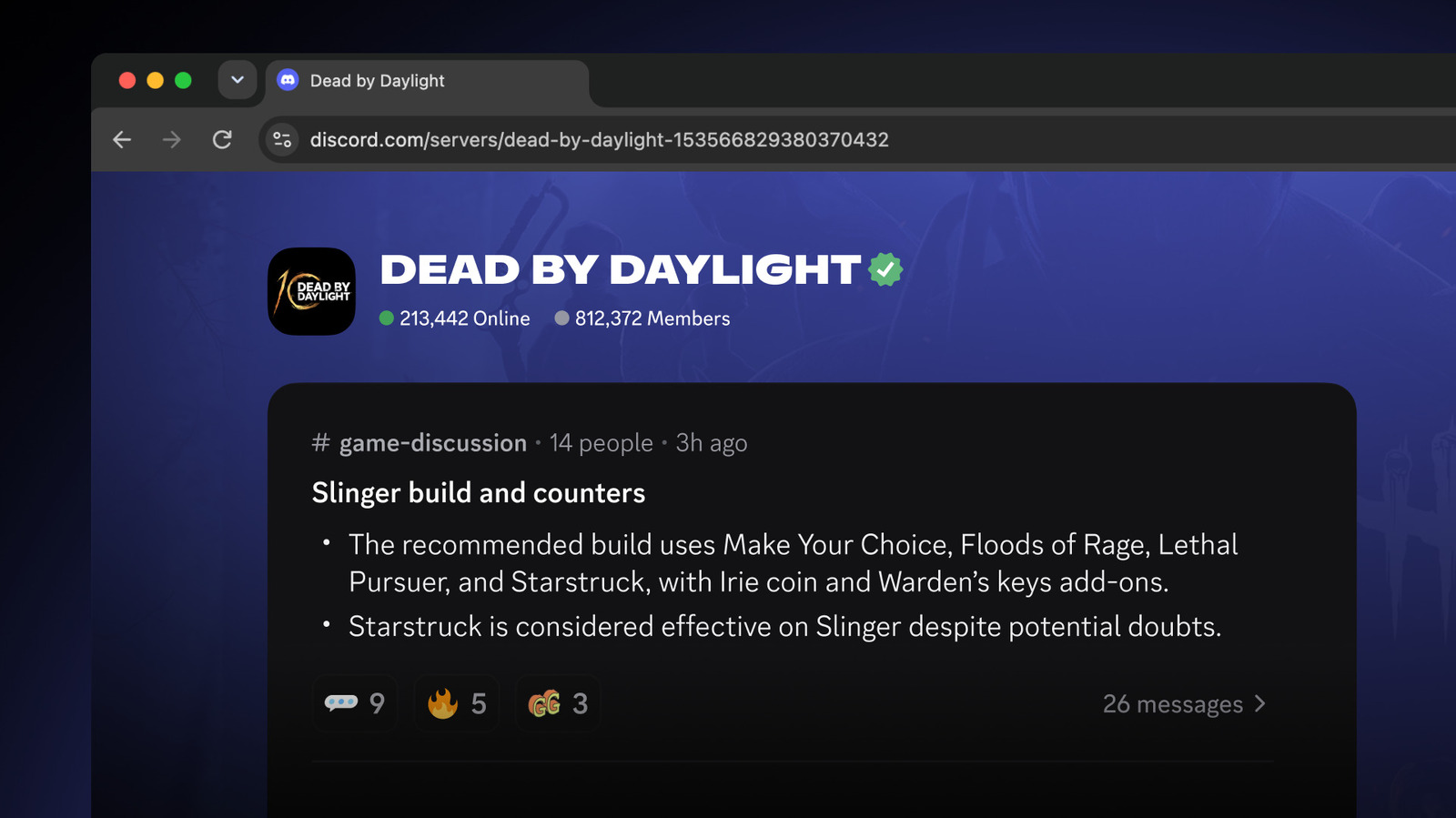
Beginning November 16, Discord will roll out "Server Web Pages" for all servers currently classified under its "Discoverable" program. These web pages are designed to act as SEO-friendly landing hubs, providing prospective members with a snapshot of the community’s culture, including descriptions and curated summaries of ongoing public channel discussions.
The more significant update, however, is scheduled for mid-December. Discord has confirmed that messages posted within the public channels of these servers may begin appearing in verbatim form, both on the dedicated Server Web Pages and within external search engine results like Google.
Crucially, Discord has implemented a privacy layer for this transition: while the content of the messages will be indexed, the individual metadata—specifically the poster’s username and avatar—will be stripped from the search results. This decoupling of identity from content is the platform’s primary mechanism for balancing open information discovery with individual user anonymity.
A Chronology of the Policy Shift
To understand the scale of this change, one must look at the timeline of Discord’s evolution from a niche gaming chat app to a generalized communication utility:
- Pre-2023: Discord maintained a strict boundary between its internal database and the public web. Conversations were ephemeral or locked behind server-specific login requirements, making them virtually invisible to search engine crawlers.
- Late 2023: Discord begins exploring "Discoverable" server hubs as a way to solve the "discovery problem"—the difficulty users face in finding high-quality, relevant communities without direct invitations.
- November 16, 2024: The official launch of the new Server Web Pages for all Discoverable Servers. These pages serve as the infrastructure for the incoming web indexation.
- December 2024 (Projected): The activation of search engine indexing, where public channel messages begin appearing in external web search results.
- Post-December 2024: The ongoing monitoring phase, where Discord will likely assess user feedback and data privacy compliance across global jurisdictions.
Supporting Data: Understanding the Scope
This policy change does not affect the entirety of Discord’s user base. The scope is specifically limited to "Discoverable Servers"—communities that meet a threshold of at least 1,000 members and satisfy Discord’s quality and safety guidelines.
- Excluded Zones: Private servers, direct messages (DMs), and Group DMs remain completely unaffected. These remain encrypted and private, with no indexation by search engines.
- Geographic Variances: To navigate the complex web of global privacy laws, Discord is implementing a tiered rollout. In the EU, UK, Canada, Brazil, Australia, and South Korea, channel messages will be off by default. Users in these regions must manually opt-in to have their messages indexed, reflecting the stricter regulatory frameworks in these territories.
- Age Protections: Discord has explicitly excluded teen users from this feature. Users identified as minors under the platform’s age verification policies are not eligible to have their messages indexed, nor can they opt-in to the feature until they reach adulthood.
Official Responses and Privacy Safeguards
The decision to index user-generated content is a calculated risk for a platform that has faced significant public scrutiny over the past eighteen months. Discord recently faced intense backlash regarding its age-verification implementation, which led to a delay in rollout and a revision of its safety policies.
In response to the current privacy concerns, Discord has provided granular control for both administrators and individual users:
- Administrative Opt-Out: Server admins for Discoverable Servers have the authority to opt-out specific channels from the web presence program entirely. This allows communities to maintain a public profile while keeping sensitive or highly localized "meta-discussion" channels off the open web.
- Individual User Control: Users who wish to maintain their current level of privacy can navigate to their "Data and Privacy" settings. Here, they can toggle off the indexing of their messages, ensuring that even if a server is discoverable, their specific contributions remain within the Discord application.
- Default States: By defaulting to "off" in highly regulated regions, Discord is signaling a proactive approach to GDPR and similar frameworks, attempting to avoid the "ask for forgiveness later" approach that has landed other social media giants in legal hot water.
Implications: The Web, SEO, and Community Dynamics
The shift towards indexable content has profound implications for the internet ecosystem.
The "Reddit-ization" of Discord
For years, Reddit has served as the primary repository for "human-searchable" knowledge. When a user has a specific problem, they append "Reddit" to their Google query. By making Discord messages searchable, the platform is positioning itself as a direct competitor to Reddit for niche, community-driven technical support and discussion. This could drive significant traffic to Discord servers, but it may also alter the nature of the conversation.
The Quality of Discourse
When users know their conversations are indexed by Google, the tone of communication often changes. In a private, closed environment, users are generally more candid and less guarded. In an indexable environment, the threat of "context collapse"—where a comment made in a specific moment is taken out of context by a search engine years later—may lead to more sanitized, less spontaneous interactions.
Administrative Burdens
Server moderators, who are largely volunteers, now face a new layer of responsibility. They must decide which channels are "public-facing" and which are "internal-only." If a server is flooded with high-traffic search queries, moderators may find themselves managing an influx of new, potentially less-vetted members, increasing the workload for community moderation teams.
The Privacy Trade-off
While Discord has stripped usernames and avatars from the indexed content, the content itself can still be identifying. If a user shares specific, identifiable details within a message—such as a workplace, a specific project, or a unique personal anecdote—they can still be identified by the "digital fingerprint" of their language. This creates a false sense of security for some users who may mistakenly believe that because their username is gone, they are anonymous.
Conclusion: A New Era of Discoverability
Discord’s move is a testament to the platform’s transition from a gaming utility to a cornerstone of the internet’s information architecture. By allowing its public servers to be indexed, Discord is acknowledging that its most valuable asset—the collective knowledge of its millions of users—is currently locked away from the public.
However, the path forward is fraught with challenges. Balancing the desire for growth and searchability with the fundamental user expectation of privacy is a delicate tightrope walk. As the mid-December deadline approaches, the platform will be closely watched by regulators, privacy advocates, and its own massive, highly engaged user base to see if this pivot results in a more connected web or a compromise of user trust.
For the average user, the message is clear: the wall is coming down. Whether that leads to a more helpful, indexed internet or a loss of the platform’s unique, ephemeral charm remains to be seen. Users are advised to review their "Data and Privacy" settings immediately to ensure they remain in control of their digital footprint before the crawlers arrive.