Revolutionizing mRNA Manufacturing: The Rise of Modular Mechanistic Modeling
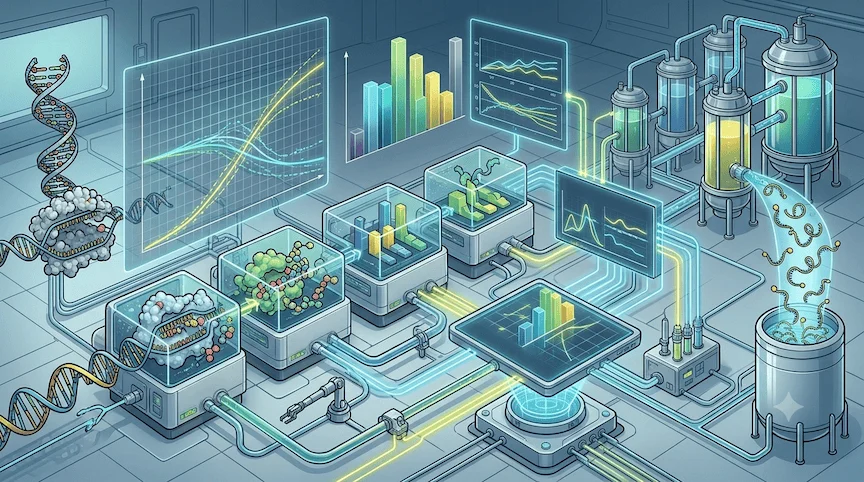
The global biopharmaceutical landscape is undergoing a profound shift. Since the accelerated success of mRNA-based COVID-19 vaccines, the industry has faced a daunting challenge: how to transition from rapid, emergency-scale manufacturing to a more predictable, cost-effective, and scalable framework suitable for a broader pipeline of mRNA therapeutics.
A breakthrough led by researchers at Northeastern University is now offering a solution. By moving away from monolithic, empirical models toward a modular, mechanistic approach to in vitro transcription (IVT), scientists are unlocking new levels of efficiency, robustness, and speed in mRNA production. This development, spearheaded by Wei Xie, PhD, associate professor of mechanical and industrial engineering, promises to transform how we manufacture the next generation of vaccines and personalized cancer therapies.
The Core Challenge: Complexity in mRNA Synthesis
At its heart, mRNA manufacturing is a complex biochemical dance. The IVT process—the enzymatic synthesis of RNA from a DNA template—is influenced by dozens of variables, including nucleotide concentrations, magnesium levels, enzyme kinetics, and pH stability.
Traditionally, process development has relied on "trial-and-error" experimentation or monolithic models that treat the entire reaction as a single "black box." These traditional methods are not only expensive and time-consuming but often fail to translate effectively from a benchtop flask to a large-scale industrial bioreactor. When a reaction fails to yield the desired purity or length, identifying the specific bottleneck in a monolithic model is akin to finding a needle in a haystack.
Chronology of a Paradigm Shift
The journey toward modular modeling began with the realization that mRNA production shares an inherent structural similarity with the molecules being created.
- Initial Observations (2020–2021): Following the widespread adoption of mRNA vaccines, researchers noted that scaling up production often resulted in inconsistencies in product quality, such as truncated transcripts or poor capping efficiency.
- The Conceptual Framework (2022): Xie and her team at Northeastern began mapping the IVT reaction not as a single event, but as a series of discrete, mechanistic steps: initiation, elongation, and termination.
- Development of the Modular Architecture (2023): The team successfully decoupled these steps, creating independent computational modules that could simulate parallel processes like mRNA degradation and chemical precipitation.
- Validation and Publication (2024): The framework was validated through systematic benchmarking against experimental data, culminating in findings published in Biotechnology and Bioengineering, which demonstrate how this digital architecture can predict yield and quality attributes with high precision.
Breaking Down the "Black Box": The Modular Advantage
The modular architecture proposed by Xie represents a fundamental departure from legacy modeling. By dividing the IVT reaction network into discrete, reusable, and mechanistically defined components, the researchers have created a "Lego-like" system for bioprocessing.
H3: Independent Calibration and Refinement
In a monolithic model, a change in one parameter often requires a total recalibration of the entire system. In Xie’s modular framework, each component—such as the T7 RNA polymerase kinetics or nucleotide degradation rates—can be calibrated and refined independently. If new experimental data emerge regarding a specific reagent or enzyme behavior, researchers can update that single module without destabilizing the rest of the model.
H3: Diagnostic Power through Sensitivity Analysis
The framework integrates sophisticated statistical tools, including Shapley value-based sensitivity analysis. This allows researchers to quantify exactly how much each parameter—such as the magnesium-to-nucleotide ratio—contributes to the final yield. By running simulated reaction trajectories, the model can predict potential failure points, such as nucleotide depletion, long before they manifest in a physical bioreactor.
Supporting Data: Why Mechanisms Matter
The power of this approach lies in its reliance on "first principles"—the fundamental laws of chemistry and molecular biology—rather than just empirical curve-fitting. Empirical models are notoriously poor at predicting behavior outside of the specific conditions in which they were tested. Conversely, mechanistic models are inherently more robust.
When applied to scale-up, the Northeastern model maintains its predictive accuracy across different volumes. This is a critical advantage for process engineers. During technology transfer, the framework supports the design of dynamic control strategies, such as fed-batch feeding schemes that adjust nutrient delivery in real-time. By predicting how these changes affect the molecular synthesis process, manufacturers can reduce the number of pilot-scale experiments required, significantly lowering the consumption of high-cost reagents like T7 RNA polymerase.
Official Perspective: Insights from Dr. Wei Xie
Dr. Wei Xie emphasizes that the primary goal of this framework is to foster "Quality by Design" (QbD). In an interview regarding the research, Xie noted:
"A modular modeling approach simplifies the complex IVT reaction network by dividing it into discrete, reusable, mechanistically defined steps. This structure improves mechanistic understanding by clarifying how each step impacts key quality attributes, including yield, capping efficiency, and transcript integrity."
Xie highlights that the flexibility of the platform is its greatest asset for the future of the industry. "New enzymes, reagents, or process steps can be incorporated by simply updating or adding the relevant module," she explained. "This framework’s ability to accommodate heterogeneous datasets generated under varying process conditions further supports rapid evaluation of manufacturing innovations while maintaining model consistency."
Implications for the Future of Bioprocessing
The shift toward modular, in silico development platforms has far-reaching implications for the pharmaceutical industry.
H3: Accelerating Time-to-Market
As the mRNA pipeline shifts from emergency vaccines to a broader range of therapeutic applications—including personalized cancer vaccines, protein replacement therapies, and gene-editing reagents—the ability to pivot quickly is essential. Because the model mirrors the modular structure of nucleic-acid sequences, it can be rapidly adapted for new constructs. This minimizes the redevelopment effort for each new drug candidate, effectively shortening the timeline from lab bench to clinical trial.
H3: Reducing Costs and Environmental Impact
Bioprocessing is resource-intensive. The cost of raw materials, specifically high-grade nucleotides and enzymes, is significant. By acting as a virtual development platform, the modular model narrows the "experimental search space." Researchers can run thousands of simulations in the digital realm to find the optimal process conditions, saving physical materials for the final, verified validation runs. This not only lowers costs but also reduces the waste generated by failed experimental batches.
H3: Strengthening Digital Twins
The framework serves as a cornerstone for the "Digital Twin" of an mRNA manufacturing facility. By linking real-time sensor data from a bioreactor with the predictive power of the modular mechanistic model, manufacturers can implement Bayesian optimization. This creates a self-correcting system that ensures consistent product quality, even when dealing with the inherent variability of biological raw materials.
Conclusion: A New Era of Predictive Manufacturing
The research led by Dr. Xie and her colleagues at Northeastern University marks a transition toward a more mature, data-driven era of mRNA production. As we move away from the "trial-and-error" era and toward a future defined by digital precision and modular design, the barriers to entry for new therapeutics will continue to fall.
By combining mechanistic rigor with computational flexibility, this modular approach ensures that the next generation of mRNA medicines will not only be more accessible but also more consistent and reliable. As pharmaceutical pipelines continue to expand, the integration of these digital bioprocessing tools will likely become the industry standard, providing the infrastructure needed to turn cutting-edge genetic science into everyday medical reality.