Bridging the Edge: Intel and Ultralytics Optimize YOLO Performance on Raspberry Pi via OpenVINO
The intersection of high-performance artificial intelligence and low-cost edge computing has reached a new milestone. In a collaborative effort, experts from Intel and Ultralytics—Alexander Nesterov, Dmitriy Pastushenkov, Francesco Mattioli, and Nuvola Ladi—have unveiled a comprehensive framework for deploying the latest YOLO (You Only Look Once) models on Raspberry Pi hardware. By leveraging the OpenVINO toolkit, the team has demonstrated that the Raspberry Pi is no longer just a hobbyist’s tool but a robust target for professional-grade computer vision applications.
Main Facts: The Convergence of OpenVINO and Raspberry Pi
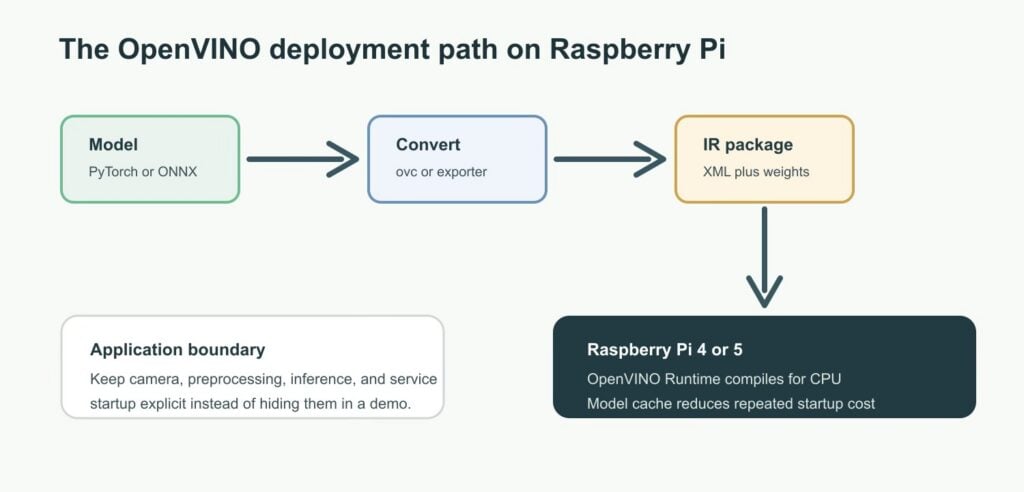
At its core, the initiative establishes a standardized deployment pipeline for Ultralytics YOLO models on Arm64-based Linux systems. The primary catalyst for this advancement is the OpenVINO 2026.2.0 release, which introduces enhanced support for Linux Arm64 wheels via PyPI, targeting CPython versions 3.10 through 3.13.
The deployment model treats the Raspberry Pi not as a specialized outlier, but as a standard Arm64 target. This allows developers to use the same programming patterns found in high-end x86 server environments. Key highlights of this integration include:
- Hardware Compatibility: Full support for Raspberry Pi 4 and Raspberry Pi 5, utilizing their respective Cortex-A72 and Cortex-A76 architectures.
- Software Optimization: Utilization of the OpenVINO CPU plugin, which abstracts the complexity of Arm Compute Library and KleidiAI to deliver optimized execution paths.
- Model Flexibility: Seamless conversion of Ultralytics YOLO models (including the cutting-edge YOLO26) into OpenVINO Intermediate Representation (IR) formats to minimize load latency and memory footprint.
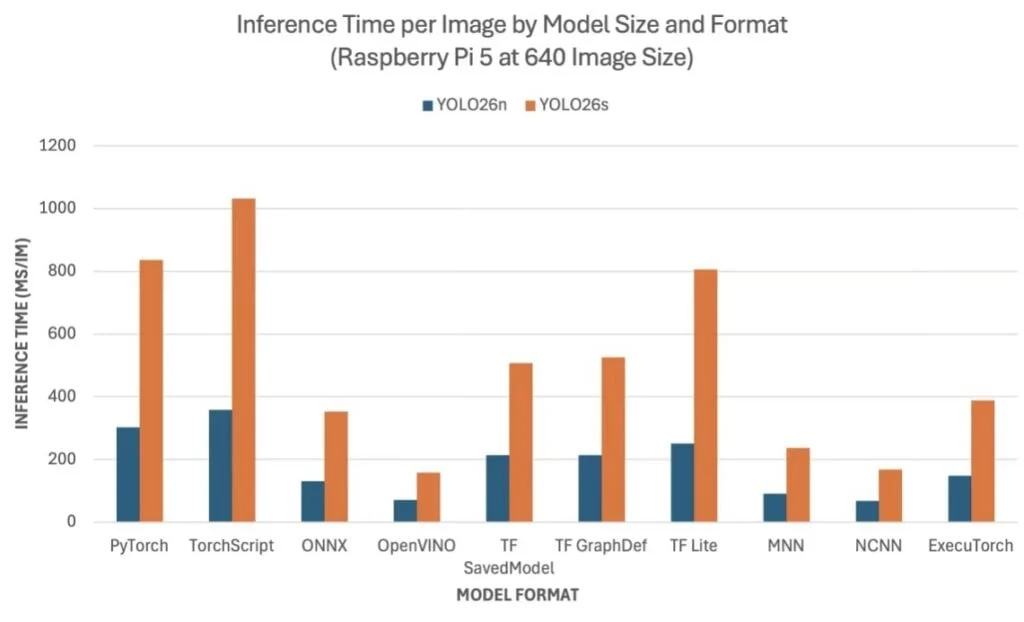
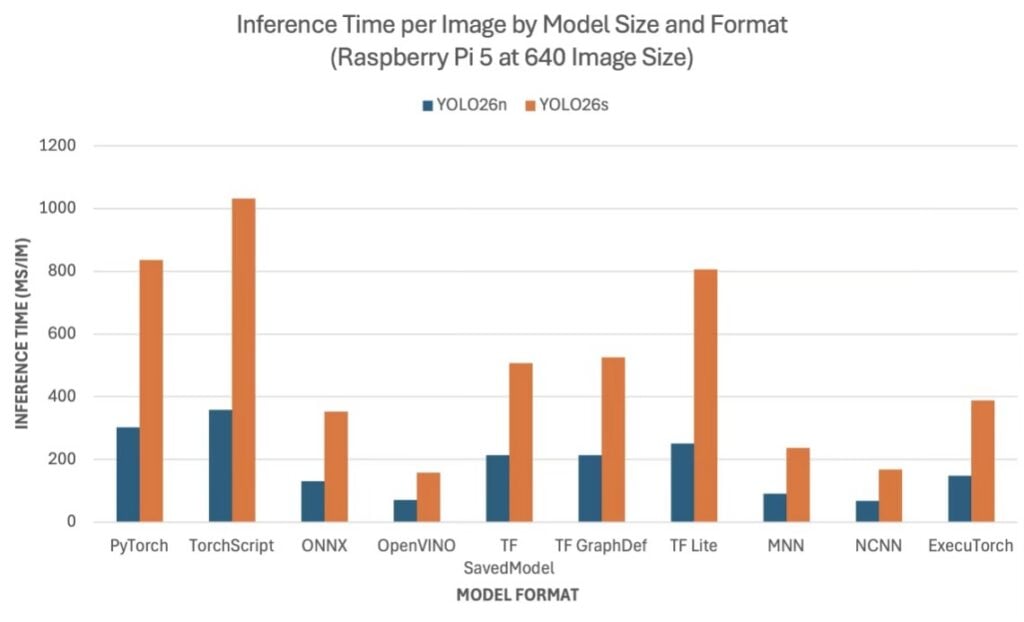
- Performance Parity: Benchmarks indicate that OpenVINO significantly outperforms alternative frameworks on Raspberry Pi hardware, particularly when deploying lightweight models like YOLO26n.
Chronology: The Evolution of Edge AI Deployment
The journey toward seamless AI on the Raspberry Pi has been a decade-long evolution of both hardware capability and software abstraction.
The Early Era: Prototype Limitations
Historically, running object detection on a Raspberry Pi was a grueling task. Early iterations of the board lacked the SIMD (Single Instruction, Multiple Data) instructions and memory bandwidth necessary for real-time inference. Developers were often forced to use heavily stripped-down versions of models, resulting in poor accuracy.
The Rise of OpenVINO and Arm Support
Intel’s OpenVINO toolkit was initially designed to optimize inference on Intel silicon (CPUs, GPUs, and VPUs). However, acknowledging the ubiquity of Arm architecture in the IoT space, Intel began expanding support for Arm. By 2024, the focus shifted toward making OpenVINO a "deployment layer" that could bridge the gap between different instruction sets.
June 2026: The 2026.2.0 Milestone
The release of OpenVINO 2026.2.0 in June 2026 represents the current pinnacle of this evolution. By publishing Linux Arm64 wheels on PyPI and aligning with the Debian Trixie-based Raspberry Pi OS, the barrier to entry was effectively lowered. Simultaneously, Ultralytics refined its YOLO26 architecture, optimizing it specifically for real-time performance on edge devices. This alignment of hardware-specific software (OpenVINO) and architecture-aware models (YOLO) created the "perfect storm" for edge AI.
Supporting Data: Hardware Profiles and Performance Benchmarks
To understand the practical application of this guide, one must look at the hardware delta between the two primary targets: the Raspberry Pi 4 and the Raspberry Pi 5.
Hardware Comparison Table
| Feature | Raspberry Pi 4 Model B | Raspberry Pi 5 |
|---|---|---|
| Processor | Quad-core Cortex-A72 (ARM v8) | Quad-core Cortex-A76 (ARM v8.2) |
| Clock Speed | 1.8 GHz | 2.4 GHz |
| Max RAM | 8GB LPDDR4 | 16GB LPDDR4X |
| Ideal Use Case | Prototypes, light services, single-stream | Sustained workloads, multi-camera, high-speed |
| Cooling Req. | Passive (usually sufficient) | Active (highly recommended) |
Performance Insights
Ultralytics’ data suggests that the YOLO26 model family, when executed via the OpenVINO runtime, achieves a superior balance of Frames Per Second (FPS) and Mean Average Precision (mAP) compared to standard TensorFlow Lite or ONNX Runtime implementations on the same hardware.
A critical technical detail highlighted by the Intel team is the "Simulation Mode" for quantization. On Arm platforms, OpenVINO executes quantized int8 models in a floating-point simulation. While this means the hardware does not see the 4x speedup typical of dedicated integer hardware, it allows for a unified workflow where the same model can be deployed across various devices without re-architecting the logic.
Model Caching and Startup
Data shows that the use of cache_dir in OpenVINO significantly impacts the reliability of edge services. On a Raspberry Pi 5, the initial compilation of a YOLO model can take several seconds. By enabling persistent caching, subsequent startups are nearly instantaneous—a vital feature for devices that may experience power fluctuations or frequent service restarts in industrial settings.
Official Responses: Insights from the Experts
The collaboration between Intel and Ultralytics is driven by a shared vision of "democratizing computer vision." According to the contributors, the focus has shifted from "Can it run?" to "How does it scale?"
On the Role of the Raspberry Pi:
The experts emphasize that the Raspberry Pi is no longer an "exception" to the rule. "It is a small Linux Arm64 target to which the standard OpenVINO deployment model can be applied directly," the team noted. This philosophy encourages developers to build applications that are platform-agnostic, allowing them to move a project from a Raspberry Pi to an Intel-based NUC or a cloud instance with minimal code changes.
On Ultralytics YOLO26:
Ultralytics representatives highlighted the importance of the YOLO26 family. They described it as a "real-time computer vision family that can analyze images and video in a single pass." By offering a unified workflow and broad export support, Ultralytics aims to reduce the "time-to-deployment" for engineers working in constraints-heavy environments.
On Community Contribution:
Intel and Ultralytics have both issued a call to action for the open-source community. They encourage developers to contribute directly to the OpenVINO CPU plugin (located in src/plugins/intel_cpu on GitHub). Improvements in JIT emitters and performance fixes for the Arm backend are cited as high-priority areas that benefit the entire ecosystem.
Implications: The Future of Edge AI
The ability to run high-accuracy YOLO models on a $60–$80 computer has profound implications for several industries.
Industrial Automation and Monitoring
Small, low-power devices can now be placed directly on assembly lines to perform real-time quality control. With OpenVINO’s optimization, these devices can handle the high-speed throughput of modern manufacturing without the need for a tethered workstation.
Smart Cities and Infrastructure
Raspberry Pi units equipped with YOLO26 can be deployed in traffic lights or public transit hubs for vehicle and pedestrian counting. The low power consumption makes them ideal for solar-powered installations, while OpenVINO ensures the inference is fast enough to be actionable.
The "Edge-to-Cloud" Parity
Perhaps the most significant implication is the stabilization of the developer experience. By using OpenVINO as a "deployment layer," the industry is moving toward a future where the underlying hardware architecture (x86 vs. Arm) is invisible to the application developer. This allows for a more fluid movement of AI models from the research lab to the physical world.
Technical Recommendations for Reliable Deployment
To ensure a successful deployment, the experts recommend several "best practices" that differentiate a hobbyist project from a production-ready service:
- Architecture Verification: Always ensure the OS is 64-bit (
aarch64). Running 32-bit OS on a Pi 4 or 5 severely bottlenecks AI performance. - Thermal Management: The Raspberry Pi 5, while powerful, generates significant heat during sustained inference. Active cooling is not optional for production environments.
- Explicit Device Selection: While
AUTOmode is available, explicitly selectingCPUfor a fixed Raspberry Pi deployment leads to more predictable behavior and easier troubleshooting. - Environment Isolation: Use Python virtual environments (
venv) to prevent dependency conflicts, especially when dealing with the specific versions of OpenVINO and Ultralytics required for Arm64.
In conclusion, the partnership between Intel and Ultralytics has provided a definitive roadmap for edge AI. By combining the accessibility of the Raspberry Pi with the optimization power of OpenVINO and the accuracy of YOLO26, the team has unlocked a new era of localized, intelligent computing. As these tools continue to evolve, the boundary between the "lab" and the "edge" will continue to blur, paving the way for more responsive and intelligent environments.