Revolutionizing Temporal Data: Google and Tryolabs Unveil Temporian to Streamline Machine Learning Pipelines

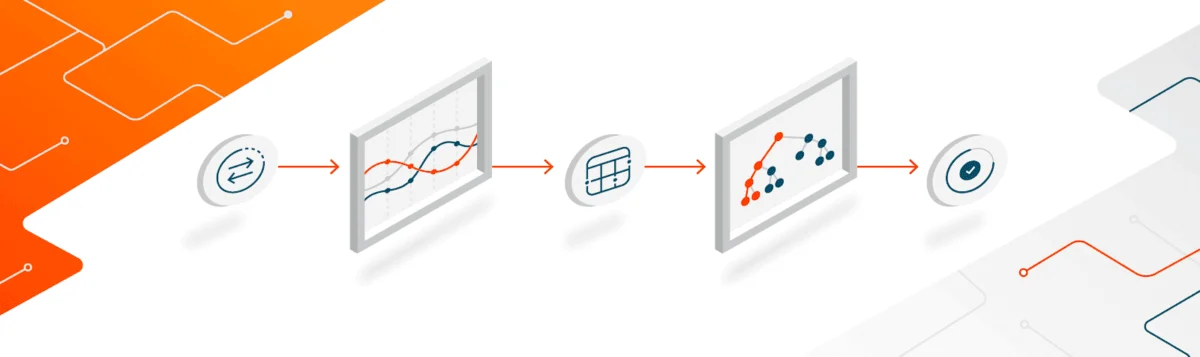
MOUNTAIN VIEW, Calif. — In the fast-evolving landscape of applied machine learning, the ability to effectively process time-dependent information often serves as the dividing line between mediocre predictive models and state-of-the-art solutions. Recognizing this critical industry bottleneck, Google—in a collaborative development effort with machine learning consultancy Tryolabs—has officially introduced Temporian, a powerful open-source Python library designed to simplify the preprocessing and feature engineering of temporal data.
Coupled with TensorFlow Decision Forests (TFDF), the new library offers data scientists and machine learning engineers an end-to-end blueprint for ingesting, transforming, and modeling complex, non-synchronized event streams. The release marks a significant milestone in how developers handle time-series, event sets, and multi-index sequential data, bridging the gap between raw transactional logs and robust predictive analytics.
The Ubiquity and Challenge of Temporal Data
Temporal data is omnipresent in modern machine learning applications. From fluctuating financial markets and shifting meteorological conditions to real-time network security logs and biometric health indicators, data constantly changes over time or holds value only within specific temporal windows.

In decision-making tasks, temporal information is often highly discriminative. For instance, the precise interval and rate of change between two consecutive heartbeats can provide vital insights into an individual’s cardiovascular health. Similarly, evaluating temporal patterns in network traffic logs allows security systems to proactively detect configuration anomalies and malicious intrusions.
However, despite its immense predictive power, working with temporal data has historically been a cumbersome and error-prone undertaking. Traditional time-series libraries generally assume uniformly sampled data—such as daily stock closing prices or hourly temperature readings. Real-world transactional data, conversely, is rarely uniform. Customer purchases, server requests, and medical interventions occur irregularly, leading to multi-source, non-synchronized event streams that defy easy aggregation.
Data scientists have traditionally been forced to write complex, bespoke code to resample, window, and align these disparate data sources before feeding them into machine learning frameworks. Temporian was conceived precisely to eliminate this friction, providing a unified, high-performance toolkit tailored specifically for event-driven data preprocessing.

A Chronological Walkthrough: From Raw CSV to Predictive Modeling
To understand how Temporian revolutionizes the preprocessing pipeline, it is instructive to examine a practical implementation. Consider a canonical machine learning task: forecasting weekly sales for an e-commerce platform using individual transaction records.
Phase 1: Ingestion and Visualization with EventSets
The process begins with raw transactional data stored in a standard CSV format. Each entry records the exact timestamp of a purchase, the client ID, the purchased product, and the price:
$ head -n 5 sales.csv
timestamp,client,product,price
2010-10-05 11:09:56,c64,p35,405.35
2010-09-27 15:00:49,c87,p29,605.35
2010-09-09 12:58:33,c97,p10,108.99
2010-09-06 12:43:45,c60,p85,443.35
Using Temporian, engineers can load this dataset into a general-purpose container known as an EventSet. Unlike rigid time-series structures, an EventSet natively supports multivariate time series, time sequences, and indexed data.

import temporian as tp

# Load the CSV dataset into an EventSet
sales = tp.from_csv("/tmp/sales.csv")
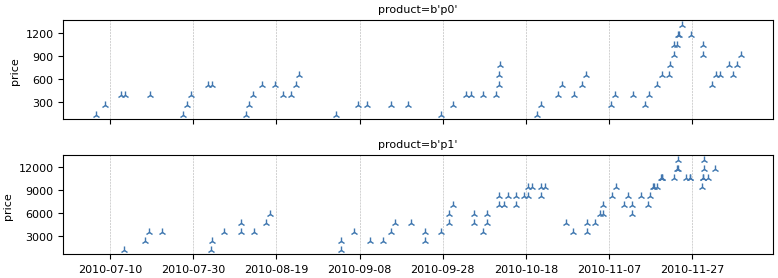
Once loaded, engineers can instantly inspect the data or plot specific features—such as the transaction price—over time. However, viewing raw transactions across an entire enterprise can result in noisy, overcrowded visualizations. To extract meaningful trends, practitioners must compute rolling metrics, such as moving sums.
Phase 2: Window Operations and Indexing
Calculating a moving sum over a rolling window—such as total sales over the preceding seven days—is effortless in Temporian using built-in window operators. Furthermore, real-world datasets often require granular analysis broken down by categorical entities, such as individual products or specific customer accounts.
Temporian handles this via multi-index event sequences:

# Index the data by product category
sales_per_product = sales.add_index("product")

# Compute the 7-day moving sum of sales independently for each product
weekly_sales_per_product = sales_per_product["price"].moving_sum(
    tp.duration.days(7)
)
By isolating operations per index, engineers can prevent data leakage and ensure that rolling aggregates respect the boundaries of individual entities.
Phase 3: Transitioning to Uniform Sampling
While transaction records are continuous and irregular, tabular machine learning models frequently benefit from regularly sampled data. Temporian allows developers to "tick" an event set at fixed intervals (e.g., daily sampling) and project rolling sums onto a uniform timeline.
# Create a daily sampling timeline
daily_sampling = sales_per_product.tick(tp.duration.days(1))

# Resample the 7-day moving sum onto a daily cadence
weekly_sales_daily = sales_per_product["price"].moving_sum(
    tp.duration.days(7),
    sampling=daily_sampling
)
Once the preprocessing pipeline is complete, the resulting EventSet can be seamlessly exported into a standard Pandas DataFrame or converted directly into a TensorFlow-compatible dataset for downstream model training.

Supporting Data and Technical Architecture
The underlying architecture of Temporian is engineered for high performance, addressing the computational bottlenecks typically associated with large-scale feature engineering on temporal datasets. By shifting heavy lifting away from custom Python loops and into optimized C++ backend routines, Temporian achieves processing speeds capable of handling millions of events without breaking a sweat.
When building predictive models with this preprocessed data, matching the right feature set with an appropriate algorithm is critical. In the demonstration pipeline, Google utilized TensorFlow Decision Forests (TFDF)—specifically a Random Forest regression model—due to their native ability to handle tabular features and complex interactions without requiring extensive feature scaling.
To prepare the data for TFDF, multiple temporal aggregations and contextual features were synthesized:

- Moving Sums across Various Windows: Features capturing sales volumes over 3, 7, 14, and 28-day windows were generated simultaneously. This allows the machine learning model to empirically determine which historical window holds the highest predictive value.
- Calendar Contextualization: Leveraging Temporian’s built-in calendar operators, day-of-the-week indicators were incorporated to capture cyclical human behavioral trends.
- Target Label Construction: Using the
leakoperator (which shifts temporal data forward in time safely for label creation), the model was tasked with predicting the subsequent day’s total sales volume based on historical metrics.
Official Insights from the Development Team
The release of Temporian is the culmination of a strategic partnership between Google’s machine learning engineering groups and Tryolabs, a boutique AI consultancy renowned for building advanced machine learning systems.
Authored collaboratively by a multidisciplinary team—including Google engineers Mathieu Guillame-Bert, Richard Stotz, Robert Crowe, Luiz Gustavo Martins (Gus), Ashley Oldacre, Kris Tonthat, Glenn Cameron, alongside Tryolabs experts Ian Spektor, Braulio Rios, Guillermo Etchebarne, Diego Marvid, Lucas Micol, Gonzalo Marín, Alan Descoins, Agustina Pizarro, Lucía Aguilar, and Martin Alcala Rubi—the project reflects a shared commitment to open-source developer tooling.
According to the engineering teams, the primary design philosophy behind Temporian was to bridge the semantic gap between how data scientists conceptually reason about time and how code executes those transformations. By treating time as a first-class citizen in the data manipulation API, Temporian eliminates the labyrinth of manual dataframe joins, lagging indices, and timestamp alignments that typically clutter feature-engineering scripts.
Broader Implications for the AI and ML Ecosystem
The introduction of Temporian and its integration with TensorFlow Decision Forests carries profound implications for several key verticals within applied artificial intelligence:
1. Democratizing Complex Feature Engineering
Feature engineering for temporal data has historically required deep domain expertise and tedious, custom-written code bases. By encapsulating complex operations—such as windowing, resampling, and multi-index grouping—into intuitive, declarative Python APIs, Temporian lowers the barrier to entry for junior data scientists and accelerates prototyping for senior practitioners.
2. Enhancing Model Interpretability and Accuracy
Because Temporian allows engineers to effortlessly feed multiple temporal resolutions (e.g., 3-day, 7-day, and 28-day moving sums) into tabular models like TFDF, machine learning algorithms can dynamically select the most relevant features. Upon training the Random Forest model in the reference example, an inspection of the INV_MEAN_MIN_DEPTH variable importance metric revealed that the 28-day moving sum (moving_sum_28) held the highest predictive weight (0.342), closely followed by the product identifier and calendar day-of-the-week indicators. This transparency helps data scientists validate whether models are learning meaningful real-world patterns rather than spurious correlations.

3. Broadening Use Cases Beyond E-Commerce
While sales forecasting serves as an accessible pedagogical example, the underlying architecture of Temporian is domain-agnostic. Financial institutions can deploy the library for real-time fraud detection by analyzing transaction velocity over sliding windows. IoT and manufacturing enterprises can process multivariate sensor streams to predict equipment failures before they occur. Healthcare providers can monitor continuous patient telemetry to flag anomalies early.
Next Steps and Future Outlook
With Temporian now fully open-sourced, Google and Tryolabs are encouraging the global developer community to test the library across diverse production domains. Comprehensive documentation, interactive tutorials, and code samples are currently available via ReadTheDocs and the official GitHub repository (google/temporian).
For machine learning practitioners looking to deepen their expertise, combining Temporian’s preprocessing workflows with the advanced capabilities of TensorFlow Decision Forests provides a formidable toolkit for tackling real-world, time-critical predictive challenges. As temporal data continues to grow in volume and complexity, tools like Temporian ensure that developers remain well-equipped to turn raw streams of time into actionable intelligence.