Securing the Silicon: Raspberry Pi Elevates Industrial Manufacturing with Provisioner 2.3
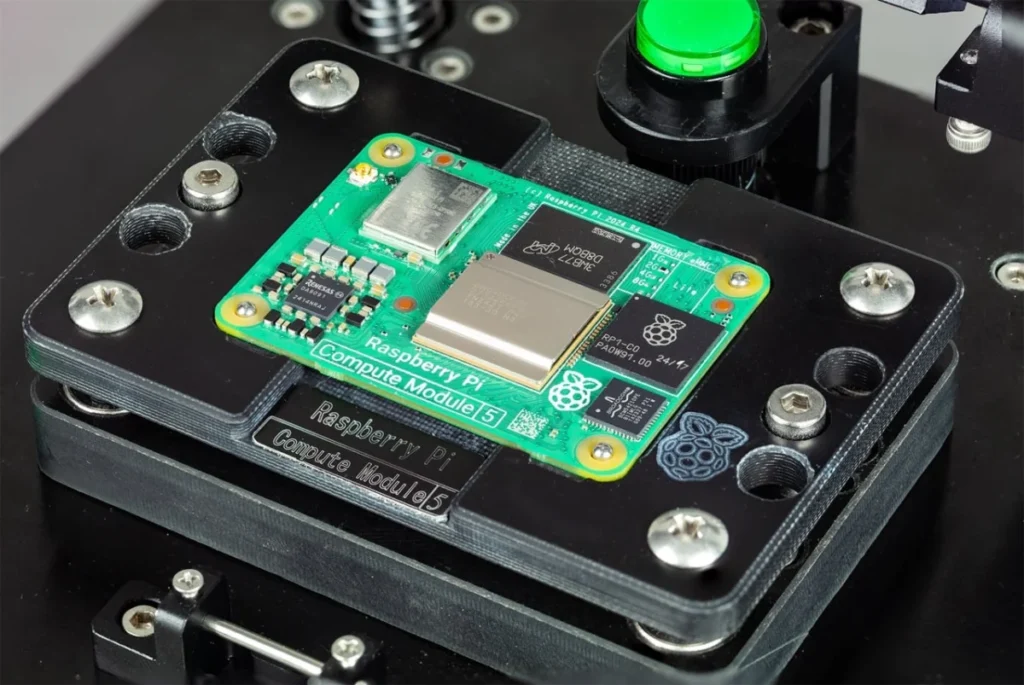
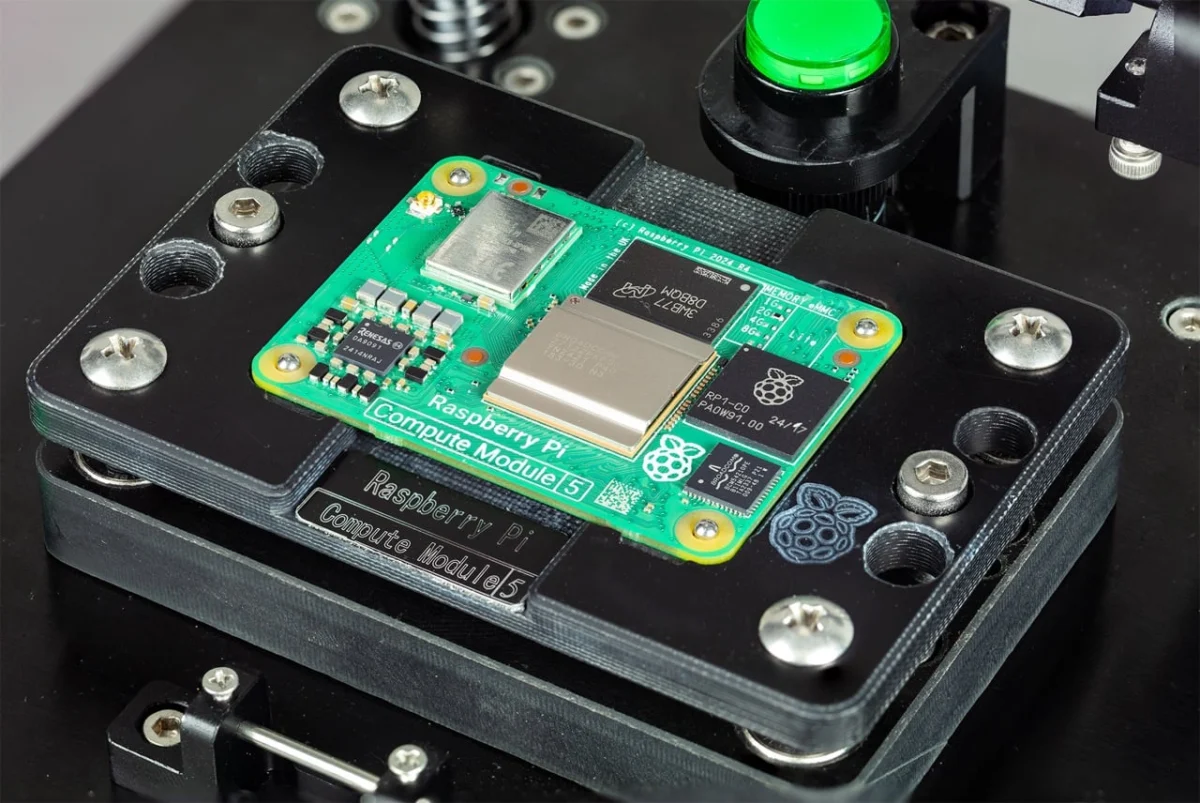
In an era where the boundary between hobbyist hardware and industrial-grade computing is increasingly blurred, Raspberry Pi Ltd has announced a significant milestone in its software ecosystem. The release of rpi-sb-provisioner version 2.3 represents a major leap forward in the company’s efforts to streamline the deployment of secure, encrypted, and remotely manageable devices at an enterprise scale.
By integrating advanced features such as Raspberry Pi Connect for Organisations, Image Description Provisioning (IDP), and enhanced cryptographic protections via rpi-fw-crypto, the organization is signaling a shift toward providing a comprehensive "manufacturing-ready" suite. This update is designed to transform the often-convoluted process of secure boot into a "boring and predictable" workflow—a necessity for industrial partners deploying thousands of units across the globe.
1. Main Facts: The Core of the Version 2.3 Update
The latest iteration of the Raspberry Pi Secure Boot Provisioner is not merely a patch; it is a foundational expansion of how Raspberry Pi hardware is prepared for the field. At its heart, the update addresses three critical pillars of modern hardware deployment: Security, Scalability, and Flexibility.
Key Enhancements:
- Raspberry Pi Connect for Organisations Integration: The provisioner now allows for the automatic association of devices with organizational accounts. This eliminates the need for manual, one-by-one pairing, which has historically been a bottleneck in large-scale rollouts.
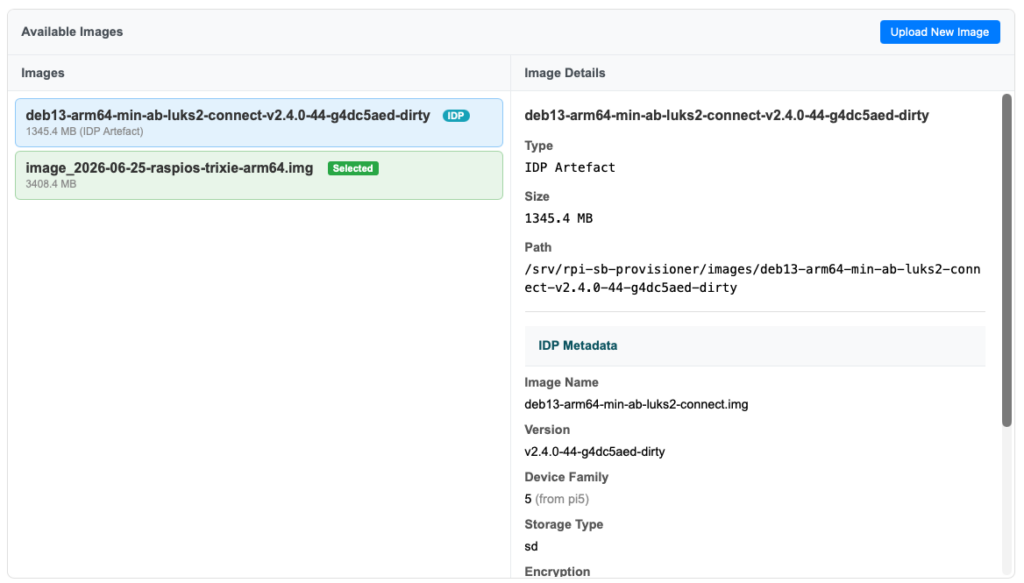
- Image Description Provisioning (IDP): Moving beyond standard Raspberry Pi OS images, version 2.3 supports a fully programmable provisioning system. This allows developers to define custom partition layouts and OS attributes using a descriptive framework.
- Asymmetric Cryptography via rpi-fw-crypto: The update leverages the newly released
rpi-fw-cryptotool, enabling the use of asymmetric keys for secure operations without exposing the unique device-specific private keys. - Manufacturing Infrastructure: The tool has matured into a full-scale system featuring a manufacturing database, comprehensive audit logs, and a user-friendly Web UI, moving away from its origins as a collection of terminal-based scripts.
2. Chronology: The Evolution of Raspberry Pi Provisioning
The journey toward version 2.3 began with a recognition of a systemic problem in the embedded hardware world: the inherent complexity of Secure Boot.
The Era of Complexity (Pre-2024)
Before the dedicated provisioner, engineers wishing to implement Secure Boot and Full Disk Encryption (FDE) on Raspberry Pi hardware had to navigate a fragmented landscape of shell scripts, manual key generation, and specialized firmware configurations. This manual process was prone to human error—a single mistake in blowing the "one-time programmable" (OTP) fuses could permanently brick a device or leave it vulnerable to exploitation.
The Birth of rpi-sb-provisioner (Early 2024)
In 2024, Raspberry Pi released the first version of the rpi-sb-provisioner. The initial goal was modest but vital: create a system that made Secure Boot "predictable." It targeted the Raspberry Pi 4 and 5, providing a more structured way to sign bootloaders and encrypt filesystems.
The Feedback Loop and Iteration (Mid-2024 to Early 2025)
Following the initial launch, the Raspberry Pi engineering team engaged in an extensive feedback loop with industrial and embedded customers. Users reported that while the basic provisioning worked, they needed better ways to manage the data associated with the process. This led to the introduction of:
- Manufacturing Databases: To track which keys were assigned to which serial numbers.
- Audit Logs: To provide a paper trail for compliance and security auditing.
- Web UI: To allow factory floor operators—who may not be Linux experts—to oversee the provisioning process safely.
The Culmination: Version 2.3 (Current)
The current release marks the transition of the tool from a standalone utility to a bridge between hardware and the cloud. By integrating with "Raspberry Pi Connect," the provisioner now handles the entire lifecycle of a device from the moment it leaves the box to the moment it is managed remotely in the field.
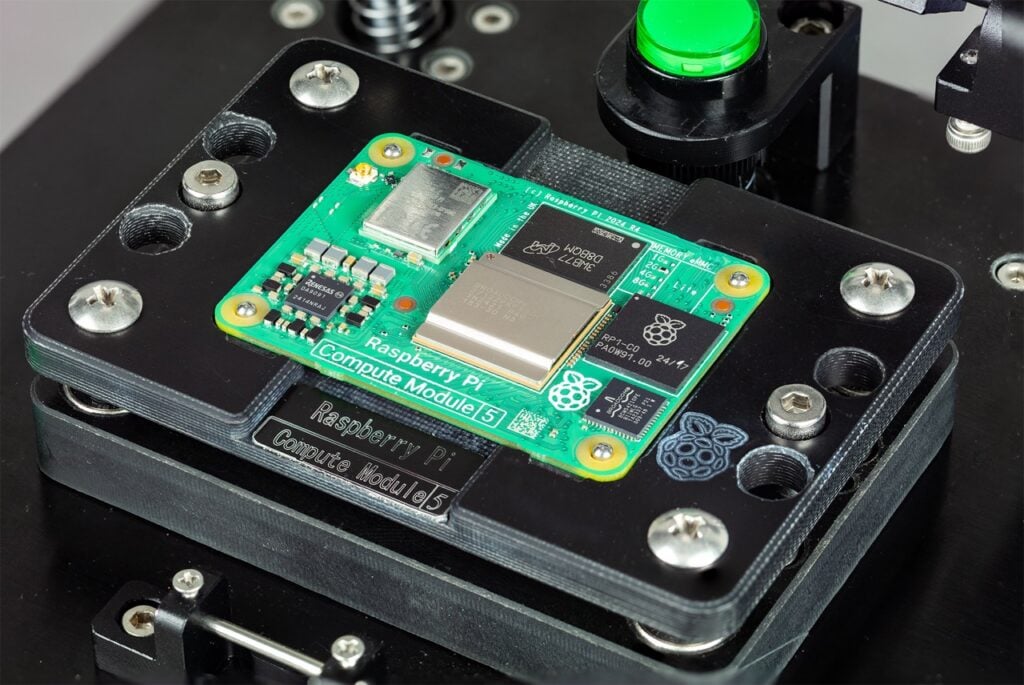
3. Supporting Data: Technical Deep Dive
To understand the impact of this update, one must look at the technical mechanisms that facilitate these new features.
Understanding Image Description Provisioning (IDP)
Previously, the provisioner was largely optimized for images created via pi-gen, the tool used to build the standard Raspberry Pi OS. However, industrial users often use Yocto Project, Buildroot, or custom Debian derivatives with unique partition requirements (e.g., dual A/B partitions for over-the-air updates).
IDP allows a developer to provide a JSON-like description of the intended disk layout. The provisioner then:
- Parses the Metadata: Identifies partition sizes, filesystem types (ext4, FAT32, etc.), and encryption requirements.
- Automates Formatting: Applies these layouts to the target media (SD card, NVMe, or eMMC).
- Applies Security: Automatically signs the necessary binaries within those custom partitions.
The Role of rpi-fw-crypto
The security of any device is only as strong as its key management. rpi-fw-crypto introduces a mechanism for asymmetric cryptography. In a typical secure boot scenario, a device-unique private key is written to the hardware. If this key is exposed during the manufacturing process, the entire fleet is compromised.
Version 2.3 uses rpi-fw-crypto to ensure that while the device can perform cryptographic signatures and decryptions to verify its own integrity, the private key remains "unexposed." This is achieved by utilizing the hardware’s internal security engines to perform operations without the key ever leaving the secure enclave of the SoC (System on a Chip).
Manufacturing Database and Scale
In a production environment, "scale" means more than just speed; it means traceability. The version 2.3 provisioner stores:
- Device IDs: Linked to specific hardware serial numbers.
- Key Hashes: To confirm which public keys were used for signing.
- Encryption Status: Ensuring every device leaving the line has FDE enabled.
4. Official Responses and Design Philosophy
Raspberry Pi’s engineering team has been vocal about the philosophy driving these updates. A lead software engineer at Raspberry Pi noted that the primary motivation was the frustration inherent in traditional security workflows.
"In my many years as a software engineer, I always found working with secure boot more complicated than it had any right to be," the engineer remarked during the announcement. This sentiment echoes a common complaint in the IoT industry: that security features are often sacrificed because they are too difficult to implement correctly.
The company’s response has been to adopt a "concrete problem" approach. Rather than adding features for the sake of novelty, every change in version 2.3—from the Web UI to the Connect integration—was built to solve a specific pain point reported by users deploying devices in the real world.
On Raspberry Pi Connect:
The company emphasizes that remote management is no longer optional for industrial IoT. By allowing "Connect for Organisations" to be provisioned at the factory level, Raspberry Pi is enabling a "zero-touch" deployment model. A device can be provisioned in a factory in one country, shipped to a customer in another, and immediately appear in the customer’s management dashboard the moment it is plugged into a network.
5. Implications: What This Means for the Industry
The release of rpi-sb-provisioner 2.3 has far-reaching implications for the broader technology landscape, particularly in the sectors of Industrial IoT (IIoT), Edge Computing, and Cybersecurity compliance.
Meeting Global Security Standards
With the introduction of the EU’s Cyber Resilience Act and similar legislation in the United States, hardware manufacturers are now legally obligated to ensure their devices are secure by design. Raspberry Pi’s new tools provide a "path of least resistance" for companies to meet these requirements. By providing a standardized, open-source method for implementing Secure Boot and Full Disk Encryption, Raspberry Pi is lowering the barrier to entry for secure hardware manufacturing.
The "Pro-Sumer" to "Industrial" Pipeline
Raspberry Pi has long been the "gateway drug" for hardware engineers. A prototype built on a Raspberry Pi 5 can now transition to a mass-produced product with the exact same security posture as a high-end industrial PC. The ability to use IDP to provision non-standard operating systems means that companies using specialized Linux distributions are no longer "locked out" of the Raspberry Pi security ecosystem.
Reducing Total Cost of Ownership (TCO)
For a business, the cost of a device is not just the purchase price; it is the cost of deployment and maintenance. Manual provisioning is expensive and error-prone. By automating the association with Raspberry Pi Connect and providing an audit-ready manufacturing database, version 2.3 significantly reduces the labor costs associated with device rollout.
Future Outlook
As the provisioner continues to evolve, we can expect further integrations with cloud providers (such as AWS IoT Core or Azure IoT) and perhaps more advanced hardware-based security features as future iterations of Raspberry Pi silicon are released. The move toward open-sourcing these tools (available on GitHub) also ensures that the community can contribute to the robustness of the code, creating a transparent security model that "security through obscurity" could never achieve.
Conclusion
The update to rpi-sb-provisioner 2.3 is a clear signal that Raspberry Pi is no longer just a board manufacturer; it is a sophisticated software and security partner for the industrial sector. By taking the "pain" out of secure boot and bridging the gap between the factory floor and remote management, Raspberry Pi is cementing its position as a dominant force in the professional embedded market. For engineers and organizations, the message is clear: high-level security is no longer a luxury—it is now a "boring," predictable, and accessible reality.