Sustaining the Ecosystem: The Rust Project Unveils Its First Cohort of Maintainers in Residence
In a landmark shift for open-source sustainability, the Rust Project has officially inaugurated its "Maintainers in Residence" (MiR) program. This strategic initiative, designed to transform the landscape of software stewardship, provides stable, long-term financial support to the individuals who form the backbone of the Rust programming language. By bridging the gap between volunteer passion and professional necessity, the Rust Foundation aims to secure the future of one of the world’s most beloved and widely used technologies.
The inaugural cohort features six distinguished contributors—four Maintainers in Residence and two Maintainer Grant recipients—who will dedicate the next 12 months to critical development, mentorship, and maintenance tasks across the rust-lang ecosystem.
The Genesis of the Maintainers in Residence Program
The inception of the MiR program was formalized under RFC 3931, a response to the growing realization that the rapid growth of the Rust language had outpaced the capacity of its volunteer-led maintenance structure. For years, the Rust Project relied on the "heroic" efforts of individuals balancing day jobs with the demanding, often invisible work of compiler maintenance, documentation updates, and bug triaging.
The program was made possible through the launch of the Rust Foundation Maintainers Fund (RFMF), a vehicle for institutional and individual philanthropy. The fund saw significant capital commitments from industry giants, including Google, AWS, and OpenAI, alongside support from the Rust Project Leadership Council.

A Chronology of Implementation
- Early 2026: Initial discussions and the publication of "What is maintenance, anyway?" clarified the need for dedicated, funded roles.
- June 2026: The official launch of the Rust Foundation Maintainers Fund.
- July 2026: The Funding Team conducted a systematic audit of Rust teams to identify "maintenance baselines"—the minimum thresholds required for project health.
- August 2026: Finalization of the pilot cohort, contracting, and the public announcement of the program’s first six recipients.
Systematic Selection: Identifying the Critical Infrastructure
The selection process for the MiR program was not merely a popularity contest; it was a rigorous, data-driven exercise in risk management. The Funding Team began by mapping the entire Rust ecosystem, identifying teams that were critically under-resourced yet fundamentally essential to the language’s stability.
The focus areas identified for this pilot round included:
- Compiler & Standard Library: The heart of the language.
- Tooling (Cargo, Rustup, Clippy, Rustfmt): The developer experience layer that drives adoption.
- Documentation (rustdoc): The primary interface for education and onboarding.
The team encountered significant friction during the recruitment phase. Many of the most vital contributors were already fully employed or were wary of the administrative burden that might accompany formal funding. Furthermore, some teams were identified as having "no active members," revealing a deeper issue regarding the sustainability of legacy codebases. The resulting cohort represents a balance of long-tenured veterans and emerging contributors capable of immediately impacting these identified "high-impact" areas.
Meet the First Cohort
The following individuals have been selected for their technical prowess and their commitment to the community’s long-term health.

Gen Li (@rami3l) – Full-time MiR (Rustup)
Gen Li has been a cornerstone of the Rustup team since 2023, serving as its lead since 2025. His transition to a full-time funded role allows him to shift his focus from emergency firefighting to strategic development. "Turning volunteering into an actual job has been an empowering experience," Li noted. "I finally have the bandwidth to take a careful look at my inbox without the fear of missing crucial details."
Chris Denton (@ChrisDenton) – Half-time MiR (Windows Support)
For five years, Chris Denton has been the authority on Rust’s Windows compatibility. His work is essential for cross-platform consistency. By formalizing his role, the Rust Project ensures that Windows-specific regressions—historically a difficult area to maintain—receive the dedicated attention they require.
Alejandra González (@blyxyas) – Half-time MiR (Clippy)
Clippy, the project’s linter, currently faces a backlog of approximately 300 pull requests. González, a long-time team member, is tackling this not just through code, but through education. Her goal is to act as a "cardiologist" for the project, mentoring new contributors and refining the open peer review system to ensure the influx of new code remains high-quality and efficient.
León Liehr (@fmease) – Half-time MiR (rustdoc & Compiler)
León Liehr brings deep expertise in the Rust type system and parser. By providing him with the stability to focus on his work, the project secures the development of complex, multi-year features that often languish when developers are forced to rotate off projects due to external employment demands.
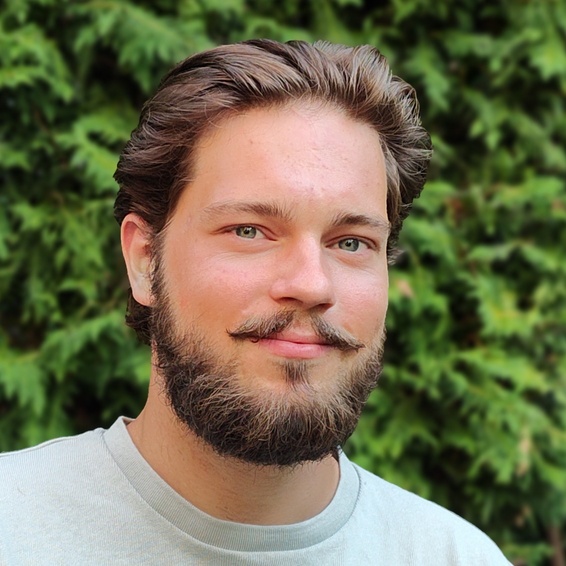
Jonas Böttiger (@joboet) – Maintainer Grantee (Standard Library)
A musicology student from Germany, Böttiger represents the next generation of open-source stewardship. His research-oriented approach to performance and soundness ensures that Rust remains a viable tool for specialized, quirky hardware environments.
Jason Newcomb (@Jarcho) – Maintainer Grantee (Clippy)
Newcomb’s focus on the developer experience within Clippy is aimed at lowering the barrier to entry for prospective contributors. His efforts in streamlining the review process are expected to reduce the "time-to-merge" for external contributors, keeping the community vibrant and engaged.
Institutional Implications and Financial Sustainability
The establishment of the MiR program marks a fundamental shift in the philosophy of the Rust Project. Historically, open-source projects were expected to flourish on a mix of corporate volunteerism and hobbyist enthusiasm. However, as Rust has moved into the critical path of kernel development (Rust for Linux) and cloud infrastructure, the "hobbyist" model has become a liability.
Corporate Stewardship and Accountability
The program owes its existence to key advocates within the industry:

- Tyler Mandry (Google)
- Niko Matsakis and Jess Izen (AWS)
- Predrag Gruevski (OpenAI)
These individuals successfully made the case to their respective organizations that investing in the maintainers of the ecosystem is a superior strategy to simply hiring internal teams to manage forks or proprietary patches. This shift signifies a maturation of the industry, where companies are recognizing that the health of the underlying language is an existential business concern.
The Challenge of Scale
While the first six recipients are a victory, they represent only a fraction of the necessary support required for a language of Rust’s scale. The Rust Funding team has been transparent about the limitations of this pilot, specifically the "difficulty in finding maintainers for some teams." This highlights a looming talent gap: the project needs not only money, but also a pipeline of experienced developers willing to take on the mantle of maintenance.
Future Outlook: A New Standard for Open Source?
The success of the MiR program will likely be measured by its ability to retain talent. If the initial cohort remains engaged and the "maintenance baseline" of the target teams improves, the Rust Foundation plans to scale the program significantly.
"This is just the start," says the official statement from the Funding Team. "We hope the work done by these maintainers will allow us to demonstrate the value of this program to potential sponsors, enabling us to fund even more contributors."
For the Rust community, the message is clear: the project is no longer just a collection of volunteers, but a professionally supported ecosystem. This transition is not about professionalizing the soul of Rust, but about protecting it. By removing the financial anxiety that often leads to burnout, the Rust Foundation is ensuring that the language remains, as it has always been, a community-driven project—only now, one that is built on a foundation of sustainable, reliable support.
To support the continuation of this program, the Rust Foundation encourages individual and corporate donors to contribute to the Rust Foundation Maintainers Fund (RFMF).