The End of an Era: BBC Radio 4’s Long Wave Silence Marks a Century of Broadcast History
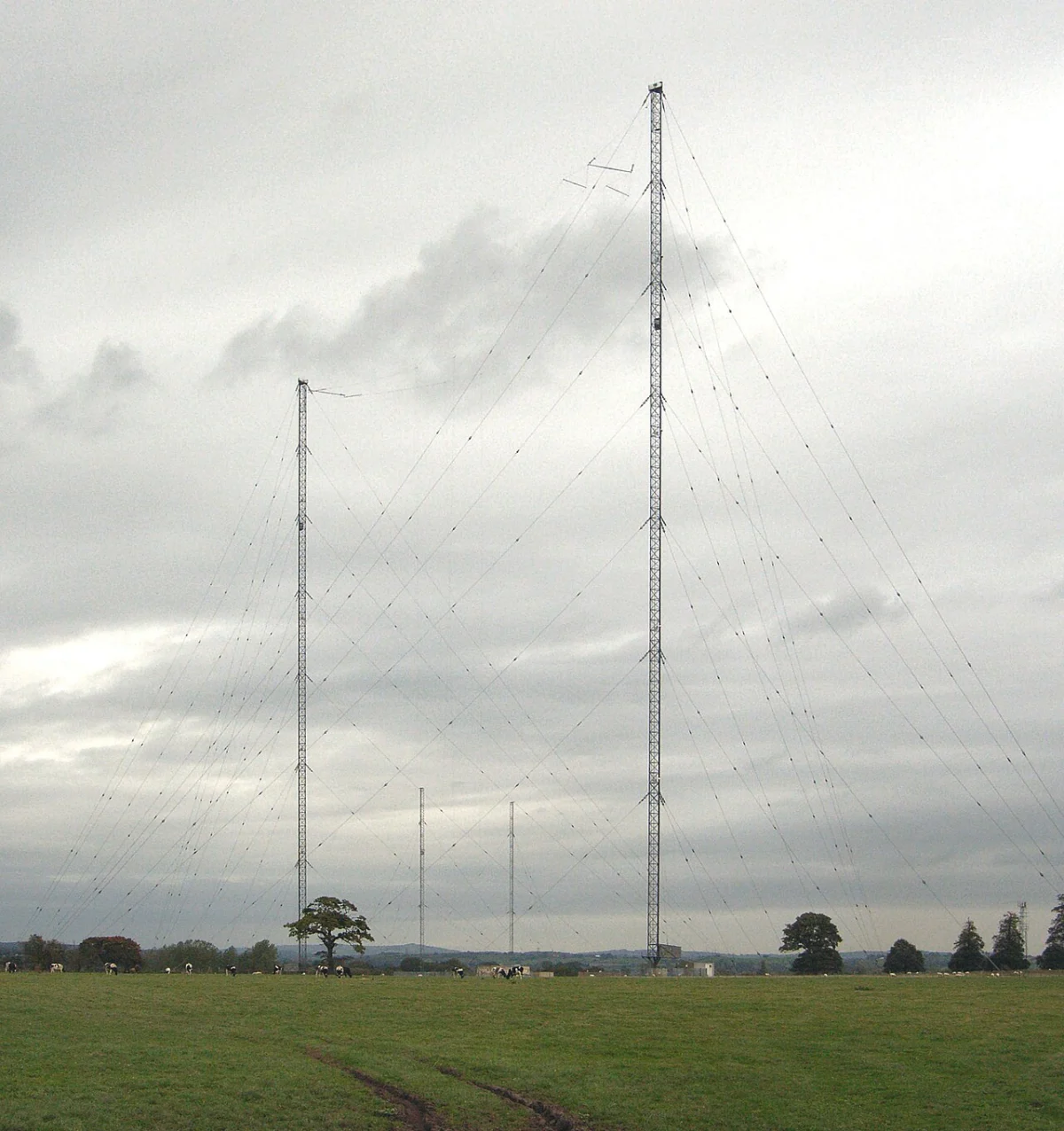
LONDON, UK – June 27, 2026 – A quiet yet profoundly significant moment in broadcasting history unfolded this morning as the British Broadcasting Corporation (BBC) ceased its transmissions of Radio 4 on the venerable 198 kHz Long Wave (LW) frequency. For many, this event passed unnoticed, a subtle shift in the ether. But for a dedicated community of radio enthusiasts, historians, and those who cherished its unique reach, it marks the definitive end of an era, concluding over a century of continuous broadcast on a band that once defined global communication.
The iconic Droitwich transmitter, a towering symbol of broadcast power for decades, now emits only a recorded message, a digital elegy announcing the service’s termination. This transitional message is expected to fall silent entirely in the near future, leaving a void that resonates far beyond the audible spectrum. The decision, driven by technical obsolescence, dwindling listenership, and the relentless march of digital progress, underscores a broader global trend away from traditional analogue broadcasting.
Main Facts: A Farewell to 198 kHz
The cessation of BBC Radio 4 on 198 kHz Long Wave at 00:00 BST on June 27, 2026, represents the final chapter in a broadcast legacy that began in the pioneering days of radio. This specific frequency, which delivered news, drama, and the famous Shipping Forecast across vast distances, has been a constant companion for generations of listeners, from remote British Isles communities to expatriates across Europe and mariners navigating distant seas.
The primary reason for the switch-off is pragmatic: the high-power transmitter tubes at the Droitwich facility, crucial for maintaining the immense reach of the Long Wave signal, are no longer serviceable. Spares are non-existent, and the cost of maintaining such an antiquated system for a diminishing audience has become economically unsustainable. The BBC’s official position cites the need to modernise its infrastructure and redirect resources towards digital platforms, where the vast majority of its audience now resides.
While the immediate impact on the general public may appear minimal in an age dominated by DAB, FM, and internet streaming, the emotional weight of this closure is considerable for those who understood its unique role. Long Wave was not merely a frequency; it was a lifeline, a cultural touchstone, and a testament to the enduring power of radio. Its demise joins a growing list of analogue services, including numerous Medium Wave (AM) stations, that have succumbed to technological advancements and changing listener habits, further signalling a significant shift in the landscape of broadcasting.
Chronology: A Century of Waves
The history of Long Wave broadcasting in the UK is inextricably linked with the very genesis of the BBC and the evolution of mass communication.
The Dawn of Broadcasting (1920s-1930s)
Long Wave emerged as a dominant force in the 1920s, a relic from the earliest days of high-power broadcasting. Its lower frequencies, typically covering 153 to 279 kHz, possessed the remarkable ability to travel enormous distances, especially via ground wave propagation, making it ideal for reaching a wide, often rural, audience in an era before extensive national networks.
The BBC’s first Long Wave transmissions began in the mid-1920s, initially on a wavelength of 1600 metres, equating to approximately 187.5 kHz. This early service, known as the BBC National Programme, aimed to provide a unified broadcast across the nascent United Kingdom. A series of international agreements, such as the Geneva and Lucerne Plans of the 1930s, which sought to rationalise broadcast frequencies across Europe, led to subsequent shifts. The BBC’s Long Wave frequency moved to 193 kHz, and then in 1934, it settled on 200 kHz (1500 metres), a frequency it would maintain for over half a century.
Wartime Resilience and Post-War Identity (1939-1980s)
During the Second World War, Long Wave proved invaluable. Its robust, long-distance signal made it resilient against localised bombing damage and jamming attempts, ensuring that vital news, government messages, and morale-boosting entertainment reached every corner of the nation and British forces abroad. It became a symbol of national unity and resilience.
In the post-war era, the BBC reorganised its domestic radio services. The 200 kHz Long Wave frequency became home to the popular Light Programme, a broad entertainment channel designed for mass appeal. By 1967, as part of significant reforms, the Light Programme evolved into BBC Radio 2, while the new BBC Radio 4 took over the more speech-based programming, including news, current affairs, drama, and documentaries, inheriting the Long Wave frequency.
Throughout the Cold War, the reliability of Long Wave took on an almost mythic quality. Its ability to penetrate deep into buildings and across vast distances made it a crucial part of civil defence planning. Anecdotes, perhaps apocryphal but illustrative of its perceived importance, circulated that British nuclear submarine captains would use the presence or absence of the BBC Long Wave signal to determine if a nuclear war had occurred, underscoring its role as a last-resort communication link. Furthermore, the 200 kHz signal was so stable and precisely controlled – a testament to the engineering at Droitwich – that it was once usable as an informal frequency standard, a beacon of accuracy for radio amateurs and scientists alike.
The Digital Shift and Gradual Decline (1980s-2020s)
The late 20th century brought new challenges and opportunities for broadcasting. The advent of FM radio offered superior audio quality and local programming, gradually eroding Long Wave’s dominance. In 1988, another frequency adjustment saw Radio 4’s Long Wave service shift slightly from 200 kHz to its final resting place at 198 kHz.
The true paradigm shift, however, came with the proliferation of digital technologies. Digital Audio Broadcasting (DAB) in the 1990s, followed by the internet revolution and the rise of streaming services and podcasts in the 21st century, fundamentally altered how people consumed audio content. These new platforms offered not only superior sound quality and an unprecedented breadth of choice but also on-demand access, rendering the unique advantages of Long Wave increasingly obsolete for most listeners. The BBC’s strategic focus naturally shifted towards these digital frontiers, leading to a series of reviews and eventual decisions to phase out its more costly analogue services. The closure of Radio 4 on Long Wave is the culmination of this decades-long transition.
Supporting Data: The Mechanics and the Audience
The decision to retire Long Wave broadcasting is underpinned by a confluence of technical, economic, and demographic factors.
The Technical Marvel and its Obsolescence
The Droitwich transmitting station, with its iconic masts, has been the heart of BBC Long Wave for nearly a century. Operating at significant power levels (historically up to 500 kW), it was designed to ensure a robust signal coverage across the British Isles and beyond. The physics of Long Wave propagation are fascinating: the low frequencies exhibit excellent ground wave characteristics, hugging the Earth’s curvature, allowing them to travel hundreds, even thousands, of kilometres without relying on atmospheric reflection (skywave), which is more variable. This made it incredibly reliable, especially during the day, unlike Medium Wave (AM) which often relies on skywave at night, leading to fading and interference.
However, this very power and reliability came at a cost. The enormous valves (vacuum tubes) required for such high-power amplification are bespoke, energy-intensive, and now, critically, irreplaceable. Manufacturing has long ceased, and the remaining stock of spares has been exhausted. Modern semiconductor technology, while efficient for lower power applications, cannot replicate the sheer output of these legacy systems without prohibitive costs and a complete redesign of the entire transmitter infrastructure.
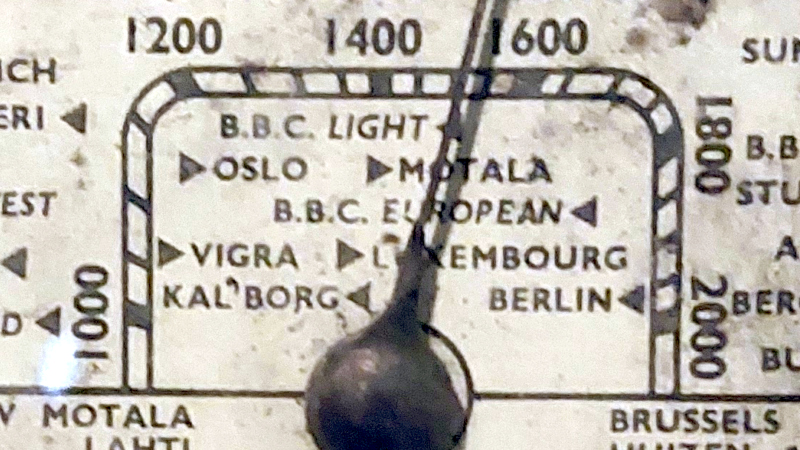
Furthermore, the environment for analogue radio has become increasingly challenging. The proliferation of switch-mode power supplies in everyday electronics – from phone chargers to LED lights and solar inverters – generates broadband radio frequency interference. This "electronic smog" manifests as an irritating buzzing or static on analogue radio receivers, particularly noticeable on Long Wave and Medium Wave, degrading the listening experience and pushing listeners towards clearer digital alternatives.
The Evolving Audience Landscape
The audience for Long Wave Radio 4 had become a niche demographic. While precise, up-to-date figures are scarce, it’s clear that listenership had dwindled significantly over the past two decades. The "certain breed of radio enthusiast" mentioned in the original report refers to those who appreciated the technical marvel of DXing (listening to distant stations) on this band, or simply valued the analogue purity.
However, the most loyal listeners were often older demographics, accustomed to traditional radio sets, or individuals in specific circumstances:
- Remote Areas: Pockets of the UK with poor FM or DAB coverage might still rely on LW.
- Maritime Community: The Shipping Forecast, a cultural institution, was originally tailored for deep-sea fishermen and mariners, who relied on LW for its robust signal far out at sea. While now available on FM, DAB, and online, many still preferred the traditional method.
- Expats in Europe: British citizens living in parts of continental Europe could often reliably pick up the Droitwich signal, providing a vital link to home.
- Unique Environments: The long wavelengths could penetrate tunnels and certain types of buildings more effectively than higher frequency FM or digital signals, offering continuous reception in challenging locations.
Despite these dedicated listeners, the overall trend is undeniable. The vast majority of the population now accesses BBC Radio 4 via FM, DAB, Freeview, Freesat, or the hugely popular BBC Sounds app and website, which offer live streaming and extensive on-demand content. The BBC’s internal analyses would have undoubtedly shown that the cost per listener for Long Wave was disproportionately high compared to its digital counterparts.
Official Responses: A Strategic Imperative
The BBC’s decision to discontinue Long Wave transmissions has been framed as a necessary step in its ongoing commitment to modernisation and serving its audience effectively in the 21st century.
In official statements preceding the switch-off, a BBC spokesperson emphasised that this was a "difficult but essential decision," necessitated by the aging infrastructure and the overwhelming shift in listener habits. "We understand that this news will be met with sadness by some of our loyal Long Wave listeners," the statement read, "but the technology supporting these broadcasts is incredibly old and can no longer be maintained. Our priority is to ensure that Radio 4’s much-loved programmes, including the Shipping Forecast, remain accessible to everyone through modern, reliable platforms."
The BBC has actively encouraged listeners to transition to alternative reception methods, highlighting the availability of Radio 4 on FM (92-95 MHz), DAB digital radio, Freeview (channel 704), Freesat (channel 704), Sky (channel 0104), and most notably, the BBC Sounds app and website. The recorded message now broadcast from Droitwich serves as a final, direct instruction to listeners on how to continue accessing the service via these digital avenues. This approach reflects a broader strategy to consolidate resources on platforms that offer greater flexibility, better audio quality, and a wider range of content, including podcasts and on-demand programmes.
Industry experts and broadcasting historians have largely acknowledged the inevitability of the move. Dr. Sarah Jones, a media studies professor, commented, "While it’s a nostalgic loss, particularly for those of us who remember a world dominated by AM/LW radio, the BBC’s decision is a pragmatic one. Maintaining such infrastructure for a dwindling, niche audience is no longer justifiable in an era of constrained budgets and rapid technological evolution. The true challenge now is ensuring that the digital transition doesn’t leave any segment of the audience behind."
Public reaction, while not widespread, has been characterised by a mixture of wistful acceptance and a degree of lament. For many, it’s a tangible severing of a link to their past. The Hackaday writer’s personal recollection of discovering The Hitchhiker’s Guide to the Galaxy on 200 kHz Long Wave in an Oxfordshire farmhouse nearly fifty years ago perfectly encapsulates this sentiment. It speaks to the deep, personal connections forged through this medium, a reminder that radio was not just a utility, but a source of wonder, education, and cultural identity. The final, poignant sign-off, "So long, Droitwich, and thanks for all the fish," borrowed from the very programme that sparked that early fascination, serves as a fitting, bittersweet epitaph.
Implications: A New Chapter for Broadcasting
The cessation of BBC Radio 4 Long Wave broadcasts carries significant implications, not just for the BBC but for the broader landscape of radio and cultural heritage.
For the BBC and its Digital Future
This move solidifies the BBC’s commitment to a digital-first strategy. By divesting from expensive, aging analogue infrastructure, the corporation frees up resources that can be reinvested in enhancing its digital platforms, improving content, and exploring new interactive audio experiences. It streamlines operations and aligns the BBC with contemporary media consumption patterns, ensuring its relevance in an increasingly fragmented media environment. Furthermore, the closure of high-power analogue transmitters contributes to the BBC’s environmental goals by significantly reducing energy consumption.
The End of an Accessible Frequency Standard
For the amateur radio community and those interested in precise time and frequency standards, the loss of the atomic-controlled Droitwich signal at 198 kHz is also notable. While not its primary purpose, the extreme stability of the transmission made it a useful, easily accessible reference. This niche utility, however, was never a sufficient justification for the maintenance of such a vast and costly system.
Cultural and Historical Resonance
The most profound implication is cultural. Long Wave represented a tangible link to broadcasting’s pioneering age. Its unique propagation characteristics meant it reached places and people that other services couldn’t, creating a shared experience across geographical divides. The Shipping Forecast, in particular, transcended its practical purpose to become a beloved piece of British cultural furniture, its rhythmic pronouncements a soothing constant in a changing world. While the forecast continues on other platforms, the symbolic connection to the Long Wave "voice of the sea" will be missed by many. The nuclear submarine anecdote, even if apocryphal, underscores the deep-seated trust and reliance placed on this particular signal in times of national crisis. Its silence severs a small but significant thread in the tapestry of British social history.
The Future of the Droitwich Site
The future of the Droitwich transmitting station itself remains a point of interest. While the Long Wave transmitter is now silent, the site still hosts other broadcast activities (e.g., Medium Wave transmissions for local radio, and potentially other communications infrastructure). However, the iconic, towering masts that have dominated the Worcestershire skyline for generations, symbols of broadcast power and reach, face an uncertain future. While some may hope for preservation as a historical landmark, the economic realities of maintaining such structures without their primary purpose often lead to eventual decommissioning and even demolition.
A Harbinger for Global Analogue Radio
The BBC’s decision also serves as a potent harbinger for other Long Wave and Medium Wave broadcasters globally. Many European countries still maintain LW services, but they face similar challenges of aging equipment, declining audiences, and increasing interference. The trend is clear: the analogue airwaves are steadily quieting, making way for the all-encompassing digital future. While the charm and nostalgia of traditional radio will forever hold a place in collective memory, the pragmatic realities of technology, economics, and listener preferences dictate that the future of broadcasting is unequivocally digital.
As the recorded message at Droitwich eventually falls silent, a chapter closes on a remarkable era. The 198 kHz frequency will become a historical footnote, a memory for those who once tuned in. But the legacy of Long Wave – its reach, its reliability, and its profound cultural impact – will endure, a testament to the ingenuity of early radio engineers and the enduring power of sound to connect humanity across time and distance.