Silent Epidemic: The Discovery of Transmissible Cancer in Freshwater Fish
In a groundbreaking study that challenges our fundamental understanding of oncology and evolutionary biology, researchers from the University of Vermont (UVM) have identified a rare and startling phenomenon: a transmissible form of cancer spreading among brown bullhead catfish (Ameiurus nebulosus) in the lakes of New England and Canada.
While transmissible cancers—malignancies where tumor cells themselves act as infectious agents—have been documented in a handful of species, this discovery marks the first time such a disease has been identified in a freshwater animal. The findings, published in the journal Nature, suggest that these mysterious, dark skin lesions are not merely the result of local environmental pollutants or viral infections, but a contagious biological entity that behaves more like a parasite than a conventional tumor.
The Core Discovery: A Biological Anomaly
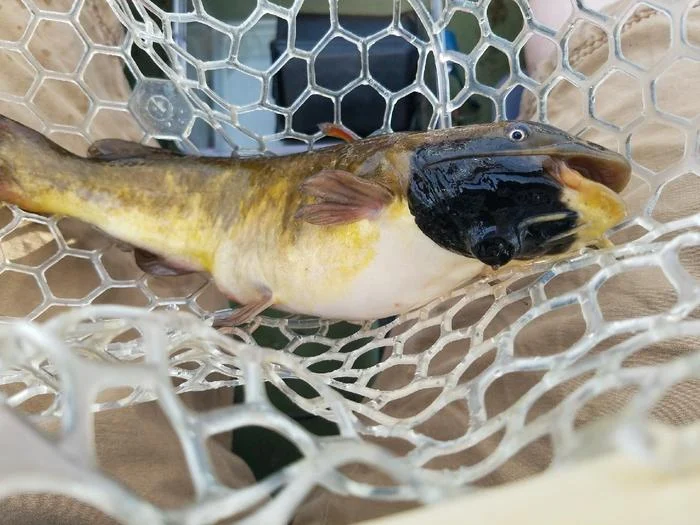
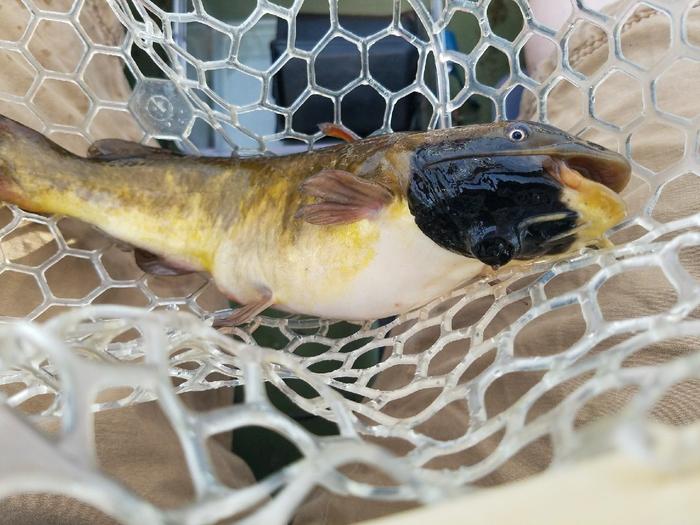
For years, anglers and biologists operating near the Vermont-Quebec border observed a troubling trend in Lake Memphremagog: brown bullhead catfish appearing with raised, black, irregular skin patches. Initial hypotheses centered on environmental stressors, such as heavy metal contamination or industrial runoff, given the species’ role as a "sentinel" for water quality.
However, after conducting a rigorous genomic analysis, the research team—led by Julie Dragon, PhD, of the UVM Cancer Center—realized they were dealing with something far more complex than simple chemical-induced lesions. When they compared the DNA of the tumors against the host fish, they discovered that the tumor cells were genetically distinct from the fish they inhabited. Furthermore, the tumor cells were strikingly similar to one another across different individual fish.
"Hundreds of thousands of genetic variants are shared among tumor samples but absent from host fish," the research team noted in their report, Brown bullhead catfish melanoma represents a novel transmissible cancer. "This is the signature of a clonally transmissible cancer."
In essence, the cancer is "infectious." The tumor cells are capable of breaking away from a primary host, surviving in the aquatic environment, and establishing themselves in a new, healthy host—a feat of biological survival that has, until now, only been observed in a tiny fraction of the animal kingdom.
A Chronology of Investigation
The timeline of this discovery reveals a shift from local concern to global scientific interest:
- 2012: Anglers and environmental biologists begin reporting an alarming increase in visible black lesions on brown bullhead catfish in Lake Memphremagog.
- 2014: Prevalence rates spike; nearly one in three fish sampled displays evidence of the disfiguring lesions.
- 2015–2025: A multidisciplinary team, including experts from UVM’s Larner College of Medicine, the University of Cambridge, and the U.S. Geological Survey (USGS), initiates a decade-long "deep dive" into the pathology of the disease.
- 2026: The team publishes their findings in Nature, officially classifying the disease as a transmissible melanoma and confirming its presence in other bodies of water across New England and Canada.
The investigation required a cross-border effort, involving scientists who meticulously sampled tissue from 17 fish to map the genomic landscape of the cancer. By moving beyond traditional virus-hunting methods, the researchers successfully identified the cancer as a cell-line that has essentially evolved into its own parasitic species.
Supporting Data: Why This Changes Everything
To date, only three other types of transmissible cancers have been definitively identified in the wild:
- Tasmanian Devil Facial Tumor Disease (DFTD): A devastating, contagious facial cancer that has decimated wild populations of the marsupial.
- Canine Transmissible Venereal Tumor (CTVT): A stable, ancient cancer that has coexisted with dogs for thousands of years.
- Transmissible Leukemia-like Diseases: Found in bivalve mollusks, including clams and mussels.
The bullhead catfish discovery is the fourth instance and the first within a freshwater vertebrate. The data suggests that the cancer may be linked to the spawning habits of the fish. According to Mark Henderson, PhD, a co-lead author of the study and a fish biologist at UVM’s Rubenstein School of Environment and Natural Resources, the disease appears primarily in larger, sexually mature fish.
"Maybe some part of spawning behavior leads to the spreading of the cancer between animals," Henderson suggested.
Furthermore, the team examined the role of arsenic. While the cancer itself is the infectious agent, the environmental context is significant. The researchers found elevated levels of arsenic in the tumor cells, which correlates with high natural concentrations of the element in the soil surrounding the affected lakes in Vermont and Maine. While arsenic may not be the cause of the cancer, it may suppress the immune systems of the bullhead catfish, creating a "biological gateway" that allows the transmissible cancer to take hold more easily.
Official Responses and Public Safety
Following the publication of the study, the research team was quick to address public concerns regarding the safety of the water and the fish populations.
"The cancer cells cannot infect or survive in another species," stated Dr. Dragon. For the human population, there is no known risk; the disease is strictly confined to the biological pathways of the brown bullhead catfish. The researchers emphasized that the fish are safe to handle for research purposes, and the discovery is an ecological issue rather than a public health crisis.
The Vermont Department of Fish & Wildlife, which assisted in the sampling and analysis, has expressed interest in expanding the surveillance of regional lakes. The goal is to move from reactive observation to proactive management, helping to determine if the disease is localized to specific watersheds or if it is a widespread, hidden epidemic.
Scientific and Evolutionary Implications
The implications of this discovery reach far beyond the shores of Lake Memphremagog. By studying how these cancer cells survive and migrate outside of an original host, researchers hope to uncover the "boundaries" that typically prevent cancer from spreading.
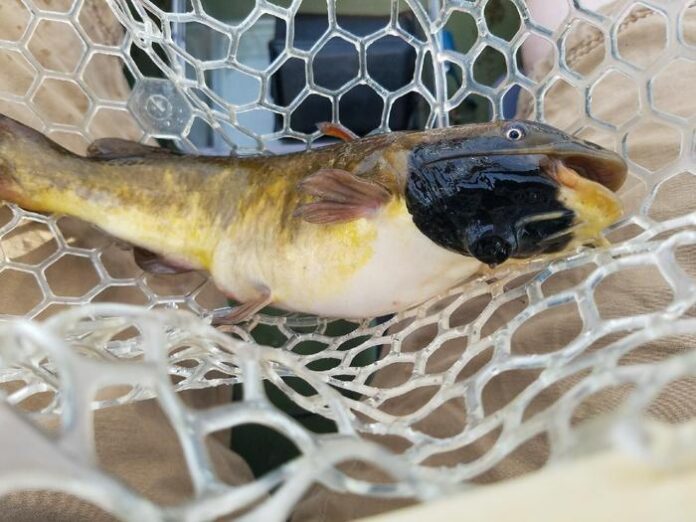
"By studying how cancers survive and spread outside their original host, we can learn a great deal about what keeps cancers contained—and what happens when those boundaries break down," Dr. Dragon explained. "These fish provide an opportunity to look at the evolution of cancer."
Understanding the "Rare" Nature of Transmission
One of the most provocative questions raised by the study is whether transmissible cancers are as rare as previously thought. The scientific community has historically viewed transmissible cancers as biological "black swans"—extreme, rare events. However, Dr. Dragon’s team suggests a more unsettling possibility: these cancers may be common, but they go undetected because they are not being actively monitored.
The researchers are currently expanding their investigation into ponds and rivers in Massachusetts to see if the phenomenon is more widespread than current data suggests.
Ecological Impact: A Balancing Act
The ecological trajectory of this cancer remains uncertain. In the case of the Tasmanian devil, the cancer was nearly catastrophic, resulting in massive population declines. Conversely, the dog-based tumor has existed for millennia without wiping out its host.
For the brown bullhead catfish, the outlook is currently somewhere in the middle. Heavily diseased fish have been observed surviving for years, suggesting that the cancer may not be immediately lethal. However, the long-term impact on the population’s reproductive health and overall biodiversity remains a top priority for ongoing research.
Conclusion: The Frontier of Oncology
The discovery of a transmissible melanoma in freshwater catfish serves as a humbling reminder of the complexity of the natural world. It bridges the gap between traditional pathology and evolutionary ecology, suggesting that cancer is not just a breakdown of a single organism’s biology, but an entity capable of its own independent existence.
As the scientific community continues to analyze the genomic data provided by the UVM team, the focus will undoubtedly shift toward understanding the mechanisms of cell transfer and the environmental factors that facilitate such a rare biological phenomenon. For now, the brown bullhead catfish remains a subject of intense scrutiny, acting as a sentinel for a new era of cancer research—one that asks not just how cancer kills, but how it travels.