The Expanding Frontier: AWS Unveils Major IoT, Identity, and Generative AI Advancements
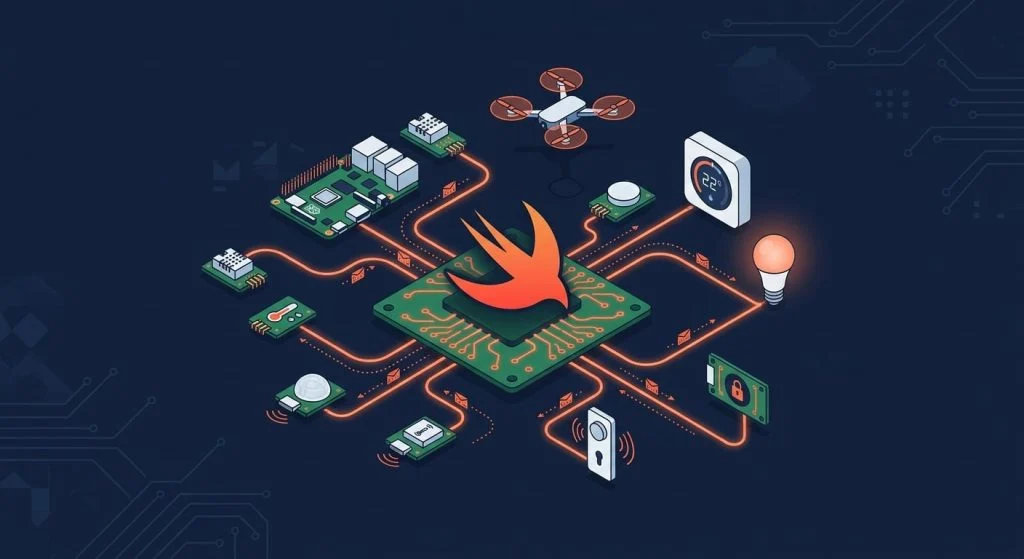
The cloud computing landscape is undergoing a profound transformation as AWS continues to bridge the gap between high-level enterprise infrastructure and the burgeoning ecosystem of edge-based development. This week, the industry witnessed a significant milestone with the general availability of the AWS IoT Device SDK for Swift, signaling a major shift in how developers can deploy sophisticated applications across macOS, iOS, tvOS, and Linux.
Beyond the realm of IoT, AWS has rolled out a series of high-impact updates—ranging from multi-Region replication for Amazon Cognito to the integration of cutting-edge OpenAI models into Amazon Bedrock. These developments collectively underscore a strategic push toward greater resilience, flexibility, and autonomous capability in the cloud.
The Rise of Swift at the Edge
The general availability of the AWS IoT Device SDK for Swift represents more than just a new tool; it is a validation of Swift’s maturation as a robust, production-ready language for server-side and edge computing.
Why Swift Matters for IoT
For years, Swift was largely pigeonholed as an application language for Apple’s proprietary ecosystems. However, through the efforts of the Swift Server Workgroup (SSWG), the language has evolved to support high-performance server-side workloads. By bringing MQTT 5 connectivity, Device Shadow, Jobs, and fleet provisioning to the Swift ecosystem, AWS is effectively enabling developers to write code that transitions seamlessly from the cloud to the physical edge.
The Broader Trend: WendyOS and Beyond
This release does not exist in a vacuum. It aligns with a broader industry trend of "Swift at the Edge." Platforms like WendyOS—an open-source operating system designed for physical AI—are leveraging Swift to deploy apps to hardware like the NVIDIA Jetson and Raspberry Pi. The ability to use a single language across the entire stack, from the backend cloud architecture to the autonomous edge device, significantly lowers the barrier to entry for developers and reduces the complexity of maintaining multi-language codebases.
Headline Announcements: Driving Enterprise Efficiency
1. Amazon RDS for SQL Server: Bring Your Own Media (BYOM)
The migration of legacy enterprise workloads remains a primary concern for IT decision-makers. AWS has addressed this by introducing "Bring Your Own Media" (BYOM) support for Amazon RDS for SQL Server.
- The Mechanism: Customers migrating on-premises SQL Server applications can now reuse their existing Microsoft SQL Server licenses, provided they have the necessary Software Assurance.
- Compliance and Governance: Through integration with AWS License Manager, organizations can track license usage in real-time, ensuring compliance while drastically reducing the total cost of ownership (TCO) during migration. This change effectively removes a significant financial hurdle for companies looking to move monolithic databases to the cloud.
2. Amazon Cognito: Multi-Region Replication
In an era where uptime is synonymous with revenue, Amazon Cognito’s new multi-Region replication feature provides a critical layer of disaster recovery.
- Near Real-Time Synchronization: Developers can now sync user and machine identity data—including credentials, pool configurations, and federation setups—to a secondary "standby" Region.
- Operational Resilience: Should a primary Region face an outage, users do not need to re-authenticate. This seamless failover capability ensures that authentication services remain highly available, a necessity for modern, global-scale applications.
- Accessibility: This feature is currently available as an add-on for user pools in Essentials or Plus tiers across 16 AWS Regions.
3. OpenAI’s GPT-5 Series and Codex on Amazon Bedrock
Perhaps the most anticipated update of the week is the general availability of GPT-5.5, GPT-5.4, and the Codex model on Amazon Bedrock.
- Advanced Agentic Capabilities: GPT-5.5 stands out as the most powerful iteration yet, specifically engineered for autonomous tasks, data analysis, and complex coding workflows.
- The Codex Ecosystem: The introduction of Codex through the Codex App and CLI, alongside IDE integrations for Visual Studio Code, JetBrains, and Xcode, empowers developers to utilize AI as a force multiplier for software development.
- Security and Governance: By delivering these models via Amazon Bedrock, AWS ensures that enterprises can leverage state-of-the-art AI without sacrificing data privacy or operational control. Pricing parity with OpenAI’s first-party rates ensures that AWS customers can innovate without financial penalty.
Chronology of Technical Evolution
The pace of innovation at AWS is relentless. Looking back at the trajectory over the last quarter, we can identify a clear pattern of "Integrated Intelligence."
- Early Q2: Focus shifted toward enhancing server-side infrastructure and developer productivity tools.
- Mid Q2: The focus transitioned to high-availability identity management, ensuring that as cloud architectures became more complex, they remained secure and accessible.
- Current Week: The focus has crystallized into "Edge-to-Cloud Integration." By bridging the gap between Swift-based edge devices and generative AI models on Bedrock, AWS is providing the infrastructure for a new generation of autonomous, AI-driven IoT devices.
Supporting Data and Implications
The Economic Impact
For enterprises, the combination of BYOM for RDS and the deployment of advanced AI models represents a significant pivot in budget allocation. Companies are no longer paying for "cloud migration" as an isolated cost; they are paying for "cloud transformation."
- Cost Reduction: The BYOM program allows enterprises to leverage existing capital expenditures (CapEx) in the form of software licenses, turning them into cloud-ready assets.
- Developer Velocity: The adoption of Swift for IoT and the availability of Codex in IDEs suggest a future where developer productivity is measured by the number of autonomous agents managed rather than lines of code written.
The Security Paradigm
With multi-Region Cognito replication, the security perimeter for identity is effectively doubled. Organizations that previously struggled with the complexity of managing global authentication now have a standardized, automated pathway. This reduces the human error associated with disaster recovery planning.
Official Responses and Industry Outlook
While AWS has not issued a singular manifesto, the sentiment from the development community is clear: the integration of high-level AI and low-level edge connectivity is the "holy grail" of modern architecture.

"The maturity of Swift on the server and its move toward the edge is a testament to the community’s demand for a unified development language," says a senior developer within the Swift Server Workgroup. "Combined with the power of Bedrock, we are looking at a future where the device in your hand and the server in the cloud are speaking the same language, powered by the same intelligence."
Strategic Implications: What Should Builders Do?
For architects and developers, these updates offer three immediate action items:
- Assess License Portability: If you are currently running SQL Server on-premises, initiate an audit of your Software Assurance status to see if you qualify for the BYOM program on RDS.
- Evaluate Identity Resiliency: If your application requires high availability, audit your current Cognito setup and consider the transition to multi-Region replication to mitigate the risk of regional outages.
- Integrate AI-Driven Coding: With Codex now available on Bedrock, integrate these models into your IDEs to streamline your CI/CD pipelines and improve developer output.
Conclusion: The Path Forward
The convergence of these technologies—Swift for edge devices, enhanced identity management, and the world’s most powerful LLMs—marks a new chapter in cloud computing. As we look ahead, the boundary between "the cloud" and "the device" will continue to blur, replaced by an integrated, intelligent, and highly resilient fabric.
As we have seen this week, AWS is not merely keeping pace with these trends; it is providing the scaffolding upon which the next decade of digital innovation will be built. Whether you are a systems engineer optimizing database costs or a software developer crafting the next generation of AI-driven IoT applications, the tools released this week provide the necessary leverage to build faster, more reliably, and more securely than ever before.
Stay tuned for next week’s roundup, as the industry continues to move at breakneck speed toward a more connected future.