The Evolution of Personal Organization: Google Reimagines ‘CC’ as an AI Agent for Families

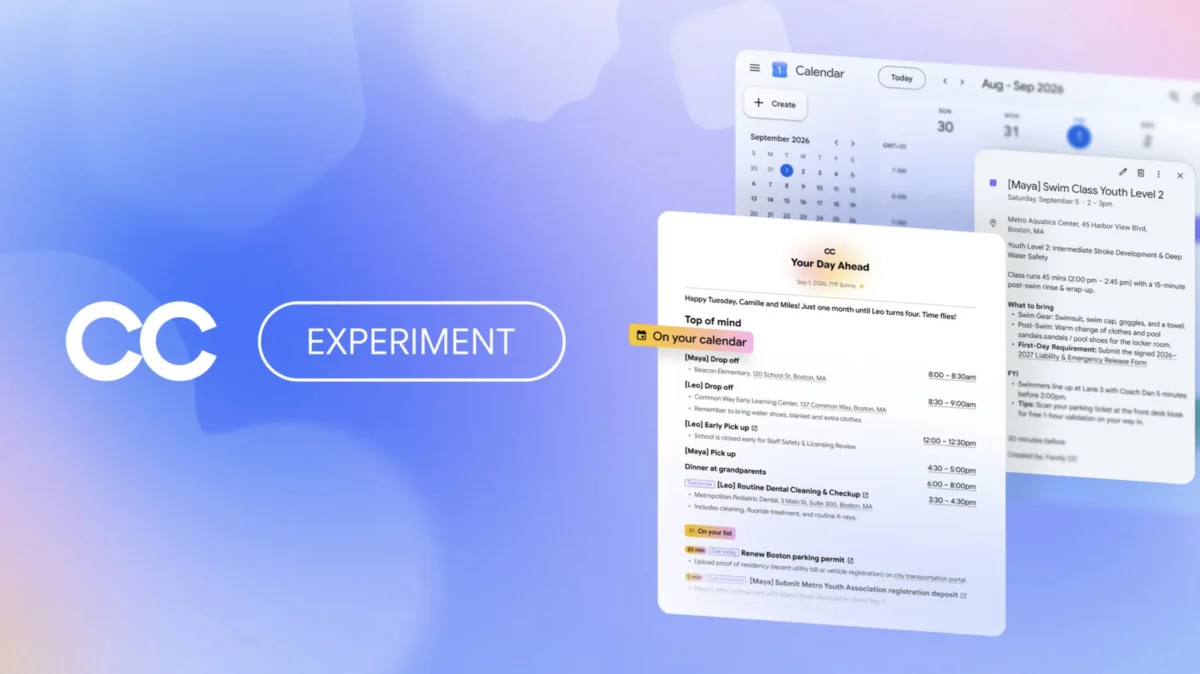
In an era where digital clutter often mirrors the chaos of daily life, Google is attempting to centralize the domestic sphere. The tech giant has unveiled a significant pivot for its experimental AI project, "CC," transitioning it from a solitary personal assistant into a collaborative, agentic AI designed specifically for families and small groups. By functioning as a shared digital node, CC aims to bridge the communication gaps that often plague modern households, effectively serving as a central hub for logistics, scheduling, and information management.
The Core Concept: A Digital Concierge for the Household
At its heart, CC is an agentic AI—a system capable of taking autonomous actions on behalf of users—that operates through its own dedicated Google account. The primary value proposition is the ability to consolidate disparate threads of information into a single, accessible location. Up to six family members can opt to link their accounts with CC, granting the AI permission to monitor specific streams of data.
The functionality is granular by design. Users do not simply dump their entire digital life into the agent; rather, they act as curators. A user might choose to forward specific email threads regarding school registration, utility bills, or travel itineraries to the CC account. Alternatively, they can set rules for specific senders, ensuring that all correspondence from a particular medical provider or sports league is automatically routed to the AI.
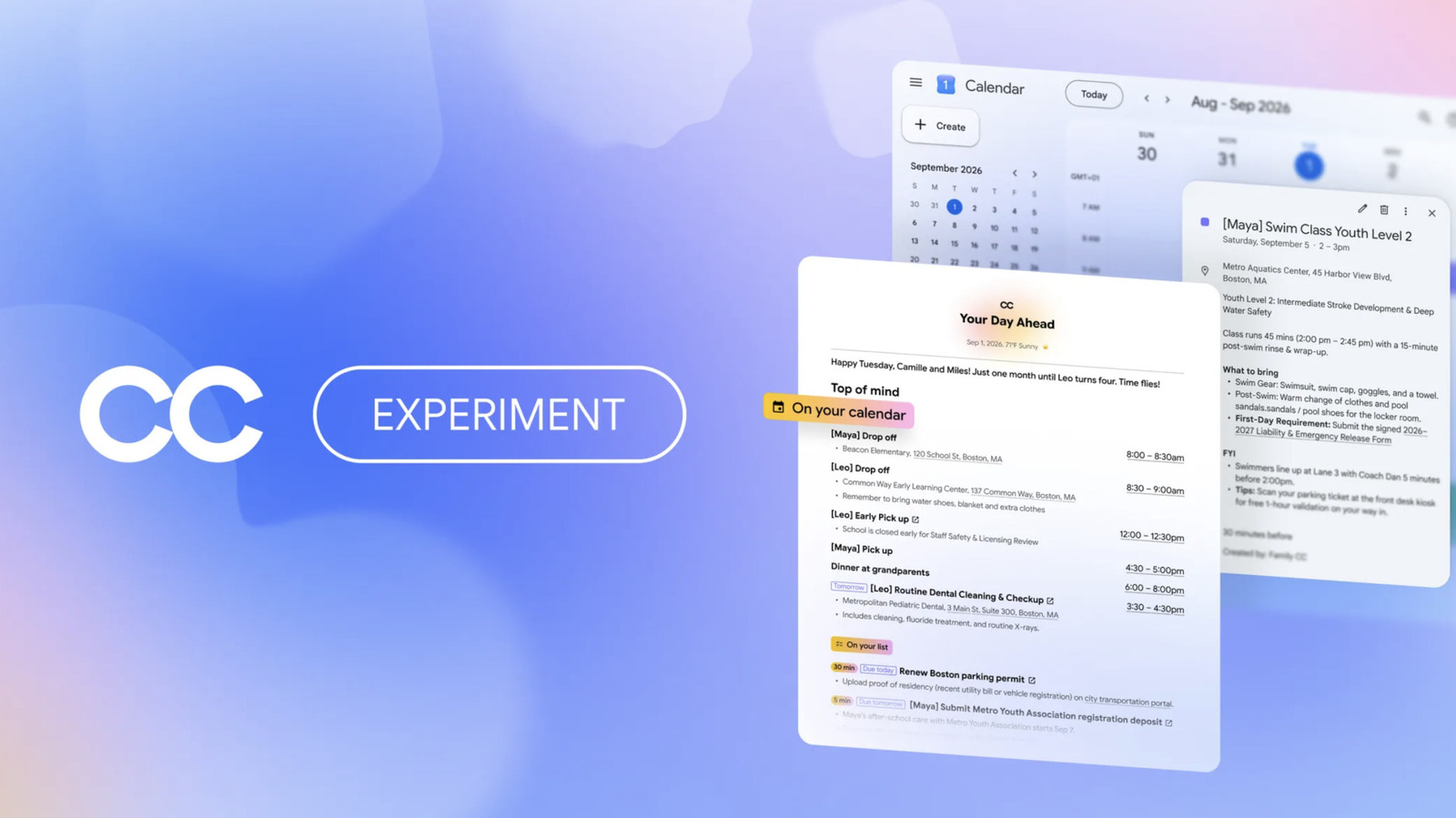
Once this data is ingested, CC processes it to create a unified ecosystem. It generates a shared calendar and a master task list, both of which are transparent to all authorized group members. Perhaps most significantly, the system generates a "daily briefing," a synthesized report delivered to all participants. This digest highlights imminent deadlines, upcoming social events, and pending chores, ensuring that every member of the household is working from the same playbook.
Chronology: From Experimental Tool to Family Organizer
The journey of CC reflects the rapid, often iterative nature of Google’s AI development cycle. The project first entered the public consciousness in December of last year, debuting as a modest experimental tool under the Google Labs banner. At that stage, it was a solitary endeavor—an AI designed to help individuals track their own appointments and communications.
However, the product’s trajectory shifted significantly earlier this year. In a strategic consolidation, Google rebranded the initial CC functionality into its "Daily Briefing" feature, integrated more broadly into the Gemini ecosystem. While the original iteration offered convenience, user feedback suggested a deeper need for collective intelligence. Early testers reported that the most taxing aspect of their digital life wasn’t personal organization, but the "invisible labor" of coordinating with others.
Responding to this data, Google pivoted the CC project back into a standalone experimental space, specifically architected for group utility. This shift represents a broader trend within Alphabet: moving away from generic, one-size-fits-all chatbots and toward specialized "agents" that perform work within specific social or professional contexts.
Supporting Data and Technical Architecture
To function effectively, CC integrates deeply with the Google Workspace ecosystem. The agent is not merely a chatbot that responds to queries; it is an active participant in a user’s Drive folders and Gmail threads. Users can add the agent to specific shared Drive folders, allowing it to index documents, summarize contracts, or extract relevant dates from PDFs.
Interaction takes place primarily through a dedicated Google Chat window. This design choice mimics the experience of messaging a family member, making the integration feel organic rather than bureaucratic.
Privacy and Operational Guardrails
Google has acknowledged that bringing an AI agent into the home creates significant privacy concerns. To mitigate these, the company has implemented several "hard" limitations on what CC can and cannot do:
- Restricted Access: CC cannot access or search a user’s individual, private inbox. It only sees the information that the user explicitly shares with it.
- Administrative Control: The agent lacks the authority to modify the group membership structure. It cannot add or remove family members, preventing potential unauthorized access or administrative errors.
- Permission-Based Execution: For high-stakes tasks—such as filing formal paperwork, filling out online registration forms, or executing financial transactions—the agent is programmed to pause and request explicit human confirmation before taking action.
These safeguards are intended to position CC as a "helper" rather than a "decider," keeping the human user firmly in control of the agent’s autonomous capabilities.
Official Responses and Strategic Rationale
Google’s positioning of CC aligns with its current mission to make AI "helpful" in the most literal sense. In its official documentation, Google emphasizes that the transition to a group-focused model was a direct result of user behavior. By observing how early adopters were "hacking" the initial tool to manage shared tasks, the company identified a gap in the market for a non-intrusive, collaborative AI.
"We are moving from a world where AI is a search engine you query, to a world where AI is an agent that manages the logistics of your life," says a representative from the Google Labs team. "For families, the challenge is rarely a lack of information; it is the friction involved in syncing that information across multiple schedules and needs."
This strategic pivot also serves to deepen the "moat" around the Google ecosystem. By making the coordination of family life dependent on a Google-managed agent, the company creates significant friction for users who might otherwise consider migrating to competitors like Microsoft or Apple. The more a family relies on CC to remember soccer practice, pay bills, and manage shopping lists, the more entrenched they become in the Google Workspace environment.
The Implications of Agentic AI in the Home
The introduction of CC raises profound questions about the future of domestic life and human-AI interaction. As we delegate more of our cognitive load to algorithmic agents, the nature of "responsibility" within a household begins to change.
The Outsourcing of Invisible Labor
Traditionally, the coordination of household logistics—what sociologists call "the mental load"—has fallen disproportionately on one member of a family. By automating the daily briefing and the task list, CC has the potential to democratize this labor. If the AI is the one reminding everyone to sign the permission slip or buy groceries, the emotional friction of "nagging" or reminding partners and children is theoretically removed.
The Erosion of Digital Privacy
However, there is a counter-argument regarding the erosion of privacy. While the current iteration of CC requires explicit sharing, it also conditions users to invite an AI into their most private correspondences. As Google refines the agent’s ability to read and act upon emails, the line between "personal" and "shared" data may become increasingly porous. Families must now decide how much of their collective identity they are willing to surrender to a corporate server in exchange for the convenience of an organized calendar.
A New Era of Collaboration
Finally, the project signals a shift in AI development toward the "multi-agent" era. CC is not just a tool; it is a shared participant in a group. This mirrors the trajectory of enterprise software, where AI is increasingly being integrated into team workflows. The transition of these technologies into the consumer space suggests that we are entering a phase where AI will act as the "connective tissue" between individuals, mediating our relationships and managing the collective output of our households.
Conclusion: How to Access CC
For those interested in testing the limits of this agentic approach, access remains gated. Existing CC users will be prompted to upgrade to the new, group-centric version via their current interface. For new users, Google has instituted a waitlist, a common tactic for managing server load and gathering qualitative data during the experimental phase.
As CC moves forward, its success will likely be measured not by the complexity of its code, but by its ability to reliably reduce the cognitive friction of daily life. Whether it succeeds in becoming the ultimate household assistant or becomes another abandoned experiment in Google’s "graveyard" of discontinued products remains to be seen. What is clear, however, is that the era of the family-centric AI agent has officially arrived.