The Eukaryotic Enigma: New Research Rewrites the Origins of Complex Life
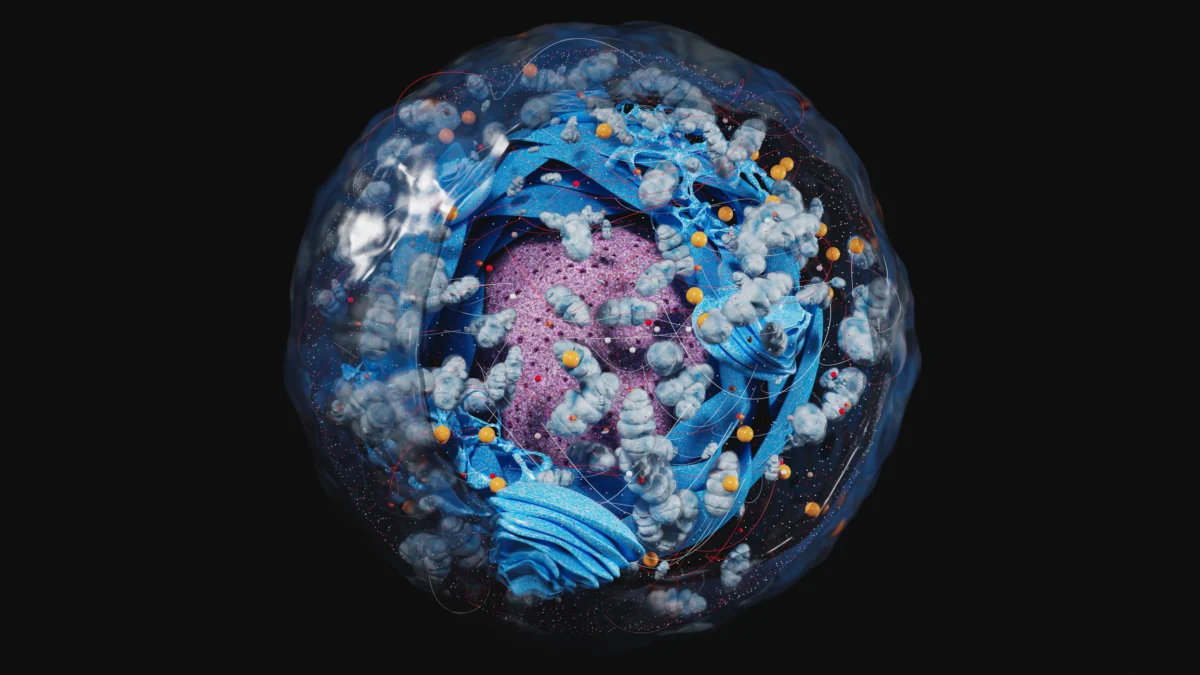
For billions of years, the Earth was dominated by the simple, uniform lives of prokaryotes—bacteria and archaea. Yet, somewhere along the timeline of our planet’s history, a radical transformation occurred. Simple cells fused, specialized, and grew in complexity, eventually giving rise to the eukaryotic cell. These cells, defined by their internal compartments—the nucleus, mitochondria, and specialized organelles—are the building blocks of every plant, animal, fungus, and protist on Earth.
For decades, the scientific community has held a relatively straightforward "two-protagonist" narrative to explain this momentous leap: a symbiotic union between an archaeon and a bacterium. However, a groundbreaking study published in the journal Nature by researchers at the Institute for Research in Biomedicine (IRB Barcelona) and the Barcelona Supercomputing Center (BSC-CNS) suggests that this story is far too simple. By leveraging the immense power of modern supercomputing, the research team has unveiled a much more crowded, collaborative, and chaotic evolutionary stage than previously imagined.
The Shift in Paradigm: Beyond the Two-Player Theory
The traditional model of "eukaryogenesis" has long focused on a singular, transformative event: the acquisition of the mitochondrion. In this scenario, an archaeal host cell engulfed an alphaproteobacterium, which then evolved into the mitochondrion. This symbiotic alliance supposedly provided the energy surplus required for the host cell to grow in size and complexity.
While the new study, titled “Gene ancestries reveal diverse microbial associations during eukaryogenesis,” does not dispute the vital importance of the mitochondrion, it fundamentally rethinks the timeline and the cast of characters involved. Lead researcher Toni Gabaldón, PhD, an ICREA researcher at IRB Barcelona and the BSC-CNS, argues that the emergence of complex cells was not a single, abrupt encounter. Instead, it was a long, drawn-out, and multifaceted process of "social" interaction between various microorganisms occurring over millions of years.
"For a long time, we have explained the origin of complex cells as a story with two main protagonists," Gabaldón explained. "Our study suggests that this narrative is incomplete and that there were more actors on stage, including other bacterial groups and giant viruses that may have facilitated gene exchange."
Chronology of a Molecular Evolution
Tracing events that occurred roughly two billion years ago—when no fossils exist and microscopic life left no skeletons—is a task that requires the precision of "computational molecular archaeology." Because direct evidence has long since vanished, the team turned to the only remaining record: the genomes of modern organisms.
The Last Eukaryotic Common Ancestor (LECA)
The research began with a rigorous reconstruction of the LECA—the ancestral cell from which all modern eukaryotes descended. By mapping the proteome of the LECA and identifying the phylogenetic origins of each protein family, the team created a blueprint of what this ancient ancestor looked like genetically.
Waves of Interaction
Using the MareNostrum supercomputer, the team analyzed tens of thousands of genomes. Their data suggests a sequence of evolutionary "waves" rather than a single explosion of complexity:
- Early Bacterial Integration: The study identifies ancient genetic signatures from two specific bacterial groups: Planctomycetota and Myxococcota. Planctomycetota are particularly significant because they are known for their unusual internal compartments, suggesting they may have provided early "blueprints" for cellular structure.
- The Mitochondrial Pivot: The signals for Myxococcota and the bacterial ancestor of the mitochondrion appear to have occurred in a closer temporal window, suggesting these acquisitions were part of a rapid, mid-process acceleration of complexity.
- Viral Mediation: Perhaps the most startling finding is the role of giant viruses, specifically Nucleocytoviricota. The data suggests these viruses did not just infect ancient cells; they likely acted as genetic "shuttles," transferring DNA between different microorganisms living in the same ecosystem.
Supporting Data: Computational Molecular Archaeology
The strength of this study lies in its conservative approach. In a field where false positives can easily skew evolutionary trees, the team deliberately filtered their data to maintain only the most robust signals.
"We are trying to reconstruct a story that took place billions of years ago and for which we have no direct fossils," note co-authors Moisès Bernabeu, Saioa Manzano-Morales, and Marina Marcet-Houben. "That is why we have been very conservative: we only kept the most robust evolutionary signals—those with a strength comparable to the signals already accepted for the ancestral archaeon and the mitochondrion."

After five years of processing genomic data, the researchers confirmed that the genetic footprint of these bacterial donors is not a coincidence. The acquisition of steroid biosynthesis enzymes from Myxococcota, for example, is a clear indicator that the ancestors of eukaryotes were "stealing" and incorporating functional genes from their neighbors long before the final transition to a complex cell was complete.
The Role of the Ecosystem: Life in the Microbial Mat
The study paints a vivid picture of the environment in which these ancestors thrived. Rather than drifting in a sterile primordial soup, the ancestors of the LECA likely lived in dense, highly competitive, and collaborative environments known as microbial mats or biofilms.
In these layered, chemically diverse environments, microorganisms were in constant contact. Viruses—which are abundant in these biofilms—could easily pick up genes from one organism and deposit them into another. This horizontal gene transfer provided a "genetic library" from which the ancestors of eukaryotes could draw, allowing them to acquire new metabolic functions, structural proteins, and membrane-handling capabilities.
This model shifts the focus from a "lucky accident" between two cells to an inevitable outcome of living in a hyper-connected, genetically fluid microbial community.
Implications: Understanding Our Own Origins
The implications of this research are profound. By demonstrating that the "two-player" theory is incomplete, Gabaldón and his team have opened a new door into the study of cellular evolution.
Why It Matters
- A New Definition of Complexity: The finding that Planctomycetota provided early structural genes suggests that the "machinery" of the cell was built piece-by-piece, potentially even before the mitochondrion was acquired.
- The Power of Viruses: This study elevates the role of viruses in evolution from mere pathogens to critical drivers of genetic innovation. If giant viruses acted as mediators of gene exchange, they are not just enemies of life, but architects of it.
- Refining Future Research: By identifying the specific groups of bacteria that contributed to the LECA, the team has provided a roadmap for future research into how these specific genes function and how they might have been regulated in a pre-eukaryotic context.
Official Responses and Future Directions
The scientific community has lauded the study for its methodological rigor. By revisiting the line of research Gabaldón pioneered in 2016—which first suggested the mitochondrion might have been a late-comer—the team has successfully utilized the vast increase in available genomic data to bring a blurry picture into sharp focus.
"All genomes preserve traces of their history," Gabaldón concludes. "In the case of eukaryotes, those traces tell us of ancient alliances between microorganisms. Understanding them helps us answer a very profound question: what we are and where we come from."
As the team continues to refine their models, the next steps will involve deeper investigations into the specific "viral mediation" hypothesis. If the role of viruses as genetic vehicles can be solidified, it could lead to a fundamental rewrite of textbooks regarding how life on Earth navigated the transition from simple to complex.
Ultimately, this study serves as a humbling reminder: the sophisticated, compartmentalized cells that compose our bodies—the cells that allow us to breathe, think, and exist—are the result of a multi-billion-year collaboration. We are not the products of a single, isolated event, but the heirs to a chaotic, crowded, and highly social microbial history. The story of our origin is not a solitary tale, but a collective one, written in the DNA of every organism that shares our planet.