The Dawn of the Agentic Era: Key Takeaways from AWS Summit New York 2026
The landscape of generative AI is undergoing a fundamental shift—moving from passive chatbots to autonomous, goal-oriented systems. At the AWS Summit in New York City, Amazon Web Services (AWS) signaled that this transition is no longer theoretical. In a keynote address that set the tone for the industry, Swami Sivasubramanian, AWS VP of Agentic AI, unveiled a suite of tools designed to move beyond simple text generation, ushering in an era of "Agentic AI" that promises to reshape enterprise productivity.
Main Facts: The Rise of Amazon Bedrock AgentCore and Amazon Quick
The central theme of this year’s summit was the maturation of the AI agent. AWS is pivoting its strategy to focus on infrastructure that allows agents to not only “think” but to act, learn, and govern themselves within the complex ecosystem of a modern enterprise.
Amazon Bedrock AgentCore: The Intelligence Layer
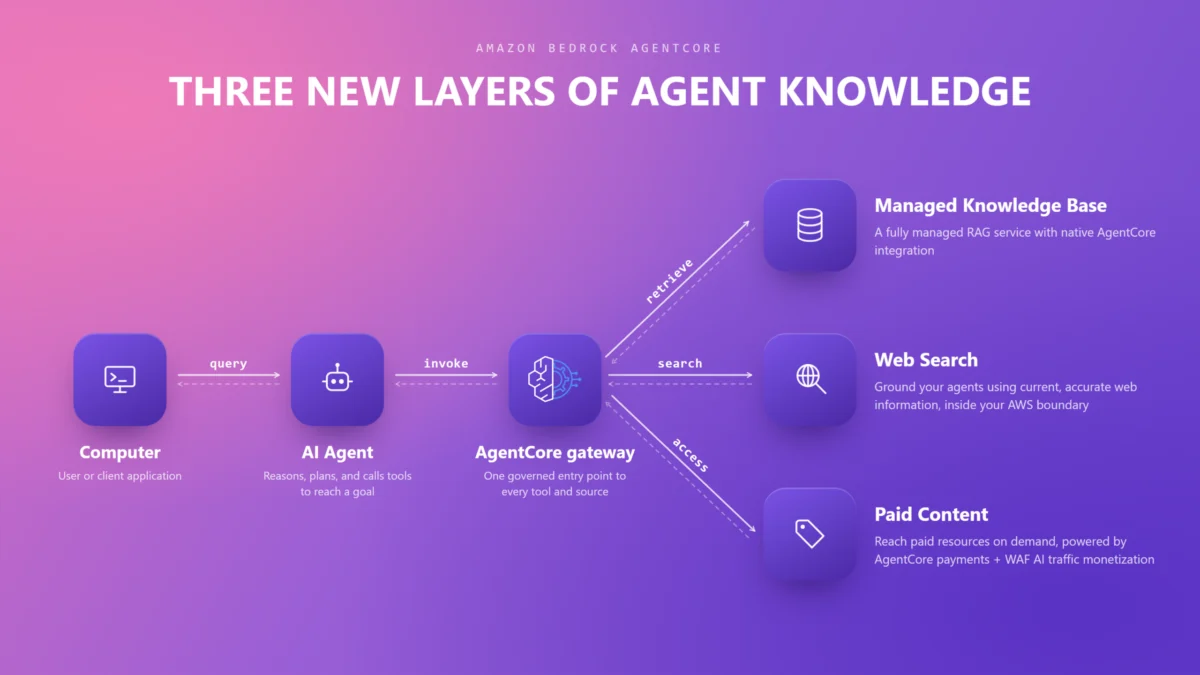
The most significant technical announcement was the enhancement of Amazon Bedrock AgentCore. AWS is positioning this as the foundation for enterprise-grade autonomous agents. The updated platform introduces three core pillars:
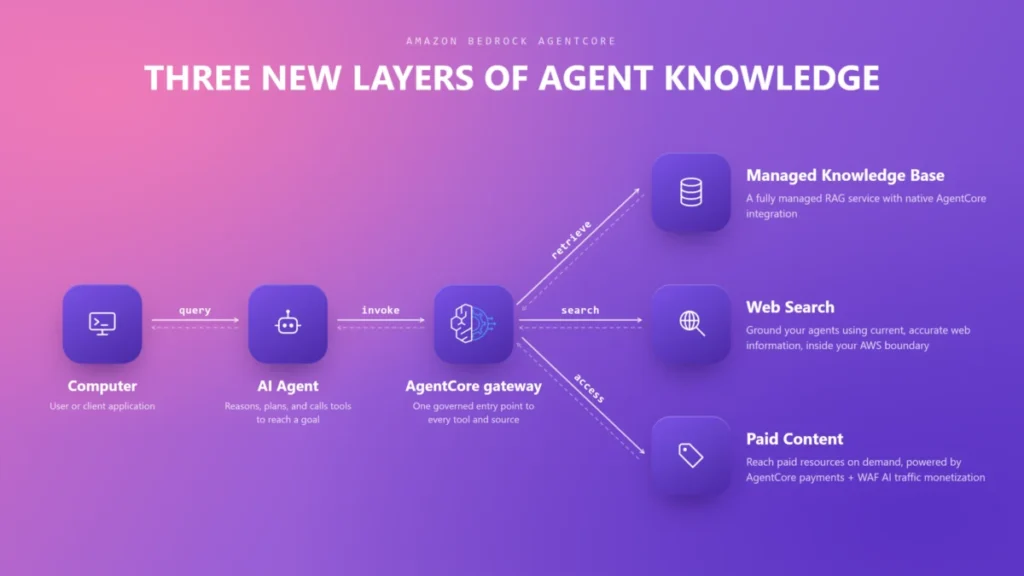
- Knowledge Integration: Agents can now seamlessly interface with a company’s internal organizational knowledge, real-time web data, and paid third-party data sources.
- Operational Resilience: New diagnostic capabilities allow teams to pinpoint and resolve failures in production environments, moving toward a "self-healing" AI architecture.
- Scalable Governance: As agents gain more autonomy, the risk of "hallucinations" or security breaches grows. AWS has introduced new guardrails that allow administrators to enforce security controls that scale proportionally with agent complexity.
Amazon Quick: Autonomy in the Workplace
Parallel to the infrastructure updates, AWS introduced Amazon Quick, a new suite of autonomous agents designed to handle specific business workflows. These are not merely assistants; they are functional roles.
- Finance Agents: Built to handle high-stakes order processing, these agents operate in the background, executing transactions with predefined financial logic.
- Sales Agents: These agents integrate across CRM systems, email platforms, and communication hubs like Slack to monitor client sentiment, draft proactive follow-up emails, and provide strategic recommendations based on interaction patterns.
Chronology of the Shift Toward Agentic AI
The journey to this year’s summit in New York has been a deliberate, step-by-step progression for AWS. Understanding the timeline of these developments is critical to grasping why the 2026 announcements carry so much weight.
Phase 1: The Foundation (2023–2024)
AWS initially focused on democratizing access to Large Language Models (LLMs) through Amazon Bedrock. The goal was to ensure that developers could choose the best model for their needs, whether it was from Anthropic, Cohere, or Amazon’s own Titan models.
Phase 2: RAG and Integration (2025)
During the middle of last year, the focus shifted to Retrieval-Augmented Generation (RAG). AWS spent this period ensuring that agents could reliably look up internal documents before answering queries, significantly reducing the frequency of hallucinations.
Phase 3: The Agentic Leap (Mid-2026)
The announcements made at the New York Summit represent the current state-of-the-art: the transition from RAG (looking up information) to Actionable Execution (performing tasks). By integrating the "AgentCore" framework, AWS is effectively giving AI a "hands-on" role in business processes, moving it from the periphery to the core of daily operations.
Supporting Data and Technical Architecture
The technical white papers and supplementary blogs released alongside the summit provide insight into the "how" behind these advancements. The "Knowledge Layers" architecture, showcased during the keynote, suggests a departure from traditional monolithic database querying.
Instead of forcing agents to scan an entire database, the new architecture utilizes a multi-layered knowledge approach:

- Semantic Caching: Frequently used organizational knowledge is cached at the edge, reducing latency for time-sensitive tasks.
- Dynamic Context Windowing: The agents are designed to prioritize the most relevant information based on the specific "work-thread" they are currently assigned to, preventing the "context overload" that often plagues less sophisticated models.
- Governance Telemetry: Every action taken by an agent is logged in a high-fidelity audit trail, ensuring that enterprises can maintain compliance with internal policies and external regulations—a non-negotiable requirement for financial and healthcare sectors.
Official Responses and Industry Context
Swami Sivasubramanian emphasized during his keynote that the goal of these tools is not to replace human workers, but to liberate them from the "drudgery of digital busywork."
"We are moving from a world where AI is a tool you talk to, to a world where AI is a colleague you collaborate with," Sivasubramanian noted. "The challenge has never been the intelligence of the models; it has been the ability to ground that intelligence in the reality of a company’s specific data and workflows. With AgentCore and Amazon Quick, we are finally closing that gap."
Industry analysts have responded positively to the announcement, noting that AWS has successfully differentiated itself from competitors by focusing on "enterprise-ready" rather than "consumer-glitzy" AI. While other players in the space continue to push the boundaries of creative generation, AWS is firmly planting its flag in the territory of operational efficiency and backend integration.
Implications for the Future of Work
The introduction of the new activity feed in Amazon Quick marks a psychological shift in how employees interact with software. By consolidating calendars, emails, and tasks into a single prioritized view—and having the AI "learn" the user’s habits—AWS is attempting to solve the "attention economy" problem.
The Death of Information Silos
For decades, the biggest hurdle to digital transformation has been the fragmentation of data. A salesperson might have data in Salesforce, communication in Slack, and meetings in Outlook. The new autonomous agents in Amazon Quick are designed to act as the "connective tissue" between these silos. By synthesizing information from disparate sources, these agents effectively eliminate the manual "copy-paste" labor that currently consumes hours of the average professional’s week.
The New Governance Paradigm
However, this transition comes with significant responsibilities. As AI agents gain the ability to draft emails and process orders autonomously, the potential for error—or abuse—increases. The emphasis on "governance that scales" at the summit indicates that AWS is keenly aware of this risk. Businesses adopting these technologies will need to invest in a new form of "AI Literacy," where employees are trained not just on how to use AI, but on how to oversee and audit the agents they deploy.
A Competitive Edge
For the enterprise, the message is clear: the early adopters of agentic workflows will likely see a massive surge in productivity. As these agents become more adept at handling mundane tasks, the nature of human labor will inevitably shift toward higher-level strategic thinking, creative problem-solving, and relationship management.
Conclusion: The Path Ahead
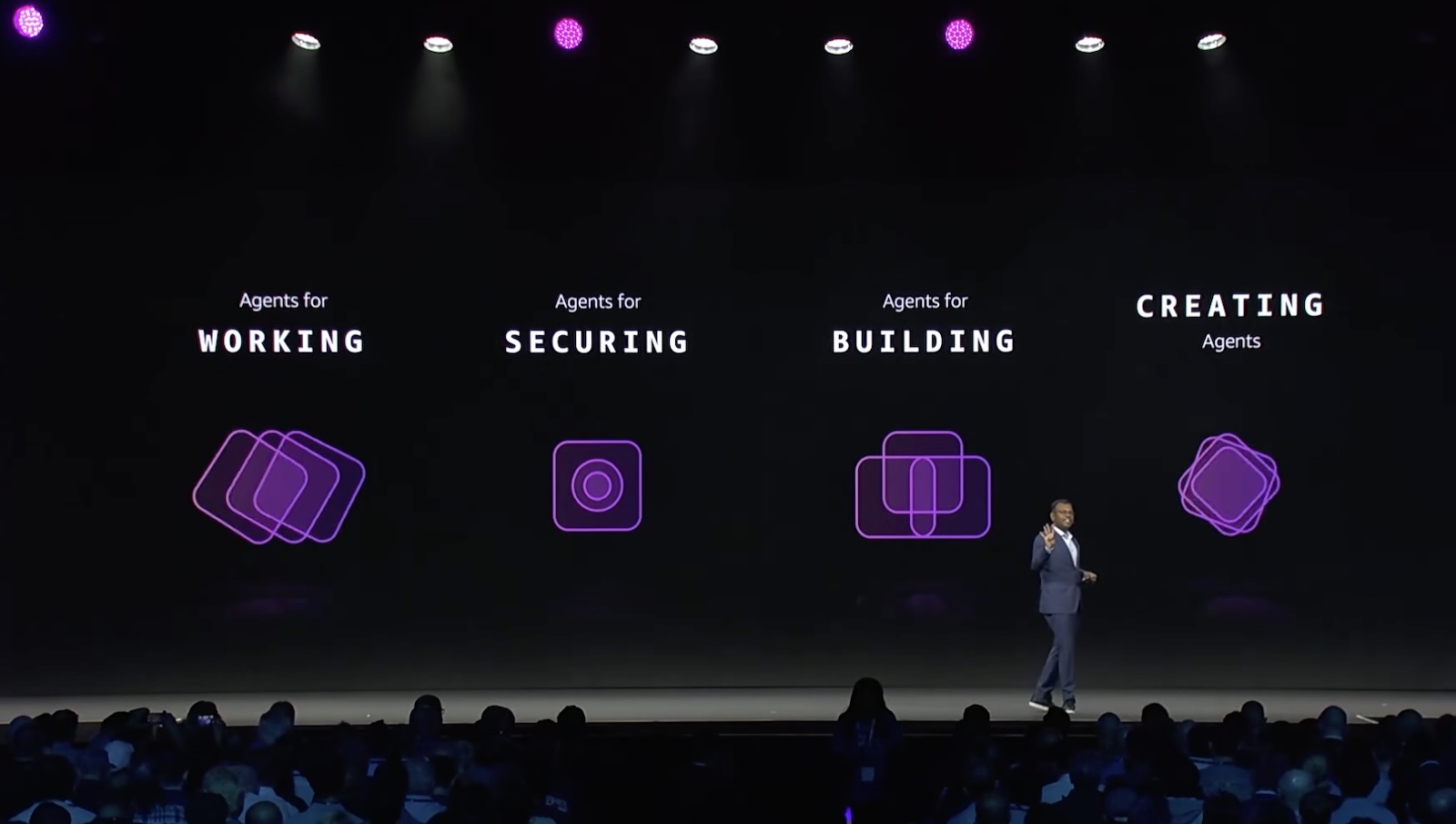
The AWS Summit in New York 2026 will likely be remembered as the moment the industry moved past the "AI hype cycle" and into the "AI implementation cycle." By providing developers with the tools to build, secure, and scale autonomous agents, AWS has laid the groundwork for a future where AI is not just an occasional assistant, but a permanent, active member of the global workforce.
As organizations begin to experiment with these new capabilities, the focus will remain on the balance between speed and control. The tools unveiled this week provide the engine for that balance, but the steering remains in the hands of the organizations that choose to adopt them. The age of the agent has arrived; the only question left is how quickly businesses can adapt to this new, automated reality.