The Open Book Touch: A New Chapter for Open-Source E-Reading Challenges Digital Monopolies
A long-anticipated open-source e-reader, the Open Book Touch, has officially launched its crowdfunding campaign, signaling a significant moment for advocates of digital freedom and user-controlled technology. Developed by the visionary Joey Castillo, this device aims to deliver a premium e-reading experience that rivals commercial giants like Amazon’s Kindle, but without the "Orwellian megacorp trappings" that often accompany proprietary hardware and digital ecosystems. Its swift ascent past 60% of its funding goal on Crowd Supply within days of launch underscores a burgeoning demand for ethical, transparent, and user-empowering alternatives in the e-reader market.
Main Facts
The Open Book Touch, priced at an accessible $149, represents the culmination of years of dedicated development in the open-hardware community. Its arrival on Crowd Supply this past weekend ignited immediate enthusiasm, quickly attracting a substantial portion of the necessary capital to move from prototype to production. This rapid financial commitment is a clear indicator of the community’s readiness to embrace a device that prioritizes user autonomy and technological transparency over corporate control.
The Launch and Early Success
The crowdfunding campaign for the Open Book Touch has not merely begun; it has surged. Reaching over 60% of its funding target in just a few days highlights a potent confluence of factors: a well-understood need in the market, a respected developer with a proven track record, and a device that genuinely delivers on its promises of innovation and ethical design. The $149 price point positions it competitively, offering an attractive proposition for those seeking a high-quality e-reader experience without the typical industry caveats. This early success is more than just a financial milestone; it’s a validation of the Open Book project’s core philosophy and a testament to the power of community-driven development.
Core Philosophy: Openness and Accessibility
At the heart of the Open Book Touch is a profound commitment to open hardware and open software. Unlike mainstream e-readers, which often operate within closed ecosystems, the Open Book Touch champions transparency, allowing users and developers to inspect, modify, and understand every component of their device. This philosophy extends beyond mere technical specifications; it’s about user freedom. It aims to liberate readers from the constraints of Digital Rights Management (DRM), proprietary file formats, and the implicit data collection practices often embedded in commercial products. The vision is simple yet radical: to provide an e-reader that respects the user’s ownership of their content and their device, fostering a truly personalized and unrestricted reading journey.
Key Innovations of the Open Book Touch
This latest iteration introduces several significant advancements that elevate the user experience. Foremost among these is the transition to an intuitive, touch-based interface, eliminating the need for physical navigation buttons and streamlining interaction. This modern approach aligns with contemporary user expectations for digital devices. Crucially, the Open Book Touch finally incorporates an illuminated display, a feature long requested by the community. This front-lighting capability is further enhanced by the ability to adjust both brightness and color temperature with a simple swipe, ensuring comfortable reading in any environment, from bright daylight to a dark room, while mitigating eye strain.
Beyond hardware, the software has undergone a substantial evolution. The user interface now offers a polished, contemporary feel, enabling readers to organize their digital library on virtual shelves and browse through book covers, mirroring the tactile pleasure of a physical bookstore. Enhanced functionalities like on-the-fly word definitions and the ability to "dog-ear" favorite pages digitally further enrich the reading experience, bridging the gap between traditional and digital reading habits. Critically, the Open Book Touch remains steadfastly DRM-free, supporting standard EPUB and TXT files loaded via a micro SD card. Its integrated WiFi-enabled ESP32 chip facilitates network connectivity, offering a web interface for convenient, over-the-air management of one’s entire book collection, further cementing its commitment to user freedom and accessibility.
Chronology: A Decade of Open Reading
The journey of the Open Book project is not a sudden emergence but a carefully cultivated evolution spanning nearly a decade. What began as a conceptual challenge to the proprietary nature of commercial e-readers has steadily matured into a robust, community-supported hardware platform.
Inception and Early Iterations
The earliest seeds of what would become the Open Book project were planted around 2019, driven by Joey Castillo’s desire to create an e-reader that was truly open. At a time when the e-reader market was already dominated by a few monolithic corporations, the idea of an entirely open-source device seemed ambitious, if not audacious. The initial versions were often more about proving a concept than delivering a polished consumer product. These early prototypes, frequently showcased on platforms like Hackaday, emphasized modularity and hackability, inviting other developers and enthusiasts to contribute to its growth. The focus was on stripping away unnecessary complexities and proprietary barriers, aiming for a core reading experience built on transparent hardware and software.
Hardware Evolution and Community Engagement
Over the years, the Open Book project has seen numerous iterations, each building upon the lessons learned from its predecessors and incorporating feedback from an engaged community of makers, developers, and readers. Early versions, such as the "Open Book Abridged" which utilized a Pico microcontroller, demonstrated the project’s commitment to simplifying the hardware while expanding its capabilities. This iterative design process allowed the project to experiment with different components, display technologies, and form factors, gradually refining the user experience. The community played a vital role, not just as testers but as co-creators, contributing code, suggesting features, and even helping to debug hardware issues. This collaborative spirit is a hallmark of successful open-source initiatives and has been instrumental in the Open Book’s steady progress. Each published update and design revision served as a public progress report, fostering trust and anticipation within its growing following.
The Road to the Open Book Touch
The development path leading to the Open Book Touch has been characterized by a relentless pursuit of both functionality and user-friendliness. Addressing key limitations of earlier models, the team focused on integrating features that have become standard in the e-reader market but with an open-source twist. The introduction of a touch interface was a significant leap, moving the device from a niche tinkerer’s gadget to a more universally appealing reading tool. Similarly, the long-awaited implementation of an illuminated display, coupled with adjustable color temperature, speaks to a maturing understanding of user needs and a commitment to competitive feature parity. This evolution wasn’t just about adding features; it was about integrating them seamlessly into an open-source framework, ensuring that even these advanced functionalities remained transparent and user-controllable. The decision to launch on Crowd Supply reflects a strategic move to scale production and reach a broader audience, signaling the project’s readiness to transition from a passionate hobby to a viable, community-backed product.
Supporting Data and Technical Deep Dive
The Open Book Touch isn’t just a collection of features; it’s a meticulously designed piece of open hardware, leveraging accessible and well-understood components to achieve its goals. Its technical specifications underpin its philosophical stance, proving that high functionality can coexist with transparency.
Hardware Specifications: Under the Hood
At its core, the Open Book Touch is powered by the ubiquitous ESP32 microcontroller. This choice is strategic, given the ESP32’s powerful combination of processing capabilities, integrated Wi-Fi, and low power consumption, making it ideal for an e-reader that requires both connectivity and extended battery life. The e-ink display is central to its identity, providing the crisp, paper-like reading experience characteristic of modern e-readers, renowned for reducing eye strain compared to traditional backlit LCD screens. The touch overlay significantly enhances interaction, moving beyond the button-based navigation of previous models to a more intuitive, gesture-driven interface.
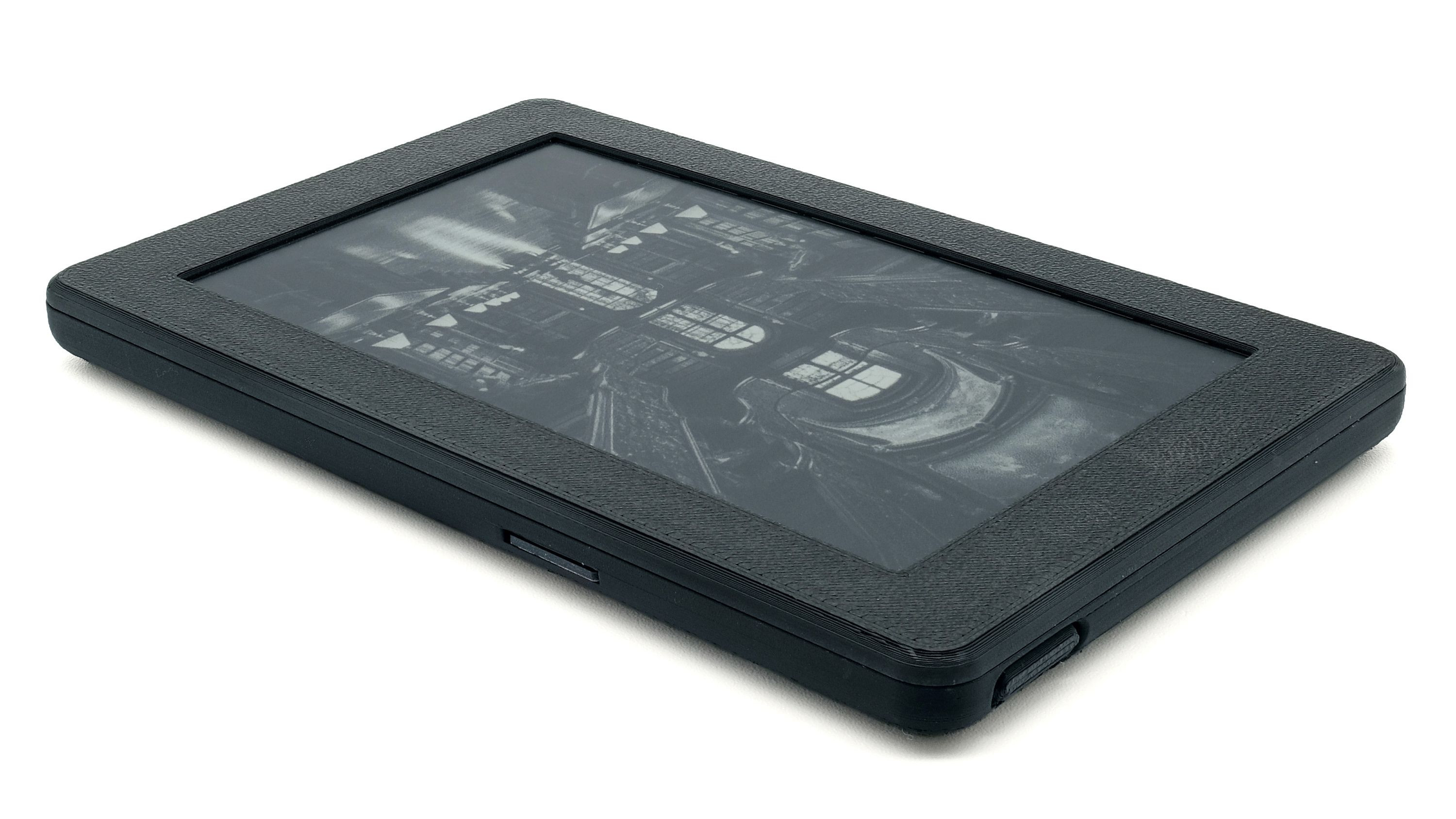
The integrated front-lighting system, a significant upgrade, uses a series of LEDs carefully positioned to illuminate the e-ink screen evenly, preventing the direct light glare associated with backlit displays. The ability to adjust color temperature, a feature often found only in premium commercial e-readers, is crucial for circadian rhythm regulation, allowing users to shift from cool white light during the day to warmer amber tones in the evening, promoting better sleep patterns. Power is supplied via a rechargeable battery, and content is stored on a standard micro SD card, providing flexible and expandable storage options that are entirely user-manageable. The open schematics and bill of materials (BOM) ensure that anyone can understand, repair, or even build their own Open Book Touch, embodying the true spirit of open hardware.
Software Enhancements: A User-Centric Experience
The software running on the Open Book Touch is as important as its hardware, designed from the ground up to be user-friendly and feature-rich. The user interface (UI) has seen substantial improvements, presenting a visually appealing and organized digital library. The "virtual shelves" concept allows for intuitive categorization and browsing, making large collections manageable. The ability to display book covers adds a layer of aesthetic pleasure and makes visual navigation quick and easy.
Beyond library management, the reading experience itself is highly refined. Users can highlight text, add annotations, and "dog-ear" pages digitally, mirroring the personal interaction with physical books. The integrated dictionary lookup feature provides instant access to definitions, enhancing comprehension without interrupting the reading flow. What truly sets the Open Book Touch apart, however, is its commitment to open standards. It natively supports EPUB and TXT files, the most common and accessible e-book formats, eliminating the need for proprietary software or conversion tools. The Wi-Fi connectivity, leveraging the ESP32, is not just for firmware updates; it enables a web interface, allowing users to manage their book collection remotely from any device on their network. This means no more tethering to a computer for file transfers, offering unparalleled convenience and control over one’s digital library.
The Open-Source Advantage
The open-source nature of the Open Book Touch is arguably its most profound "feature." This means that not only are the hardware designs (schematics, PCB layouts) freely available, but the software source code is also open for inspection, modification, and contribution. This model offers several distinct advantages. Firstly, it fosters transparency and trust; users can verify that there are no hidden backdoors, data collection mechanisms, or unwanted functionalities. Secondly, it promotes longevity and repairability. Should the original developer cease support, the community can continue to maintain, update, and even improve the device. This stands in stark contrast to commercial products that can become obsolete when manufacturer support ends. Finally, it democratizes technology, empowering individuals to learn, innovate, and adapt the device to their specific needs, fostering a vibrant ecosystem of collaboration and continuous improvement.
Official Responses and Community Reception
The launch of the Open Book Touch has been met with significant enthusiasm, reflecting years of anticipation from a dedicated community and a clear articulation of its creator’s vision.
Joey Castillo’s Vision
While direct quotes regarding the Crowd Supply launch are not explicitly provided in the original text, Joey Castillo’s long-standing philosophy and the very existence of the Open Book project serve as his most profound statement. His vision, as inferred from the project’s goals, is deeply rooted in digital liberation. He envisions a world where reading is an unfettered activity, free from the dictates of large corporations. His "official response" to the market’s current state is the Open Book Touch itself: a tangible rebuttal to proprietary ecosystems, DRM, and planned obsolescence. He believes that access to knowledge and literature should not come with a subscription fee, nor should it be contingent on hardware that can be rendered useless by its maker’s whims. Castillo’s persistent dedication over nearly a decade underscores a deep commitment to empowering users to "keep reading on their own terms," positioning the Open Book Touch not just as a product, but as a manifesto for digital autonomy.
Crowd Supply’s Role and Campaign Momentum
Crowd Supply, a platform renowned for supporting open hardware and innovative tech projects, plays a crucial role in bringing the Open Book Touch to a broader audience. While the platform itself does not issue "official responses" in the same vein as a project creator, its decision to host the Open Book Touch campaign signifies a vote of confidence in the project’s viability and appeal. The platform’s structure allows for community-driven funding, which is perfectly aligned with the Open Book’s ethos. The rapid pace at which the campaign has blown past 60% of its funding goal is Crowd Supply’s most direct "response" to the project’s potential. It validates the platform’s ability to connect innovative creators with a passionate audience eager to fund and receive such unique devices. The financial success on Crowd Supply demonstrates a strong market signal that there is a significant, underserved segment of consumers who value open, ethical, and user-centric hardware.
Enthusiastic Community Feedback
The immediate and enthusiastic response from the open-source community, and indeed the broader tech and reading communities, has been palpable. Forums, social media, and dedicated open-source platforms are abuzz with excitement. Long-time followers of the Open Book project have expressed relief and joy at seeing the "Touch" iteration finally come to fruition. Feedback often centers on the device’s key innovations: the illuminated touch screen, the robust software features, and above all, the steadfast commitment to being DRM-free. Users are particularly vocal about the importance of being able to load standard file formats from a micro SD card and manage their collection over a network, liberating them from vendor lock-in. This collective enthusiasm is not just about a new gadget; it’s about the tangible realization of a shared ideal – a powerful demonstration that technology can serve users, rather than the other way around. The rapid funding success is a direct reflection of this widespread positive sentiment and the strong desire for alternatives in the e-reader space.
Implications and Future Outlook
The Open Book Touch, while perhaps not poised to overturn the e-reader market overnight, carries profound implications for the future of digital reading and the broader open-source hardware movement.
Challenging the Proprietary Paradigm
The most significant implication of the Open Book Touch is its direct challenge to the proprietary paradigm that dominates the e-reader market. Companies like Amazon, Kobo, and Barnes & Noble have built vast ecosystems around their devices, often locking users into specific stores, file formats, and Digital Rights Management (DRM) schemes. This not only limits user choice but also dictates how, when, and even if, a user can access their purchased content in the long term. The Open Book Touch offers a stark alternative: a device where the user is truly in control. By supporting open standards (EPUB, TXT), enabling local storage (micro SD), and providing a network interface for management, it fundamentally redefines the relationship between reader and device. It posits that an e-reader can be a tool for empowerment rather than a gateway to a controlled marketplace, fostering genuine digital ownership and challenging the very notion of content lock-in.
Niche Market, Broad Impact
While the original article correctly notes that the Open Book Touch is unlikely to make a significant "dent in the market share that Amazon’s Kindle enjoys," its impact should not be underestimated. The open-source hardware market is inherently niche, catering to enthusiasts, privacy advocates, educators, and those who prioritize transparency and customization. However, the influence of such projects often extends far beyond their direct sales figures. The Open Book Touch serves as a proof of concept, demonstrating that it is entirely feasible to create a high-quality, user-friendly e-reader without resorting to proprietary restrictions. This can put pressure on larger manufacturers to consider more open practices, or at the very least, highlight the value proposition of such features for a segment of their customer base. It fosters innovation by showcasing alternative approaches and cultivates a community of developers and users who contribute to the evolution of open technologies. Its success, even within a niche, inspires other open hardware projects across various domains.
The Future of Open Hardware E-Readers
The Open Book Touch represents a critical milestone for the future of open hardware e-readers. Its successful crowdfunding campaign signals a growing maturity in the open-source hardware ecosystem, demonstrating that complex, consumer-facing devices can be developed, funded, and brought to market outside traditional corporate structures. This success paves the way for further innovation, encouraging more developers to tackle similar challenges in consumer electronics. The project could evolve to incorporate even more advanced features, greater customization options, or even serve as a platform for educational initiatives in hardware and software development. Ultimately, the Open Book Touch is more than just an e-reader; it is a beacon for a future where technology is designed with user freedom and transparency at its core, offering a compelling vision for how we interact with our digital world on our own terms. As the campaign progresses and the devices begin to ship, it will be fascinating to watch how this "Open Book" truly writes the next chapter for open-source technology.